
Hardware
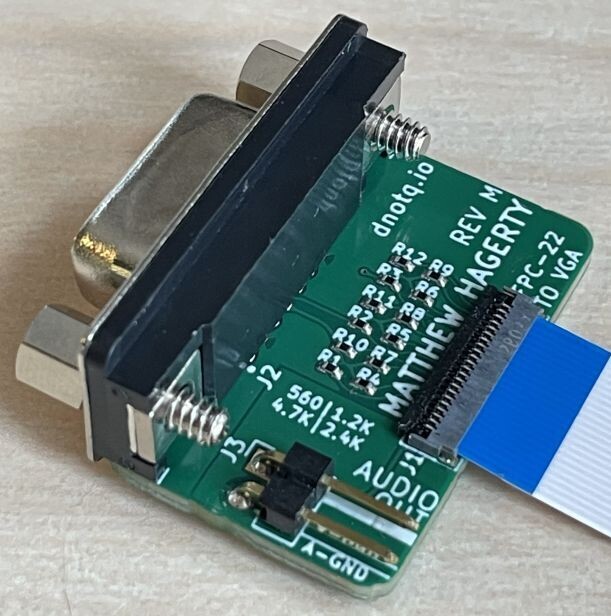
| Catalogue ID | HW-0013 |
|---|---|
| Manufacturer | Arcade Shopper |
| Region | United States |
| Type | Video Display (Video) |
| Connects via | for F18A MK1 VDP |
| Platform | ADAM |
| Status | Released |
| Manufacturer site | https://www.arcadeshopper.com/wp/ |
| Source | Collectors DB v1.00 Master |
The F18A MK1 VGA Header distributed by Arcade Shopper is a small, specialized interface board designed to work alongside the F18A MK1 Video Processor Upgrade. It acts as the physical breakout terminal that lets you plug a standard 15-pin VGA monitor cable directly into your modified Coleco ADAM or ColecoVision system.
Purpose of the VGA Header:
The F18A MK1 board completely replaces the console's original, noisy Texas Instruments TMS9918A/9928A video chip. Because the F18A processes graphics entirely in the digital domain to output a crisp, modern VGA signal, it completely bypasses the motherboard's factory RF or composite audio/video traces.
The raw VGA signals leave the F18A chip via a flat ribbon cable. The VGA Header board sits at the other end of that ribbon, translating the flat flexible circuit traces into a rugged, standard DB-15 female VGA connector that can handle the physical strain of heavy monitor cables.
The header board gives retro-hardware builders options for how they want to manage the physical layout of their console:
The connector assembly can be sourced directly through the Arcade Shopper Classic Computers Store. It is typically sold as an optional add-on part for users building their own custom wiring harnesses, replacing a worn-out breakout jack, or configuring dual-output display systems.