
Hardware
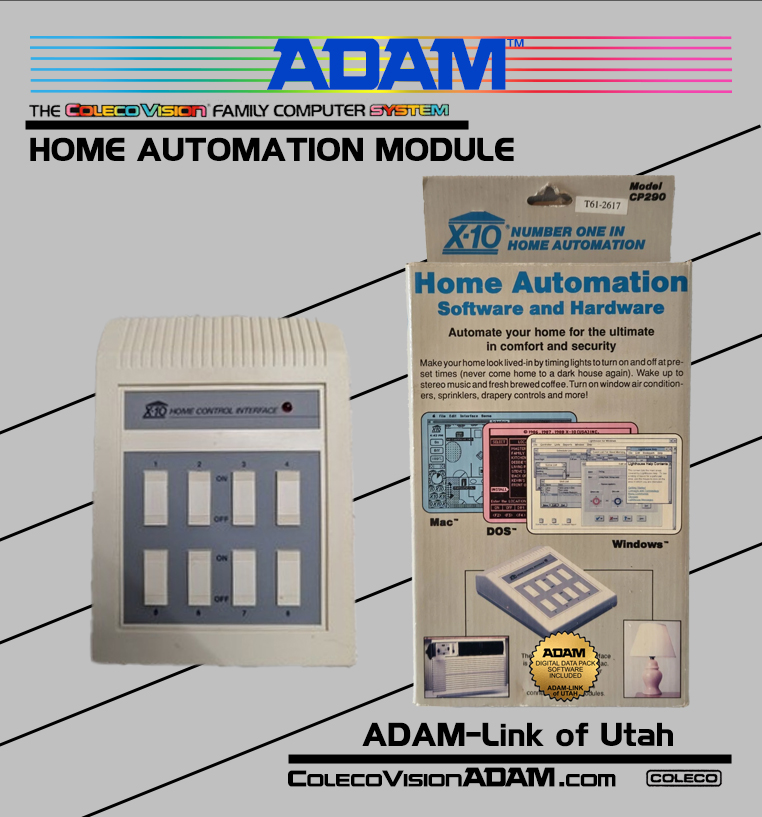
| Catalogue ID | HW-0246 |
|---|---|
| Manufacturer | ADAMLink of UTAH |
| Person or team | Alan Neely |
| Type | Modem and Network (Network) |
| Connects via | Internal Expansion Slot #1 |
| Platform | ADAM |
| Status | Released |
| Source | Collectors DB v1.00 Master |
The Coleco’s ADAM X-10 Home Automation Package with Serial Interface by ADAMLink of Utah was an advanced smart-home setup developed in the late 1980s. It bridged the 8-bit Coleco ADAM computer with the industry-standard X-10 home automation system, allowing users to program and automate physical household electronics directly from their game console.
The X-10 protocol was the grandfather of modern smart-home ecosystems. It worked by sending high-frequency digital control signals directly through a house's existing AC electrical wiring.
By plugging an electronic device (like a lamp, appliance, or heater) into a specialized X-10 wall module, a central controller could turn that device on, off, or dim it remotely without requiring any custom internet or wireless cabling.
The ADAMLink of Utah Package:
While X-10 manufactured standalone physical timer blocks, ADAMLink of Utah engineered a hardware and software kit to give the Coleco ADAM total control over the environment:
This package is considered an incredibly rare, niche artifact of 1980s retro-computing history. It was sold in low quantities to early home automation hobbyists through mail-order user-group catalogs. Today, collectors value it as a testament to how user groups like ADAMLink of Utah aggressively pushed a discontinued 8-bit video game platform into the realm of practical, futuristic utilities