| ||||||||||||||||||||||||||||
| EXTERNAL EXPANSION | ||||||||||||||||||||||||||||

|
||||||||||||||||||||||||||||
Assorted Hardware Currently in My Collection. There are many additional ones out there not shown.Help me find those missing for preservation.

COLECO ELECTRONICS
Collected
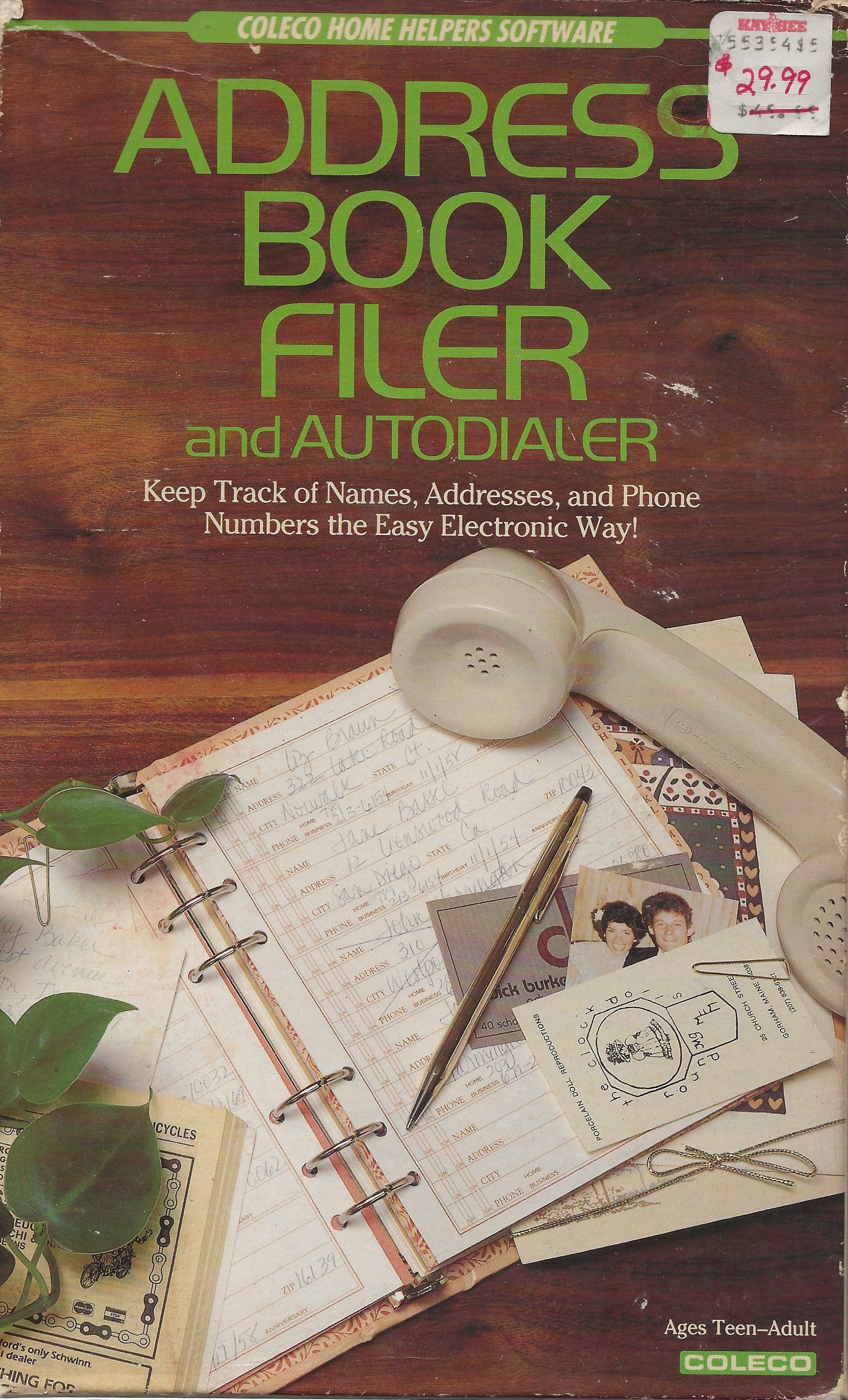
COLECO ADDRESS BOOK FILE & AUTODIALERColeco has begun shipment of "Address Book Filer" and "Autodialer," a software plus peripheral package for the ADAM Family Computer System. Available in both digital data pack and 5 1/4" floppy disk formats, "Address Book Filer" is the latest title in Coleco's growing library of Home Information Management programs. The "Address Book Filer" program allows the user to create an electronic address book by making, saving, finding and updating several hundred entries at the touch of a key. Each entry has twelve features for the user to fill in. These include basics such as last name, first name, address, home phone and business phone, as well as three note features, which may be used to create birthdays, favorite colors or other pertinent personal features. Four of these features are searchable as well, allowing the user to access lists of people by first name, last name, city or even by a personal feature such as birthday month. "Address Book Filer" may be merged with Coleco's recently released "SmartLetters and Forms" software program to print personalized form letters. The user may also create a format with SmartWriter, ADAM's built-in word processing program, and merge it with "Address Book Filer" to create personalized form letters and mailing labels. The accompanying "Autodialer" hardware is a simply installed peripheral that connects with the user's existing telephone, allowing the user to make local and long-distance telephone calls easily and automatically. 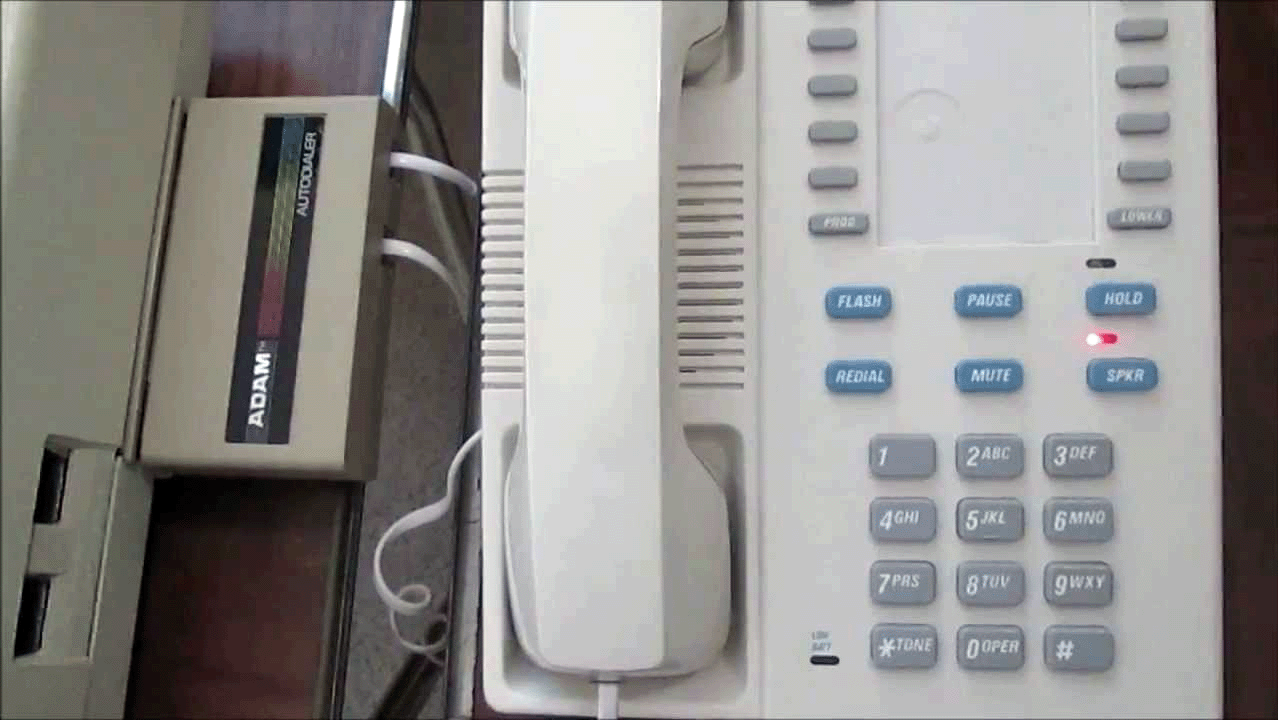
Collected
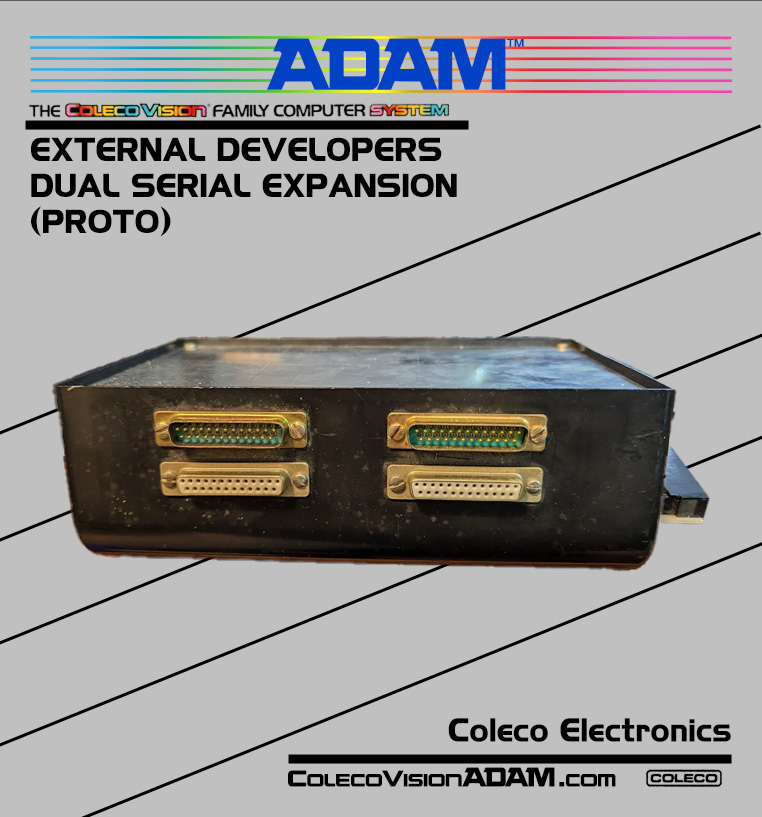
COLECO ADAM UNKNOWN X00256 REV 0Unknown device proclaimed by seller to be a Developers RS-232 .jpg)
.jpg)
.jpg)
.jpg)
.jpg)
EVE ELECTRONICS
Collected
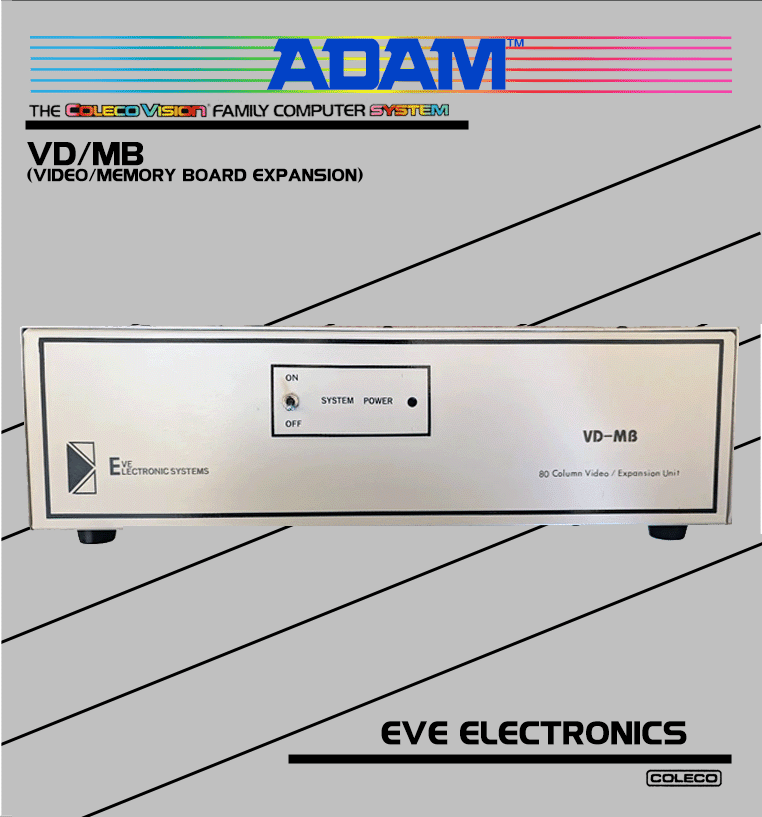
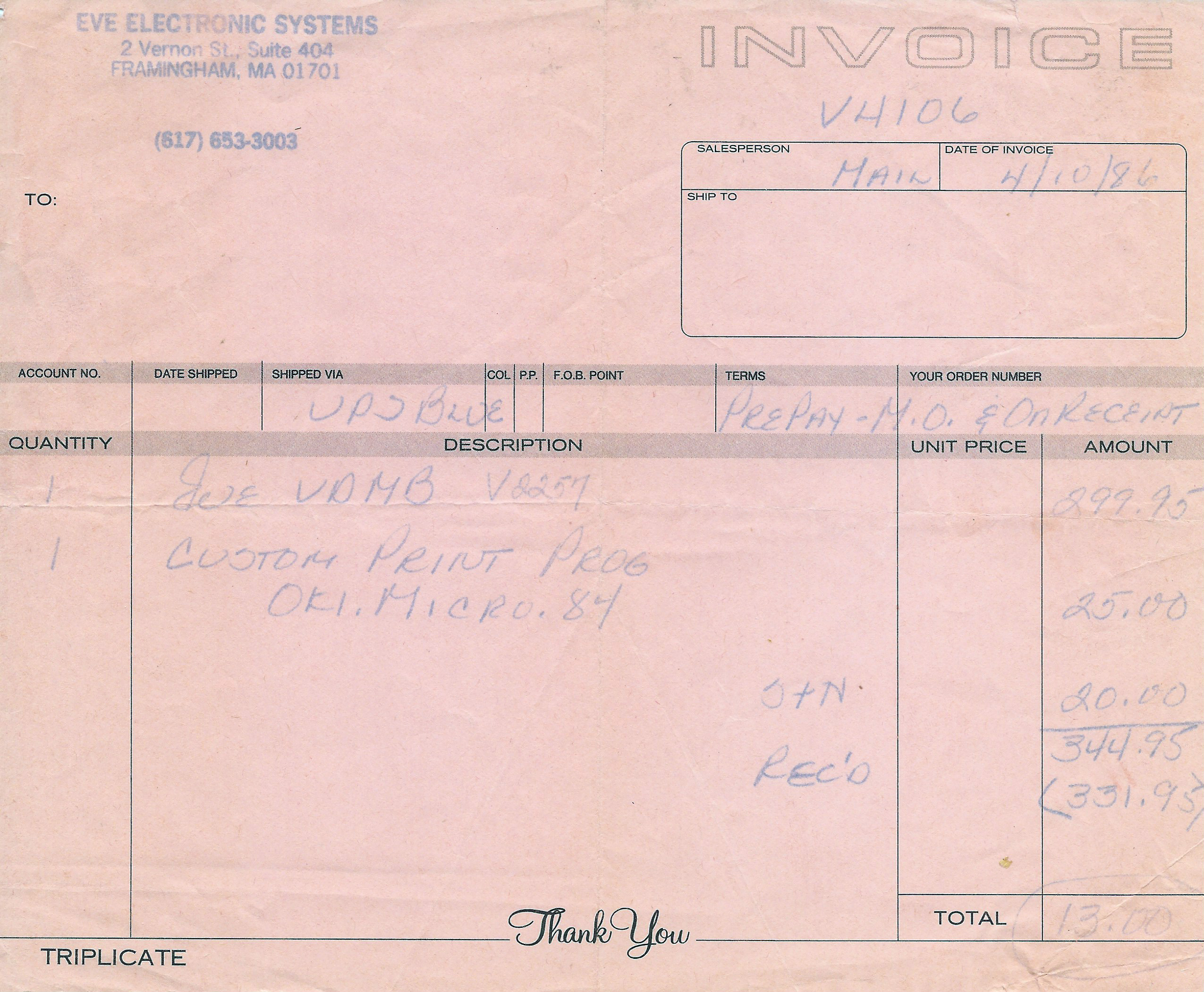
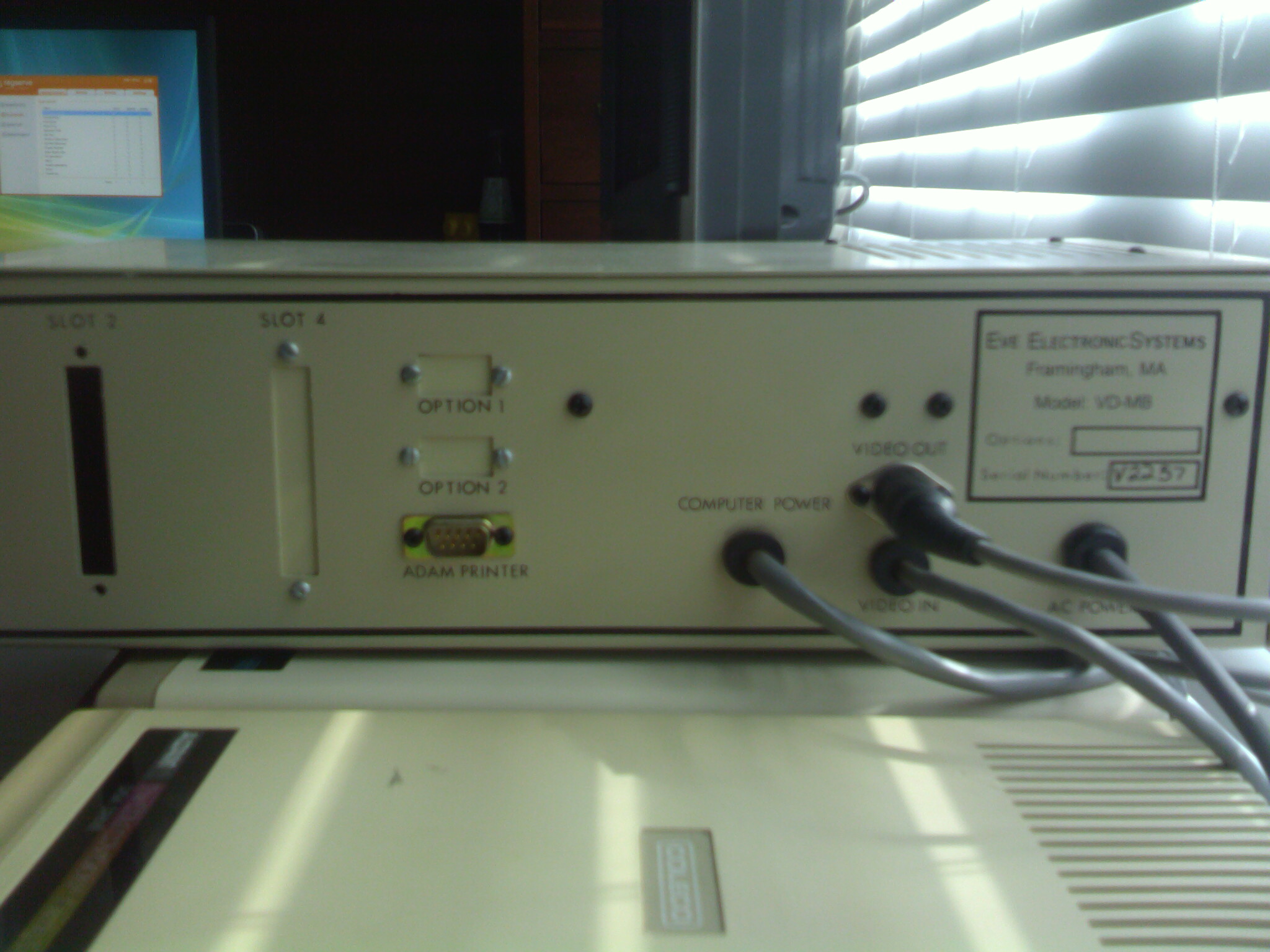
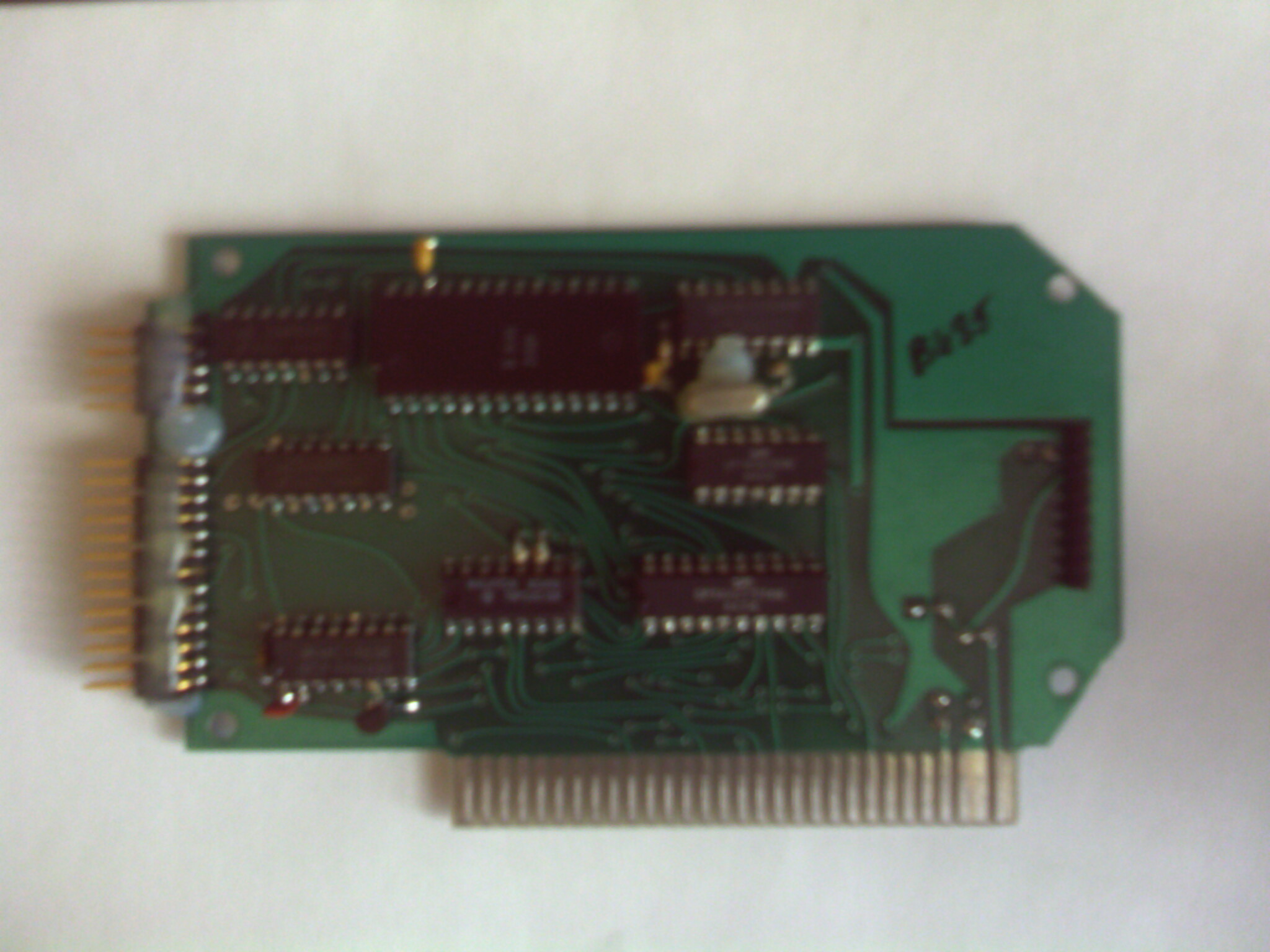
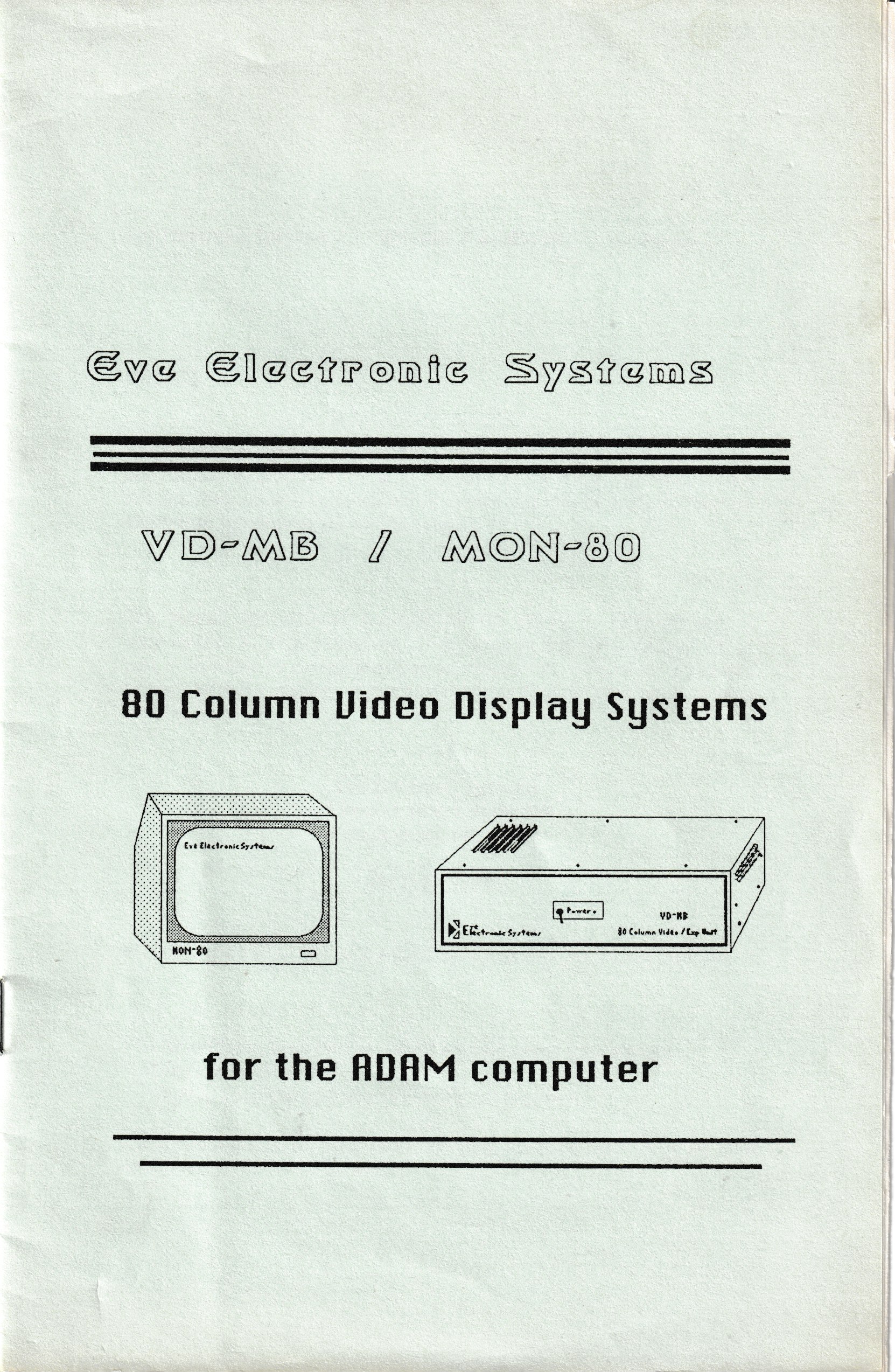
VD-MB 80 COLUMN VIDEO/EXPANSIONManufacturer: Eve Electronic Systems, 2 Vernon St., Suite 404, Framingham, MA 01701 — © 1985, 1986 The VD-MB is a complete 80-column expansion chassis for the ADAM, combining integrated video generation, a multi-rail power supply (replacing the ADAM printer's power function), and a 4-slot expansion bus for EVE peripherals. The companion MON-80 is the monitor-only version without the expansion bus.
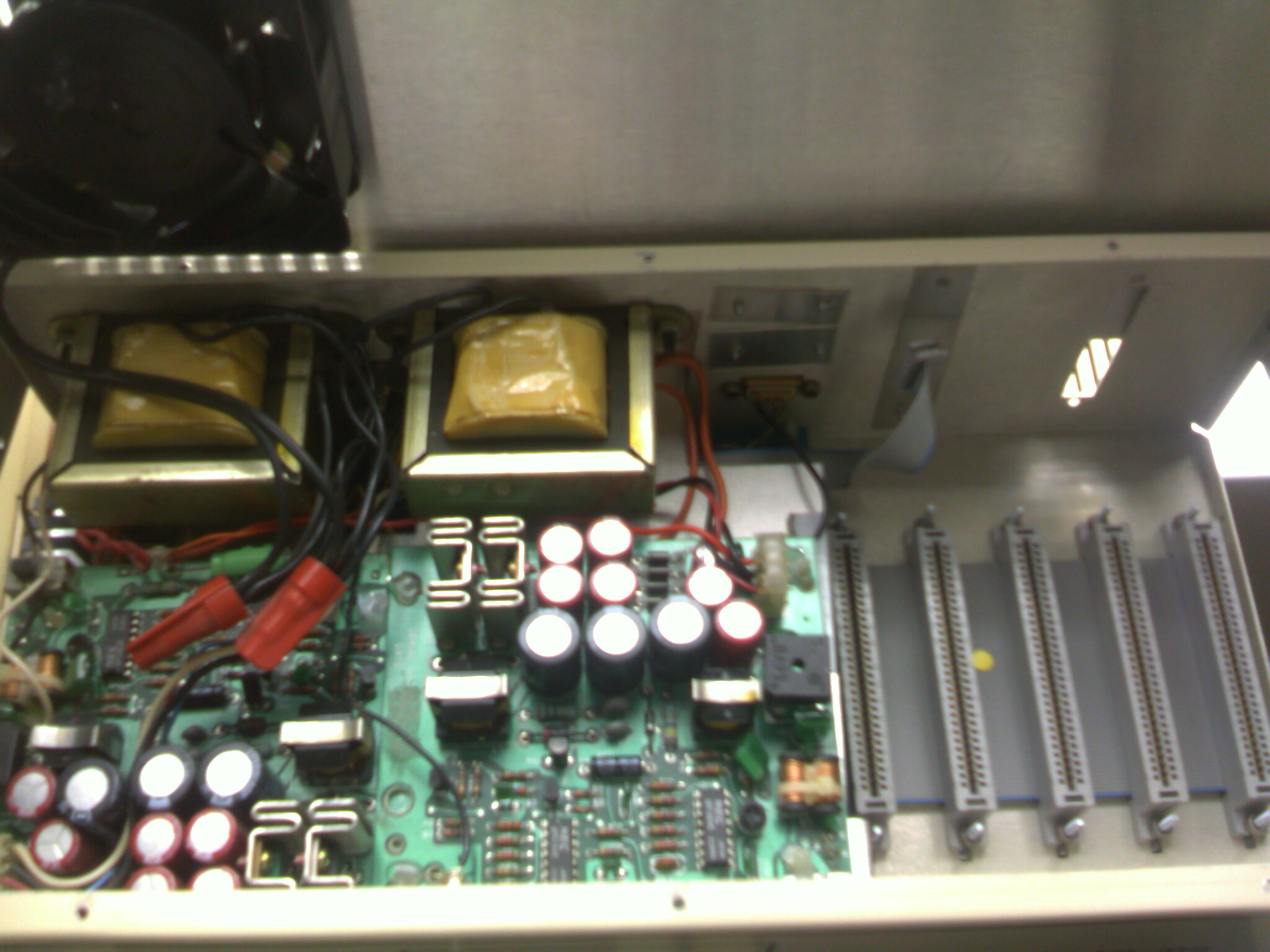
Software Integration: Shipped with modified CP/M that boots directly into 80-column mode. Video switching between ADAM 40-column (CRT:) and EVE 80-column (UC1:) is controlled through the CP/M IOBYTE — selectable via the STAT command ( Architecture: The VD-MB uses a CRTC-based video generation approach with its own processor and firmware running the H19 terminal emulation independently of the ADAM's Z80. The chassis contains two large power transformers, voltage regulation with heatsinks, and extensive filtering capacitors — a substantial power supply designed for continuous operation with multiple expansion cards installed. 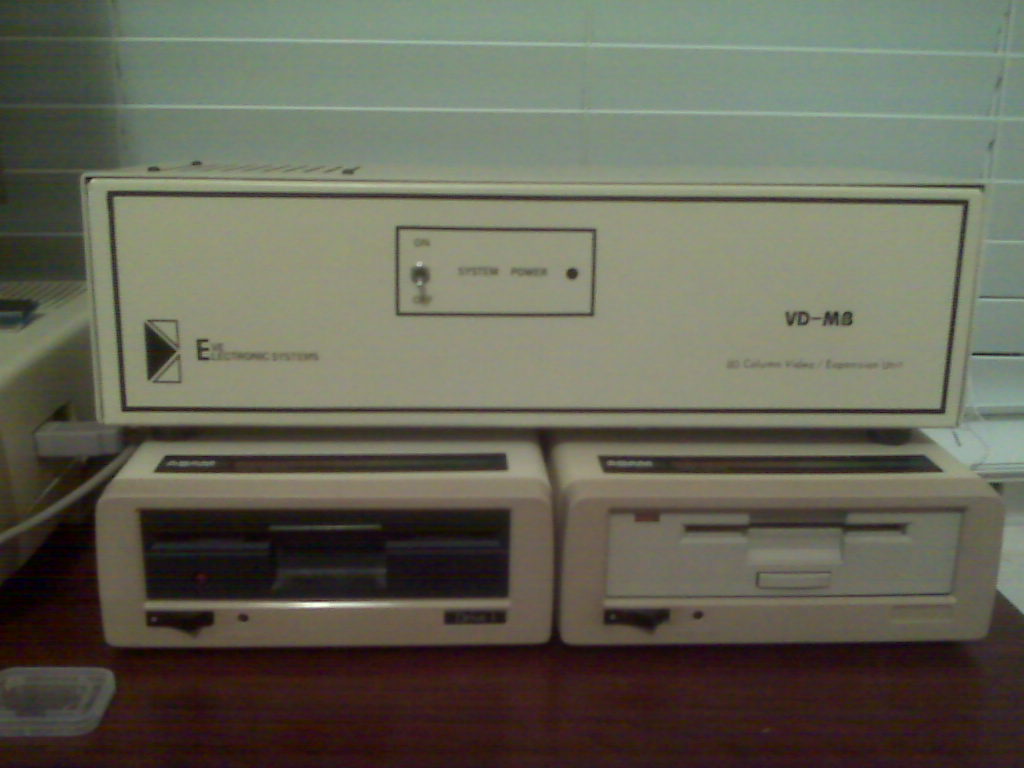
.jpg)
.jpg)
Collected
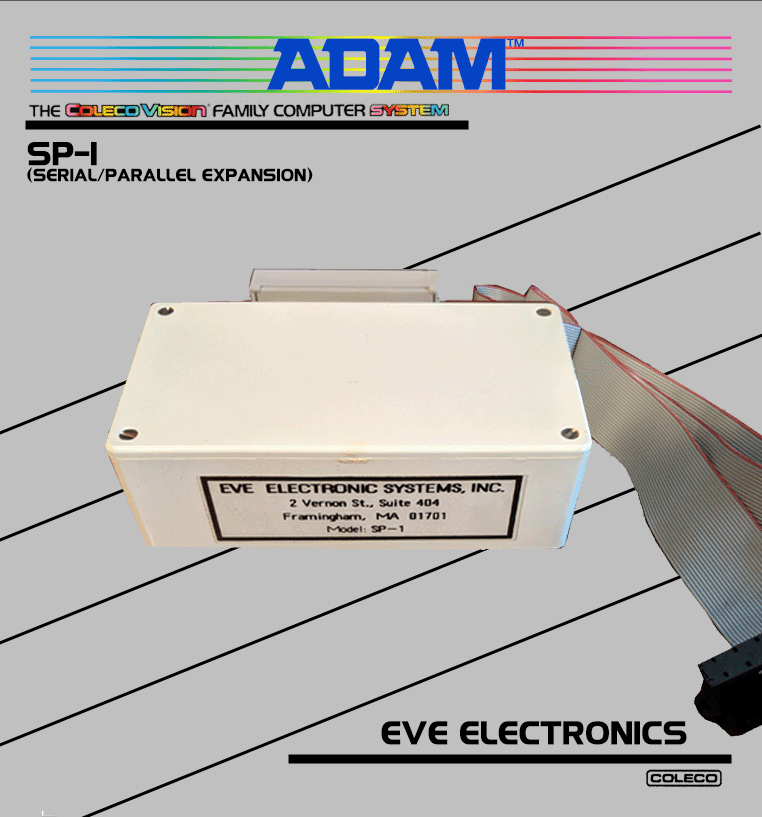
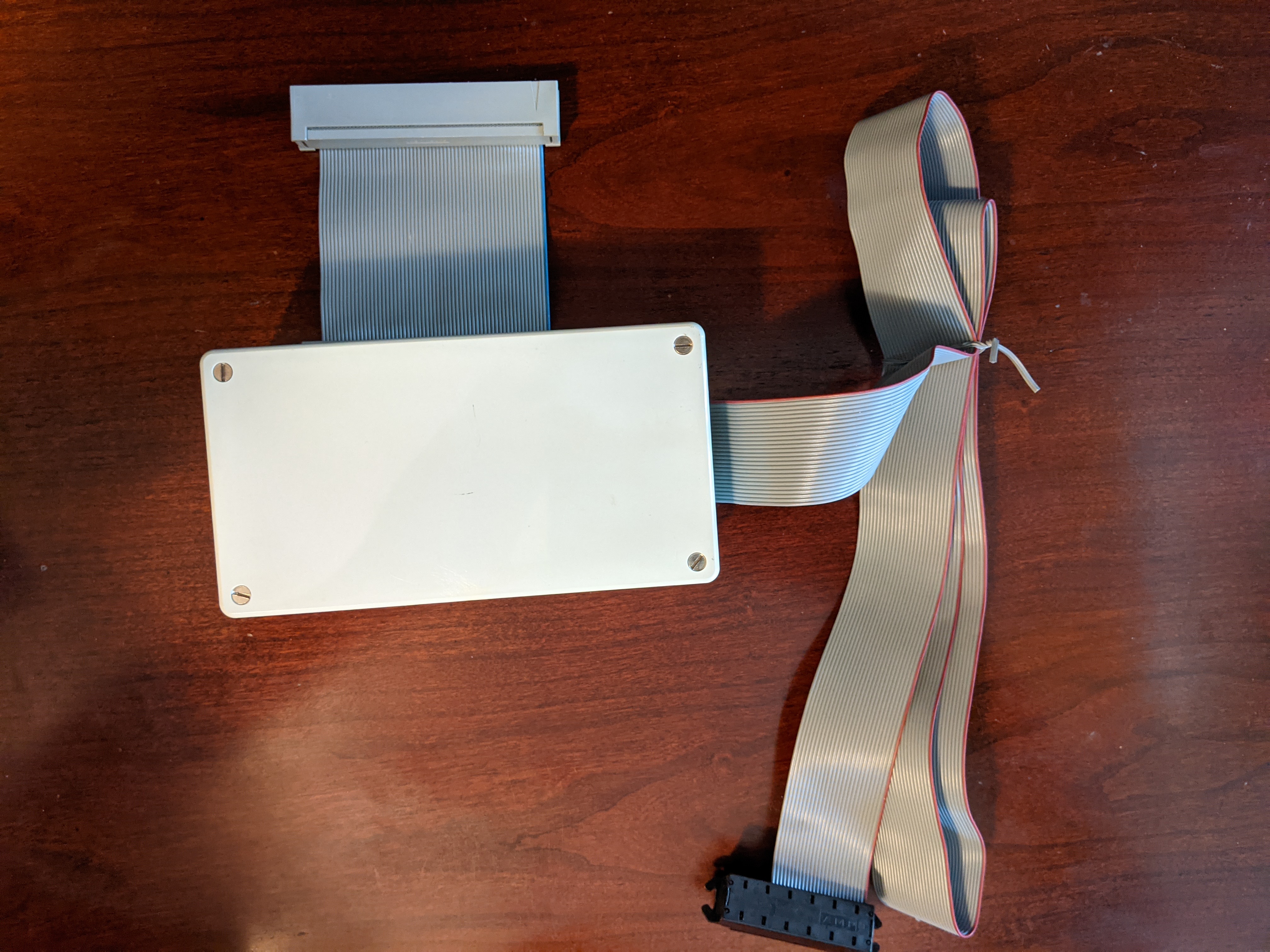
SP-1 Serial & Parallel InterfaceSP-1: Opens the ADAM to the outside world. The SP-1 includes an RS-232C Serial channel, and a (Centronics) Parallel printer channel. The SP-1 allows the use of hundreds of different printers, both high speed dot matrix, and letter quality. With the SP-1 you can now use standard models, and direct connect to other computer systems. The SP-1 comes with software for use with SmartBasic, and CP/M. The SmartBasic programs allow the selective output to either the serial port, the parallel port, or the ADAM printer. A program is also provided to allow 'draft' printout of a Smartwriter file to either the serial or parallel port. The CP/M program allow the 'IOBYTE' in CP/M to be set for the desired output. 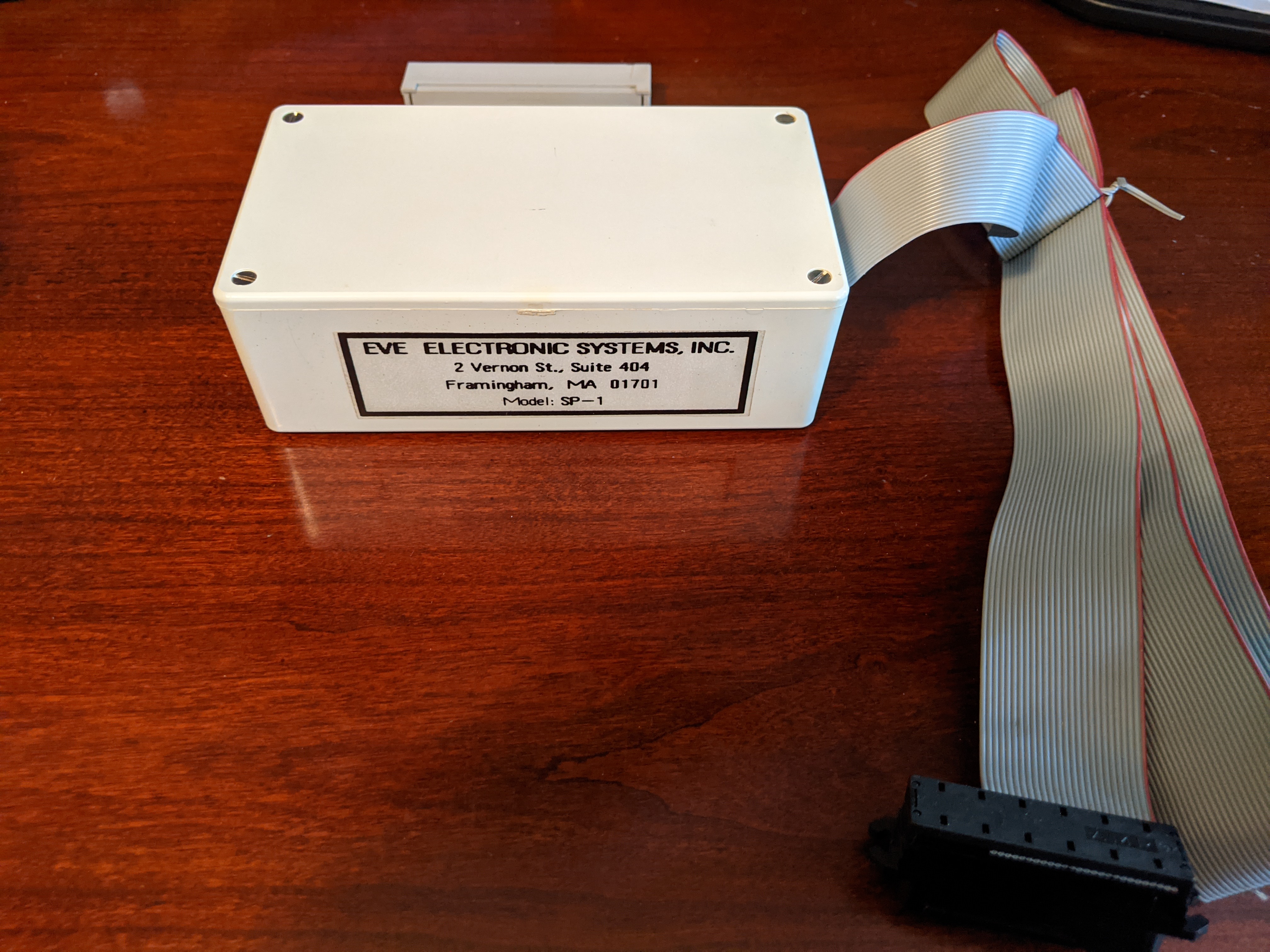
Collected
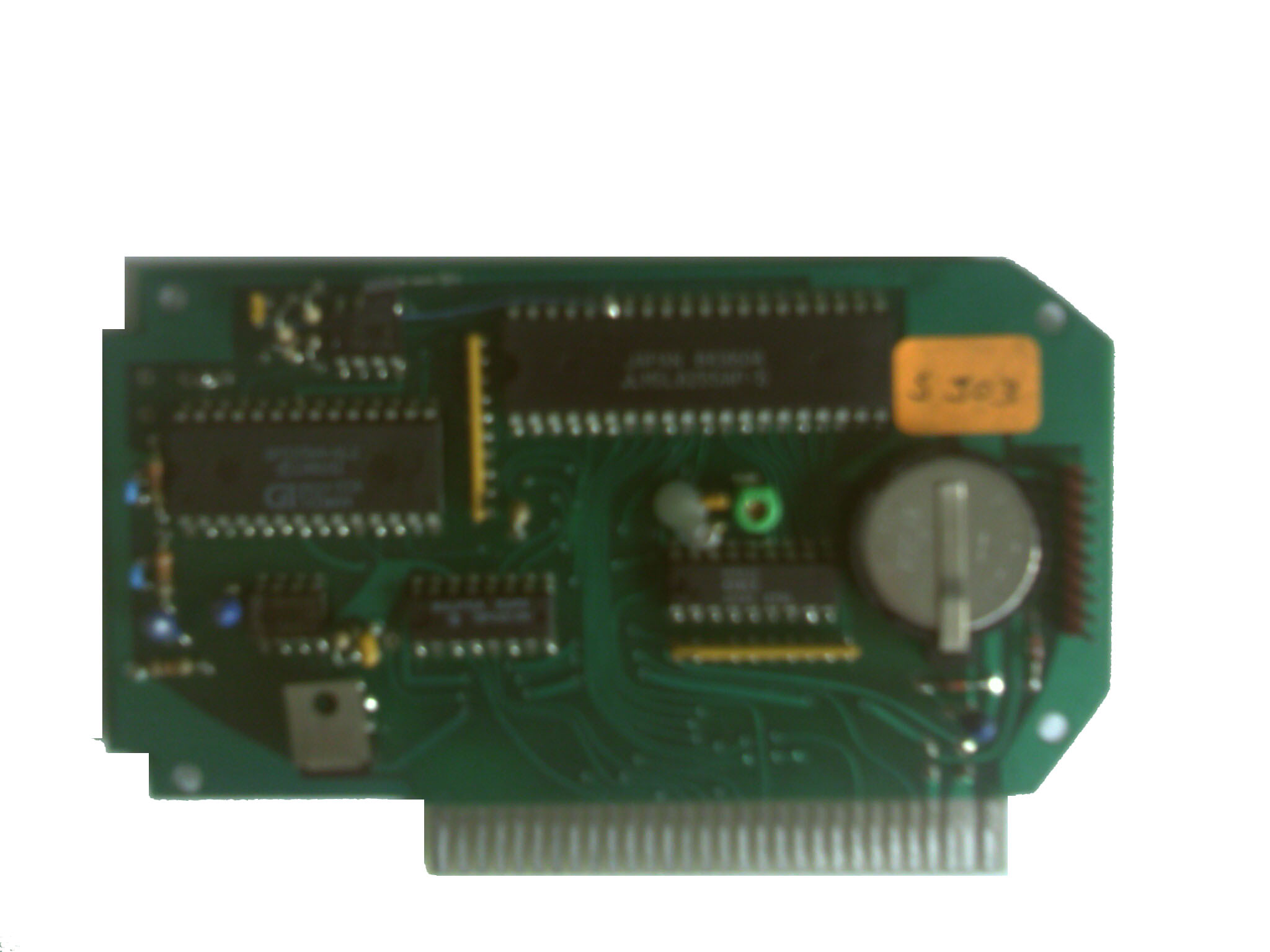
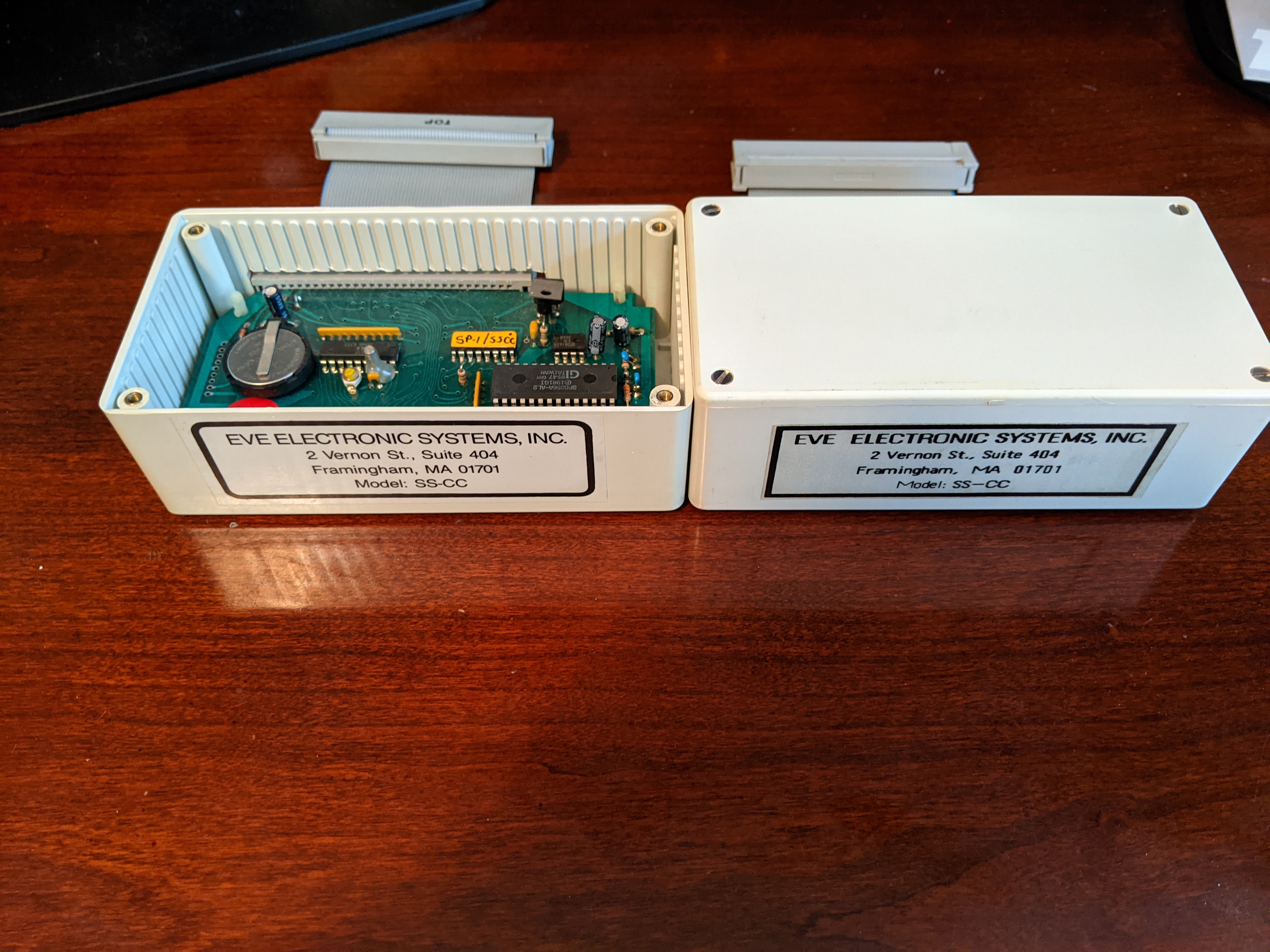
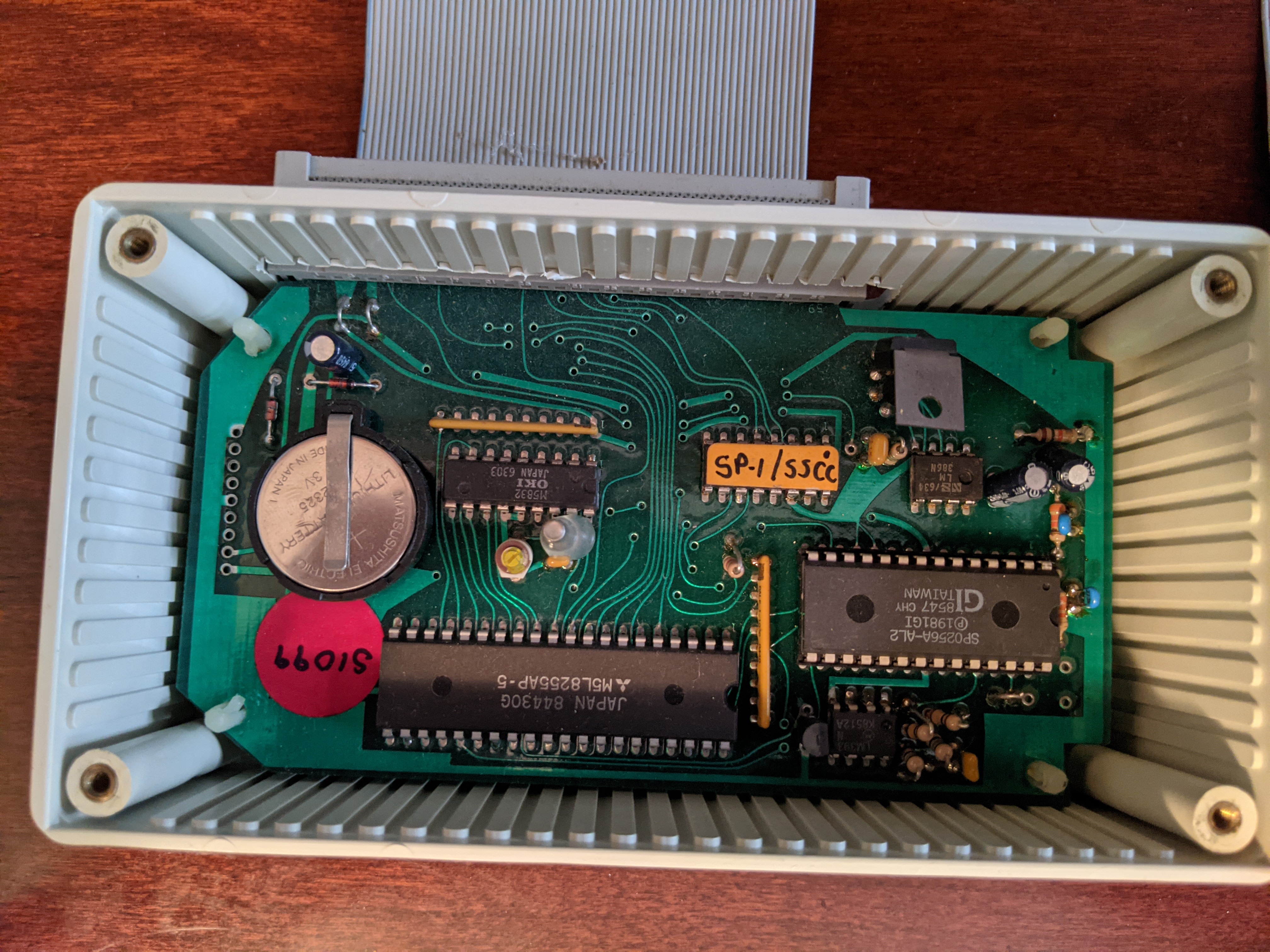
SS-CC SPEECH SYNTHESIS - CLOCK CALENDARSS-CC: Now you can give ADAM a 'VOICE'. The EVE speech unit may be used with your programs to add capabilities to your ADAM that are only limited by your imagination! Also on this interface unit is a 'real time' clock calendar circuit so you, and ADAM will now have a access to the time and date as needed. Software included with the SS-CC: a standard phoneme library, and sample 'Talk' & 'Clock' programs. For use with both SmartBasic and CP/M. 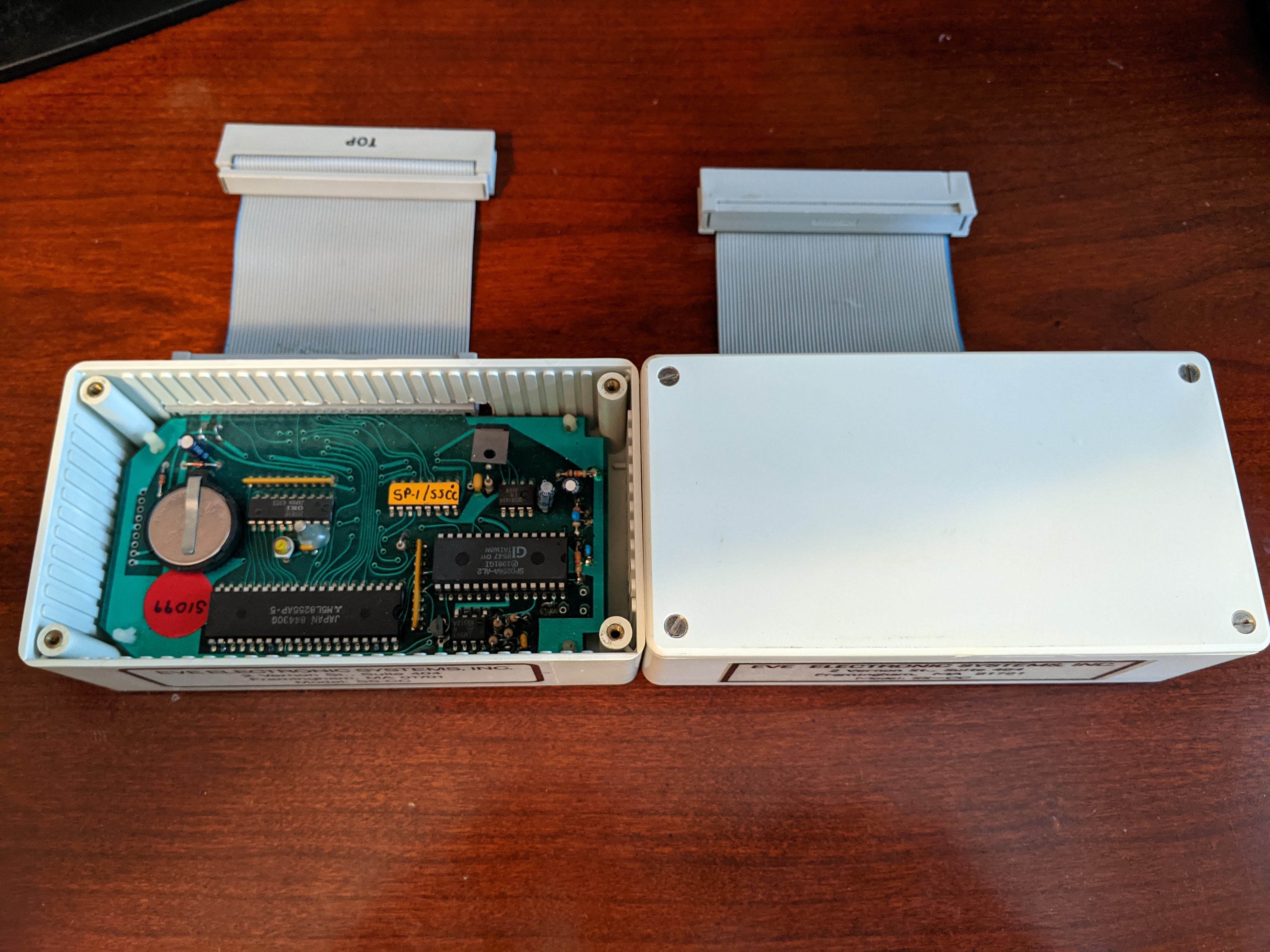
Collected
.jpg)
Dual SP-1/SS-CCDUAL SP-1/SS-CC: You get the best of both expansions convieniently placed in one box. .jpg)
.jpg)
HI-TEK RESEARCH
Collected
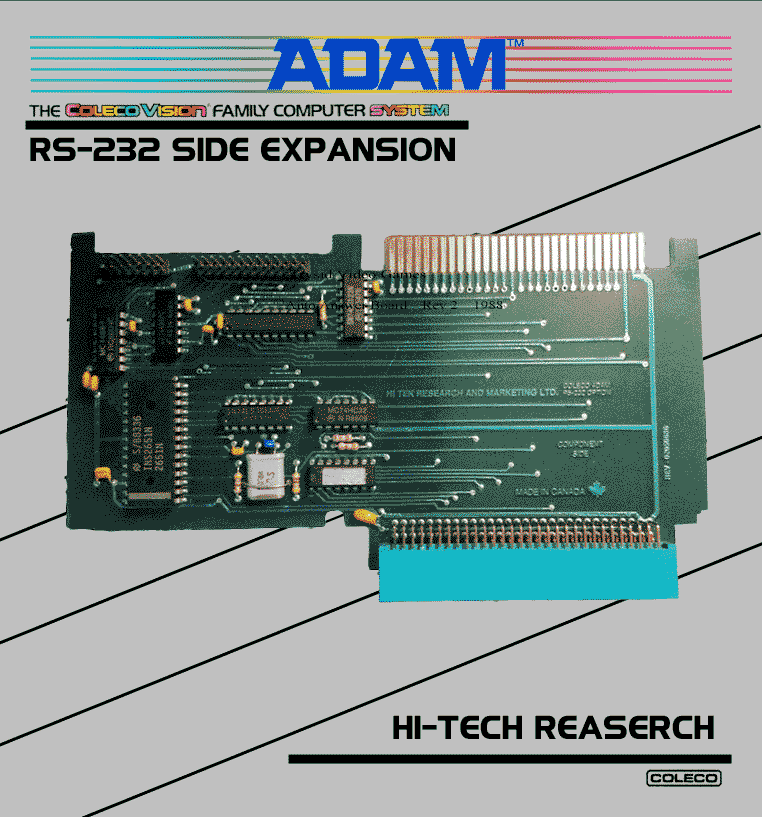
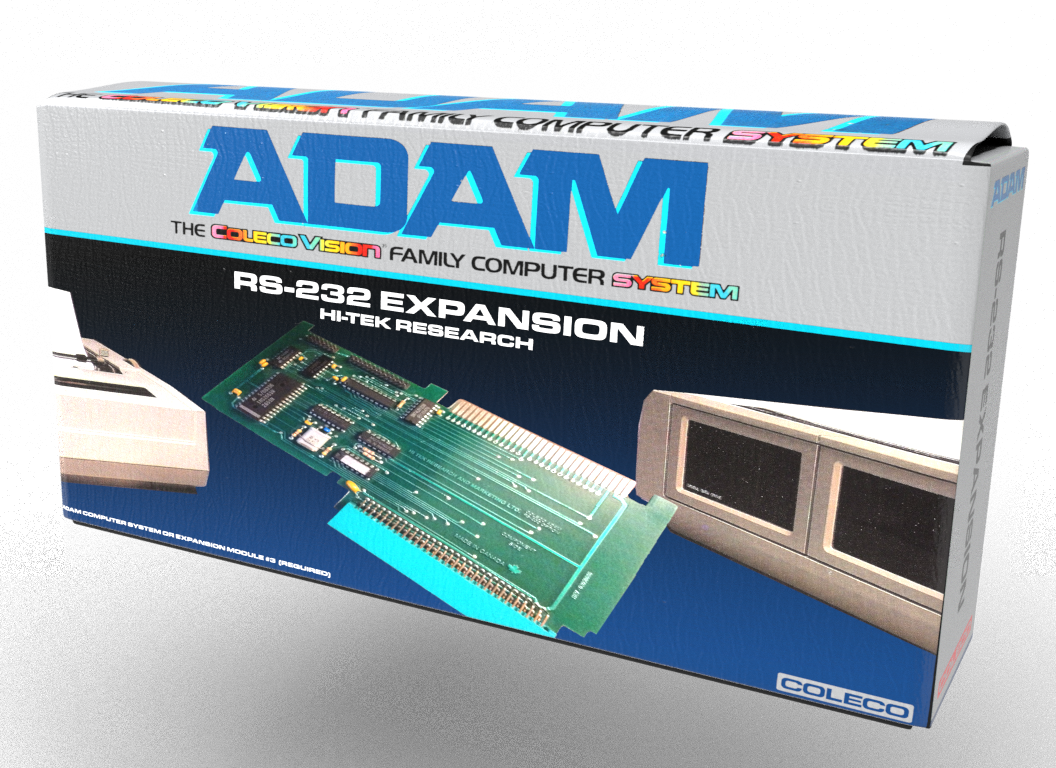
RS-232 SERIAL / PARALLEL SYSTEM EXPANSIONManufacturer: Hi-Tek Research and Marketing Ltd., Bay 14, 3650 19th St. N.E., Calgary, Alberta, Canada T2E-6V2 — (403) 250-3406 Combined RS-232 serial and Centronics parallel interface for the Coleco ADAM. Connects via the side expansion port (60-pin card edge). Made in Canada. Shipped with a pre-attached parallel cable, program diskette, and instruction manual. US units included an additional serial cable option requiring user assembly; Canadian consumers could order custom serial cables ($35.00 option). Key ICs (verified from board photography):
Software Integration: Included SmartBASIC drivers (siobasic, bserial, bprinter) and CP/M drivers (cpmptr, cpmser). Under SmartBASIC, output routing is controlled via PR# commands: PR#0 = monitor/TV, PR#1 = ADAM printer, PR#2 = parallel device, PR#3 = serial device. The siobasic program uses SmartKeys to configure serial port parameters (baud rate, parity, etc.). Under CP/M, the cpmptr and cpmser files are transferred to the CP/M system disk for parallel and serial support respectively. Assembly language routines handle USART initialization and are loaded below address 28000 (LOMEM:28000 protects this area). Connectors: 14-pin serial output (TXD, RXD, RTS, CTS, DCD, GND, DTR — CCITT V.24 compliant) and 26-pin Centronics-compatible parallel output. Full CCITT V.24/EIA RS-232C interface documentation included in manual. /PXL_20211116_150547549.jpg)
/PXL_20211116_150558246.jpg)
LUNDY ELECTRONICS
Collected
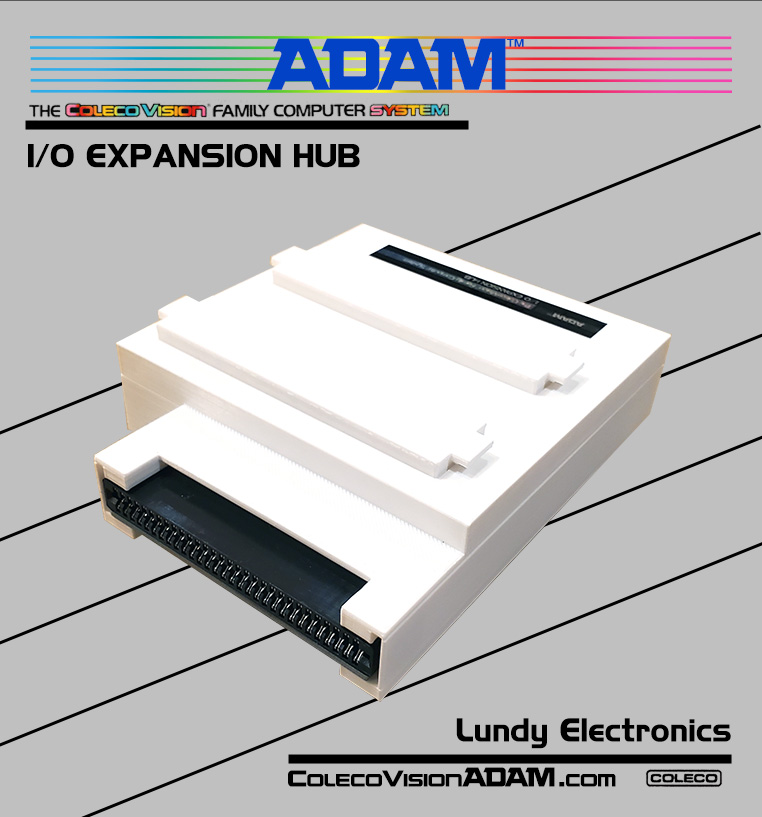
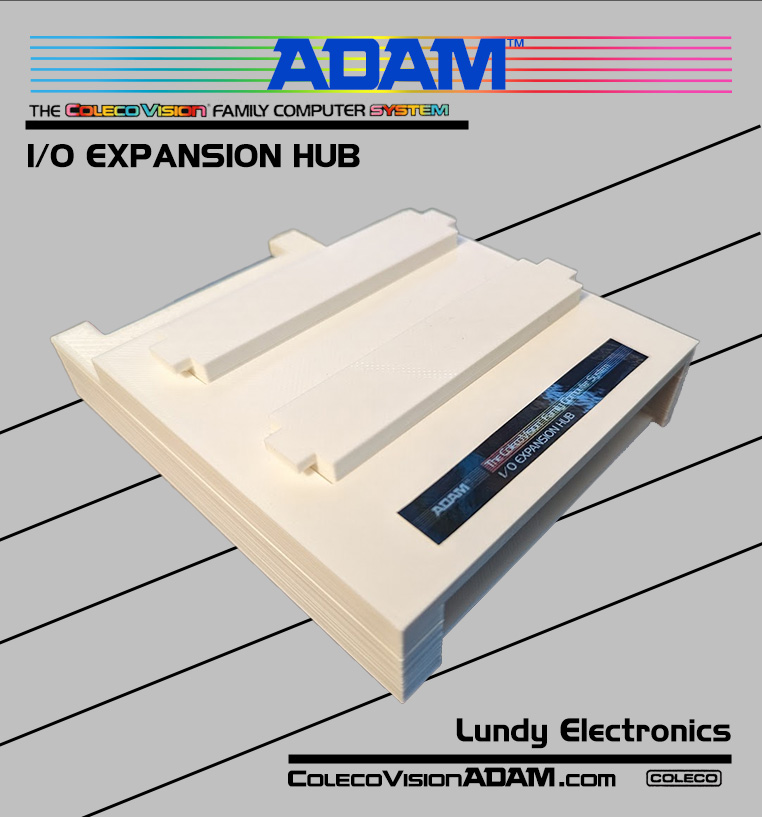
ADAM I/O EXPANSION HUBLundy Electronics designed the ADAM I/O Expansion Hub with a professional PCB layout to eliminate crosstalk and provide proper power requirements, ENIG (gold) I/O edge card PCB fingers for durability and oxidation resistance, and high quality 3D-printed housing. The unit also comes with two top expansion port covers to cover any unused top port(s) safely. Allows the user to quickly connect and leave attached multiple expansion units. Has been tested with the following configurations: Internal expansions: Lundy Electronics MIB238-WiFi card, Lundy Electronics 1MB RAM expander card External expansion: Lundy Electronics ADAM Speech module, Lundy Electronics MIDIMITE II MIDI module, OPCODE SGM (Super Game Module) module 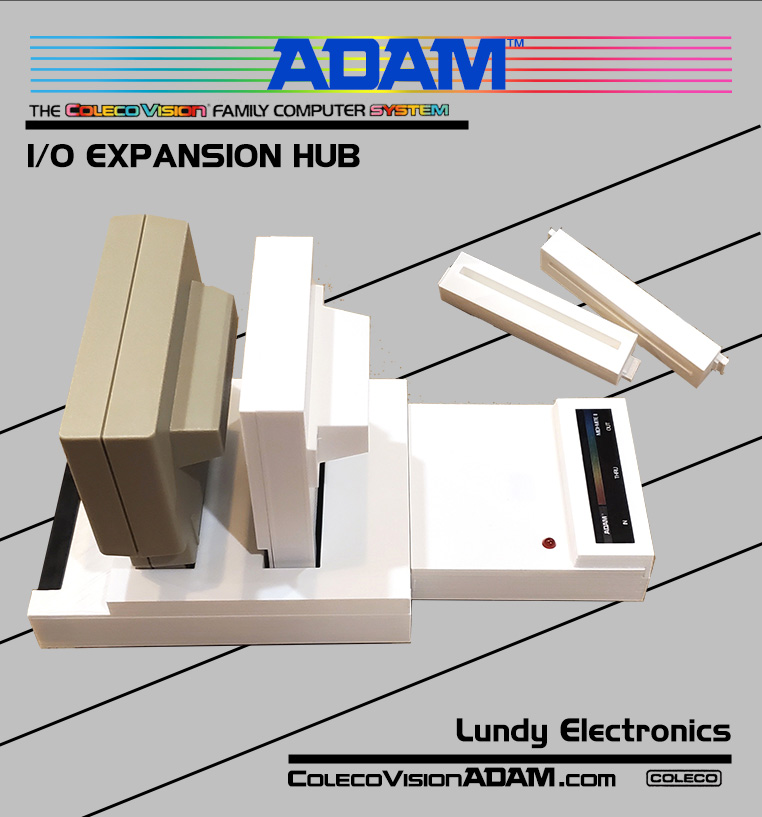
Collected
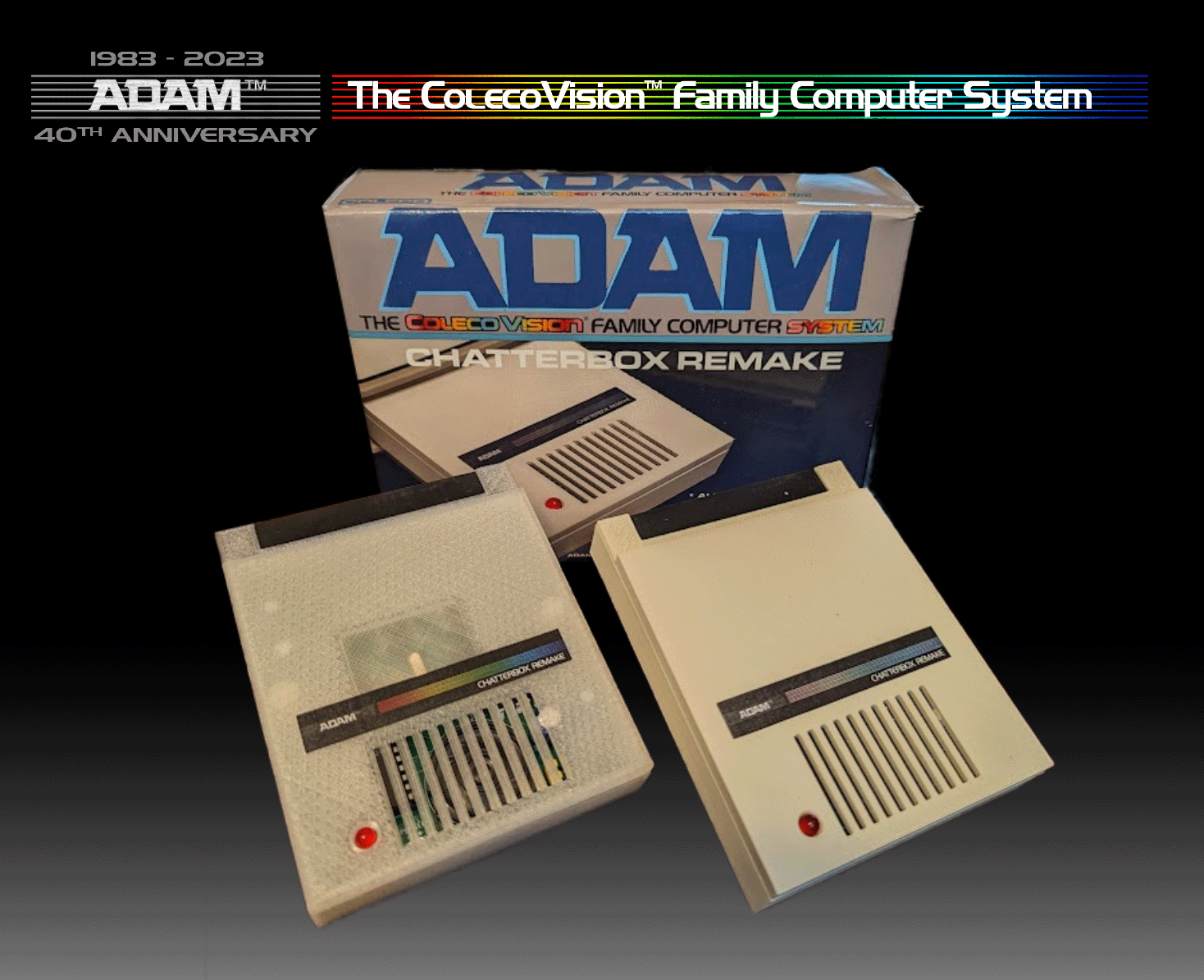
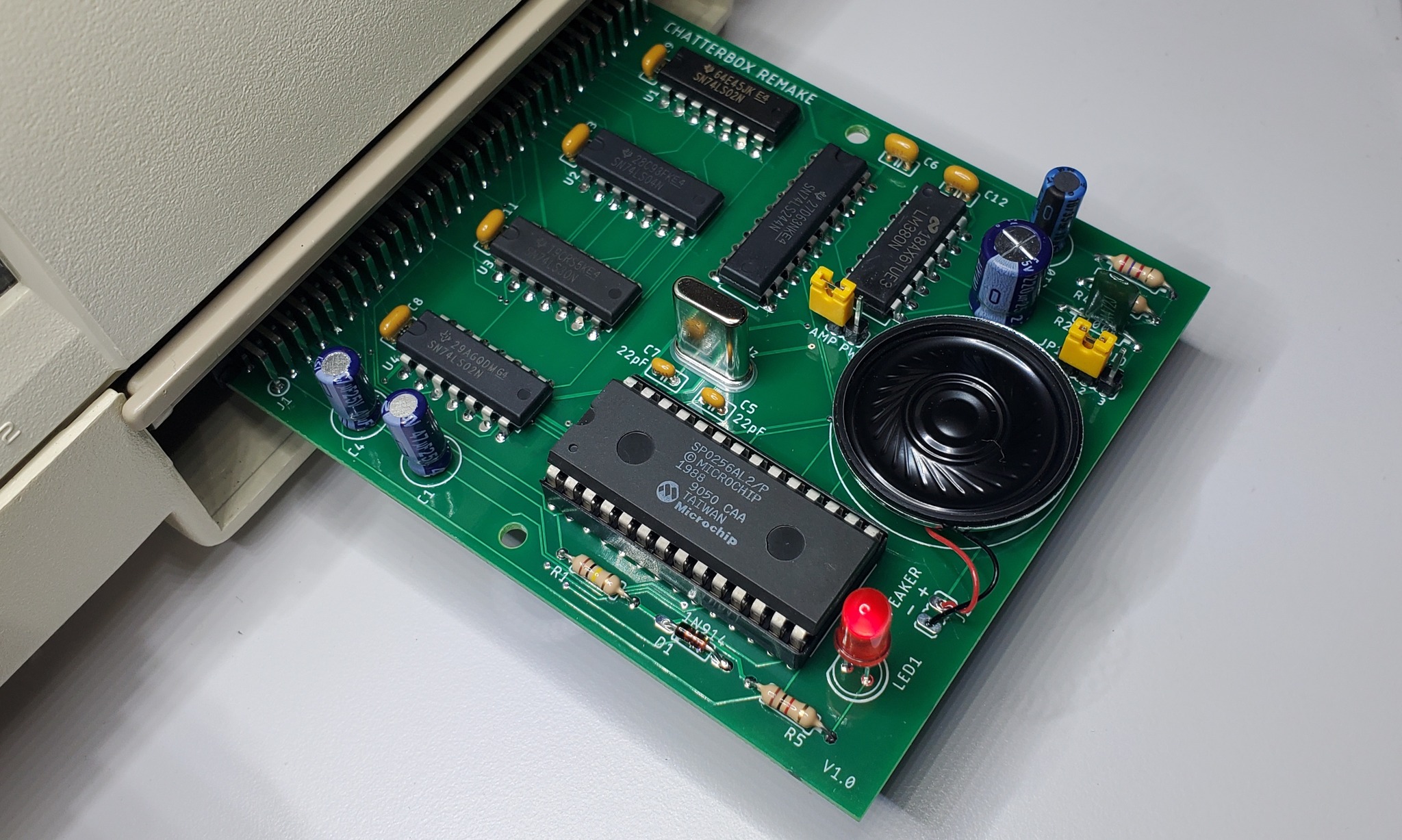
CHATTER BOX REMAKEWhen Rich G DiRocco reached out needing help sourcing parts to recreate a kit for an ADAM speech synthesizer kit he built in his childhood, I happily helped. I took it a step further and went ahead and created a PCB and modified the design to make it even better. This is the Chatterbox Remake based on the original design by AAL Computing by M. Walters back from 1985. This was a joint project between myself and Rich DiRocco. The Chatterbox Remake originally had just an external speaker and I modified it to be selectable between amplified external speaker or internal audio by way of the same method as the SGM without needed amplification. Other than that, I had to tweak and add a few parts to the design. I also designed a 3D printed case to safely house the unit. I realize the external speaker method will not be used much, if at all. It was done for complete nostalgia reasons and Rich can now experience the same effect as he did back in the day. The Chatterbox Remake will not be a product offered by Lundy Electronics and was just a fun project for myself and Rich. Eric Pearson also recently released his version of a speech synthesizer and is a simplified approach with less components and no external audio and is a better fit for the masses. 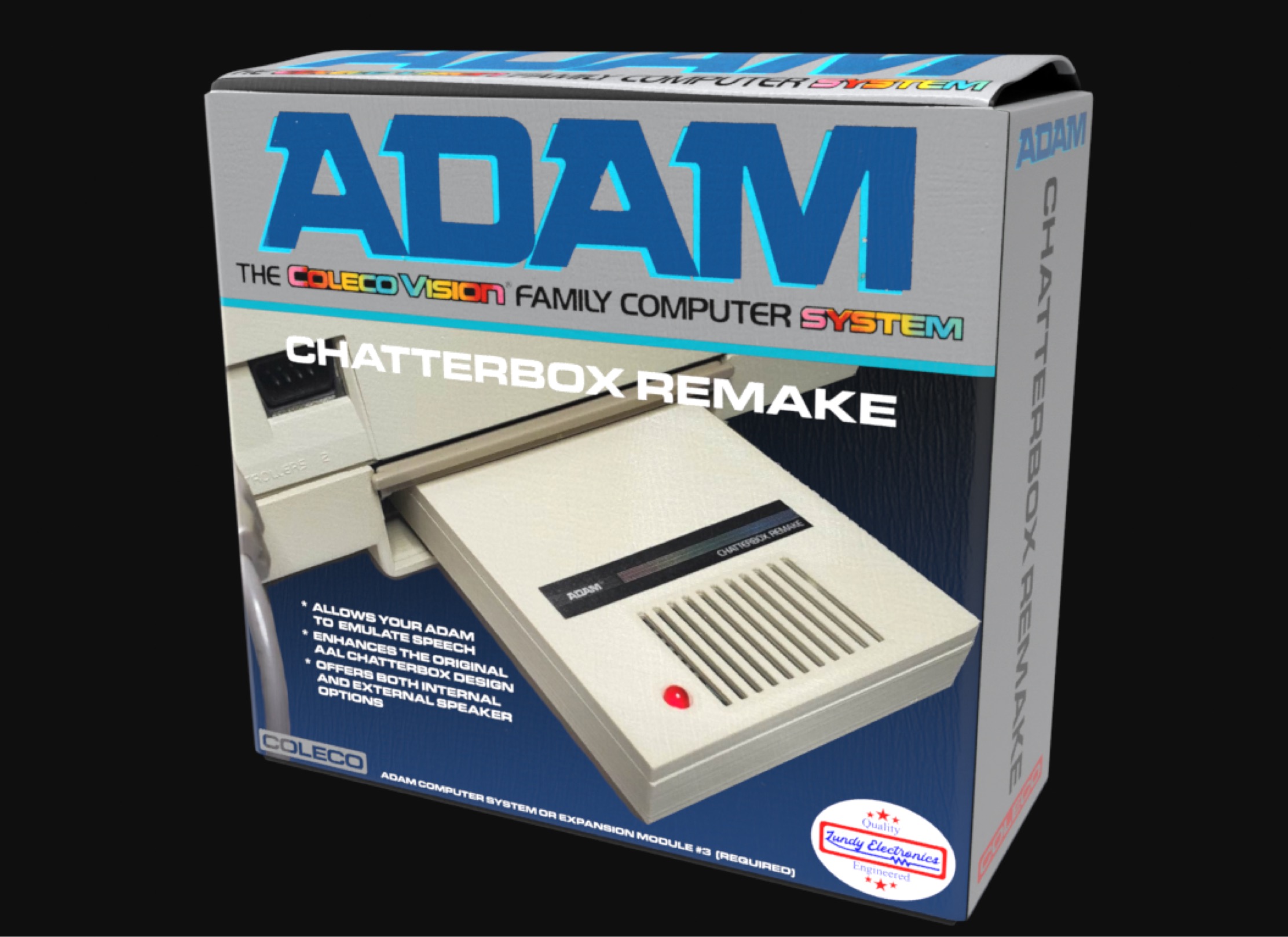
Collected
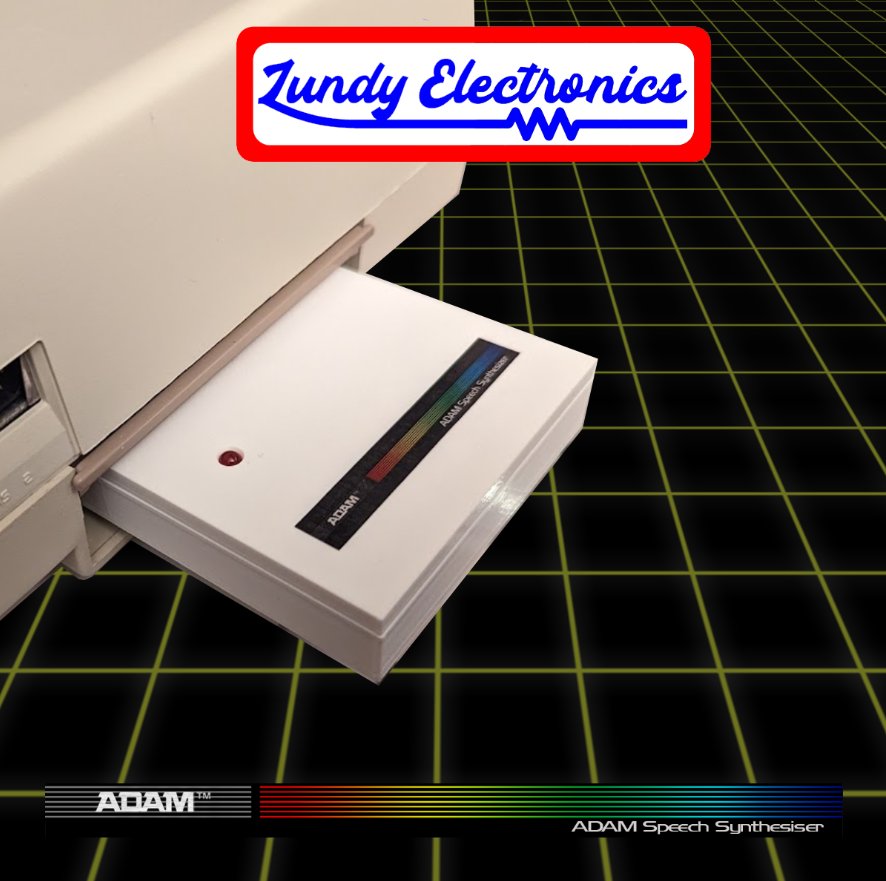
ADAM SPEECH SYNTHESIZERThe ADAM Speech Synthesizer based on Eric Pearson's original GitHub project is a revised version by Lundy Electronics. This I/O expansion device adds speech to your ADAM using a SP0256A-AL2 speech chip. This professionally-built unit comes complete with housing and is offered in two versions, one with the speech chip and one without. Since the SP0256A-AL2 speech chip is becoming increasingly difficult to find, we provide the option to purchase the complete unit when the speech chip can be found and another option without for those who have their own chip or supplier available. 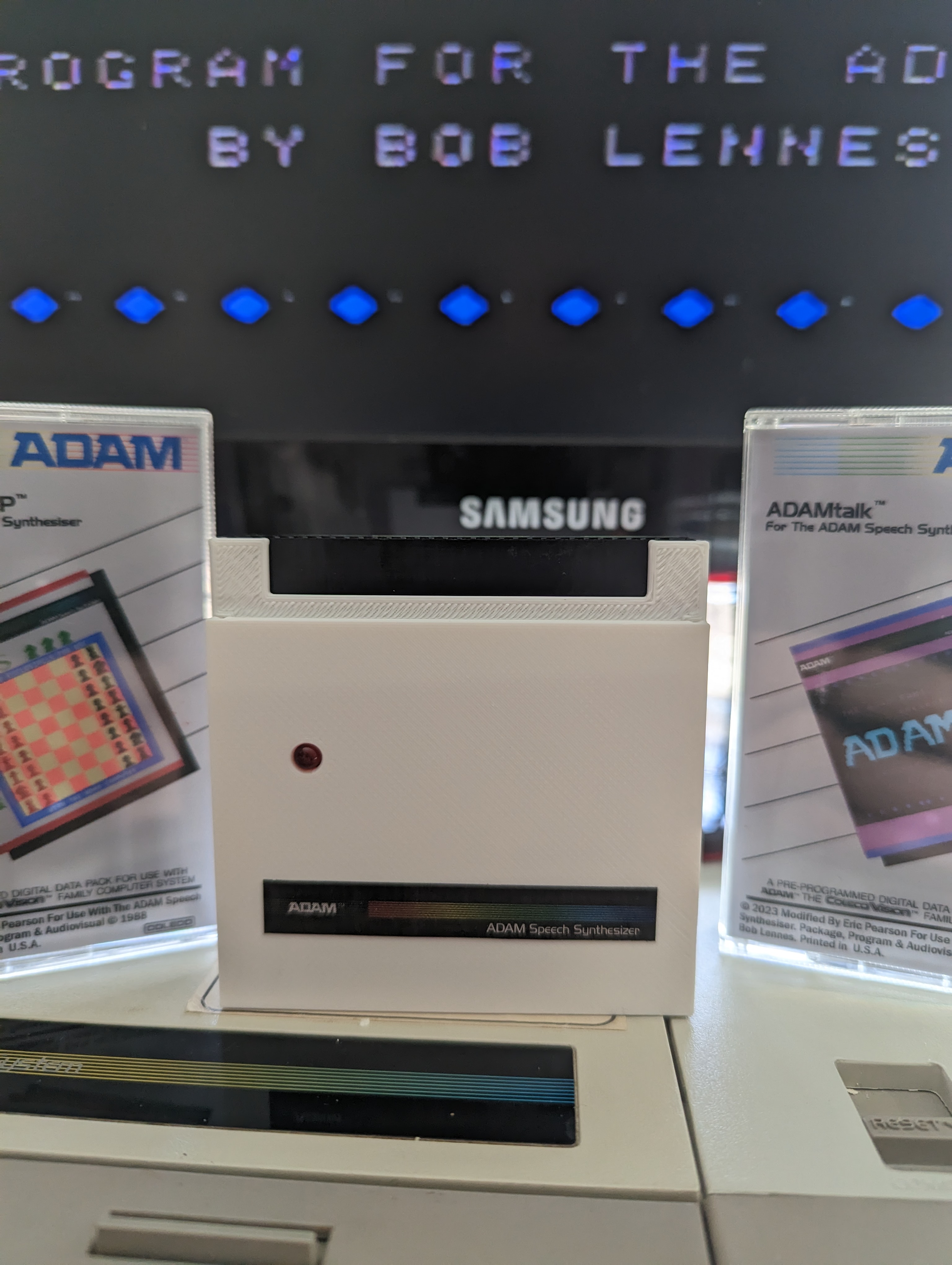
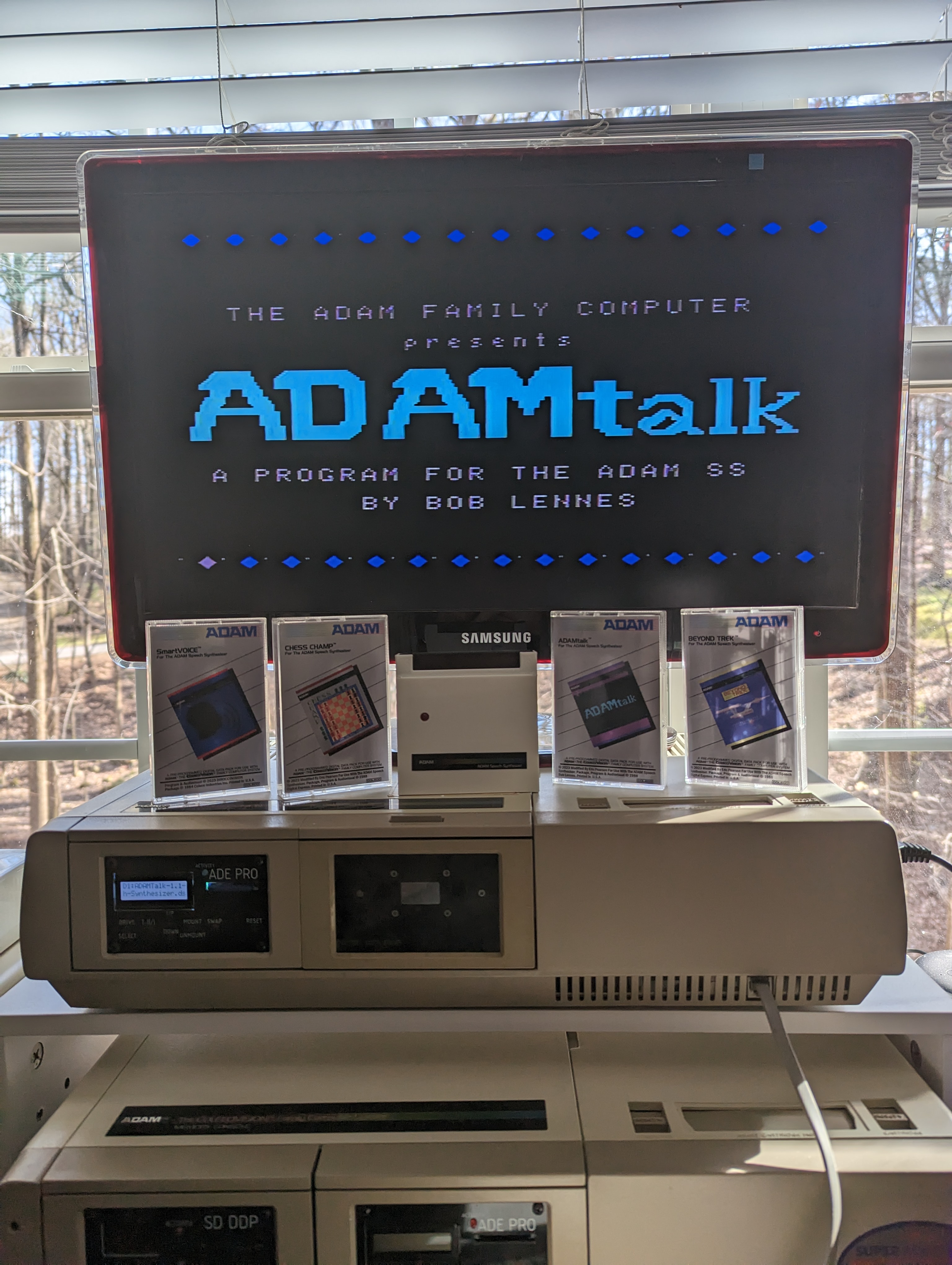
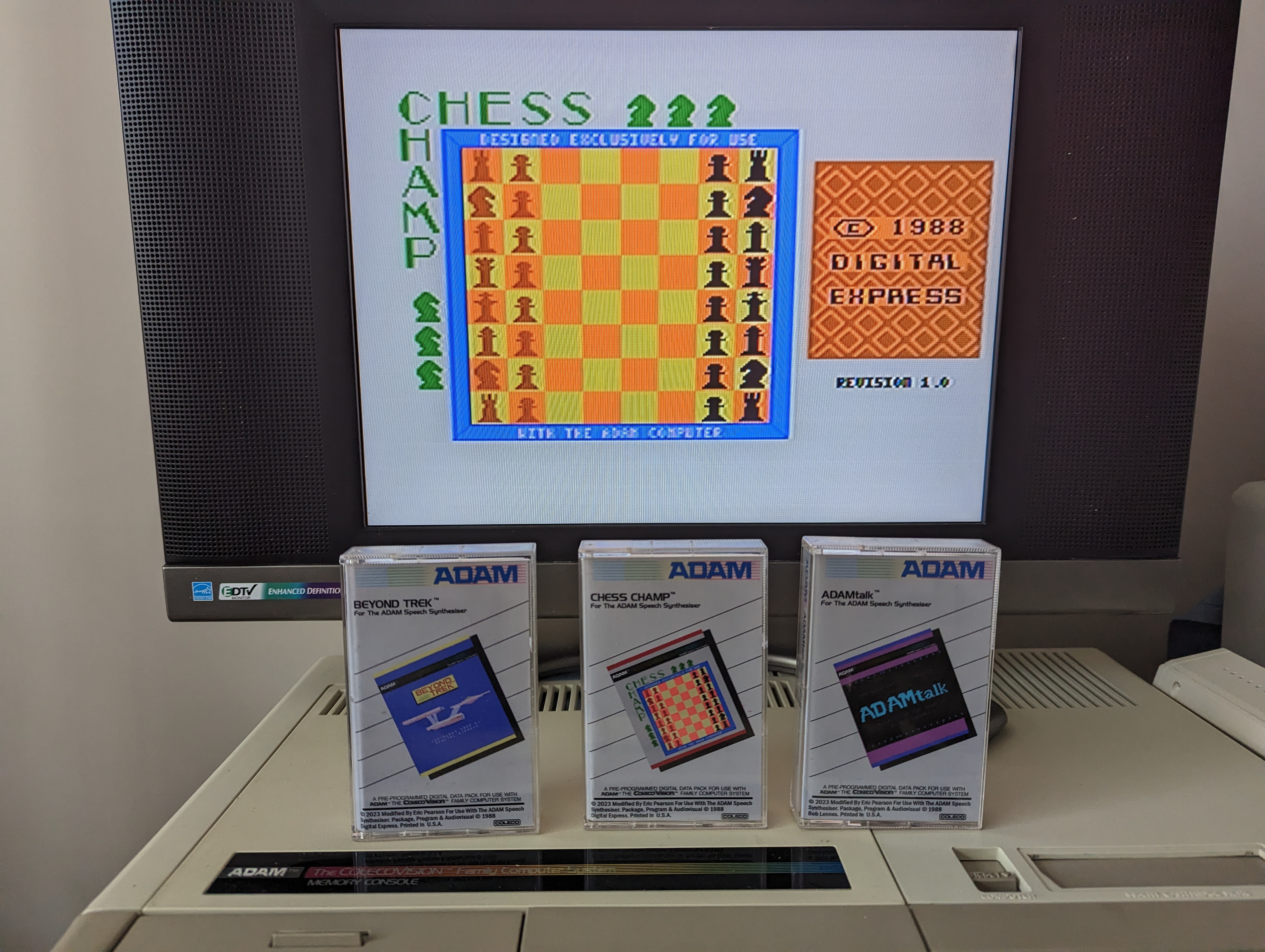
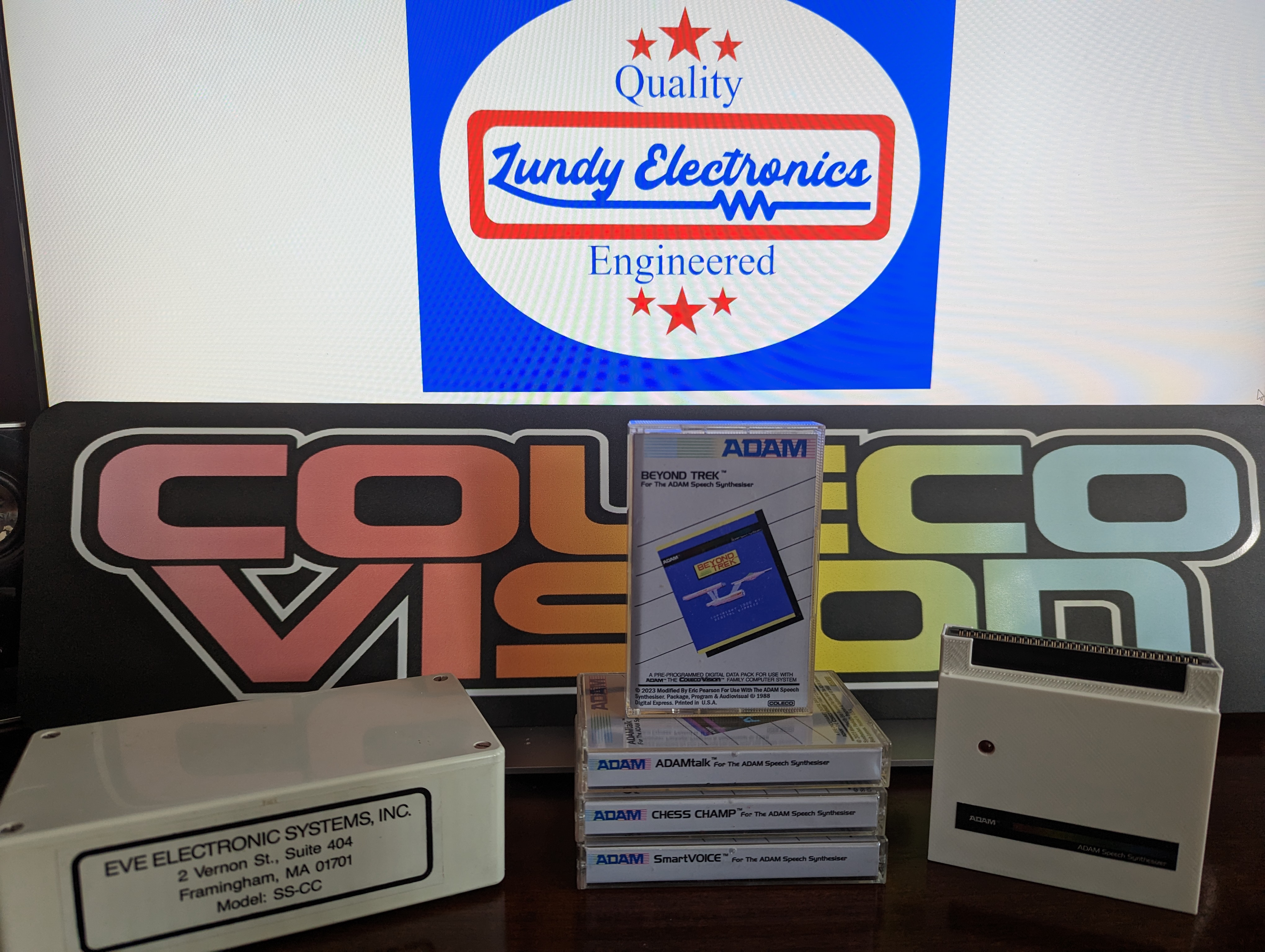
DISCONTINUED MARCH 2023 Collected
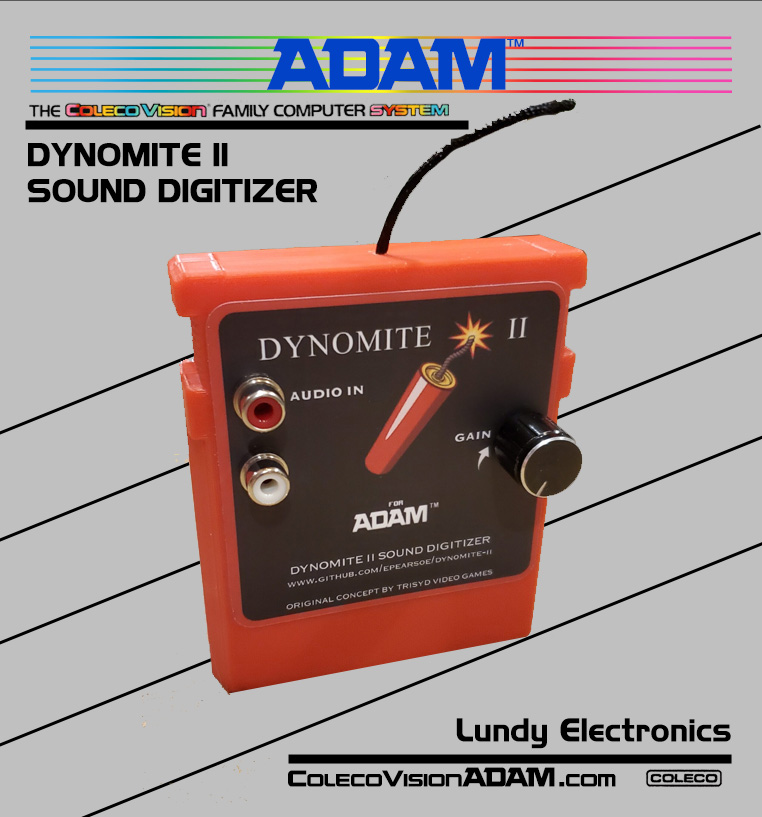
Dynomite II Sound Digitizer CartridgeColeco ADAM Sound Digitizer – This device is the Lundy Electronics take of the Dynomite II sound digitizer github project created by Eric Pearson. It uses the original software written by Trysid Video Games for their original Dynomite sound digitizer from back in 1990 and allows you to sample and save sounds using the ADAM. Samples can be used by experienced programmers. Detailed information and software for this device can found on Eric Pearson's github page at: Collected
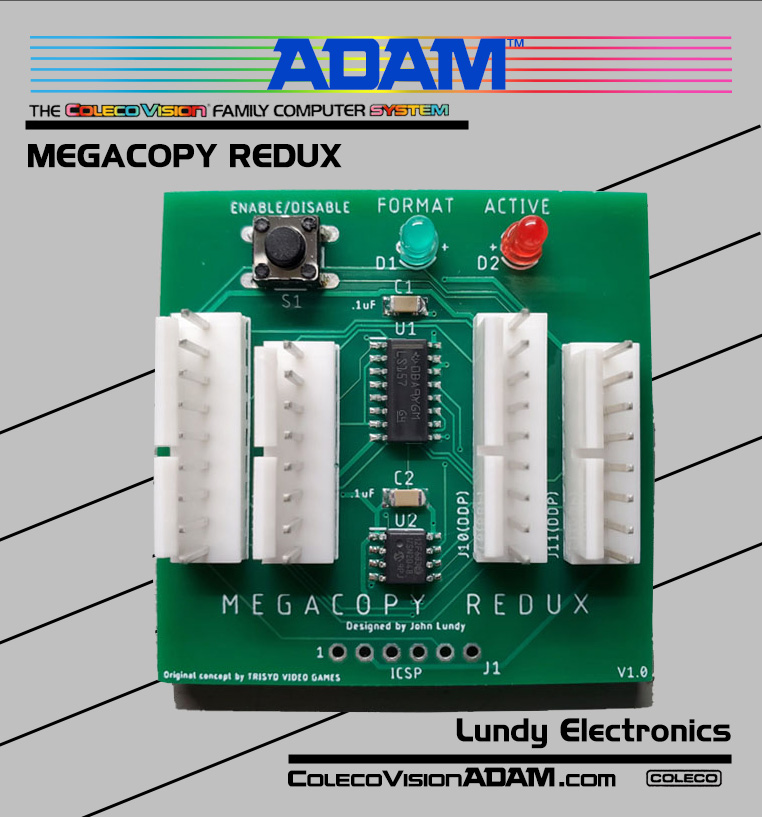
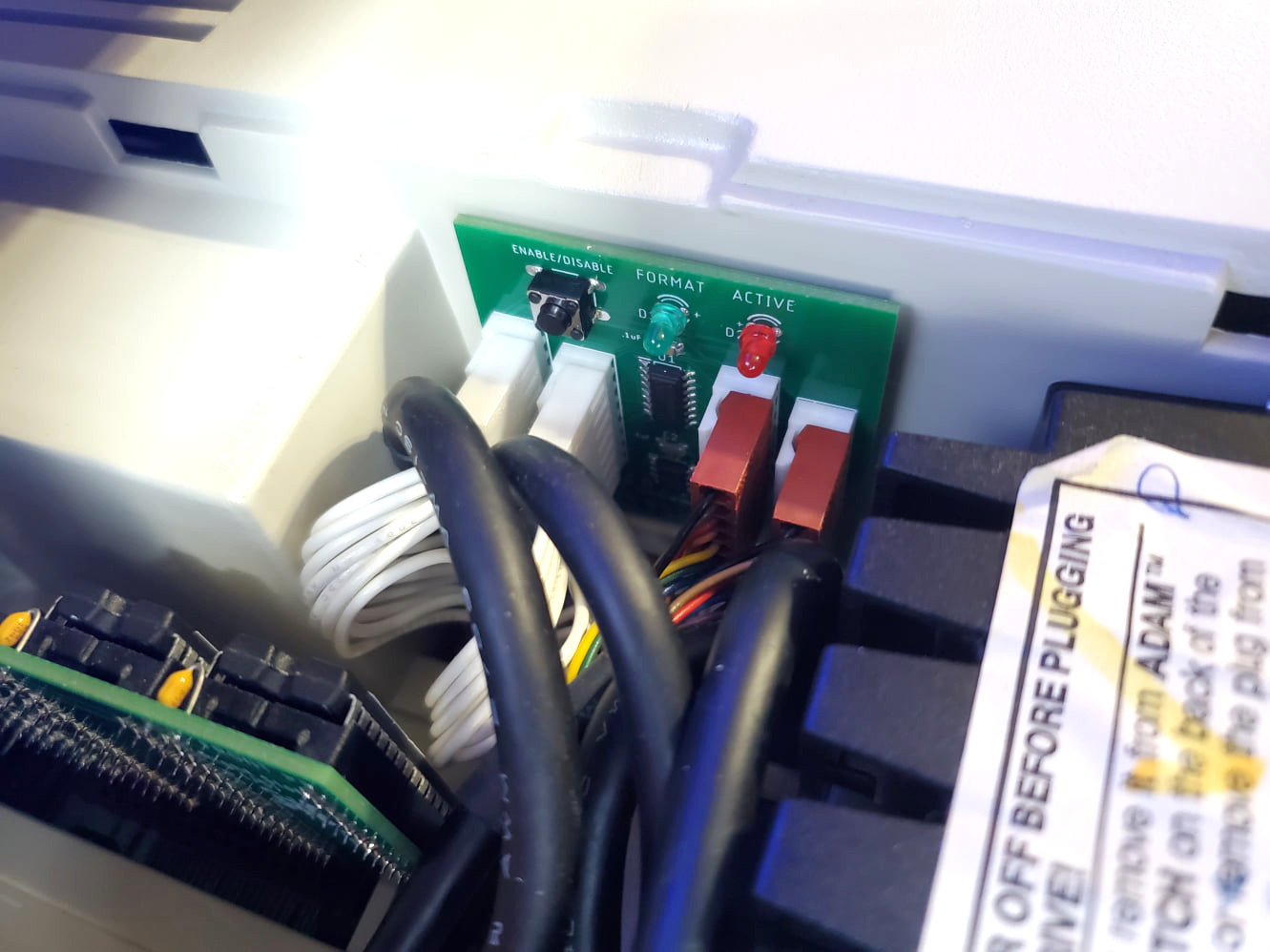
MEGACOPY REDUXWe now have the ability to create new tapes with true digital formatting for the Coleco ADAM! You will no longer have to hunt down and spend a ton of money trying to procure a seemingly impossible to find MEGACOPY III by Trisyd back from 1987. Note: You need two DDP drives in working order to use this device. Features:
DISCONTINUED MARCH 2023 Collected

ADAM I/O EXPANSION BREAKOUT EXTENDER BOARDThe Lundy Electronics ADAM I/O Expansion Breakout Extender Board Set is designed for ADAM hardware developers as an easy way to prototype designs. This kit breaks out and extends every signal and voltage from the ADAM I/O expansion port and extends it 12" through two 30-pin ribbon cables to a receiving project side breakout board. The breakout board is mounted to an unpopulated breadboard base for the end user to supply and configure their own breadboard design based on their development needs. Collected
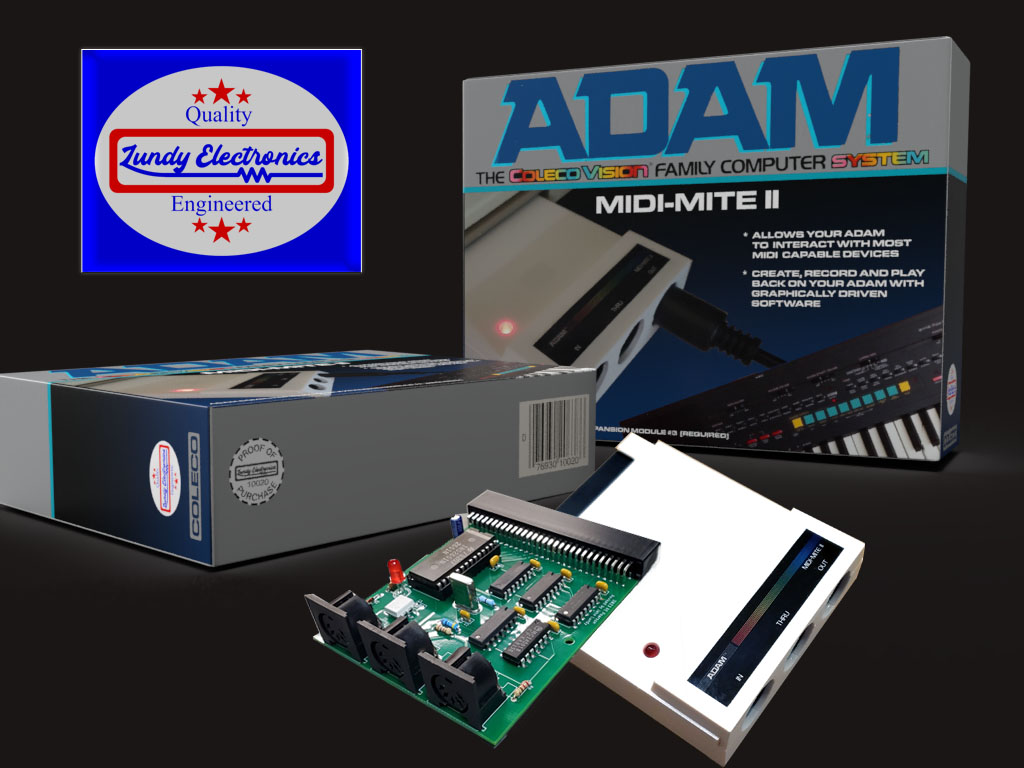
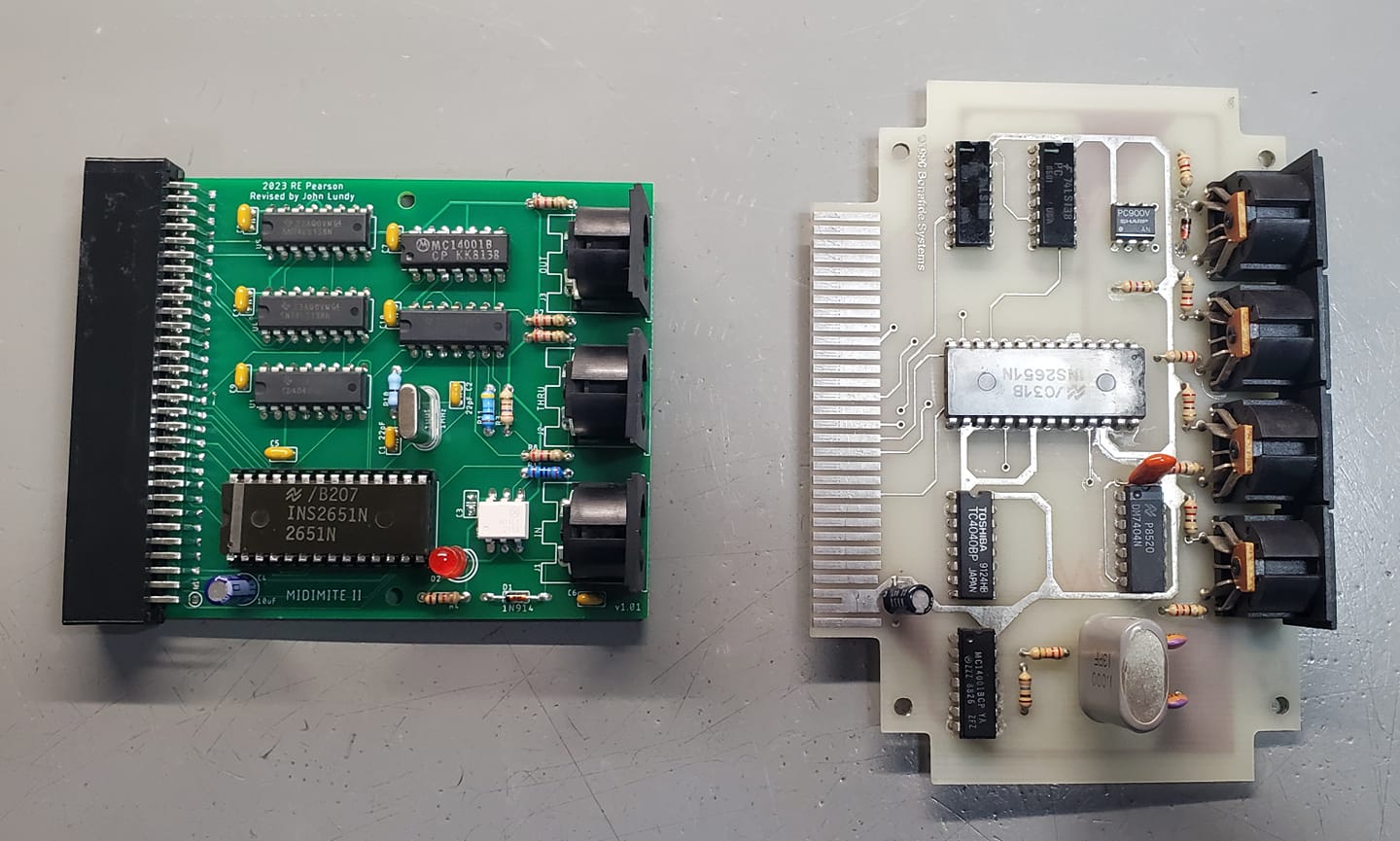
MIDI-MITE 2I introduce the Lundy Electronics spin of Eric Pearson's MIDI MITE II github project. The original untested reverse engineered design currently on Eric's github does not work. With the help of Rich G DiRocco sending me his MIDI MITE original, I was able to get the MIDI MITE II design to work. This spin uses a female socket connection for direct installation to the I/O expansion port. I find that ribbon cables are a bad choice because they can introduce noise in the audio and even the display. I have notified Eric of the changes I made, so the design can be fixed. My design has the following changes over the original MIDI MITE:
MICRO INNOVATIONS
Collected
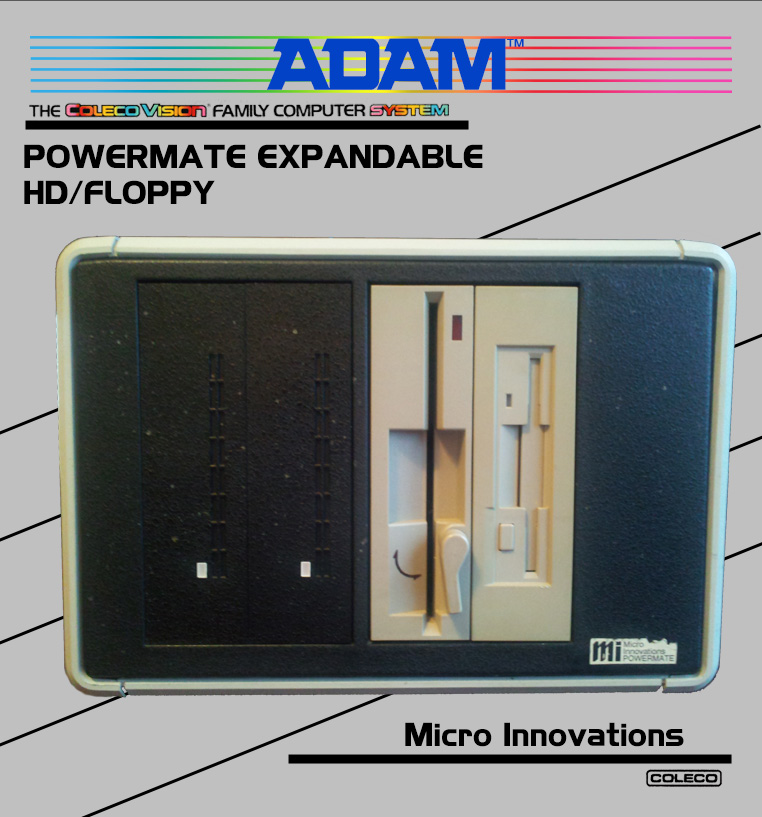
POWERMATE 20 EXPANDABLE UnitPowermate Floppy/Hard Disk Subsystems Standalone add on subsystems that provide one or two 10, 20 or 40 MB hard disk drives, one or two 360K or 720K floppy disk drives, two RS 232 serial ports, a parallel printer port, and a memory expander board port for the Coleco Adam computer. Base Units: Price Powermate 10 $399.00 Powermate 20 $499.00 Powermate 40 $599.00 Options: 360K Floppy disk drive $100.00 720K Floppy disk drive $105.00 Second 10 MB Drive $150.00 Second 20 MB Drive $225.00 Second 40 MB Drive $300.00 Peripheral cable (serial or parallel) $14.95. 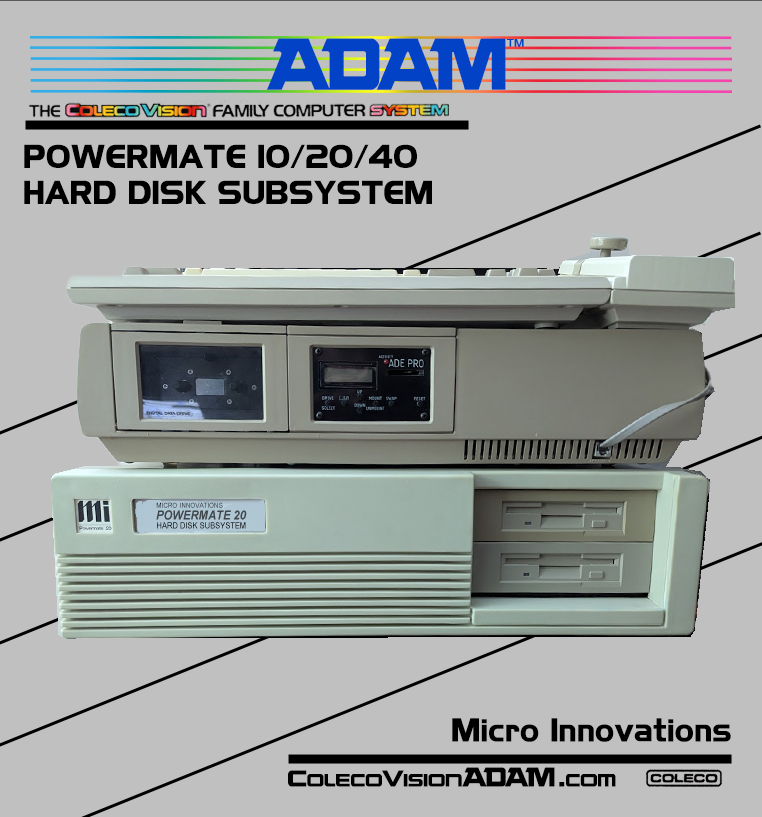
MICROFOX TECHNOLOGIES
Collected
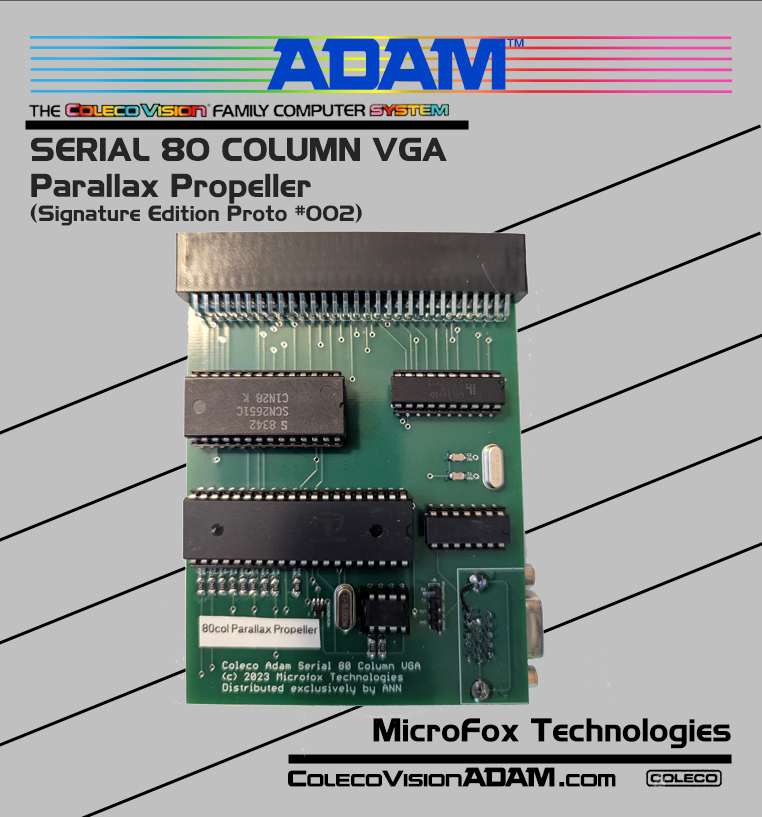
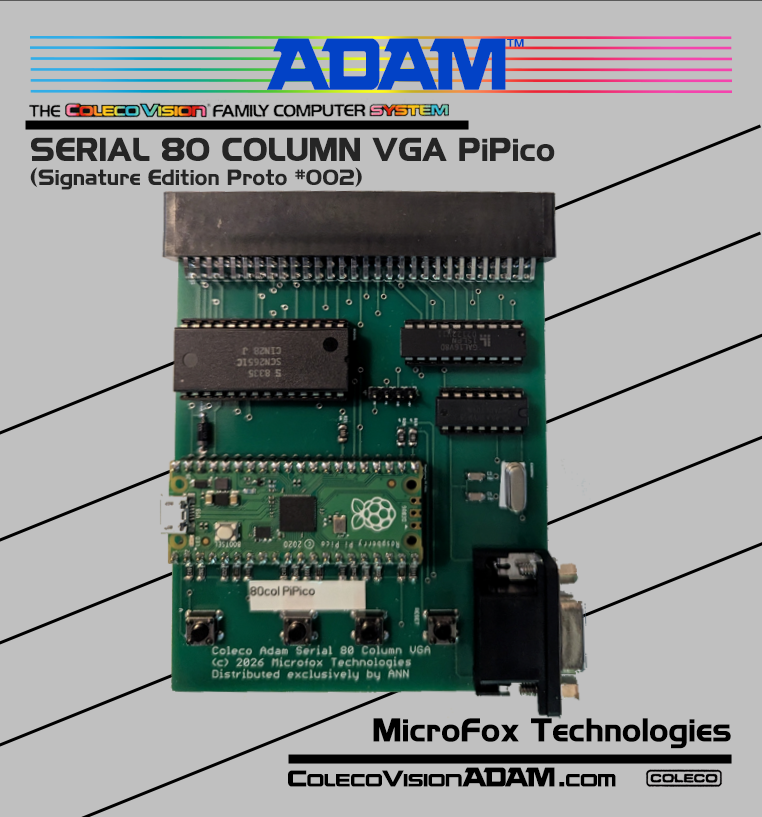
80-COLUMN SERIAL VGA CARDDesigner: Doug Slopsema / MicroFox Technologies — Distributed exclusively by ANN Modern 80-column text display expansion for the Coleco ADAM via the side expansion port (60-pin card edge). Pairs a vintage Signetics SCN2651C USART (NOS, 1983 date codes) for serial protocol conversion with a modern microcontroller that generates 80-column VGA text output through a DB-9 VGA connector. Two versions were produced:
Both versions share the same core architecture: the ADAM's Z80 writes character data through the expansion bus to the SCN2651C USART, which serializes it to the video processor. The microcontroller maintains an 80×25 character frame buffer and generates real-time VGA output — giving the ADAM a proper 80-column text display comparable to CP/M business terminals of the era, using silicon that didn't exist when the ADAM was manufactured. Key ICs: Signetics SCN2651C Enhanced Programmable Communication Interface (28-pin DIP, NOS 1983 date codes), Parallax P8X32A Propeller 8-core MCU or Raspberry Pi Pico RP2040 dual-core ARM Cortex-M0+, 5.000 MHz crystal (USART baud rate reference), 74-series TTL support logic. Professional PCB with silkscreen, solder mask, and plated through-holes. Pictured are the Signature Edition prototypes (#002). ORPHANWARE
Collected
.jpg)
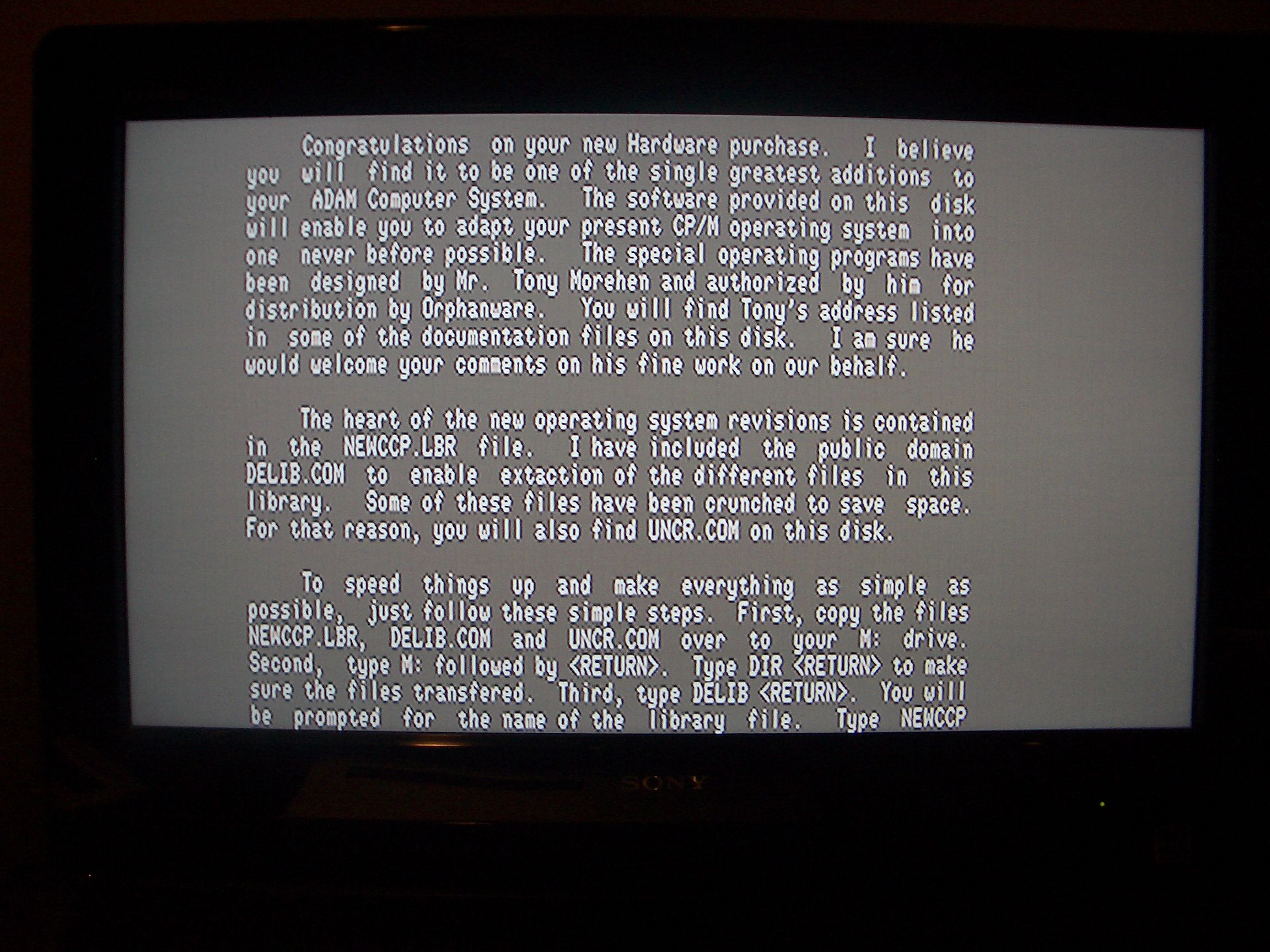
80 COLUMN VIDEO TERMINAL BOARDDesigner: William White / Digital Research Computers — © 1983 A complete Z80-based CRT terminal engine adapted as an ADAM expansion peripheral. Based on the ZRT-80 terminal design by Digital Research Computers (not to be confused with Digital Research Inc./CP/M), this board contains its own independent processor and video generation circuitry — essentially a second computer dedicated entirely to the display. Housed in a white plastic enclosure that connects to the ADAM's side expansion port. Key ICs (verified from board photography):
Architecture: The ADAM sends character data serially via the INS8250N UART. The Orphanware board's own Z80, running the ZRT-80 terminal firmware, renders those characters into an 80×24 text display using the HD46505 CRTC and character generator ROM. The video output is monochrome composite to an external monitor. DIP switches (at least 3 packages visible) configure baud rate, parity, auto-modes, and video options. The board retains the ZRT-80's keyboard header from the original standalone terminal design. Historical note: Coleco had planned to release its own 80-column expansion for the ADAM, but it was never completed. The ZRT-80 was a well-known terminal design in the S-100/hobbyist community — William White adapted the proven design for the ADAM market, providing the platform's first 80-column capability for serious CP/M use. 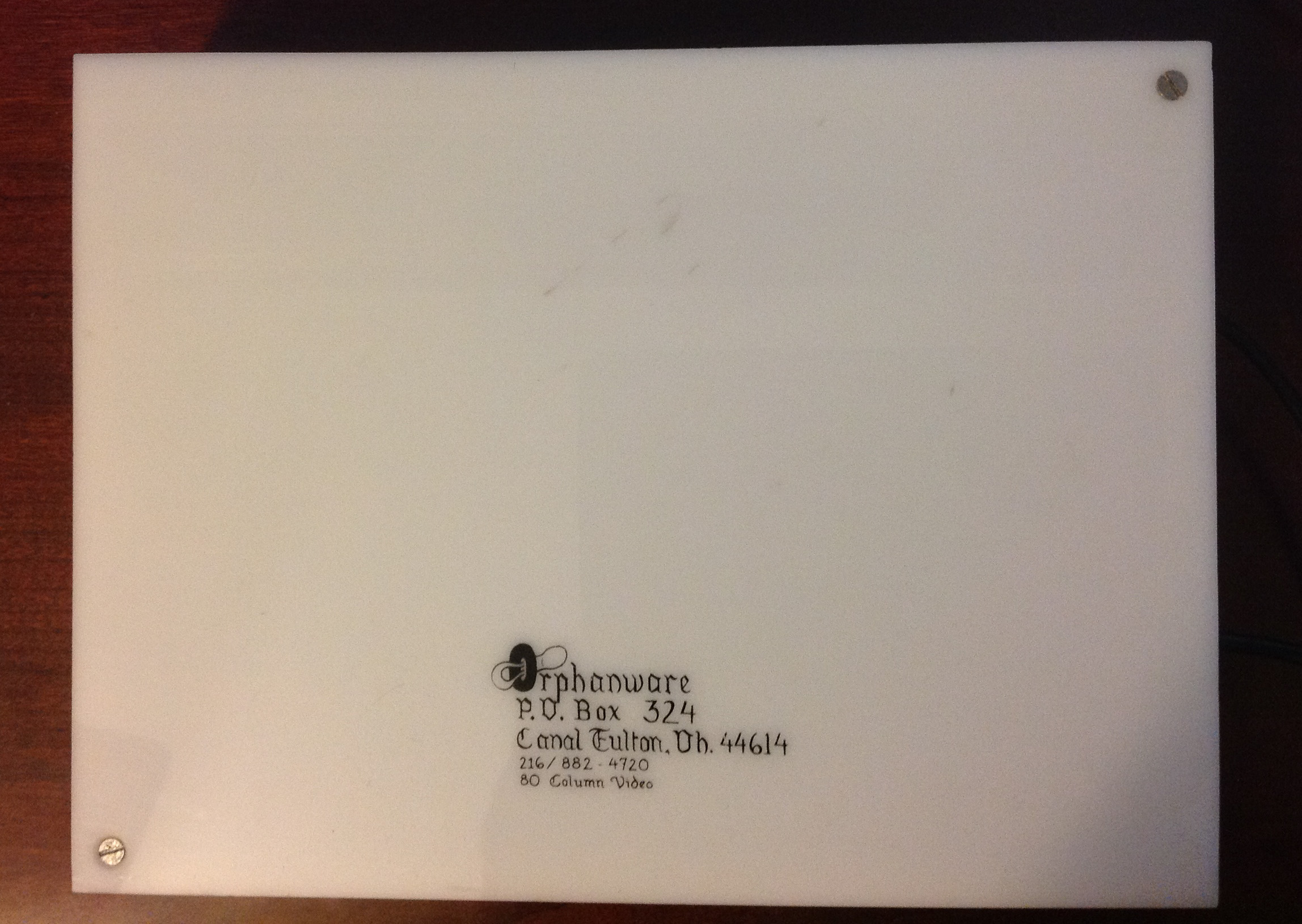

.jpg)
Collected
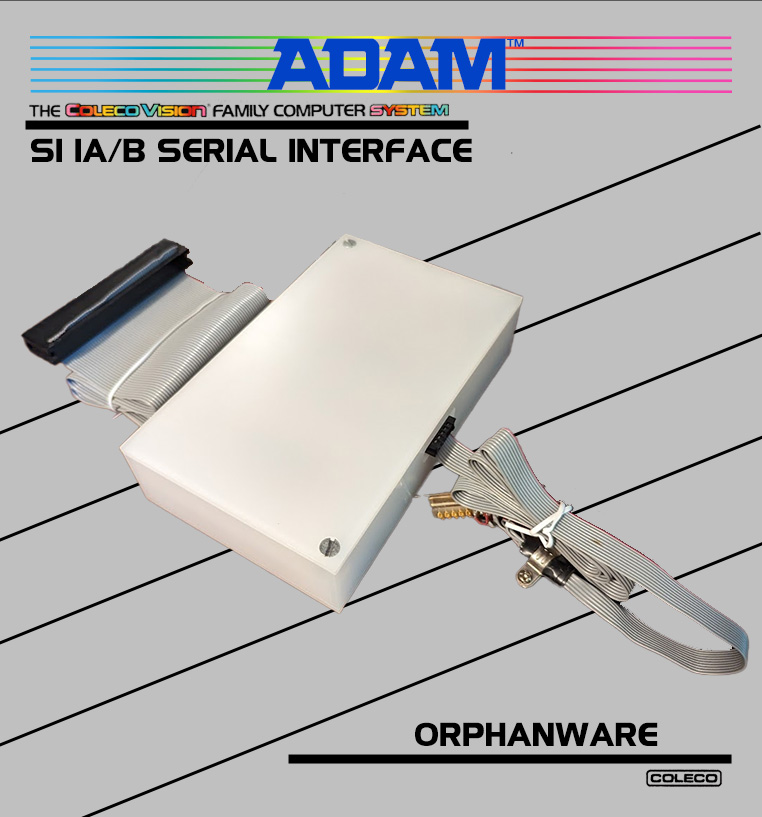
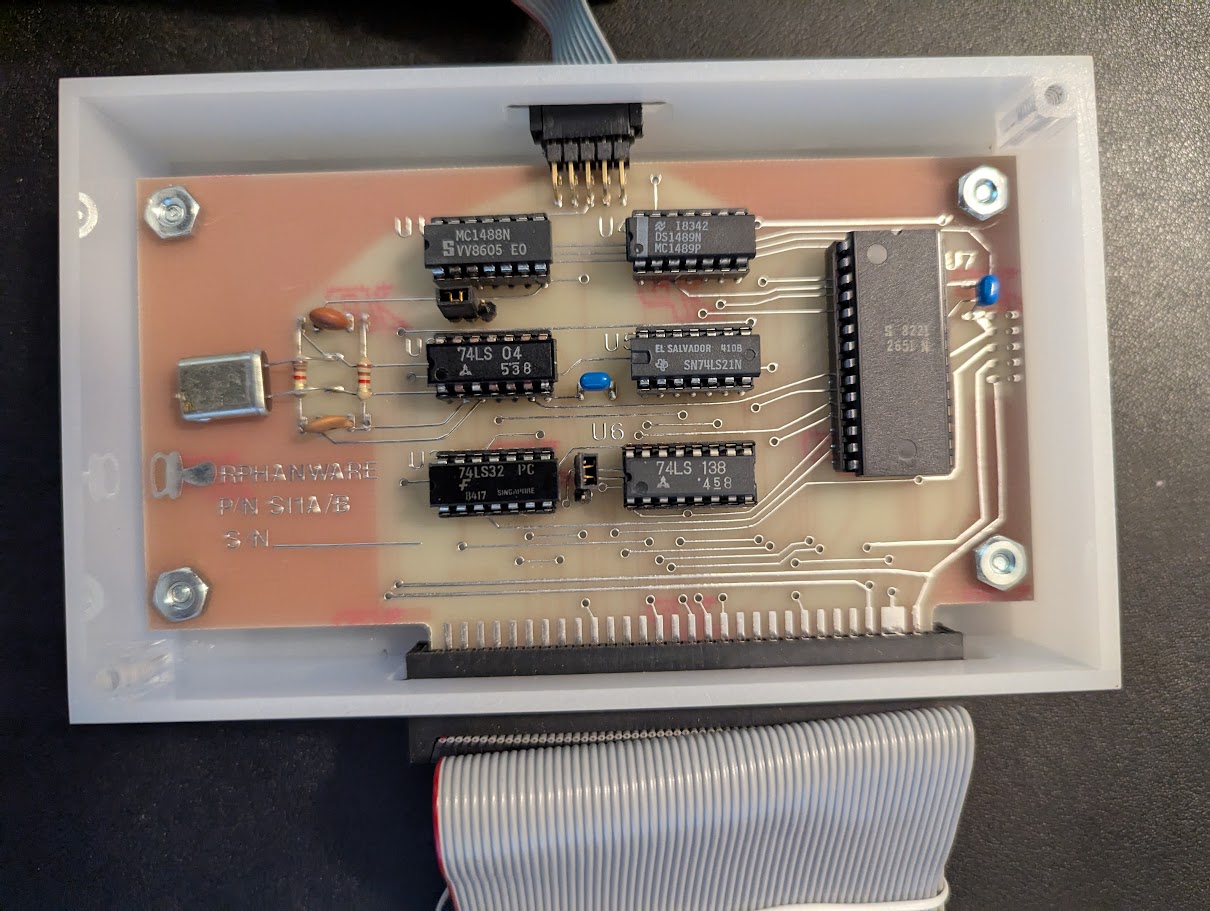
SI 1A/B SERIAL EXPANSIONPart Number: Orphanware P/N SI1A/B RS-232 serial port expansion card for the Coleco ADAM, connecting via the side expansion port (60-pin card edge). Provides a standard RS-232 serial interface for modems, terminals, printers, and other serial peripherals. Housed in a white plastic enclosure with ribbon cable to the ADAM and pin header for the serial output cable. Key ICs (verified from board photography — 7 ICs total):
Architecture: Clean 7-IC design. The 74LS138, 74LS21, 74LS32, and 74LS04 form the address decode and control logic mapping the SCN2651 USART to a Z80 I/O port range. The MC1488/DS1489 pair handles RS-232 level conversion. A crystal oscillator provides the USART baud rate reference clock. Single-sided PCB with bare copper traces — no solder mask or silkscreen beyond the part number etched in copper. 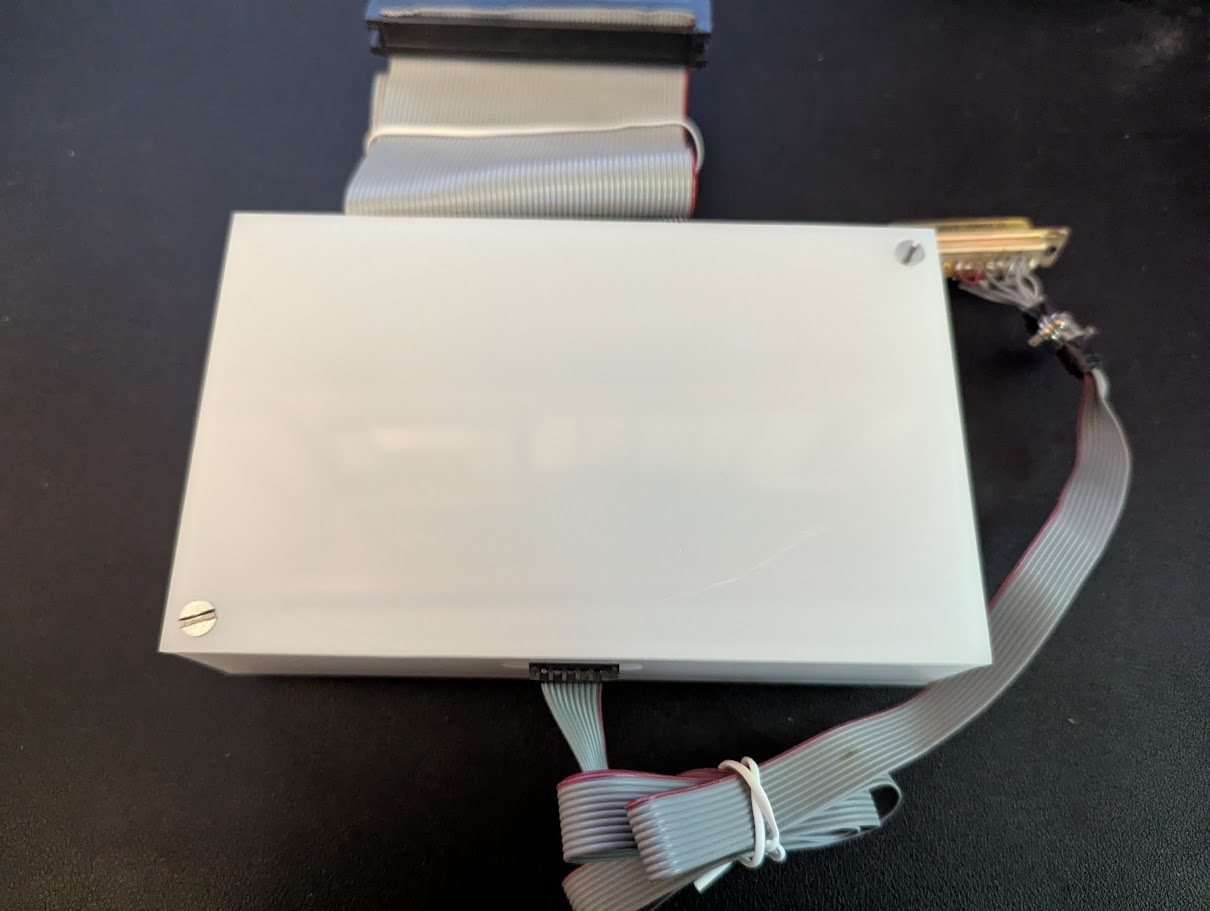
TRISYD VIDEO
Collected
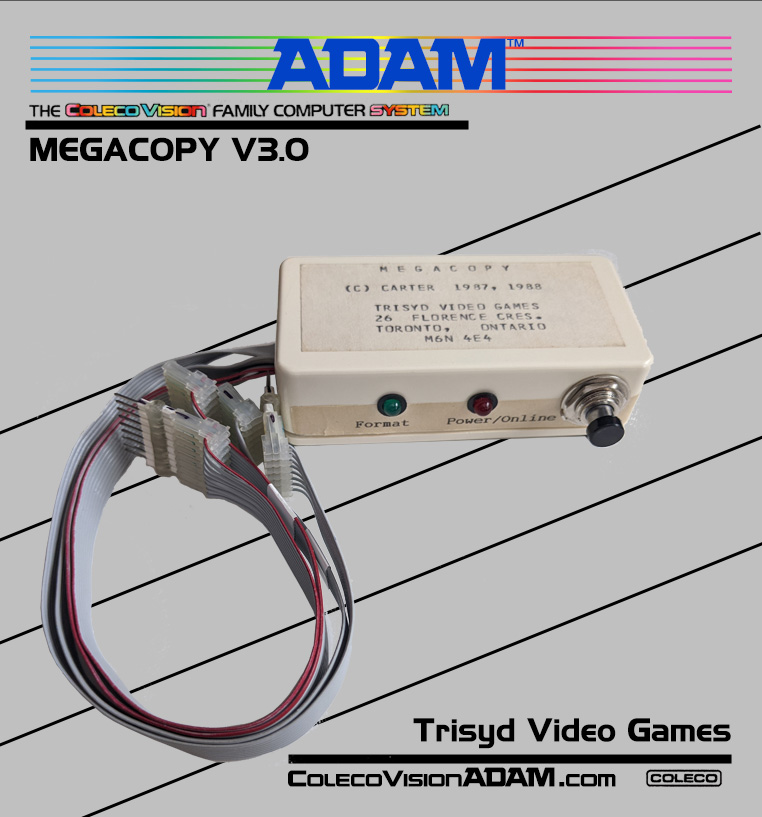
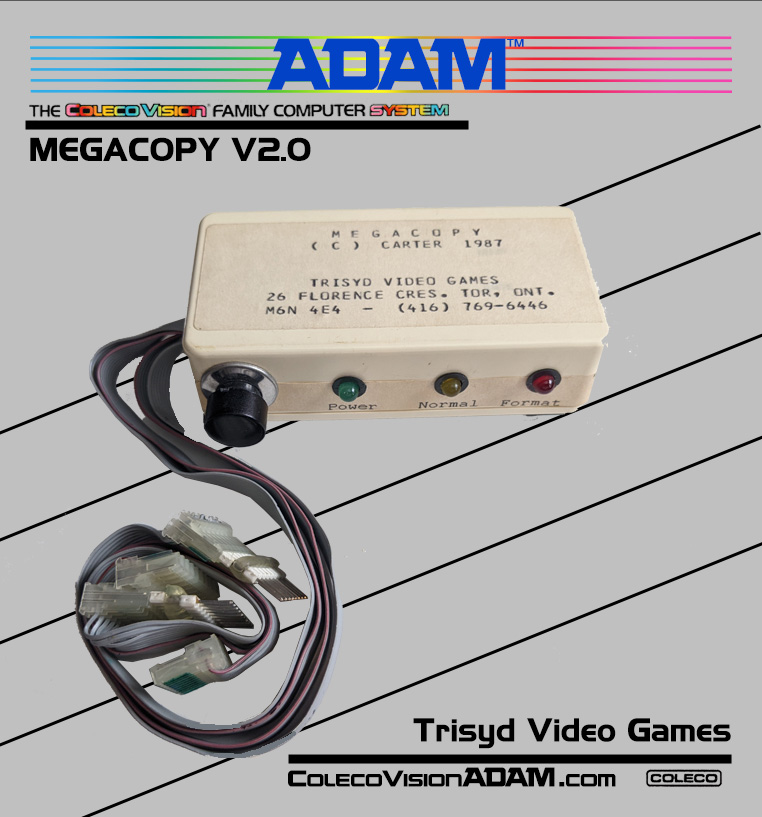
MEGACOPYHigh Speed Data Pack copier and formatter of regular cassettes for the ADAM. MEGACOPY consists of a hardware interface and driving software. Your interface configures the second tape drive to accept format code being sent to it from the first drive. The accompanying software controls the interface and tape drives to work together and thus produce an excellent quality digitally formatted tape. 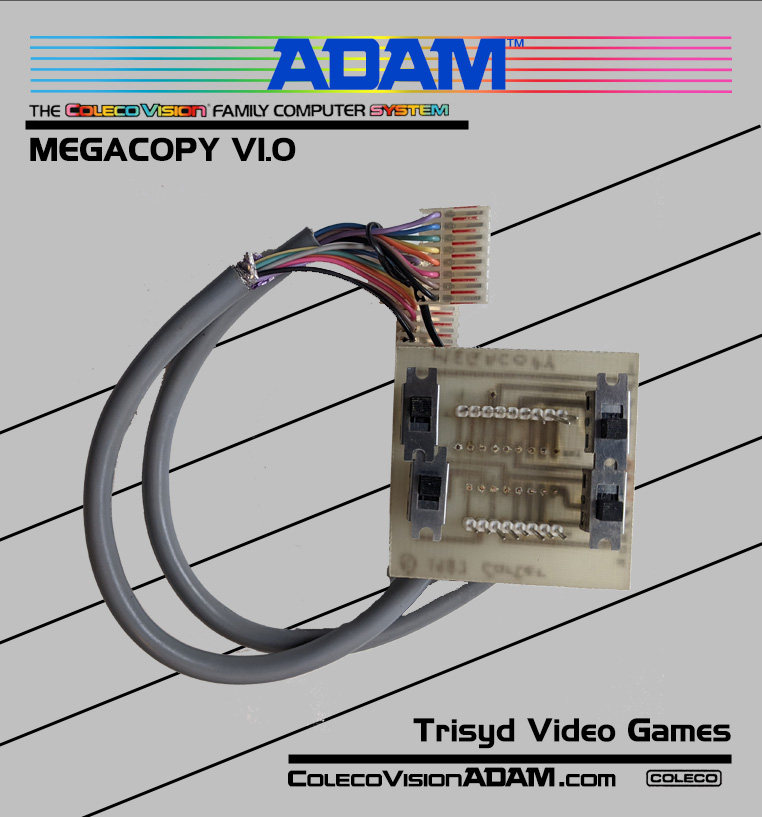
Collected
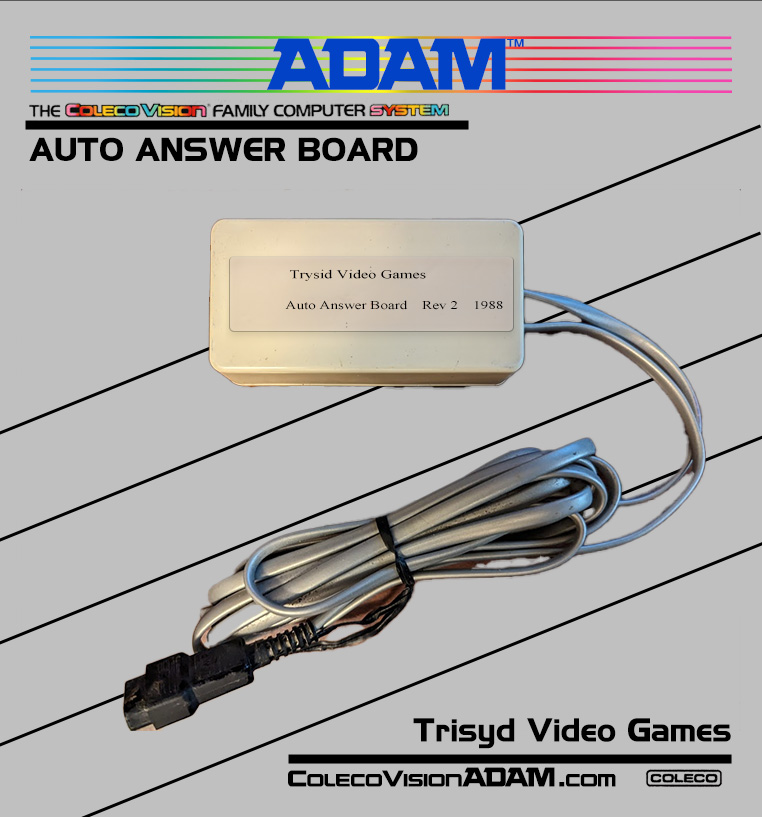
TRYSID AUTO ANSWER UNITAuto answer unit for ADAM telecommunications. OTHER COMPANIES
Collected
ADAM-LINK AUTO ANSWERDesigned by ADAM-Link of Utah, this device plugs into the ADAM game port and detects when there is an incoming call, allowing the ADAM to Auto-Answer with the Modem. COLLECTED
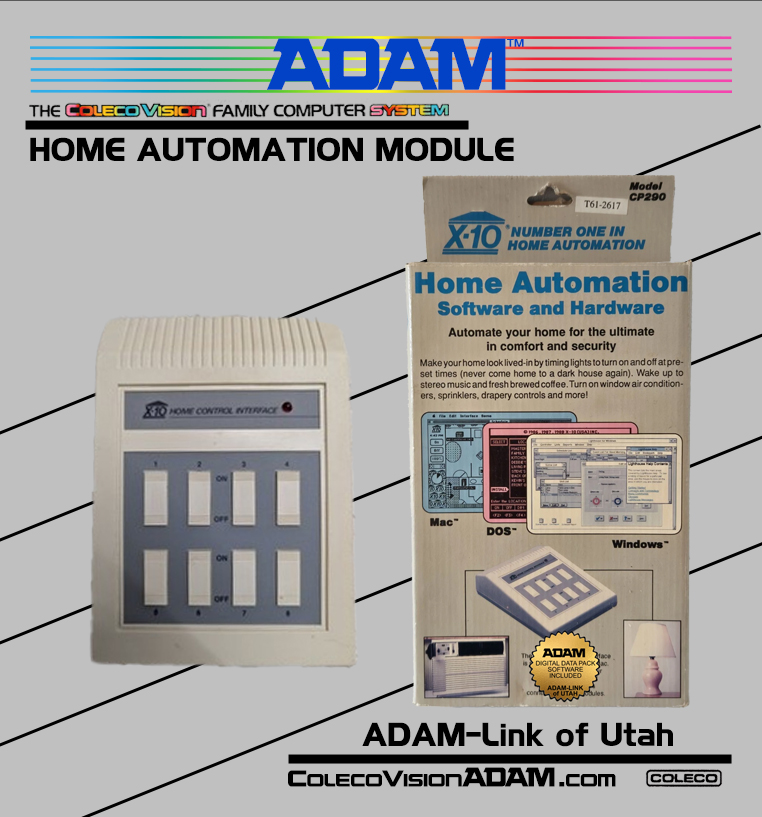
ADAM-LINK X-10 Home Automation PackageOffered by ADAM-Link of Utah, this device plugs into the ADAM's RS232 port (card required) and allows for Automation of your home using the many modules offered for the X-10 system. Software was designed by Bonafided Systems to allow ADAM to monitor and control the system. Collected
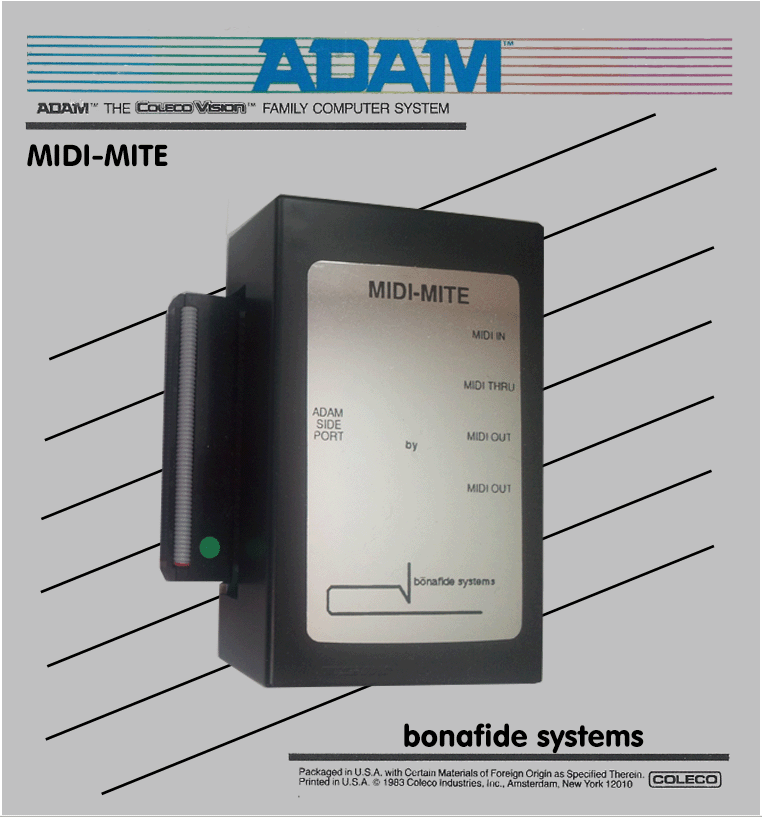
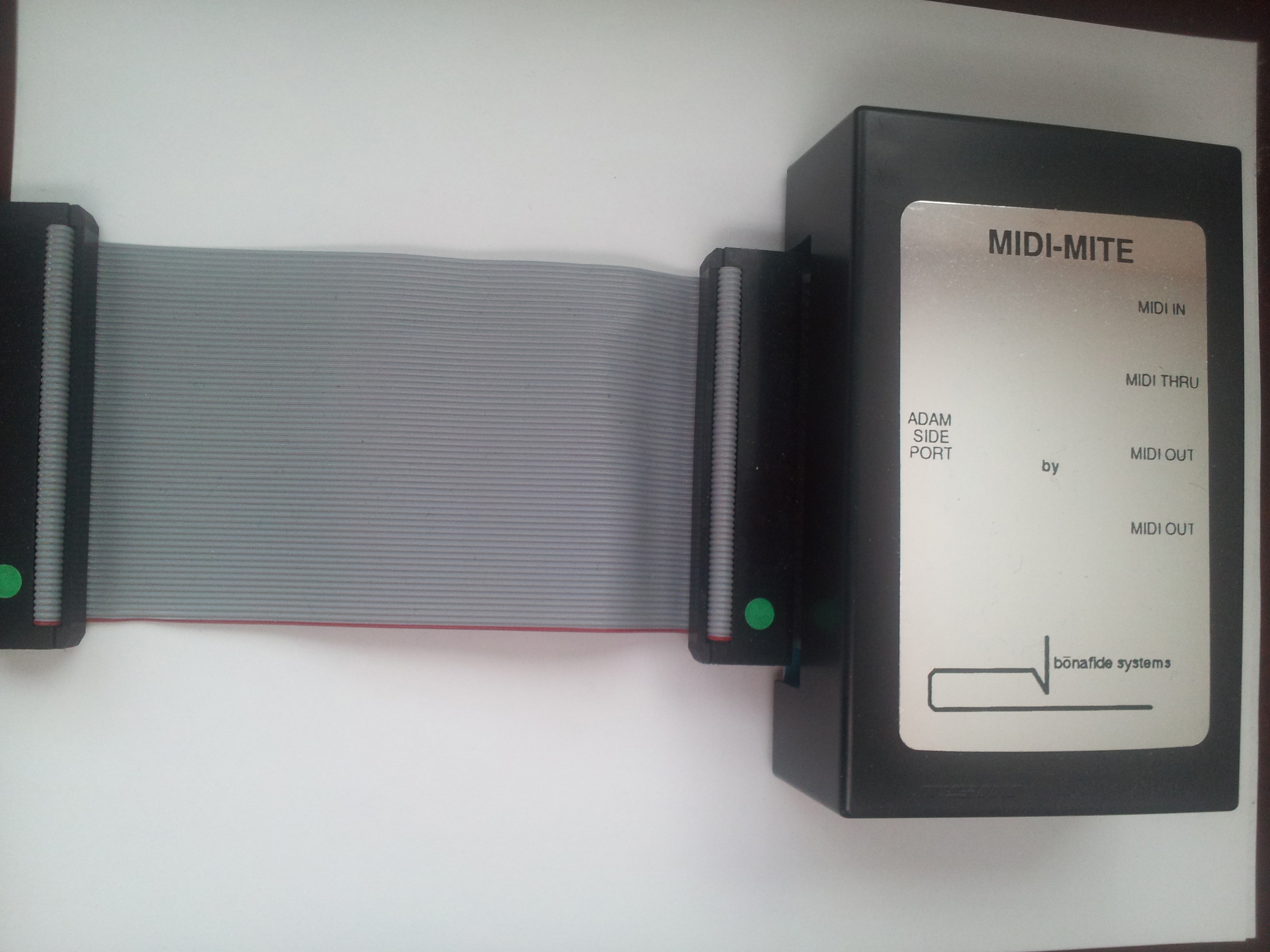
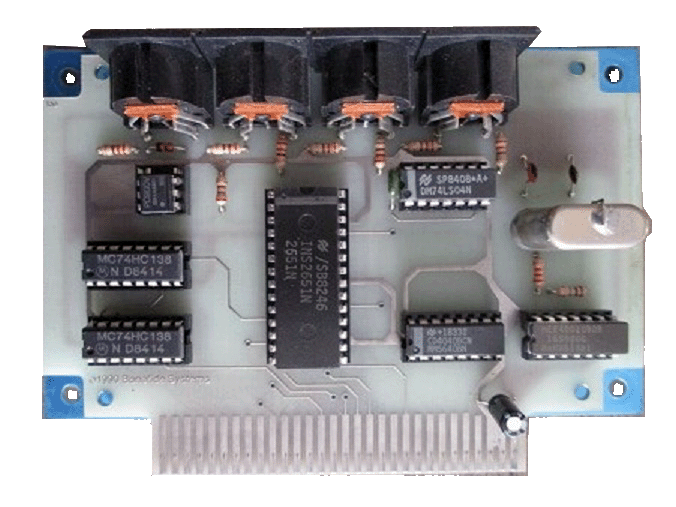
MIDI-MITEManufacturer: Bonafide Systems — © 1990 MIDI interface for the Coleco ADAM, connecting via the side expansion port (60-pin card edge). Provides four 5-pin DIN MIDI jacks for connecting external MIDI instruments, synthesizers, and sequencers. The package comes complete with the interface, two MIDI cables, one 60-conductor ribbon cable to connect to ADAM, two software programs on digital data pack, and three instruction manuals. Key ICs (verified from board photography):
Architecture: The ADAM's Z80 communicates with the INS8251N USART through decoded I/O ports. The USART serializes/deserializes MIDI messages at 31,250 baud. Four 5-pin DIN connectors provide standard MIDI IN, MIDI OUT, MIDI THRU, and a fourth port. A crystal oscillator provides the MIDI baud rate reference. The MIDI IN port includes optocoupled isolation per the MIDI electrical specification. Single-sided PCB with card edge connector for the ADAM side expansion port. Software: Shipped with SEQuel sequencer software (versions 1.0 and 2.0) and VT_Player by Bonafide Systems.
MIDI-Mite Instructions
VT_Player
Registration Card
Mini Recorder
SEQuel 1.0
SEQuel 2.0
MIDI Disk Images
Collected
.jpg)
HLM/GMK SI 1A/B SERIAL EXPANSIONA repackaged Orphanware SI 1A/B serial expansion card. Identical 7-IC architecture: SCN2651 USART, MC1488N/DS1489N RS-232 level converters, and 74LS-series address decode logic (74LS138, 74LS21, 74LS32, 74LS04). Connects to the ADAM side expansion port via ribbon cable, providing a standard RS-232 serial interface for modems, terminals, and other serial peripherals.  2.jpg)
Collected
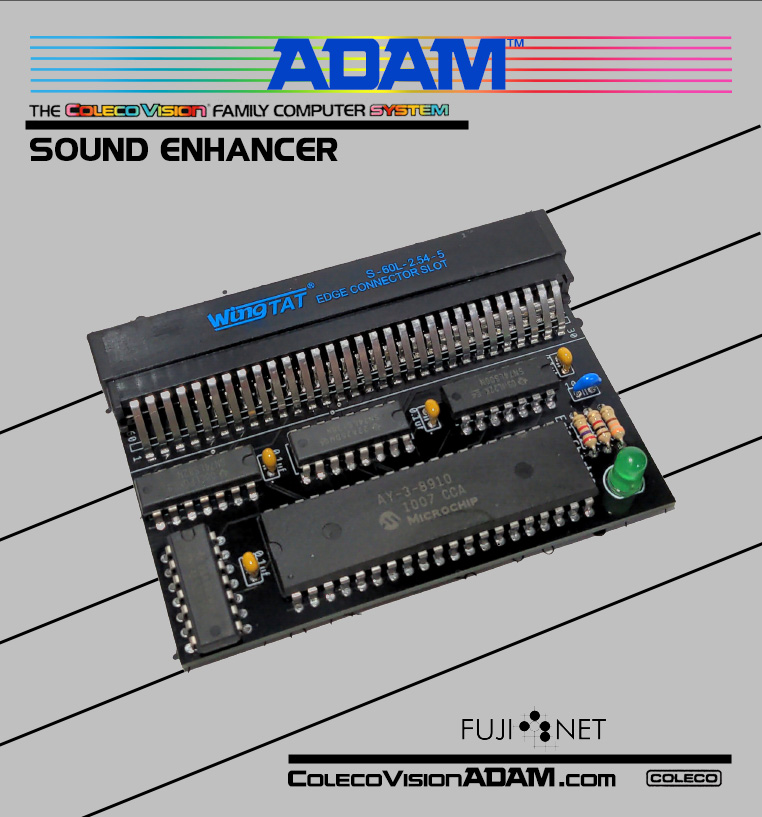
Coleco ADAM Sound Enhancer v1.0The Coleco ADAM Sound Enhancer plugs into the Expansion Port on the ADAM computer and allows the ADAM to play most SGM (Super Game Module) cartridges. The Coleco ADAM Sound Enhancer plugs into the Expansion Port on the ADAM computer. This revised board now comes with a case and a 3.5mm line out jack and allows the standalone Coleco ADAM to play most SGM (Super Game Module) cartridges. It contains an AY-3-8910 programmable sound generator chip and 74 series logic chips. This board works out of the box with RF (TV) output. If you are using the AUX VIDEO port (composite video) then you have two options for hearing audio from the ADAM Sound Enhancer:
Collected
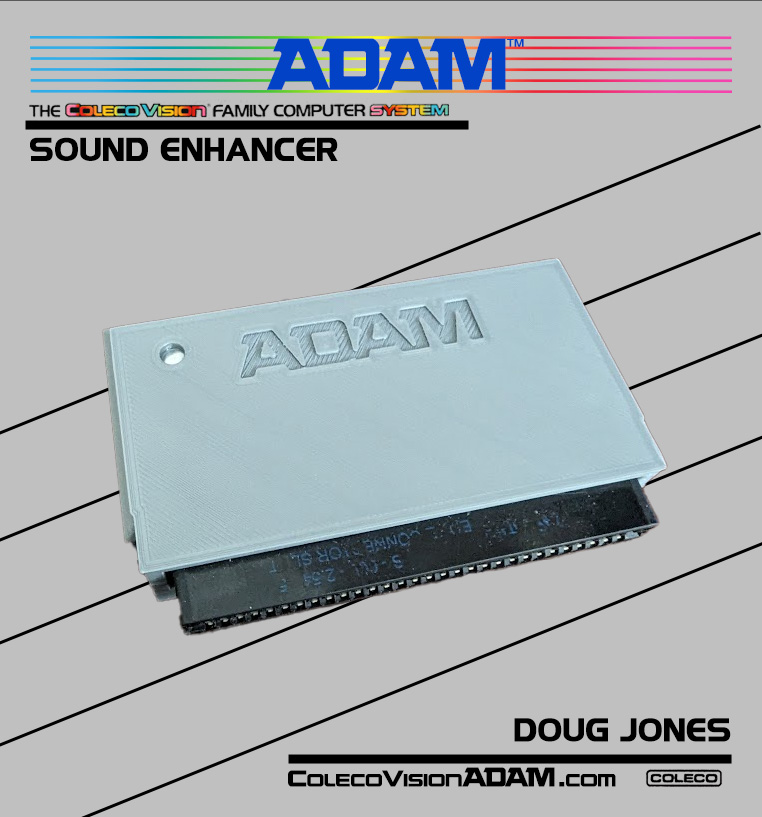
Sound EnhancerThe Coleco ADAM Sound Enhancer plugs into the Expansion Port on the ADAM computer and allows the ADAM to play most SGM (Super Game Module) cartridges. The Coleco ADAM Sound Enhancer plugs into the Expansion Port on the ADAM computer. This revised board now comes with a case and a 3.5mm line out jack and allows the standalone Coleco ADAM to play most SGM (Super Game Module) cartridges. It contains an AY-3-8910 programmable sound generator chip and 74 series logic chips. This board works out of the box with RF (TV) output. If you are using the AUX VIDEO port (composite video) then you have two options for hearing audio from the ADAM Sound Enhancer:
Collected
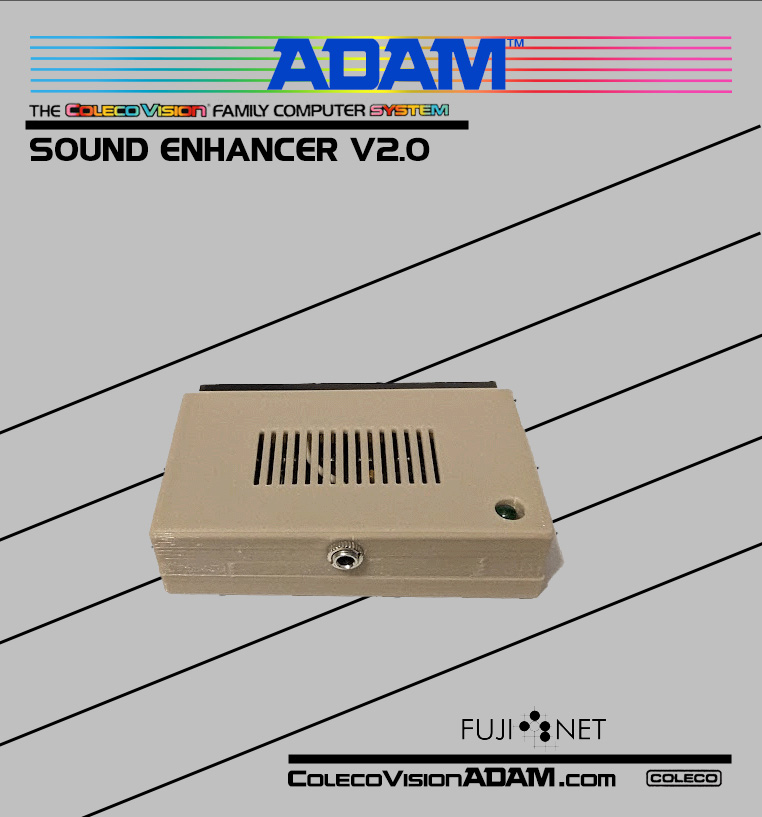
Coleco ADAM Sound Enhancer V2.0The Coleco ADAM Sound Enhancer plugs into the Expansion Port on the ADAM computer. This revised board now comes with a case and a 3.5mm line out jack and allows the ADAM to play most SGM (Super Game Module) cartridges. The Coleco ADAM Sound Enhancer plugs into the Expansion Port on the ADAM computer. This revised board now comes with a case and a 3.5mm line out jack and allows the standalone Coleco ADAM to play most SGM (Super Game Module) cartridges. It contains an AY-3-8910 programmable sound generator chip and 74 series logic chips. This board works out of the box with RF (TV) output. If you are using the AUX VIDEO port (composite video) then you have two options for hearing audio from the ADAM Sound Enhancer:
Collected
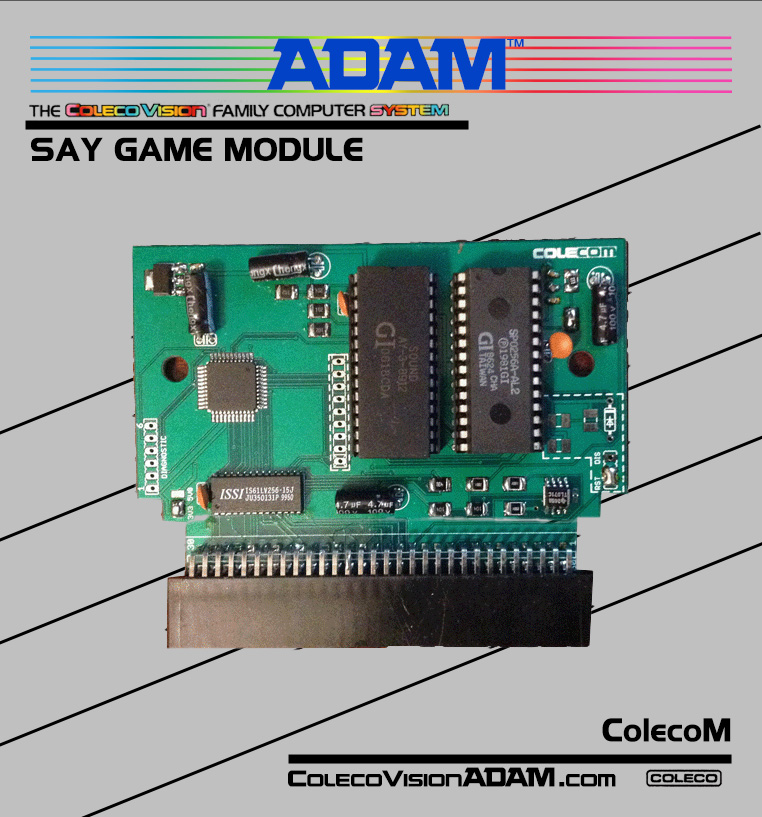
COLECOM SAY GAME MODULEManufacturer: ColecoM Speech synthesis expansion module for the Coleco ADAM / ColecoVision, connecting via the side expansion port (60-pin card edge with ribbon cable). Adds synthesized speech capability using vintage General Instrument speech synthesis silicon on a modern professionally-manufactured PCB. Key ICs (verified from board photography):
Architecture: The ADAM's Z80 writes phoneme/allophone codes through the expansion bus to the SP0256-AL2, which synthesizes speech audio in real time. The SRAM provides data buffering for speech sequences. The “DIAGNOSTIC” label on the silkscreen suggests built-in self-test capability. Professional green PCB with silkscreen, solder mask, and plated through-holes — a modern production board using vintage speech synthesis ICs. Collected
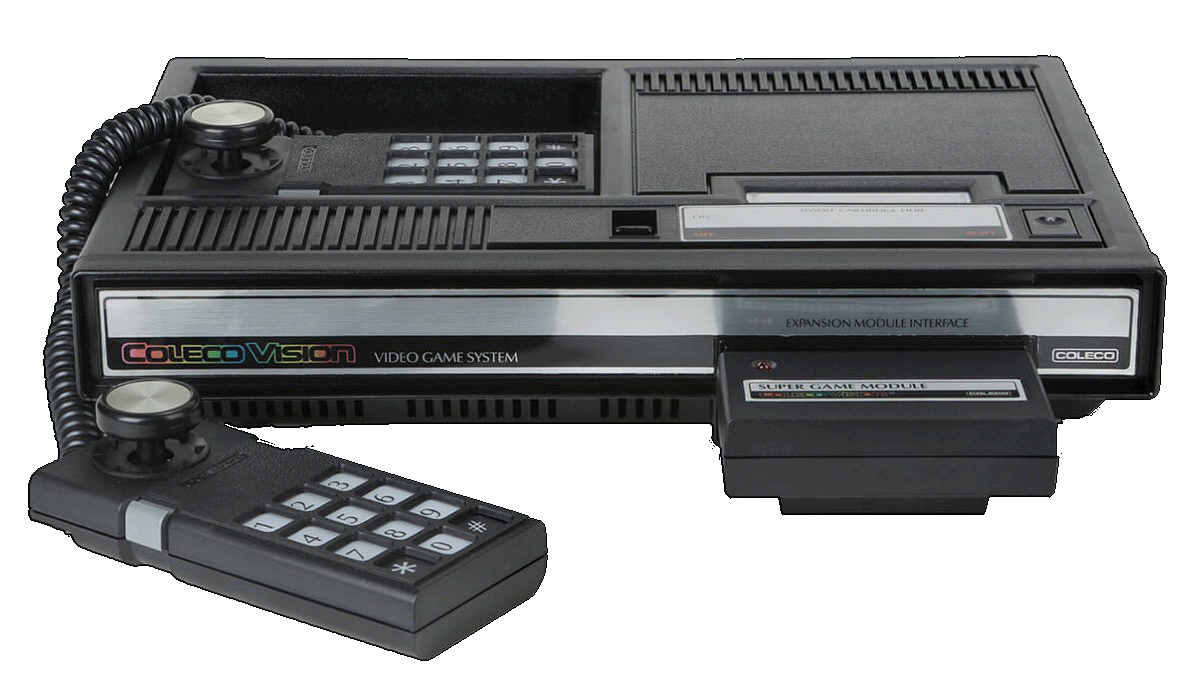
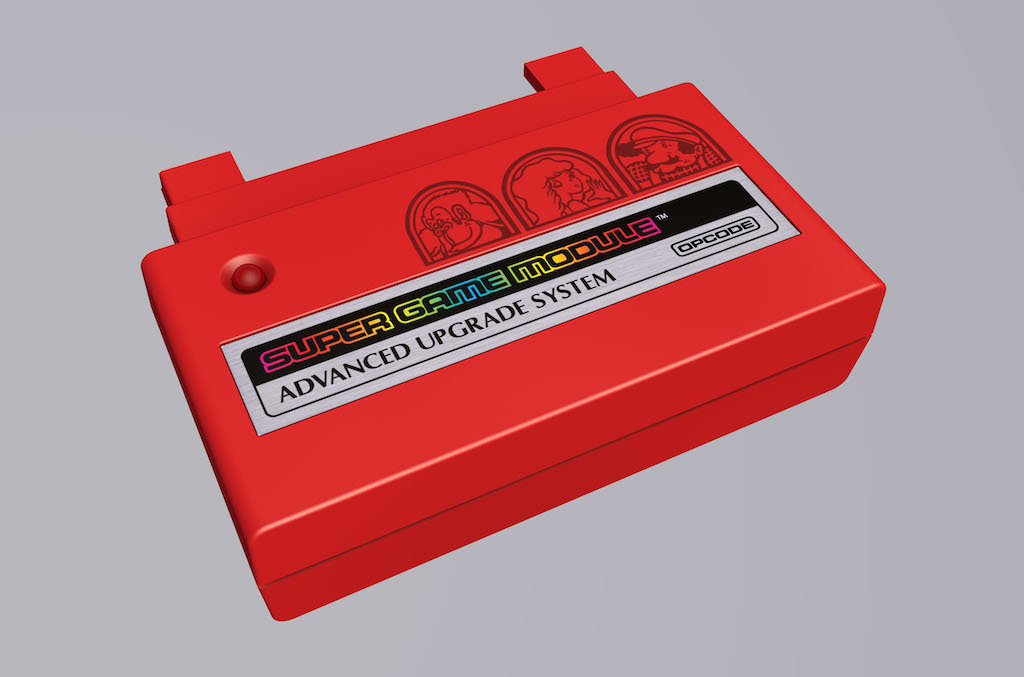
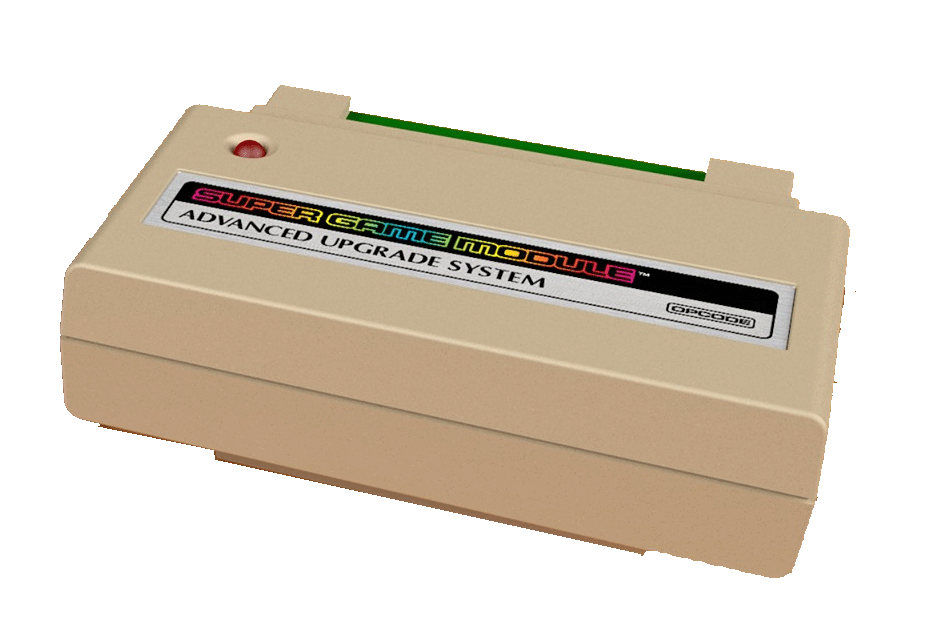
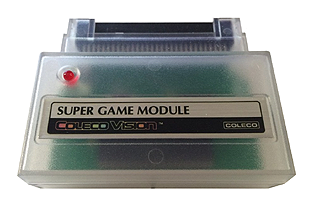
SUPER GAME MODULE (SGM)The Opcode Super Game Module upgrades our current ColecoVision video game console from its standard 1K RAM, with up to extra 32K (24) RAM. Both SGM1 versions of the Super Game Module has also a more advanced sound chip inside than the one in our ColecoVision. This advanced sound chip was one of the most known out there in the 80's, namely the AY-3-8910A. AY-3-8910A was already a known audio chip, for example in some MSX computers and earlier arcade machines. The Super Game Module 1 is just a simple expander with more RAM and better sound, there is no graphic chip inside. 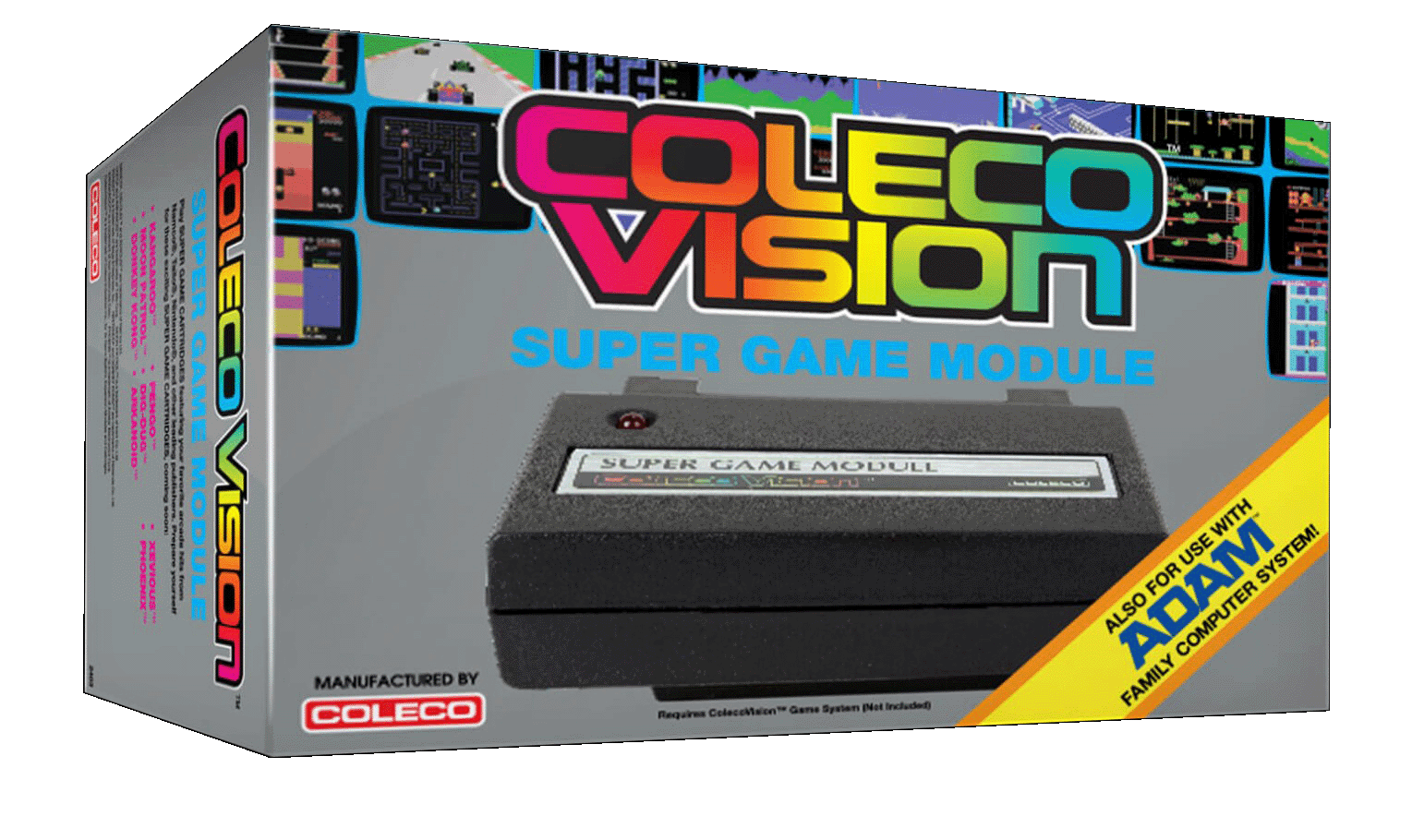
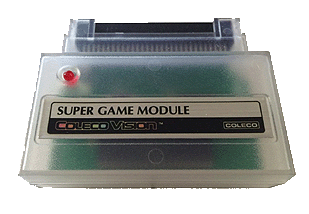
LABEL VARIANTS



DIFFERENT SHELL RELEASES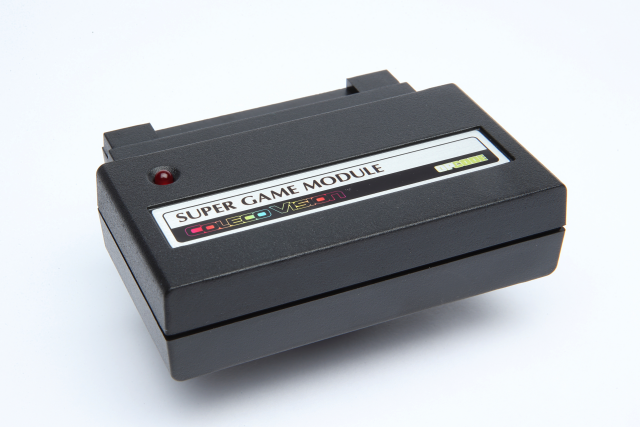
| ||||||||||||||||||||||||||||