

Best of Sierra On-Line V1 - V4
(10/26/2026)
The classic Sierra On-Line games are making their way to the Coleco ADAM in an exciting new series of software collections!
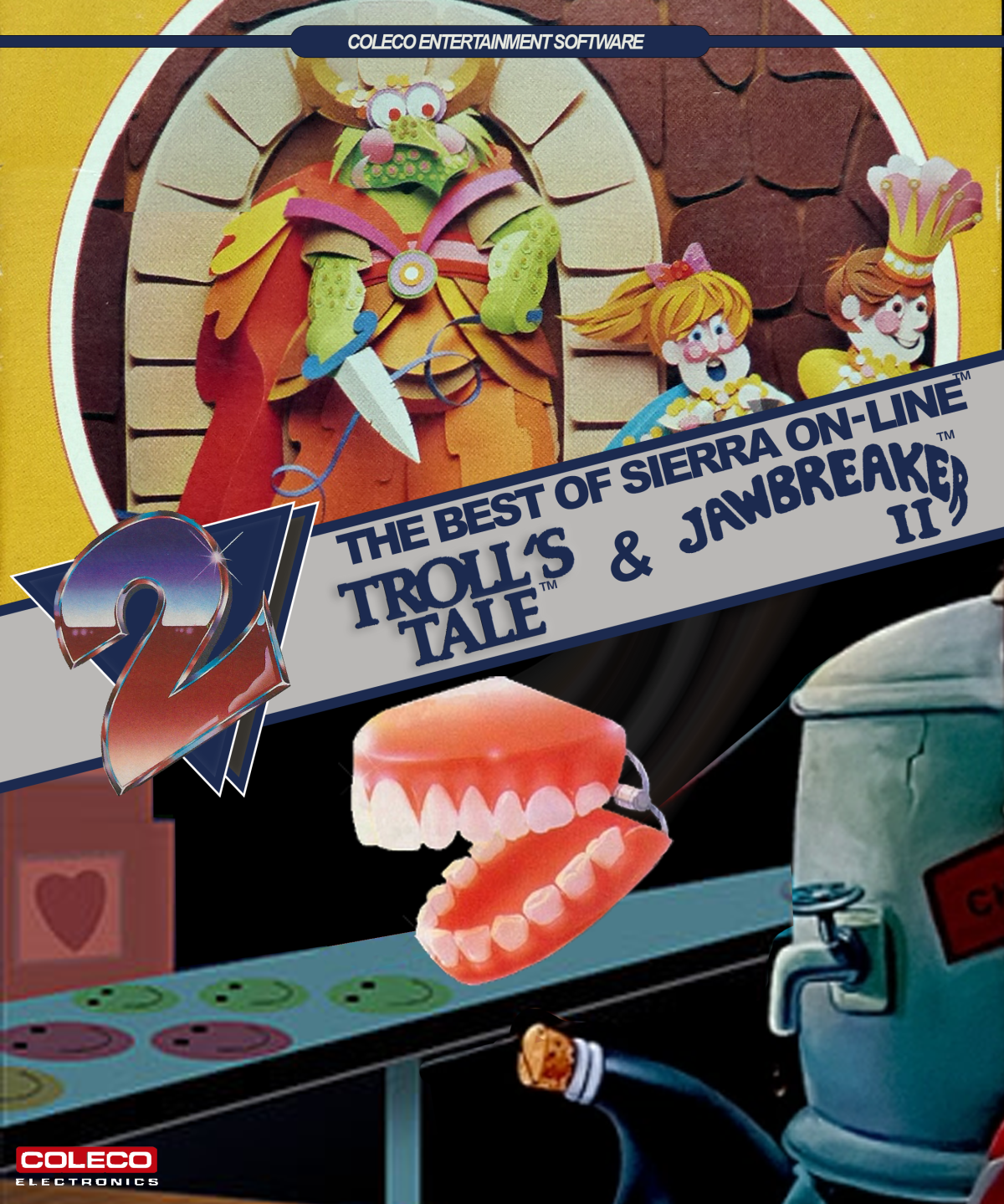
Following the previously announced Volume 1, featuring Troll's Tale and Jawbreaker II, the series continues with more unforgettable titles from the early days of computer gaming.
🎮 Volume 1: Troll's Tale & Jawbreaker II
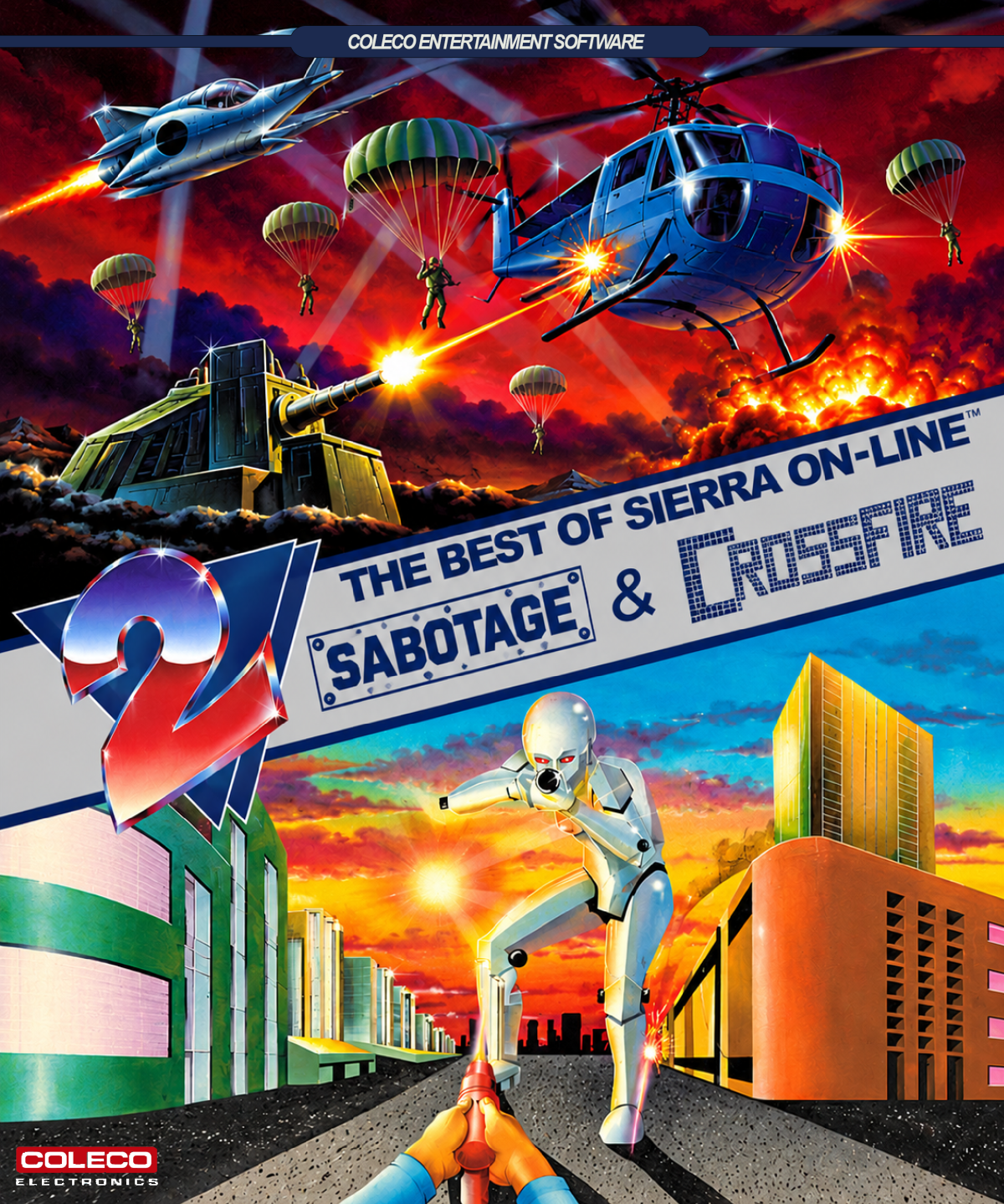
🎮 Volume 2: Sabotage & Crossfire
🎮 Volume 3: Cannonball Blitz & Apple Cider Spider
🎮 Volume 4: Mouskattack & Pest Patrol
Each volume brings two classic Sierra games together in a Coleco-style collection, recreating the excitement of the original releases for the ADAM computer.
From arcade action and strategic shooting to colorful adventures and challenging maze games, these collections celebrate an important chapter in early home computer gaming.
Stay tuned as development continues and we share more screenshots, progress updates, and release information!
#ColecoADAM #ColecoVision #SierraOnLine #SierraVision #RetroGaming #VintageComputing #Coleco #ClassicGames #GamingHistory



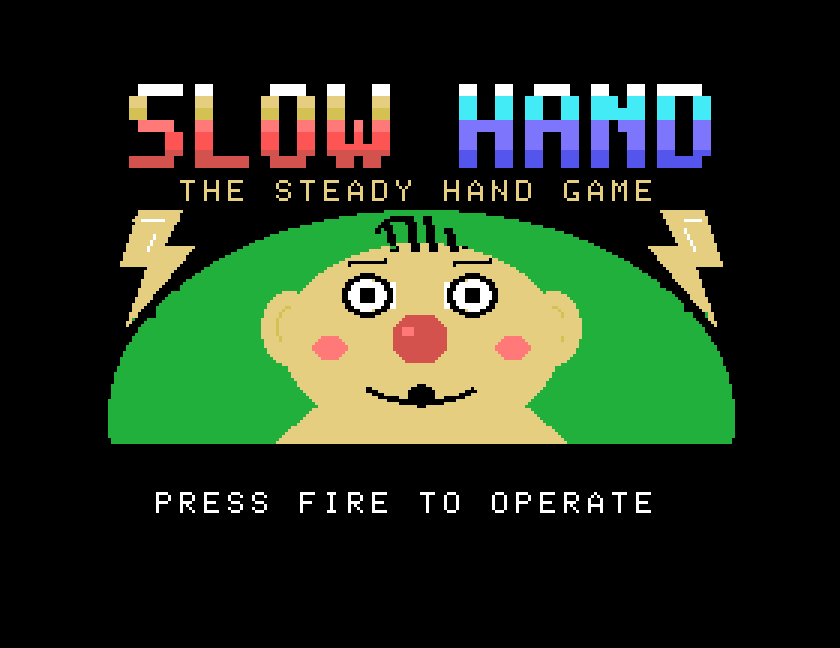
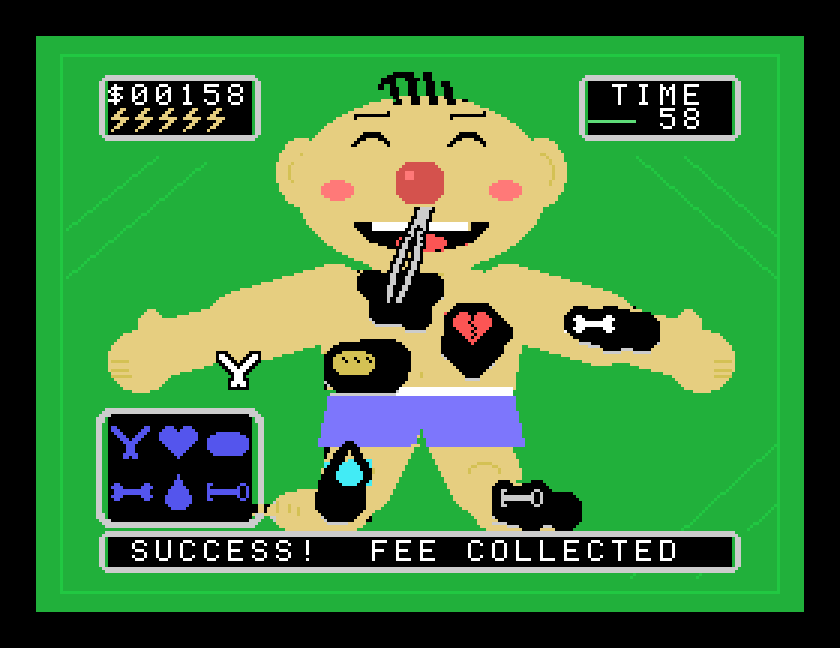
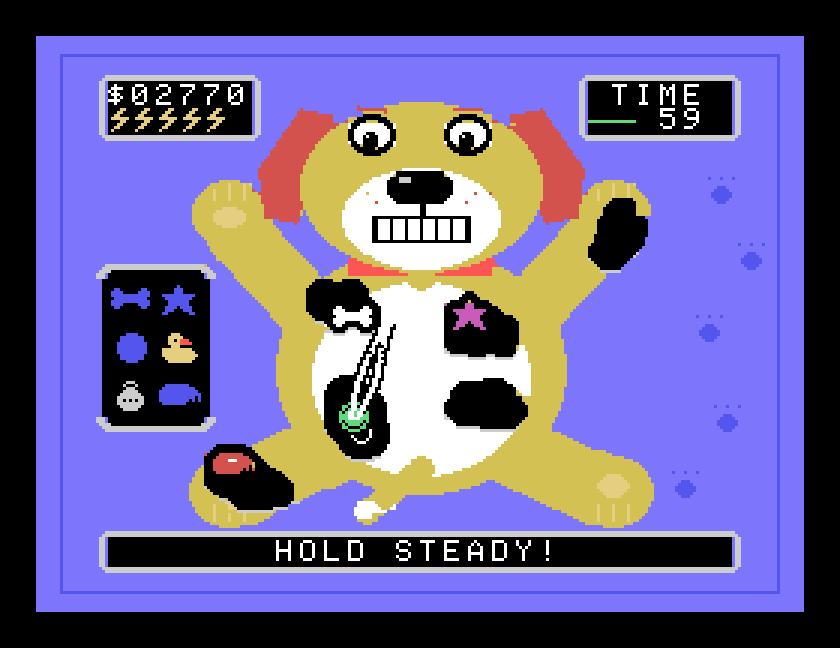
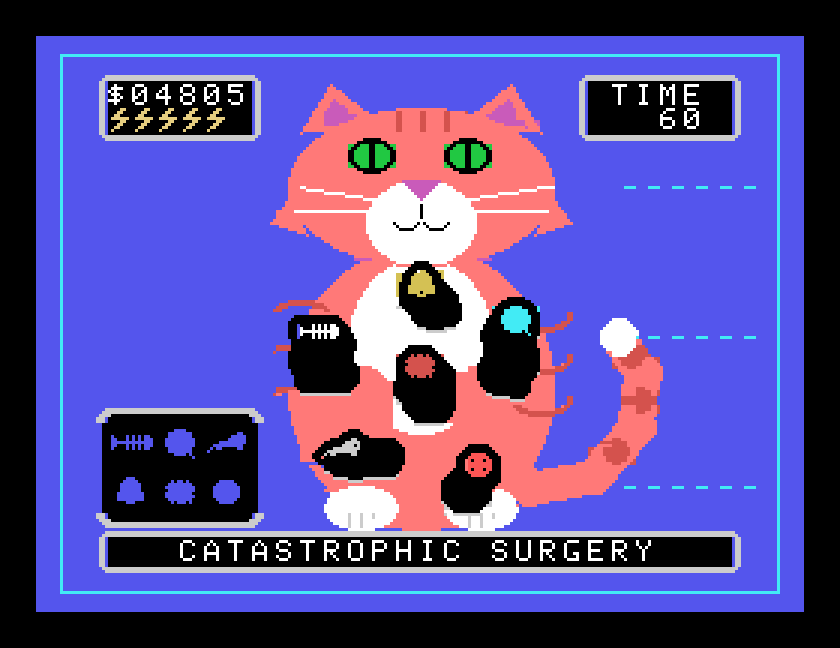
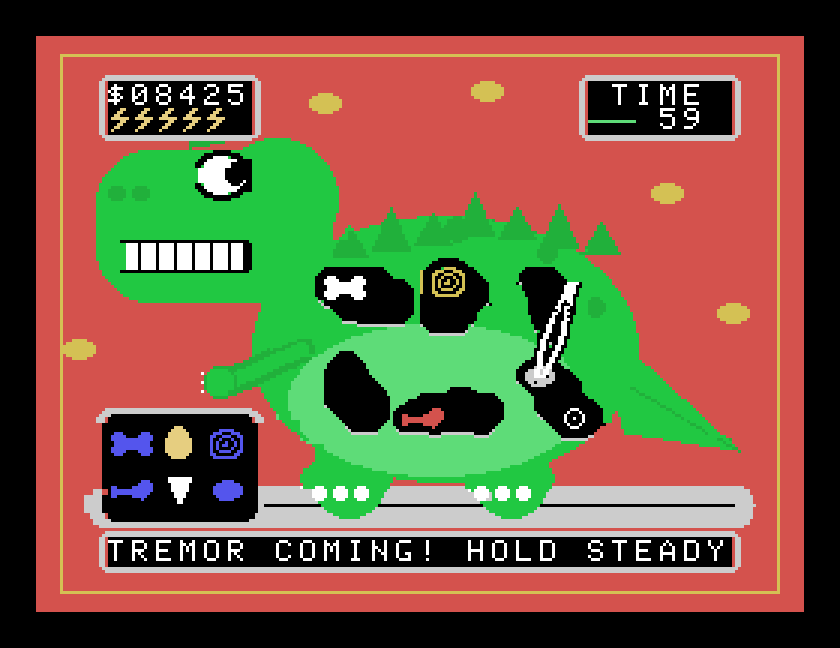
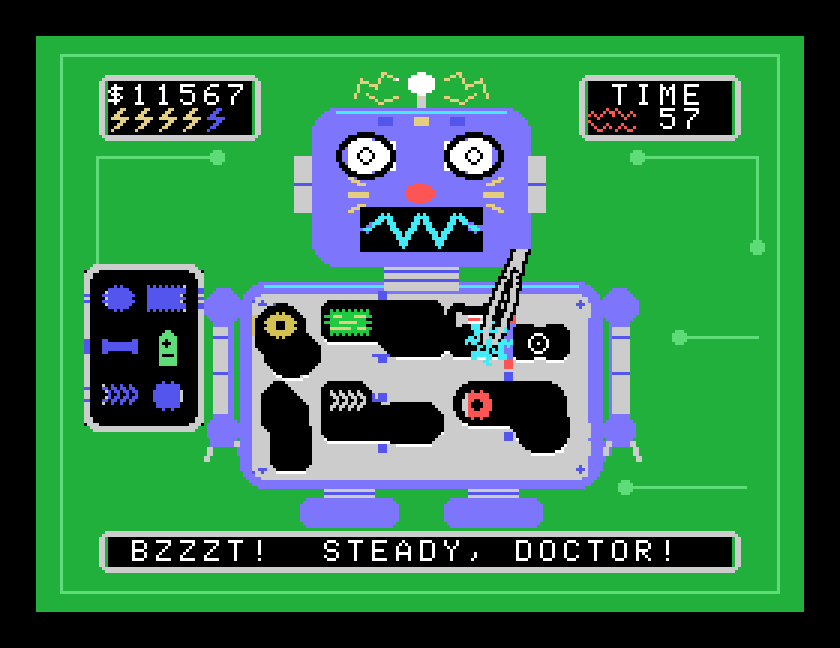
Steady... Steady... BZZZT!
(10/25/2026)
• The Classic Patient, a fidgety dog, a twitchy cat, a dinosaur with a tremor and a robot full of live wires
• Hold the right button for a steady hand when the patient moves
• Intern, Resident or Surgeon: less room and less time at each rank
• Arcade Surgery against the clock, or Classic Surgery with no clock
• Save all five to become MASTER SURGEON
https://diroccovision.itch.io/steady-steady-bzzzt
#ColecoVision #Homebrew #RetroGaming #DiRoccoVision #SlowHand
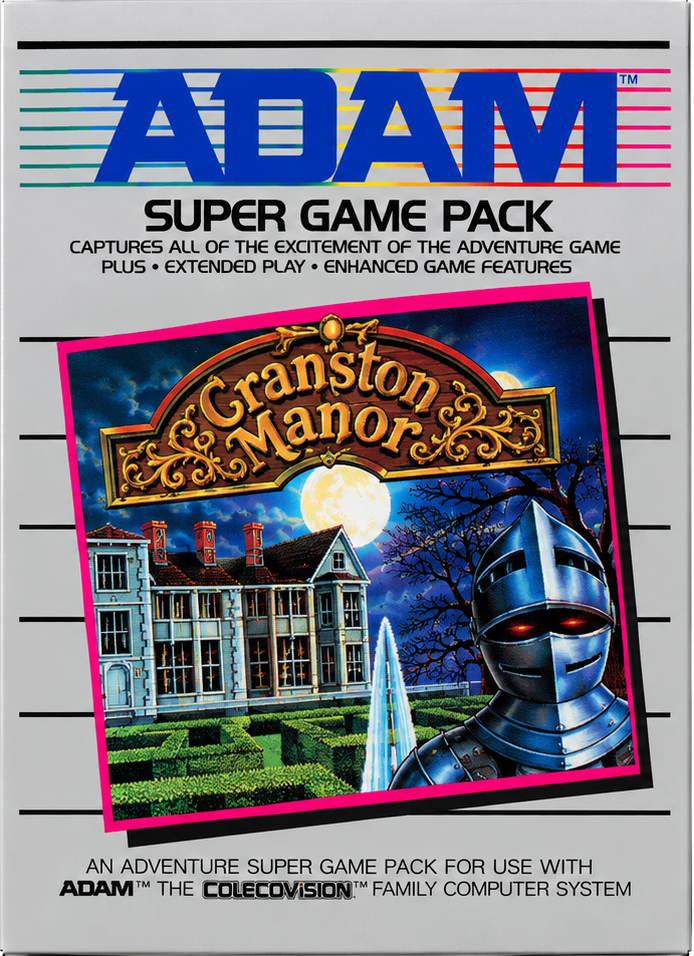
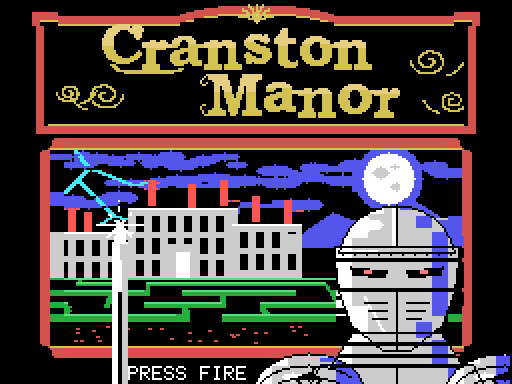
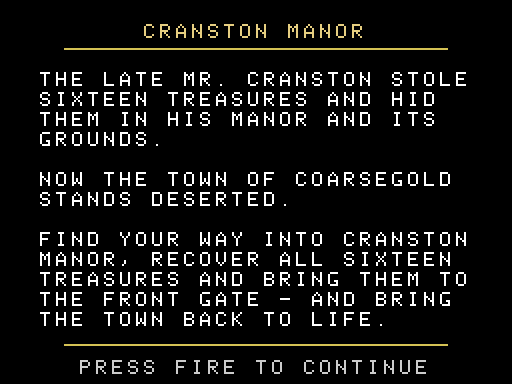
Cranston Manor 🏰 **A LOST COLECO ADAM SUPER GAME IS COMING BACK TO LIFE!** 🕹️
(10/18/2026)
Originally released by Sierra On-Line for the Apple II, *Cranston Manor* was planned as one of Coleco's Adventure Super Game Packs, complete with its own product number: **7703**.
Coleco even featured the game in its promotional literature and packaging artwork—but it never received a confirmed commercial release.
**More than 40 years later, we're working to change that!**
We're beginning the reconstruction of *Cranston Manor* as a full Coleco ADAM Super Game Pack, designed to look and play like something Coleco could have released in 1984.
🔹 Original Sierra adventure gameplay and puzzles
🔹 Enhanced graphics optimized for the ADAM
🔹 Keyboard and SmartKey controls
🔹 Optional joystick navigation
🔹 The mysterious manor, underground passages, and 16 hidden treasures
🔹 Planned disk and Digital Data Pack versions
Our goal isn't simply to port the Apple II game. We want to recreate the experience Coleco might have envisioned, preserving the original adventure while making the most of the ADAM's capabilities.
Research is complete, and early technical and graphics development is now underway.
We'll be sharing more as the project progresses!
**Another forgotten piece of Coleco history is getting a second chance.**
#ColecoADAM #CranstonManor #ColecoVision #SierraOnLine #RetroGaming #HomebrewGames #ClassicComputing #Coleco #RetroComputing
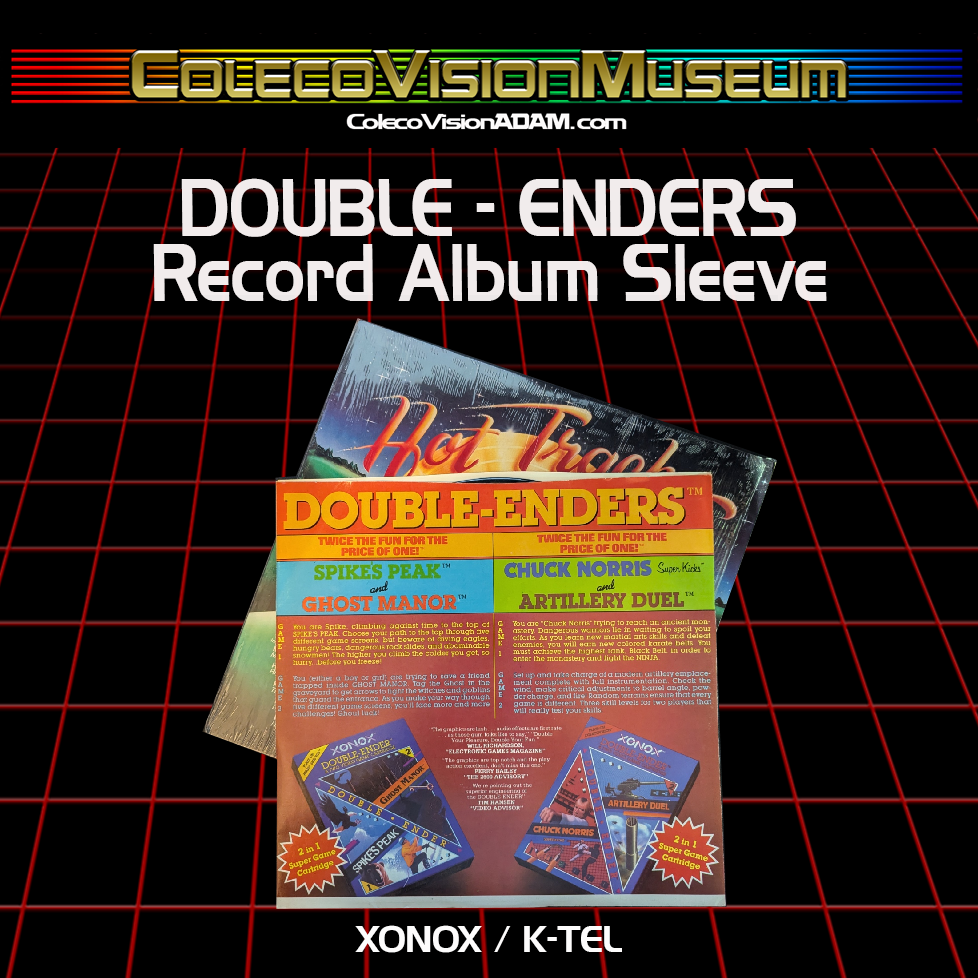
XONOX Record Sleeve
(10/17/2026)
#ColecoVision #ColecoADAM #ColecoVisionMuseum #Xonox #KTEL #DoubleEnders #GhostManor #ChuckNorris #RetroGaming #VideoGameMemorabilia
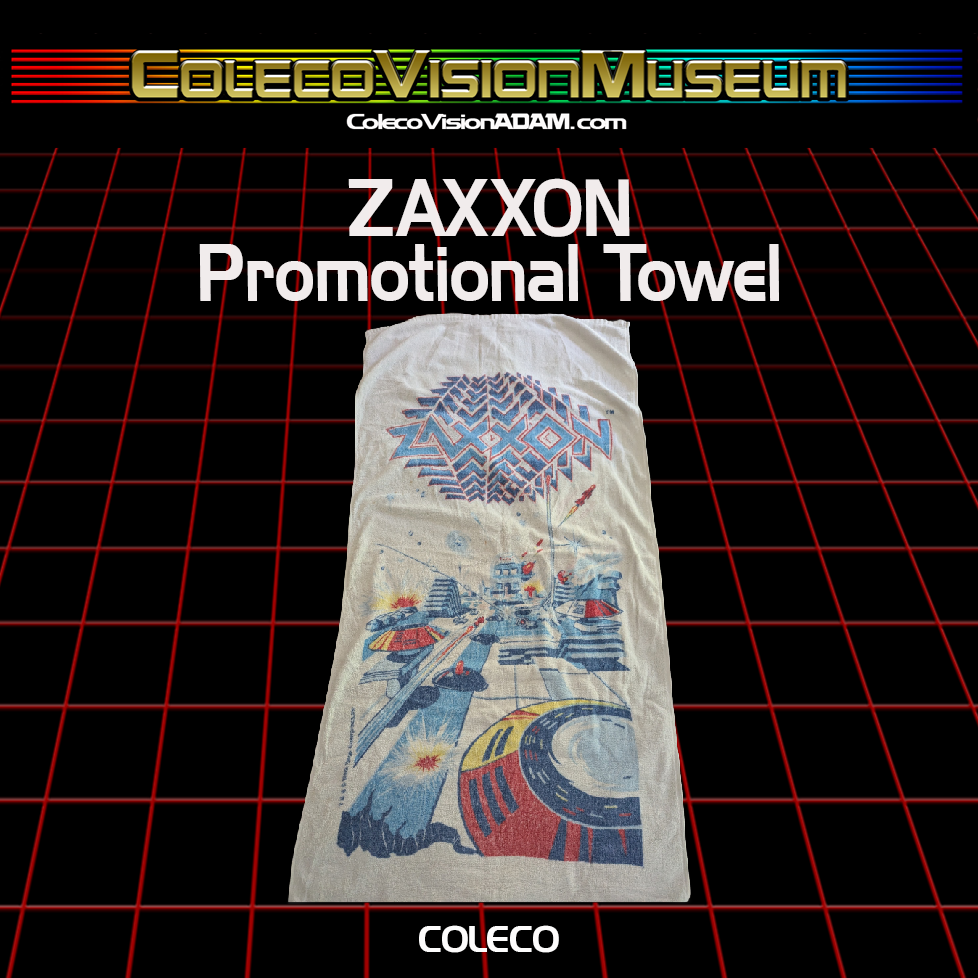
ZAXXON PROMOTIONAL TOWEL — COLECO
(10/17/2026)
#ColecoVision #ColecoADAM #ColecoVisionMuseum #Zaxxon #Coleco #SEGA #RetroGaming #VintageGaming #VideoGameMemorabilia #1980s
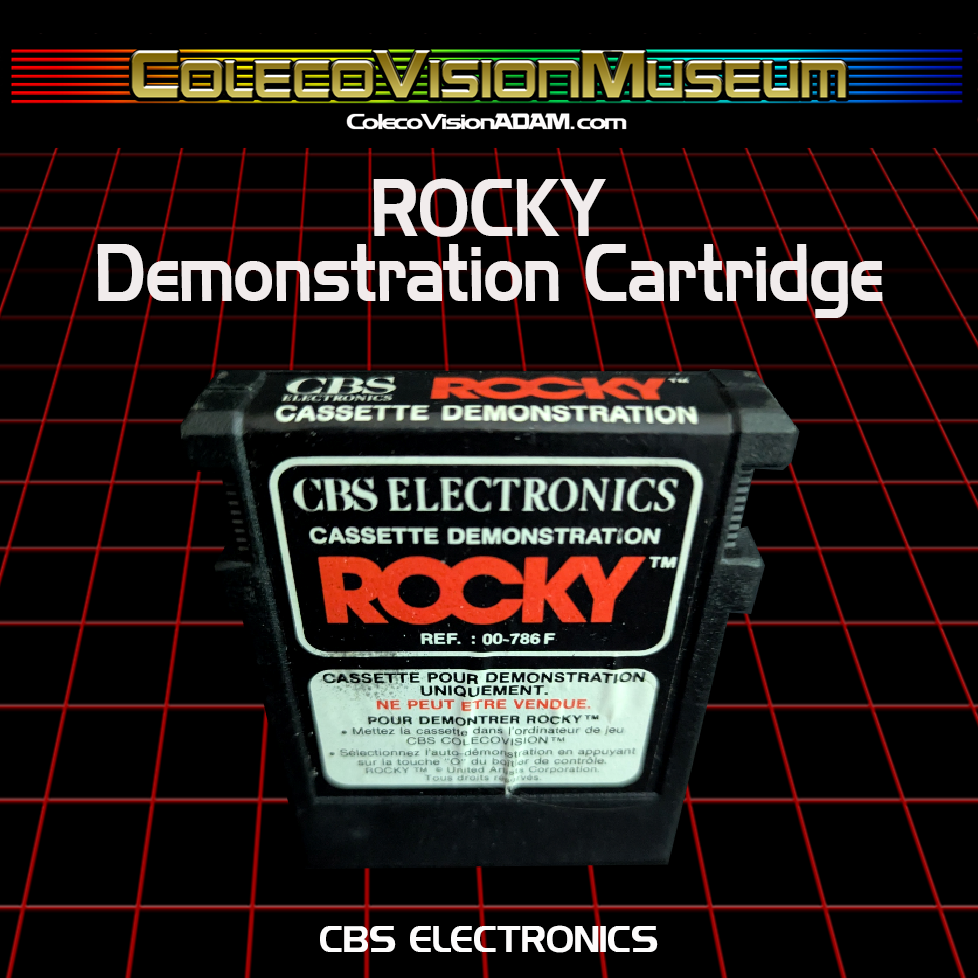
MAIL CALL: JOYSTICK EXTENSION CABLE / ROCKY DEMO CART
(10/17/2026)
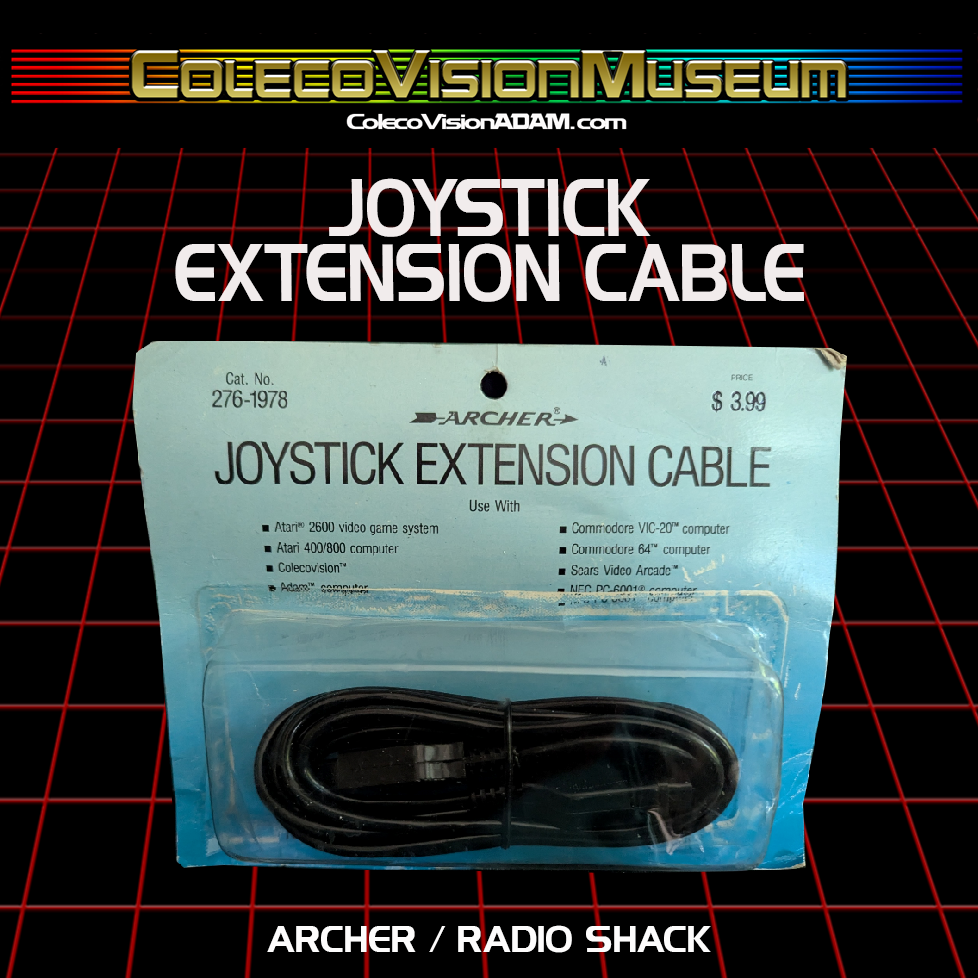
🏛️ New arrival to the ColecoVision & ADAM Museum! This vintage Archer Joystick Extension Cable, catalog #276-1978, was sold through Radio Shack for just $3.99. Its original packaging lists compatibility with the ColecoVision, ADAM, Atari, Commodore and other popular systems, making it a great example of the universal gaming accessories available during the 1980s.
#ColecoVision #ColecoADAM #ColecoVisionMuseum #RadioShack #Archer #Joystick #RetroGaming #VintageGaming #VideoGameHistory
#ColecoVision #ColecoADAM #ColecoVisionMuseum #Rocky #CBSElectronics #Coleco #DemoCartridge #RetroGaming #VideoGameHistory
🔮 WORK IN PROGRESS — NEW SGM GAME COMING 🔮
(10/11/2026)
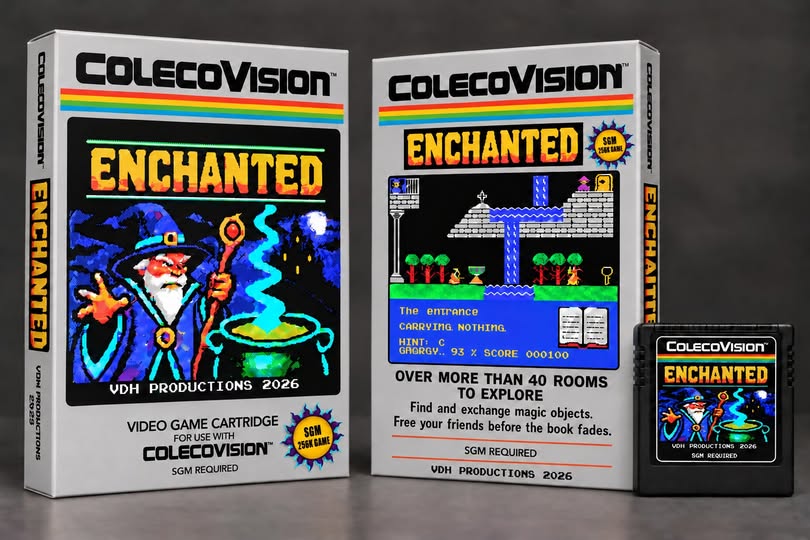
Developer Danny Van Den Heuvel is working on a new SGM adventure game called Enchanted, and based on the design he’s sharing with his community, this one has real reach.
The adventure: Over 40 rooms. 10 friends to rescue. For each friend, you must collect a specific series of objects — in the correct order. Powerful items can be found to destroy your foes. But time is running out — a book is burning to ashes, and when the last page is gone, so is your chance.
What’s planned:
✓ 40+ rooms to explore
✓ 10 friends to rescue
✓ Puzzle progression — correct-order object collection
✓ Combat with discoverable power items
✓ Burning-book time pressure mechanic
✓ Super Game Module required (enhanced graphics and sound)
This is still in active development — not a release yet. If you want to follow Danny’s progress, see what a new SGM title looks like being built from the ground up, or support his work directly, his Patreon is free to follow:
👉 https://www.patreon.com/[Danny's handle]/posts/new-colecovision-171495588
The ColecoVision SGM scene continues to grow, and projects like Enchanted are a reminder that the platform still has new stories being written for it in 2026. The ColecoVision turns 45 in 2027 — and the games being built right now are how we get there.
What SGM game would YOU love to see made? Drop it in the comments — I want to see the community’s wish list for the format. 👇
#ColecoVision #SGM #SuperGameModule #ColecoVisionHomebrew #Enchanted #RetroGaming #ColecoVisionADAMMuseum
New ColecoVision Homebrew Release: Dragon’s Descent
(10/11/2026)
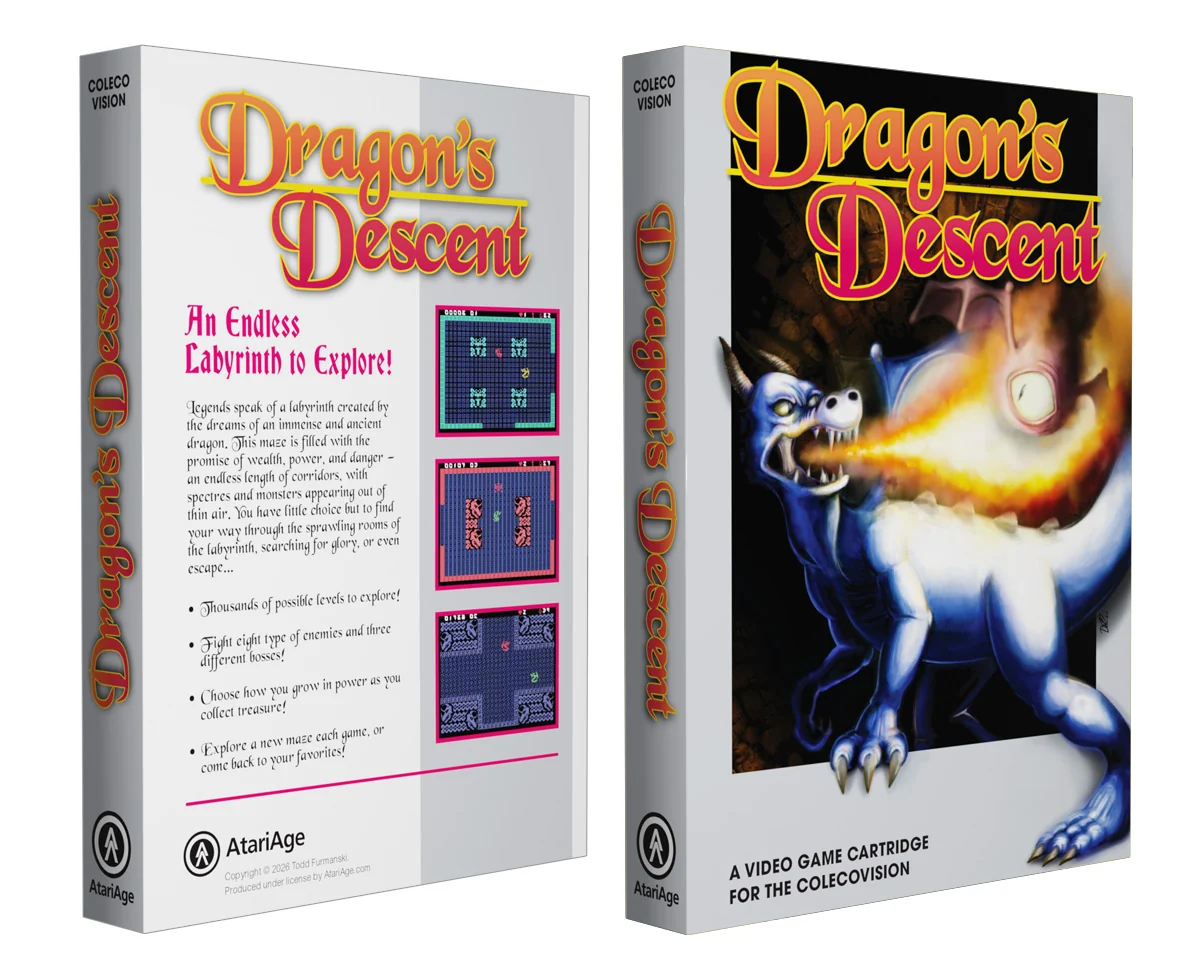
Dragon’s Descent, a new single-player dungeon crawler for the ColecoVision, is now available from the AtariAge Store for $50.00. Programming and design are by Todd Furmanski, with artwork and layout by Benedikt Scheffer. The release ships complete with a professionally printed box, a full-color 16-page manual, and the game cartridge — the full-package treatment collectors have come to expect from modern AtariAge Store releases.
The Story. In a time forgotten by all save the oldest of wyrms, a cruel dragon named Molobros achieved heights of greed reviled even by his avaricious kin. Gemstones were prized by him, second only to the power he hoarded and the lives he consumed. His enemies did not defeat him by strength — and now, generations later, it falls to you to descend into his labyrinth and finish what they could not.
The Game. Dragon’s Descent is a top-down dungeon explorer where every wall is a threat and every monster is both an obstacle and an opportunity. Touching walls or enemies depletes your hit points. Collecting gems and defeating monsters increases your score — more so the deeper you venture, and more so with each shot of higher fire-breath power. Every level of the labyrinth contains a key, an exit, and a treasure room offering one of three power-ups. The design rewards exploration, risk calibration, and strategic growth.
Features:
Thousands of possible levels to explore
Eight distinct enemy types
Three different bosses
Choose how your dragon grows in power as you collect treasure
Random Maze mode — a new maze each game, or revisit your favorites
Infinite Maze mode — explore until you run out of health or complete Level 7
Hard mode — even the walls are deadly
Toggleable music
Technical Specifications:
Field Value
Platform ColecoVision
Players 1
Controller Standard ColecoVision Joystick
Cartridge Size 32K
Package Boxed, 16-page color manual, cartridge
Publisher AtariAge Store
Price $50.00 USD
Where to Buy: store.atariage.com/products/dragons-descent-colecovision
Dragon’s Descent will be added to the ColecoVisionADAM.com games database and preserved in the Legends record for both Todd Furmanski and Benedikt Scheffer as part of the museum’s ongoing documentation of the modern ColecoVision homebrew scene.
The ColecoVision turns 45 in 2027. Releases like this one are a reminder that the platform is not just preserved — it is still being written for.
Catalog your own ColecoVision collection, including this release, on the ColecoVision Collection Manager.
BUG DOME / DUCK FRENZY — Release Announcement
(10/09/2026)
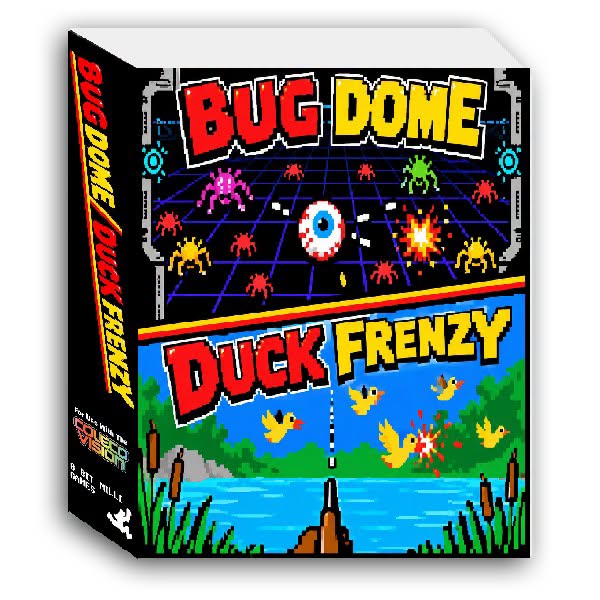
8 Bit Milli Games (run by Milli Hicks) is out with BUG DOME / DUCK FRENZY — two completely different arcade experiences packaged together on a single ColecoVision cartridge. These are the label’s first in-house developed games since FLUX back in January 2026, and Milli has made clear it feels great to be shipping ColecoVision titles again.
BUG DOME: The bugs are out for revenge. Battle endless swarms of angry insects inside an electrified arena, dodge deadly bug zappers, and blast your way to survival.
DUCK FRENZY: Step right up to the carnival shooting gallery. Rows of moving ducks, take aim, blast your targets, see how long you can keep the action going.
Both games feature colorful graphics, fast-paced arcade action, and the kind of old-school challenge the format was built for — exactly what you want from a two-in-one release.
The collector angle (this one is a fun touch):
✓ Reversible box design — BUG DOME artwork on one side, DUCK FRENZY on the other. Display whichever game you prefer.
✓ Two different cartridge labels — one featuring BUG DOME prominently, the other featuring DUCK FRENZY. Both carts contain the exact same two games.
✓ For the completionists among us: grab both label variants to have the full set.
Massive respect to Milli and the 8 Bit Milli Games team for shipping a professional-tier release AND thinking about collectors with the dual-label variant play. The modern CV scene continues to prove what’s possible for the platform in 2026.
Available now 👇
https://www.8bitmilligames.com/product/bug-dome-duck-frenzy-colecovision
Both label variants will be cataloged in the museum’s games database, with 8 Bit Milli Games preserved in the Legends record alongside the rest of the modern CV publishers.
The ColecoVision turns 45 in 2027. Releases like this one are how we get there.
What’s the last multi-game cart or compilation you picked up for the ColecoVision? Drop it in the comments — I want to see what’s on everyone’s shelves. 👇
#ColecoVision #ColecoVisionHomebrew #8BitMilliGames #BugDome #DuckFrenzy #NewRelease #ColecoVisionADAMMuseum #RetroGaming
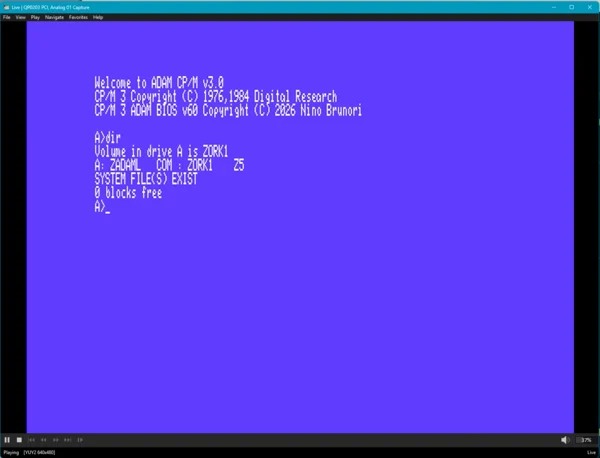
🖥️ **ADAM CP/M 3.0 RELEASED — A HISTORIC MILESTONE!**
(10/08/2026)
**Nino Brunori (Captain Cozmos)** has developed and released **ADAM CP/M 3.0**, bringing Digital Research's CP/M Plus operating system to the Coleco ADAM!
Although CP/M 3.0 was discussed and attempted for the ADAM as early as 1984, those efforts never produced a working system. Nino's accomplishment represents approximately four years of dedicated research and development beginning in 2022.
Unlike the earlier CP/M 2.2, this new implementation features a custom BIOS engineered specifically for the ADAM's unique hardware architecture.
**NEW FEATURES INCLUDE:**
🔹 80-column color display with F18A support
🔹 Real-time clock functionality
🔹 RAM disk support up to 1 MB
🔹 Hard drive support up to 20 MB
🔹 Multiple floppy disk formats
🔹 ADAM data pack compatibility
🔹 File date and time stamping
🔹 Automatic media detection
🔹 Configurable screen colors
🔹 Expansion-memory resident command processor
This achievement demonstrates the incredible potential that remains within the Coleco ADAM, more than four decades after its release.
👏 **Congratulations to Nino Brunori** for this outstanding contribution to the ADAM community and for helping write another chapter in the history of this remarkable computer!
The ColecoVision & ADAM Museum celebrates the individuals whose dedication continues to preserve and expand the legacy of this remarkable computer.
\#ColecoADAM #ColecoVision #CPM3 #RetroComputing #VintageComputers #ComputerHistory #ColecoVisionADAMMuseum #CaptainCozmos
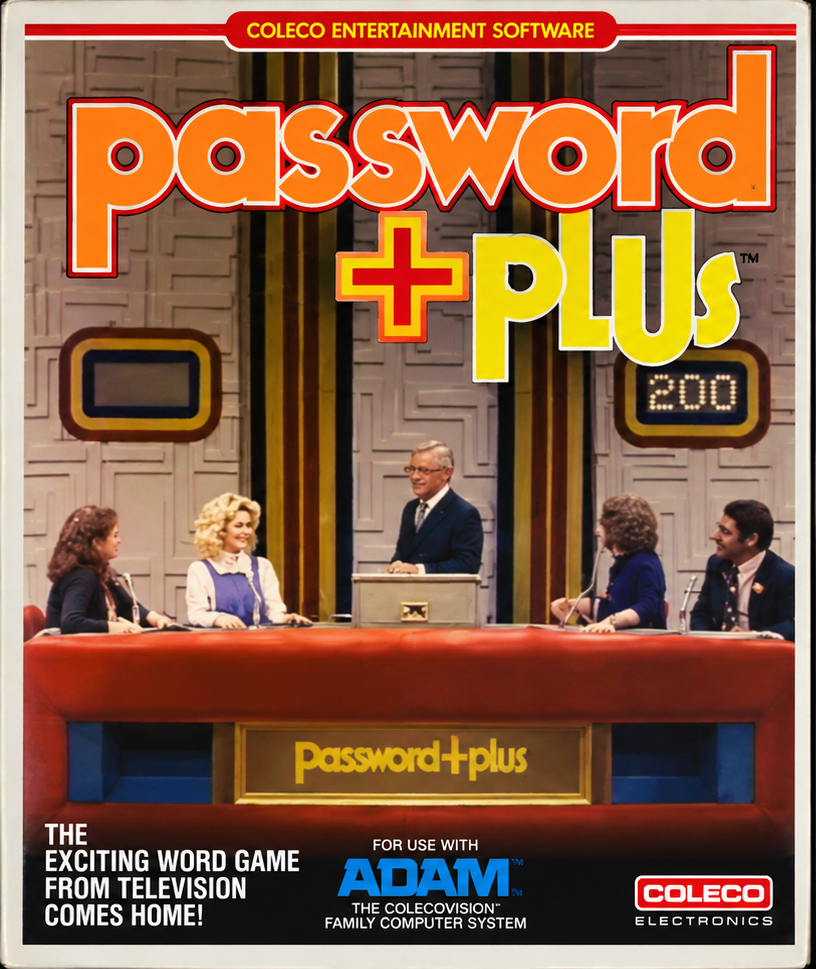
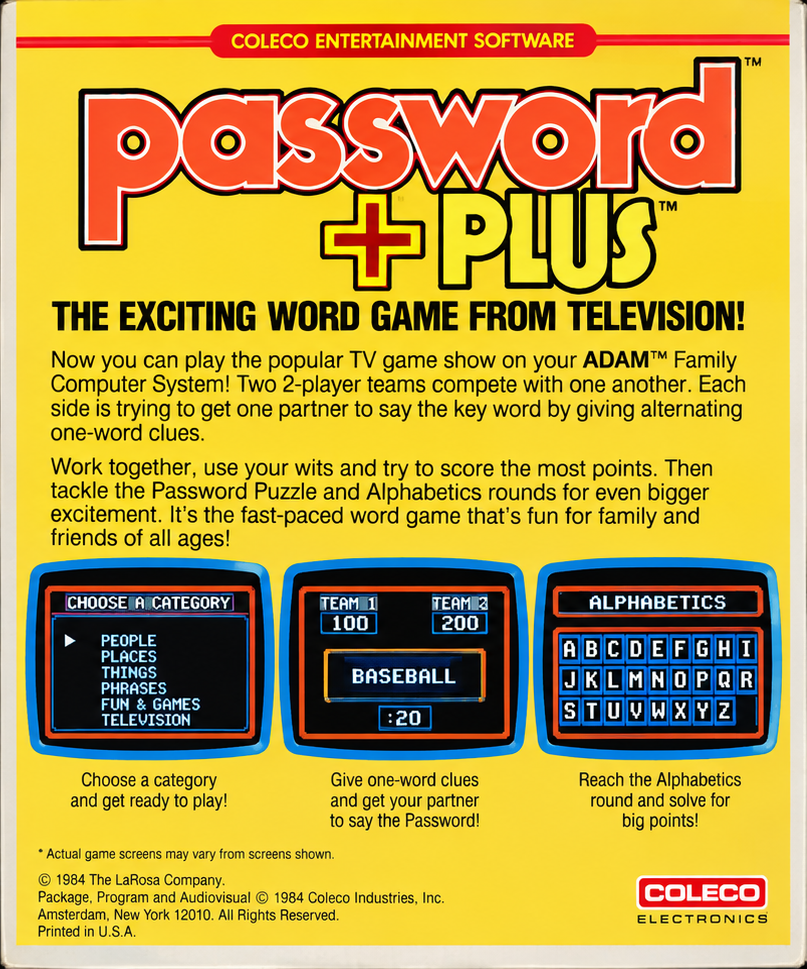
Password Plus brings the classic television word game to the ADAM Computer.
(10/07/2026)
Originally announced by Coleco for the ADAM but never released, this 2026 DiRoccoVision production recreates the missing title using Coleco’s original ADAM game-show software architecture as its technical foundation. The game features human and computer partners, keyboard answer entry, computer-controlled clue giving and guessing, timed play, persistent game data and support for additional word and puzzle packs—bringing another of ADAM’s long-lost announced titles to life.
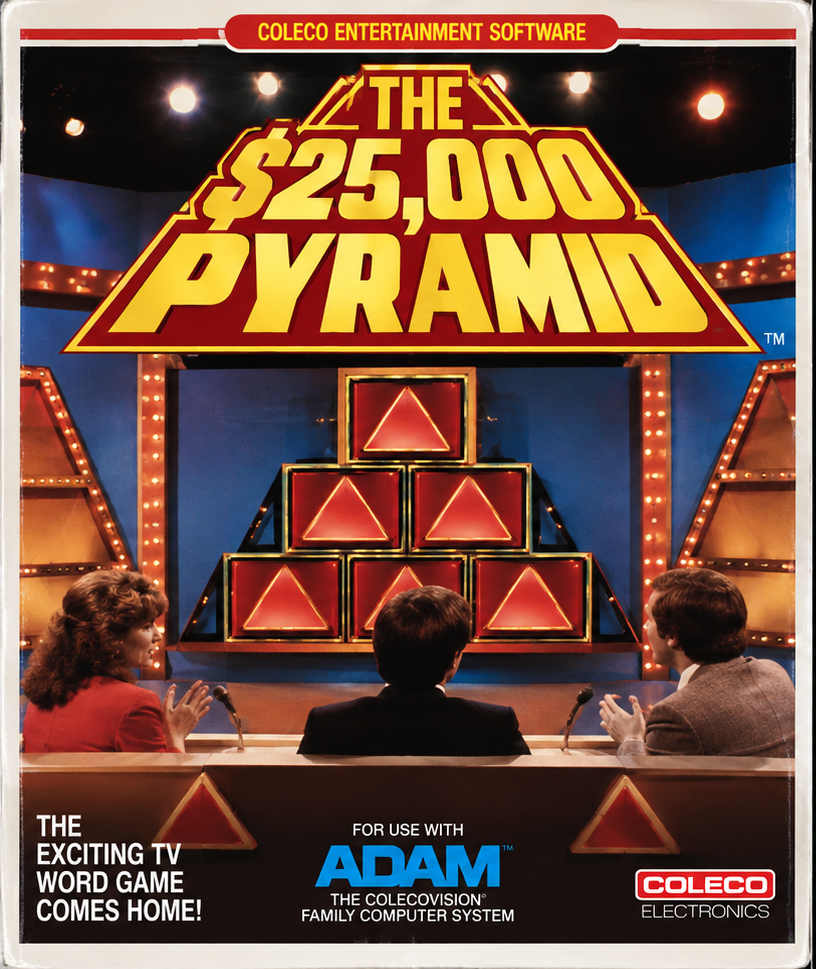
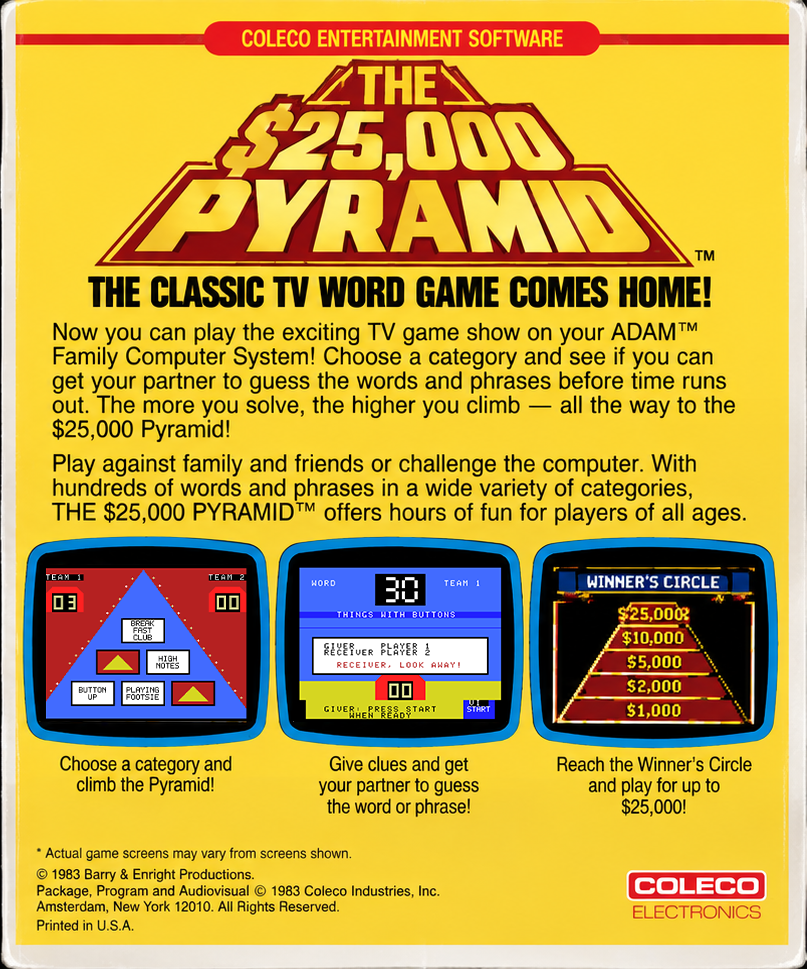
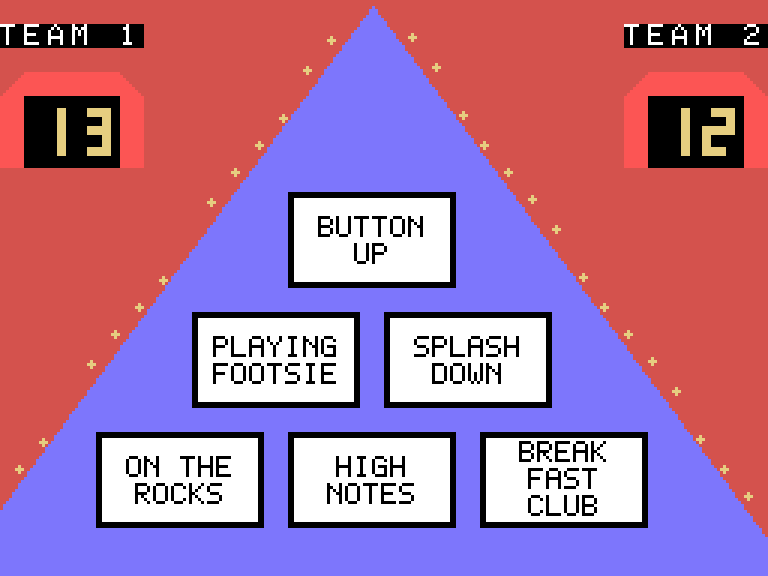
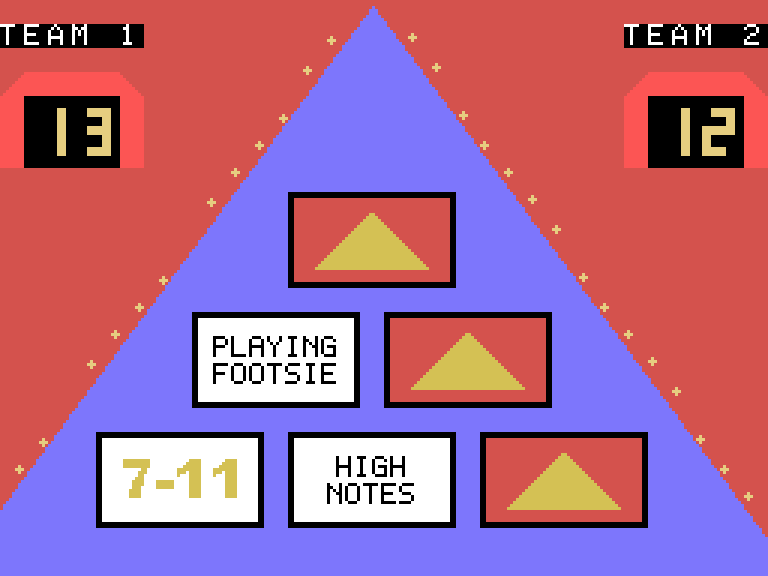
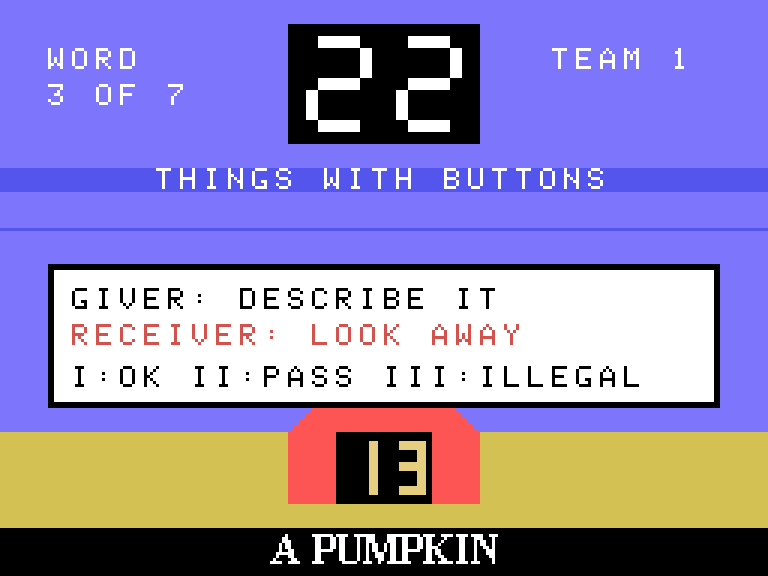
The $25,000 Pyramid brings the fast-paced television game show to the ADAM Computer.
(10/07/2026)
Originally announced by Coleco for the ADAM in 1984 but never released, this 2026 DiRoccoVision production recreates the missing title using Coleco’s original ADAM game-show software architecture as its technical foundation. The game features multiplayer and single-player competition, computer opponents, keyboard answer entry with Coleco-style flexible answer matching, authentic timed rounds, a large library of categories and support for additional category packs—bringing another of ADAM’s long-lost announced titles to life.

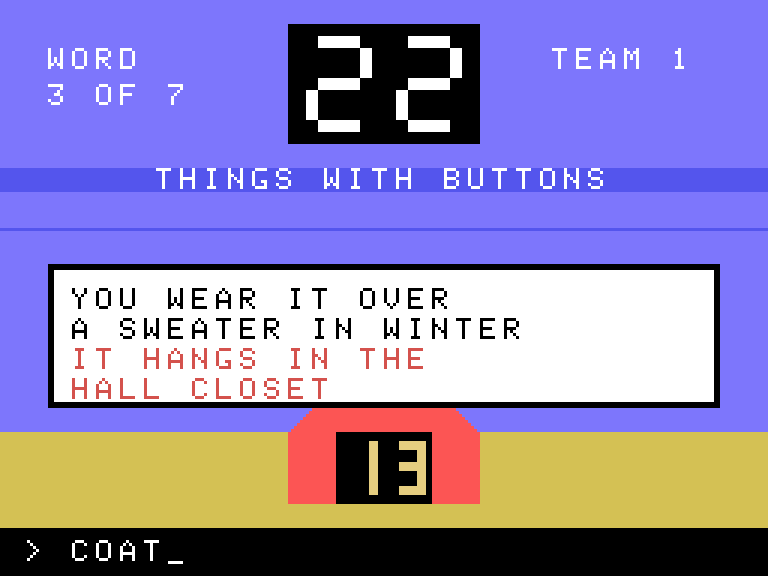
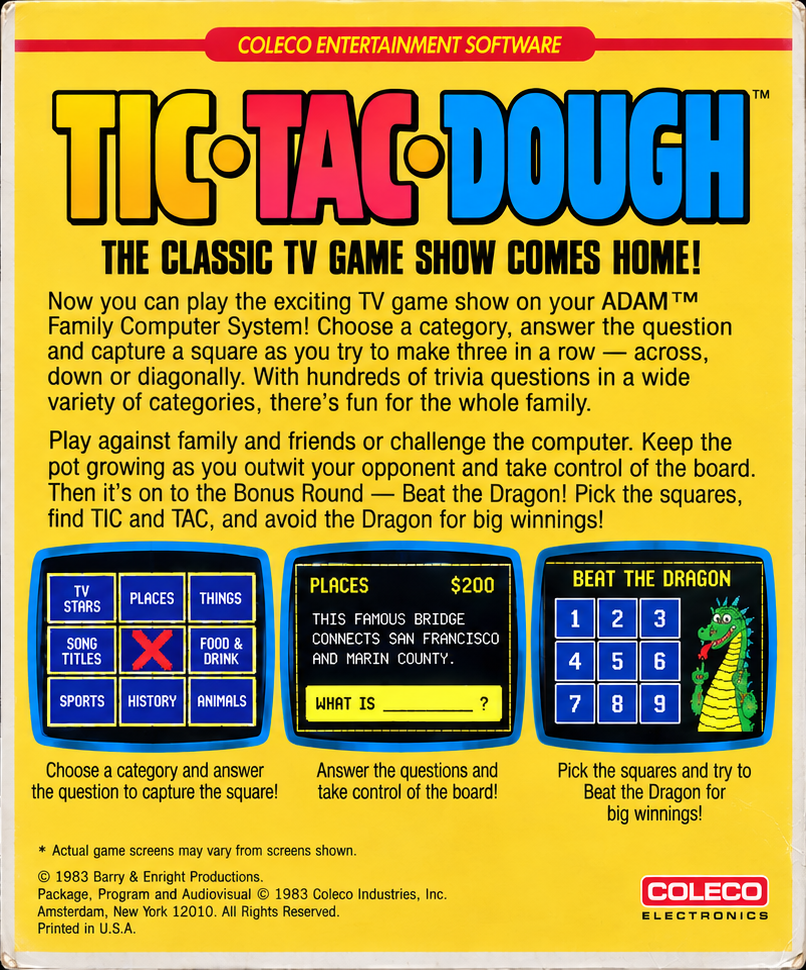
Tic Tac Dough brings the classic television game show to the ADAM Computer.
(10/07/2026)
Originally announced by Coleco for the ADAM but never released, this 2026 DiRoccoVision production recreates the missing title using Coleco’s original ADAM game-show software architecture as its technical foundation. The game features computer opponents, keyboard answer entry with flexible answer matching, a large question library, persistent game data and support for additional question packs—bringing one of ADAM’s long-lost announced titles to life.

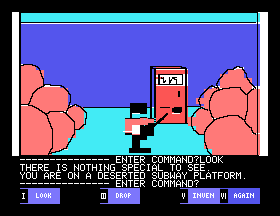
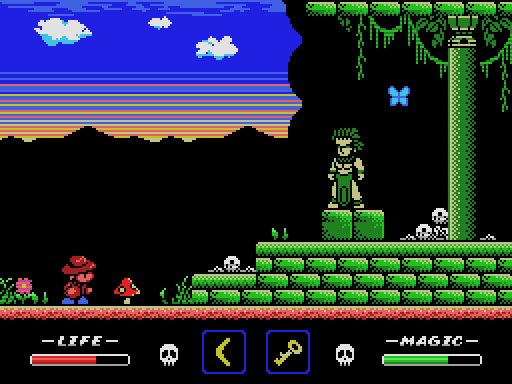
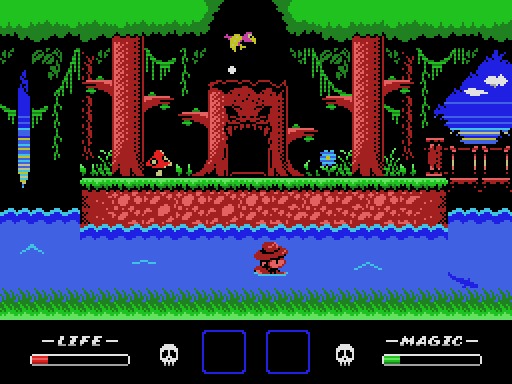
Sydney Hunter & The Yucatan Jungle fpr 2026?
(10/03/2026)

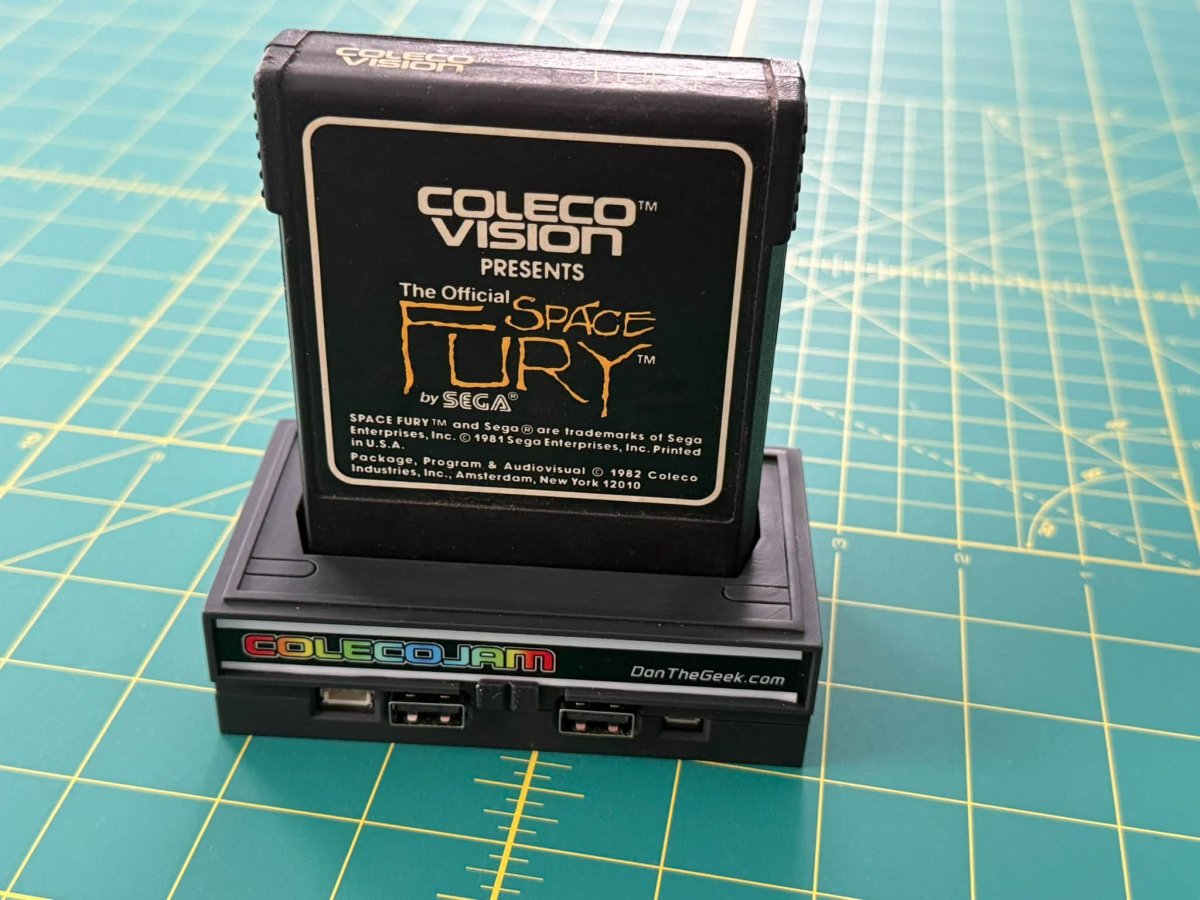
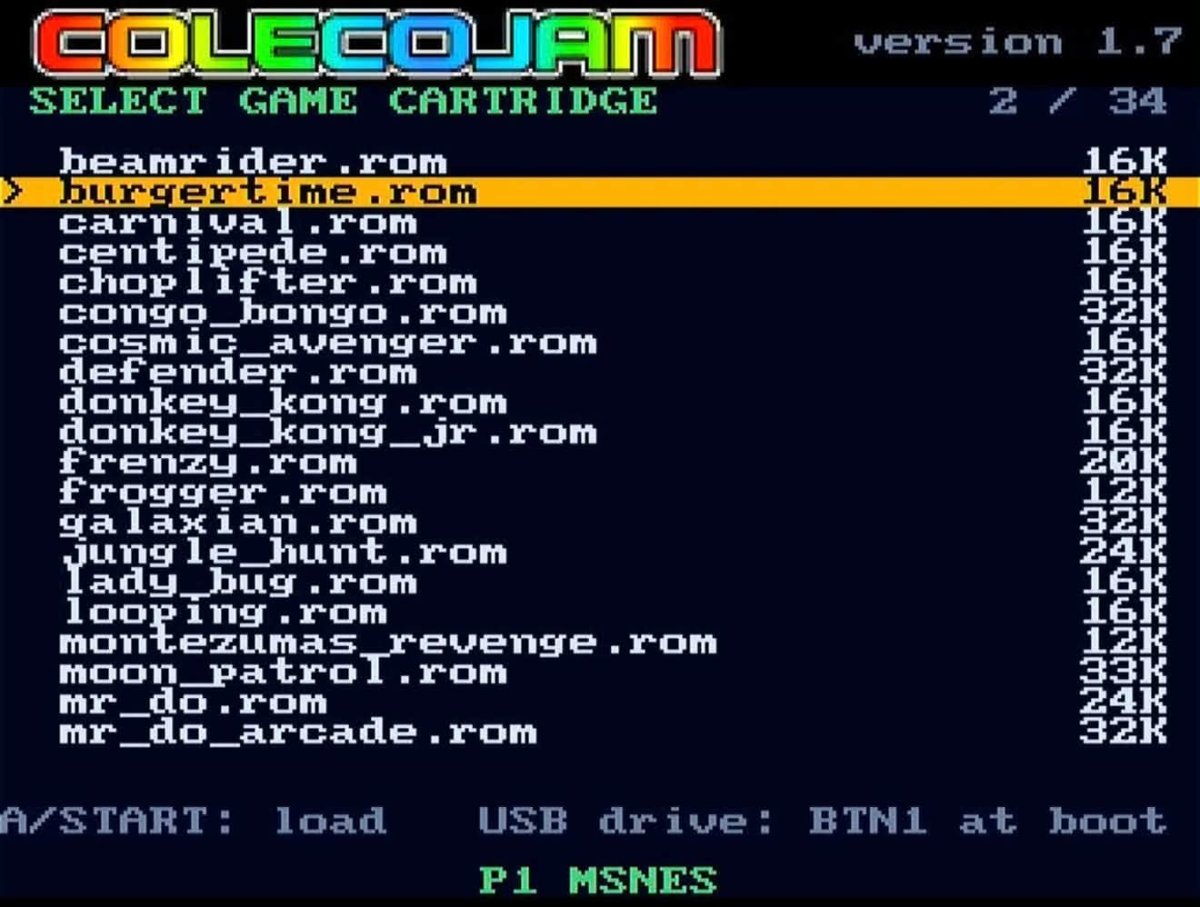
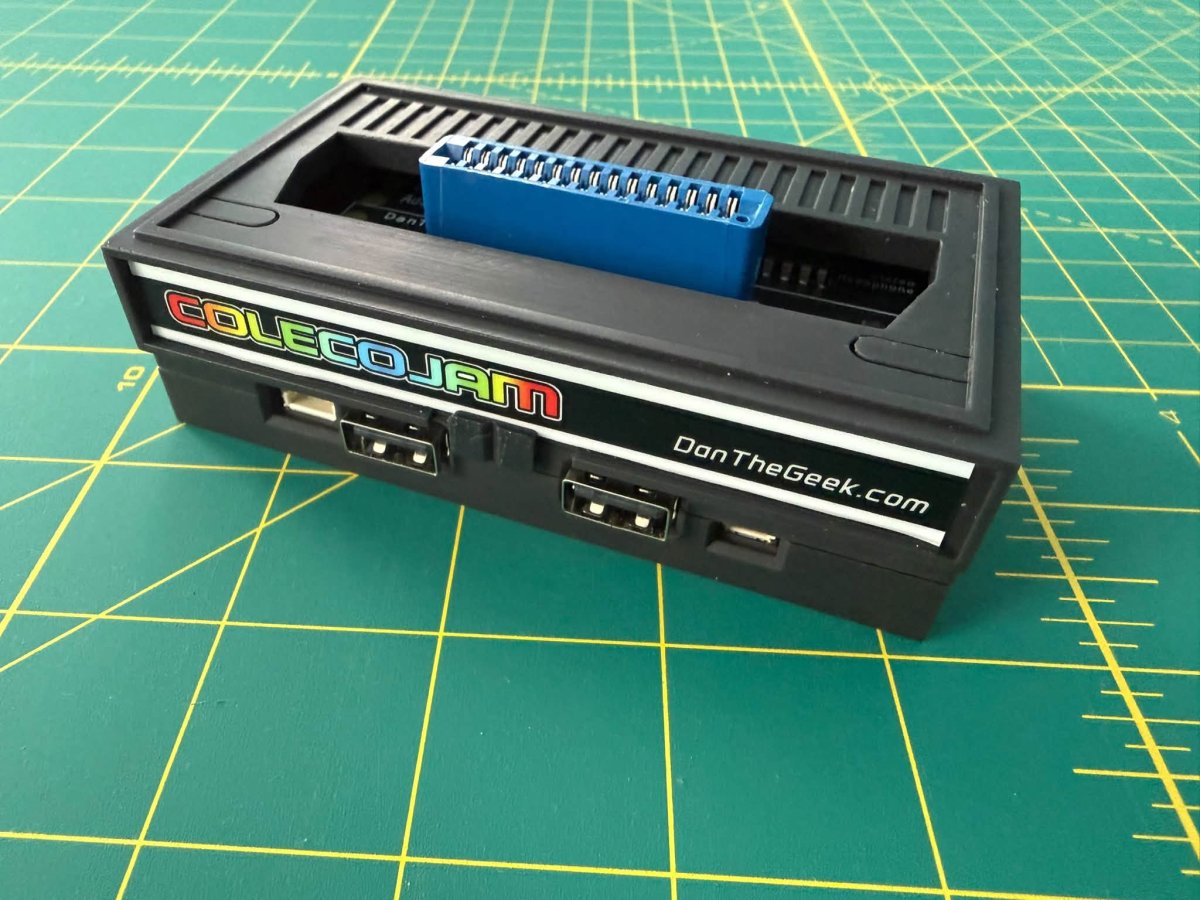
COLECOVISION ON THE ADAFRUIT FRUIT JAM
(10/03/2026)
It’s another great example of enthusiasts finding new ways to keep original ColecoVision software—and even the original cartridges—running on modern hardware.
#ColecoVision #Coleco #FruitJam #Adafruit #ColecoVisionEmulator #RetroGaming #Emulation #RetroComputing #VideoGameHistory
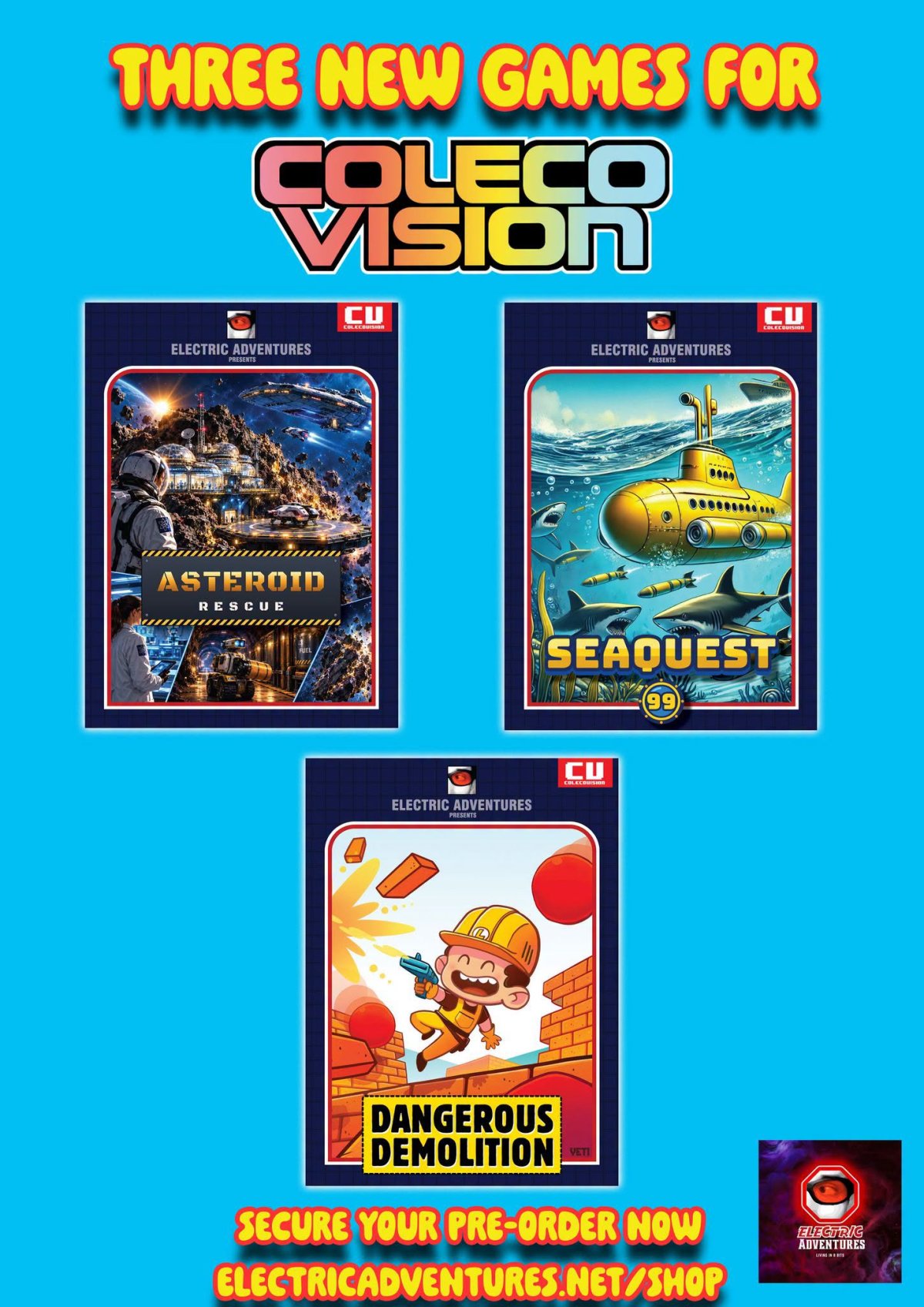
Electric Adventures presents three new homebrew games for your ColecoVision console or Adam computer.
(10/03/2026)
Package ©2026 Electric Adventures and made in Australia by Electric Adventures
Reserve your pre-order now (electricadventures.net/shop).
Games will be shipped in December 2026/January 2027, depending on when the printed boxes can be delivered.
Asteroid Rescue
Game Design and Graphics: Jim Wills
Programming: Tony Cruise aka Electric Adventures
A group of scientists are working in research labs established on numerous asteroids in the sector containing precious metals. Due to over-mining, the asteroids have become unstable and are in imminent danger of breaking up. A mothership has been dispatched with a rescue ship to allow the evacuation of the scientists one at a time from the asteroids.
The rescue ship only has enough fuel to land on the landing pad, so the resident robot working in the underground sections will have to be sent to collect more fuel to allow the rescue ship to take off and dock with the mothership.
Only when all of the surviving scientists have been rescued from the asteroid can the mothership move on to the next research asteroid. There will be ten levels, each with both a surface and underground section. The aim in the game is to rescue all of the scientists; the number of saved scientists is the score, so to speak, in this game.
Once a scientist is lost, there is no way to earn it back in that game.
Dangerous Demolition
Dangerous Demolition is a mashup between Breakout and a top-down shooter.
Don't you hate when the ball is taking ages to hit the last remaining brick?
Now you can shoot to guide it and finally kick this brick!
But beware, if the ball hits you, you'll get wiped out too!
The game offers 4 game modes and 30 levels (+a "survival mode" with infinitely generated levels). It will challenge your arcade gaming skills!
Game created by Dr Ludos, Music by Jaden Houghton, Cover illustration by Yéti and logo courtesy of 2Minds
Seaquest 99
Seaquest is a classic horizontal shoot-em-up released by Activision for the Atari 2600 in 1983.
Activision ported a large number of their games to other systems, but this one missed out and was only released for the Atari 2600.
Gameplay and Mechanics
Objective: Control a submarine to rescue up to six lost divers while shooting or dodging enemy killer sharks and scavenger submarines.
Oxygen Management: Your air supply constantly depletes. You must surface before your oxygen runs out.
Scoring/Rescuing: Rescuing a full load of six divers and making it to the surface awards bonus points. Surfacing with an incomplete load or no divers can cost you a life or a rescued diver.
Difficulty: The game speeds up and becomes harder each time you surface. You start with three lives and earn an extra life at 10,000 points.
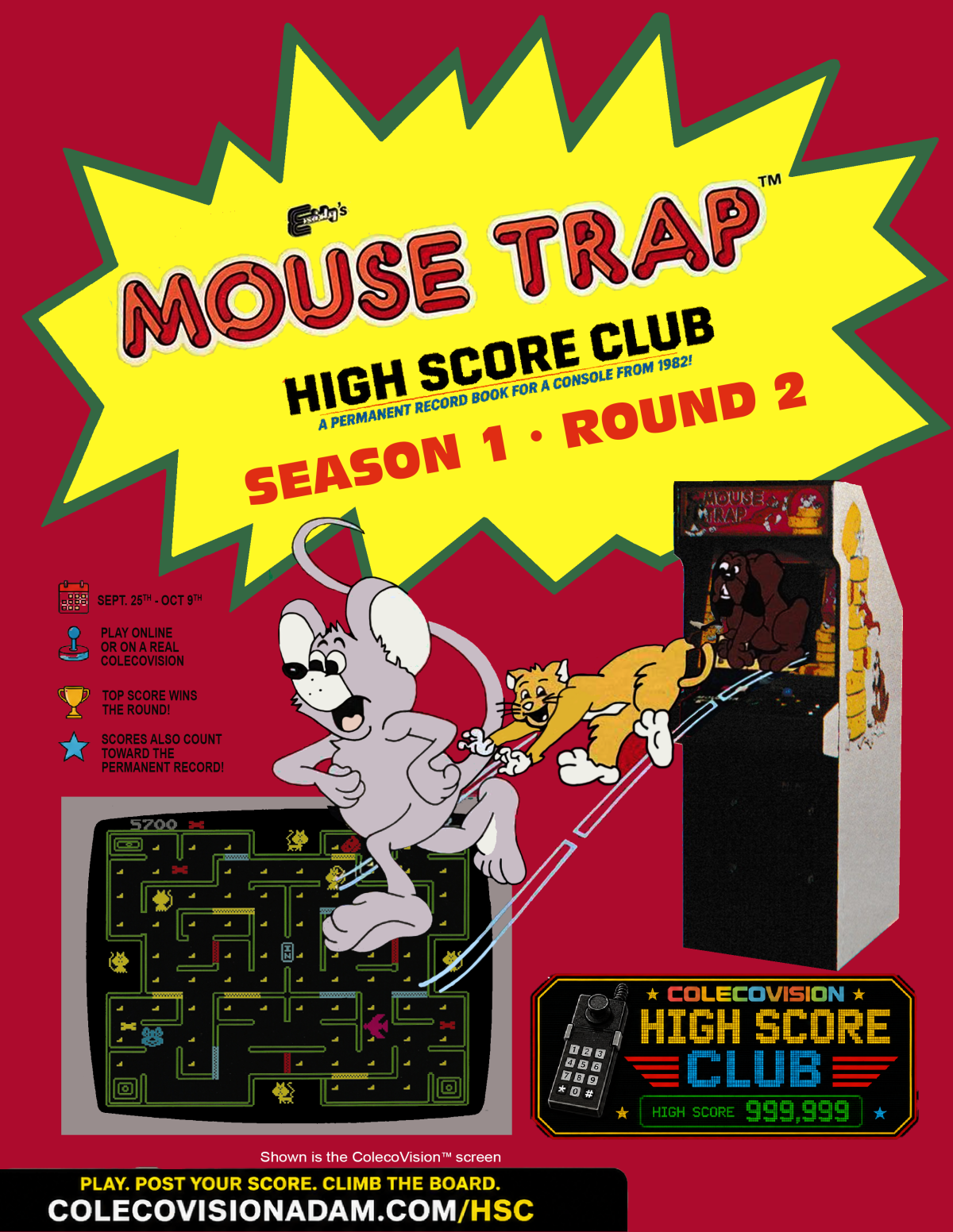
🕹️ THE COLECOVISION HIGH SCORE CLUB — SEASON 1, ROUND 2 IS NOW OPEN! 🏆
(9/28/2026)
Season 1 continues with one of the ColecoVision’s classic maze games:
🐭 MOUSE TRAP
Guide your mouse through the maze, gobble up cheese, open and close doors, and use the game’s famous transformations to turn the tables on those pursuing cats!
Round 2 runs from September 25 through October 9, and everyone is invited. Play Mouse Trap right on the website—no emulator to install, no ROM to find—or play on a real ColecoVision. Both count!
And remember, the featured competition is only part of the High Score Club.
🏆 All 133 original ColecoVision game boards are OPEN!
You can play any original ColecoVision title at any time and submit a score to its permanent leaderboard. Many records are still waiting for someone to claim them.
Your Round 2 Mouse Trap score counts twice: toward the Round 2 competition and toward the permanent Mouse Trap high-score record. When the round ends, the permanent leaderboard remains open, and your score stays there until somebody beats it.
So get that mouse moving, watch out for the cats, and see how high you can climb!
🎮 PLAY:
COLECOVISIONADAM.COM/HSC
Season 1 • Round 2: MOUSE TRAP
📅 September 25 – October 9
🎮 Play online or on a real ColecoVision
🏆 Top score wins the round
⭐ Scores also count toward the permanent Mouse Trap record
PLAY. POST YOUR SCORE. CLIMB THE BOARD.
#ColecoVision #MouseTrap #HighScoreClub #ColecoVisionHighScoreClub #RetroGaming #ClassicGaming #Coleco #VideoGameHistory #HighScore #ColecoVisionADAM
New Arrivals at the ColecoVision & ADAM Museum
(9/28/2026)
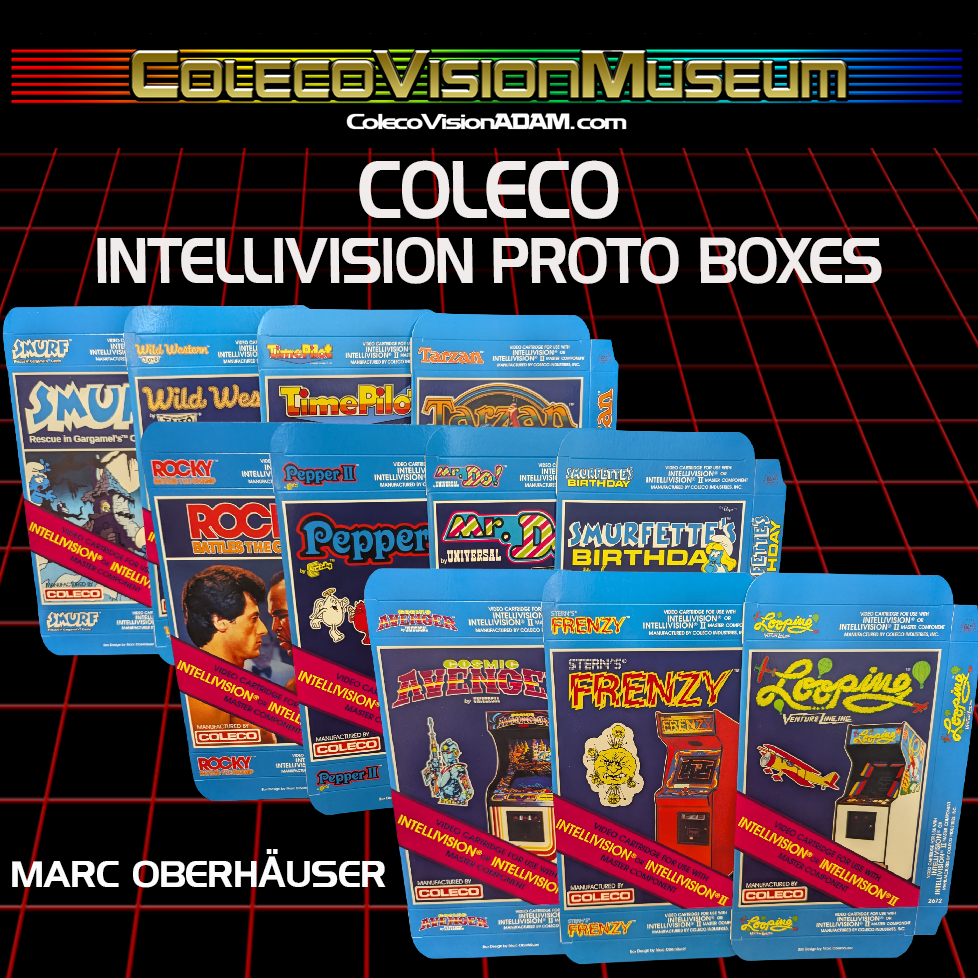
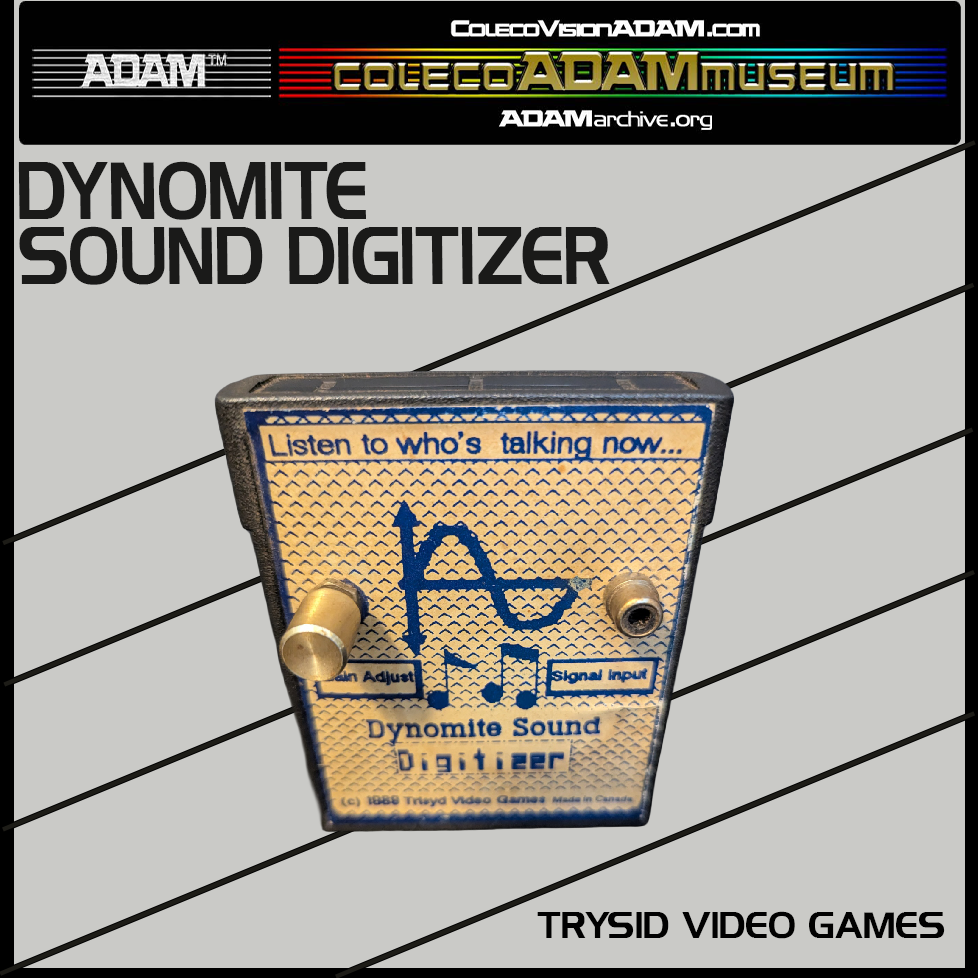
Recent additions include a Recreational Products Video Game Organizer, Gemini 10-foot Joystick Extension Cable, Atarimax Ultimate SD Cartridge, ColecoVision collector mugs by Brian Hathaway, a 1982 Mountain Dew “Win a ColecoVision” promotional can, the Trysid Dynamite Sound Digitizer for the ADAM, and Marc Oberhäuser’s collection of Coleco Intellivision prototype reproduction boxes.
I’m finally catching up on photographing and documenting these additions, with more still to come. Each represents another small piece of ColecoVision and ADAM history that I’m pleased to preserve and share through the museum.
Keep watching ColecoVisionADAM.com as the museum continues to grow!

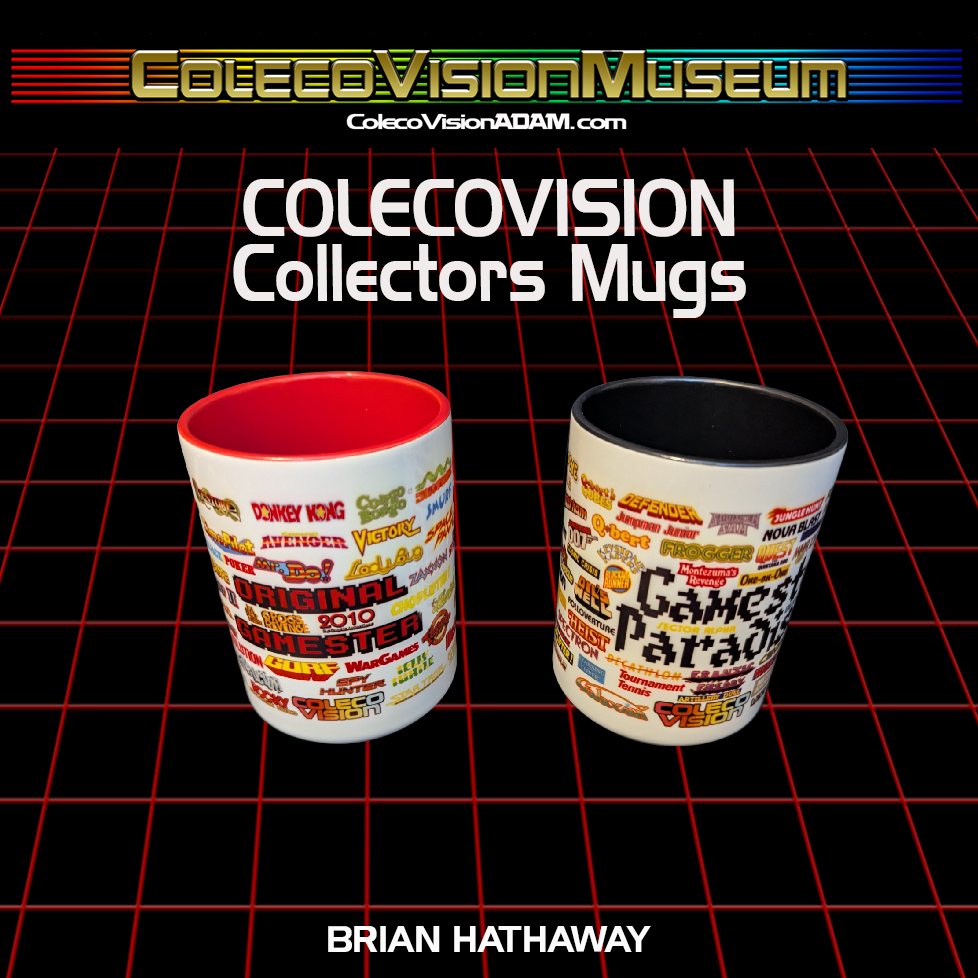
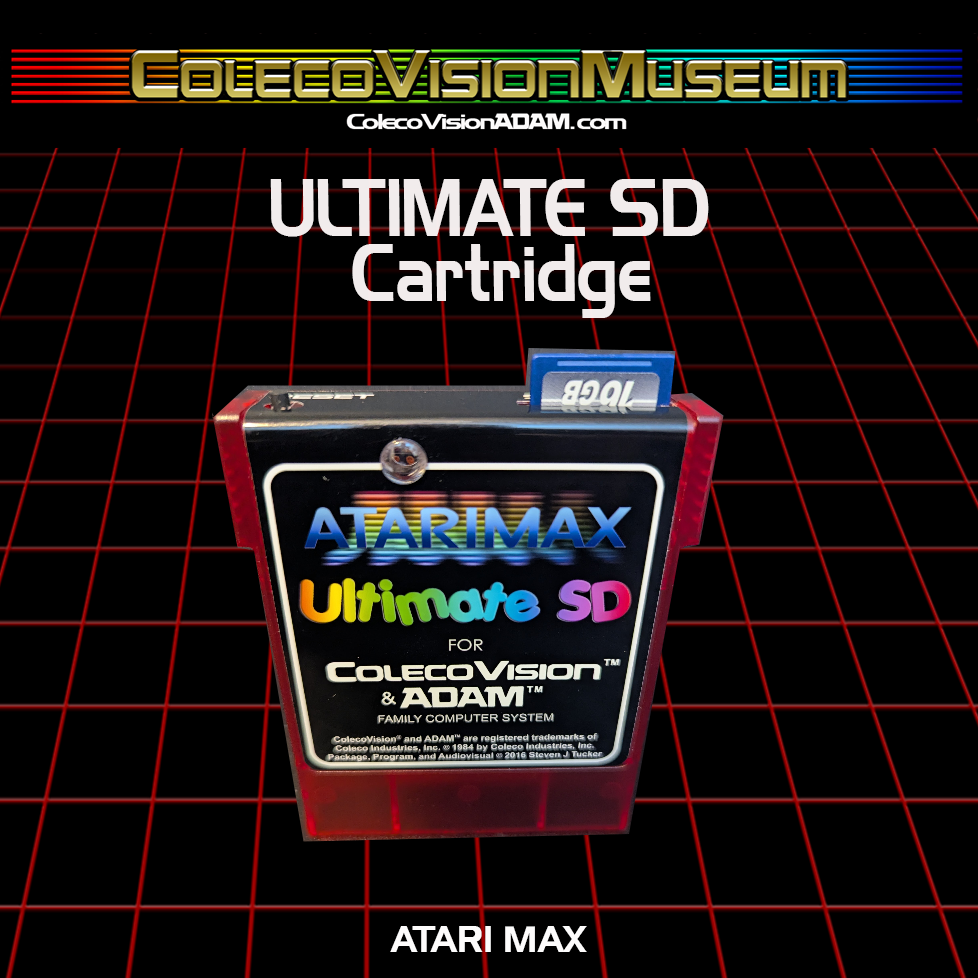
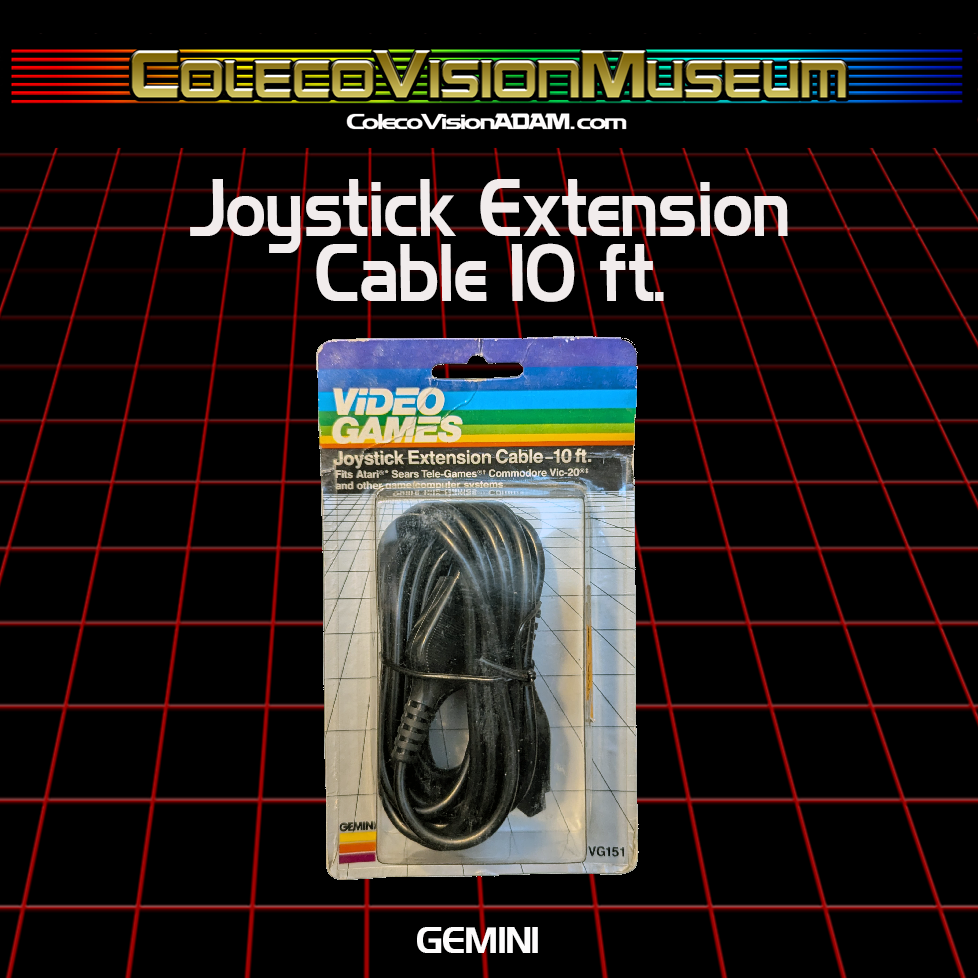
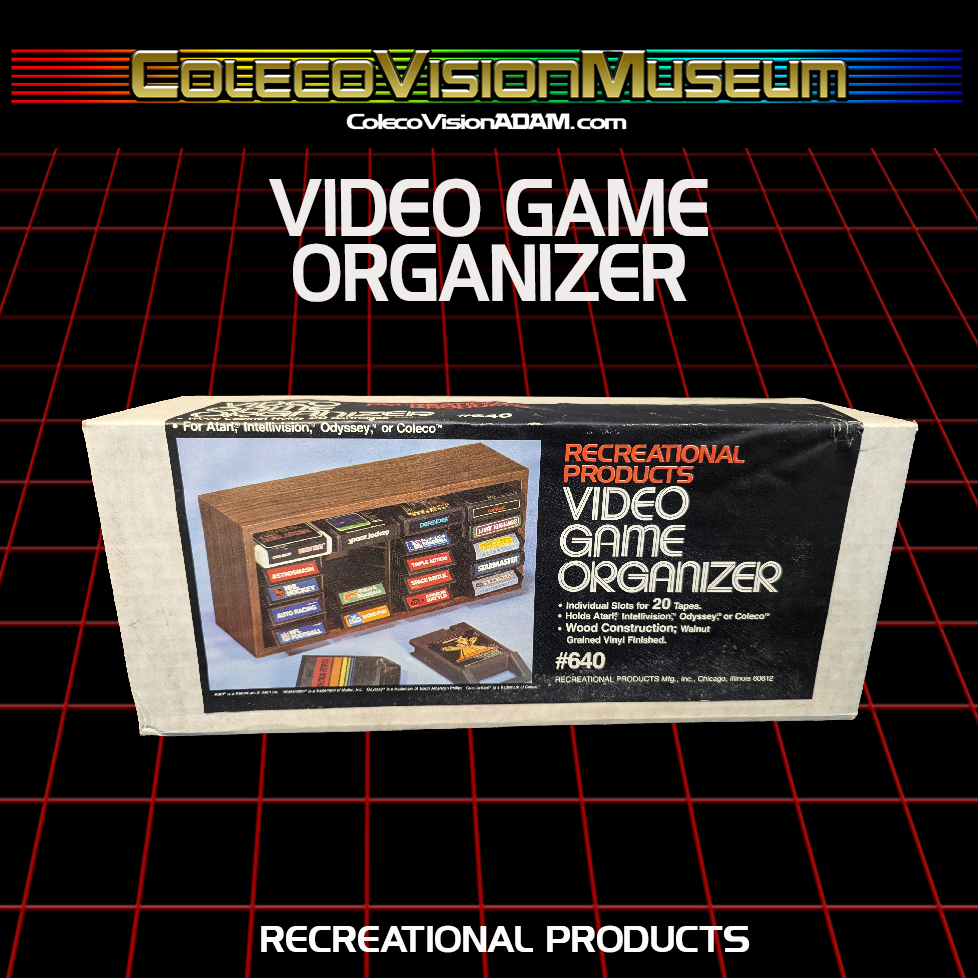
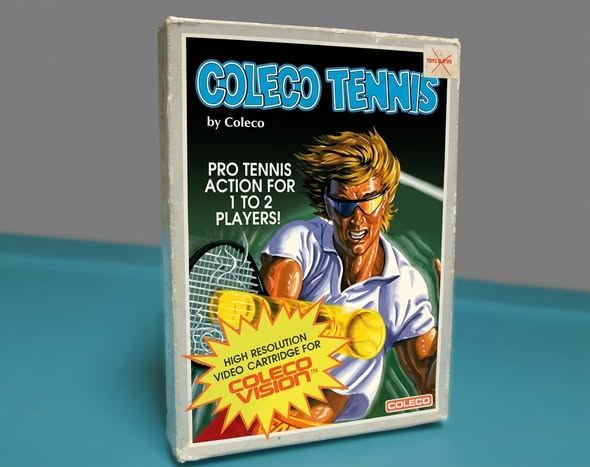
New Nintendo Port of Tennis from bfggamepassion
(9/25/2026)
The 1989 Game Boy Tennis, ported to the ColecoVision.
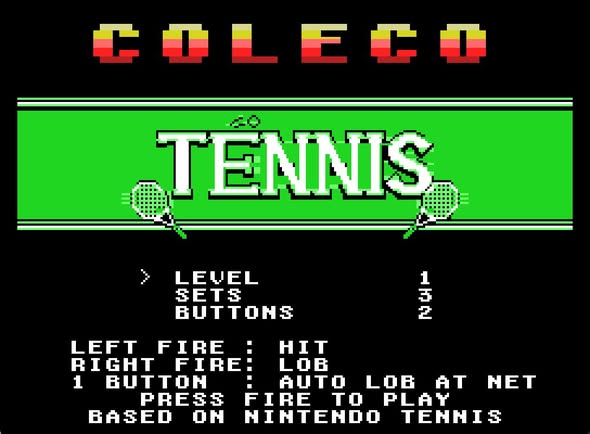
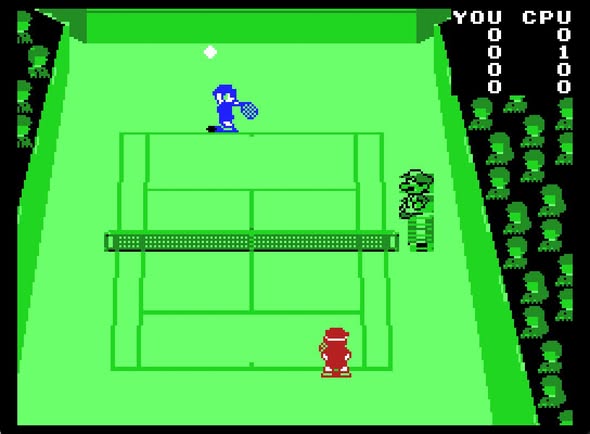
Nintendo's classic Tennis now runs on a 32K ColecoVision cartridge. You play a full match against the computer, with four difficulty levels and 1 or 3 sets. Mario is in the umpire's chair.
The game logic is not a remake: it is the original Game Boy code, translated instruction by instruction to the ColecoVision's Z80. Ball physics, shot angles, the CPU player's behaviour and the scoring rules are all the Game Boy's own.
Features
The full Game Boy stadium, 256 pixels wide, fills the screen.
The original four shades of green are kept.
The players are drawn with hardware sprites: red for you, blue for the CPU.
4 difficulty levels, and matches of 1 or 3 sets.
Two control modes:
2 buttons (default): left fire to hit, right fire to lob;
1 button: either button hits, and the game lobs automatically when your opponent comes to the net.
Sound effects on the SN76489 sound chip.
The game runs at 60 frames per second.
Made for real hardware
The ColecoVision's video chip, the TMS9918A, is strict: if video memory is written too fast while the screen is being drawn, the data is silently lost on a real console. Coleco Tennis only writes video memory in two situations:
while the screen is off, to draw the title and the court;
during the vertical blank, from data prepared in RAM.
Every video access was checked in a cycle-counting simulator: none is too fast, and the vertical-blank update uses about 60% of the time available.
Made with AI
This port was made with Claude, Anthropic's AI assistant, working together with a human developer.
Claude did the technical work:
reverse-engineered the Game Boy ROM;
wrote a translator that converts the Game Boy's SM83 code to Z80;
moved the game's memory into the ColecoVision's 1 KB of RAM;
wrote the display, sound and controller code in assembly;
built the graphics converters and the simulator that checks the timing rules.
The translated game logic was checked step by step against the real Game Boy game running in an emulator: over 2,700 game steps, the ball, players and score match exactly. The only differences come from one deliberate tweak that makes the player's angled shots slightly shorter.
The human developer directed the project, tested the game and decided how it should look and play.
Coleco Tennis is part of a series of ports of the same game, all made the same way: ZX Spectrum, Commodore 64, Amstrad CPC and CPC Plus/GX4000.
Credits
Original game: Tennis © 1989 Nintendo. This is an unofficial, non-commercial fan port, not affiliated with or endorsed by Nintendo.
Port: made with Claude (Anthropic).
Tools: sjasmplus, SkoolKit, PyBoy, openMSX.
SUPERHERO 🦸 A new ColecoVision adventure from DiRoccoVision
(9/24/2026)
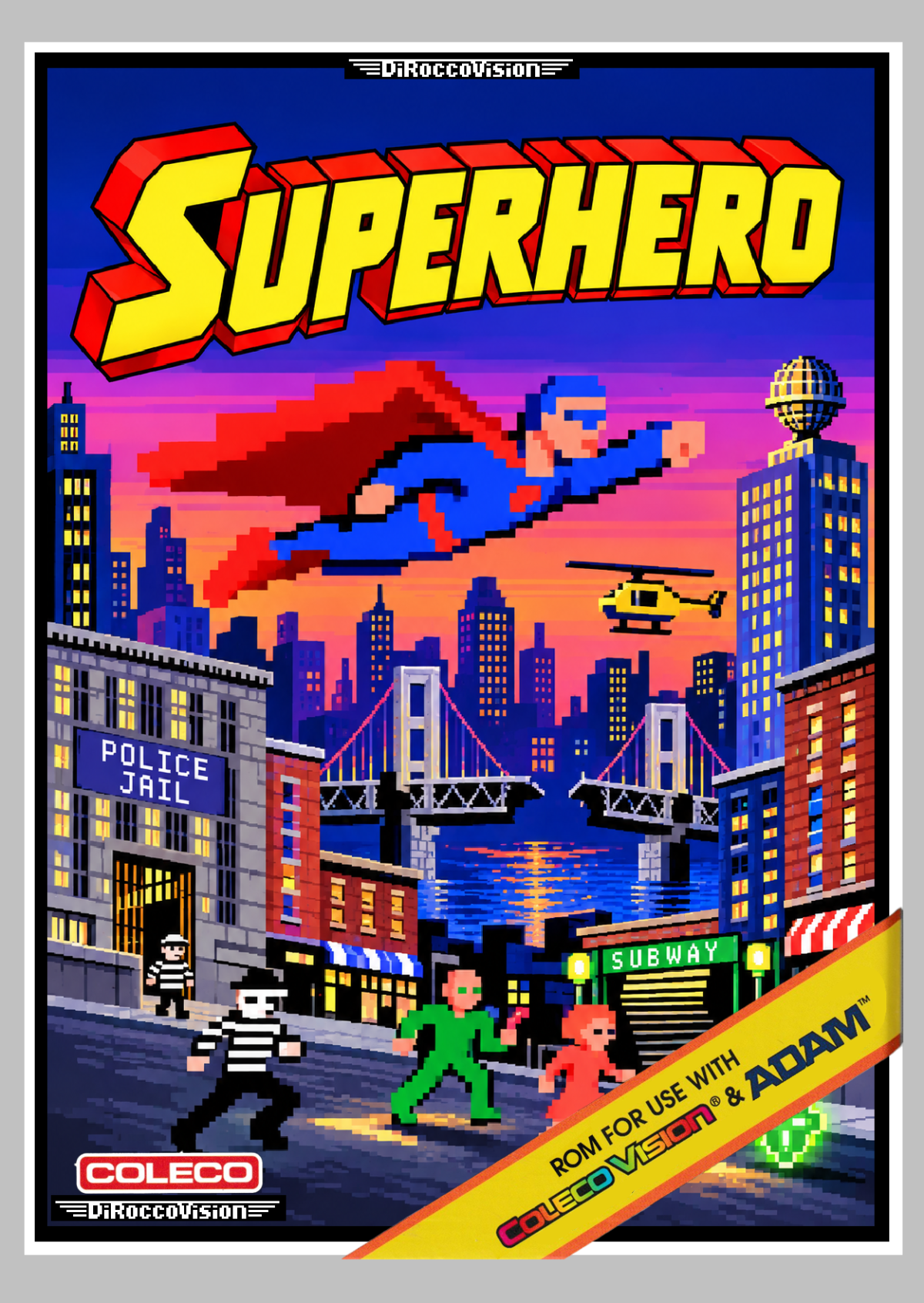
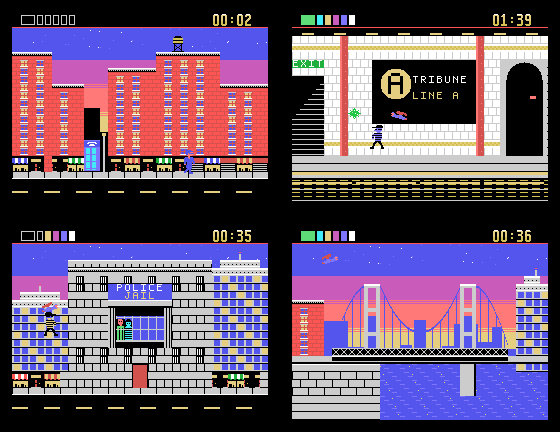
SUPERHERO is a new DiRoccoVision adventure for the ColecoVision. You start in everyday clothes beside a phone booth. Step inside, and you fly out as the hero. Then you have work to do:
- Round up the gang: catch the villain and his five henchmen, and carry every one of them to the police jail.
- Rebuild the bridge: find its three pieces and lay them back in place.
- Watch out for the green crystals: they sap your power. Only the reporter can bring it back.
- Finish the job: walk back through the TRIBUNE's front door in your everyday clothes, and the city is safe.
It all happens against the clock across a 27-room city at dusk: streets, landmarks, a subway with four stations, and X-ray vision to look through the walls.
Two ways to play:
CLASSIC: the original 1979 rules. It was checked against the original Atari cartridge frame by frame, and it plays the same.
ENHANCED: the same adventure, rebuilt for the ColecoVision.
- Smooth motion.
- A jail that shows exactly who you have caught, each crook in his own colour.
- A bridge you can watch come back together, piece by piece.
- X-ray on its own button, and a hover on the other.
- A true clock with split times.
- Fairer rules where the original was rough.
In both modes:
- The city redrawn for the ColecoVision, with characters drawn side-on who walk.
- MAP + STATUS on keypad 0: the city as you have seen it, where you last saw each crook, and the bridge's progress.
- Sound: CLASSIC recreates the original's effects, and ENHANCED gets a new multi-voice set for the ColecoVision's sound chip.
- Optional speech with a Lundy speech module, which you can switch off on the menu.
- One player, or two with a joystick each, as in the original's teamwork mode.
- The reporter can come to you, or you can go and find her. Crooks move at normal or fast speed.
- * pauses the game.
It's in development and not out yet. More soon.
Be Kind, Rewind - A Video Store Game for the ColecoVision
(9/24/2026)
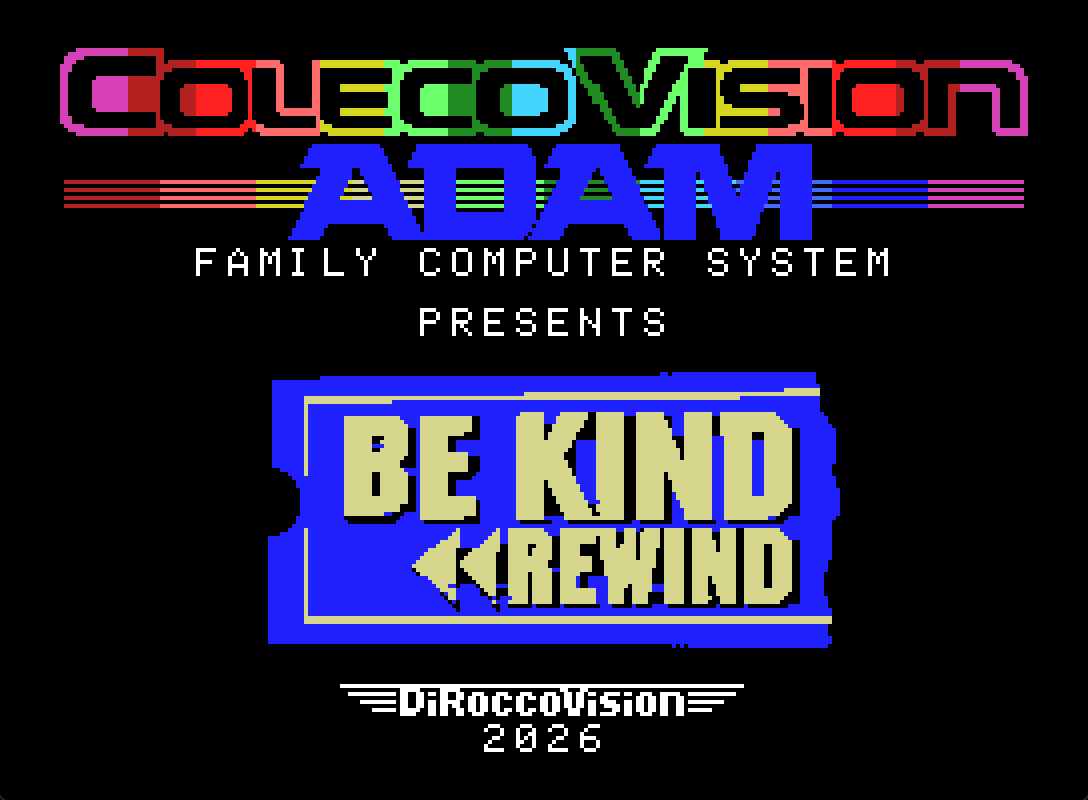
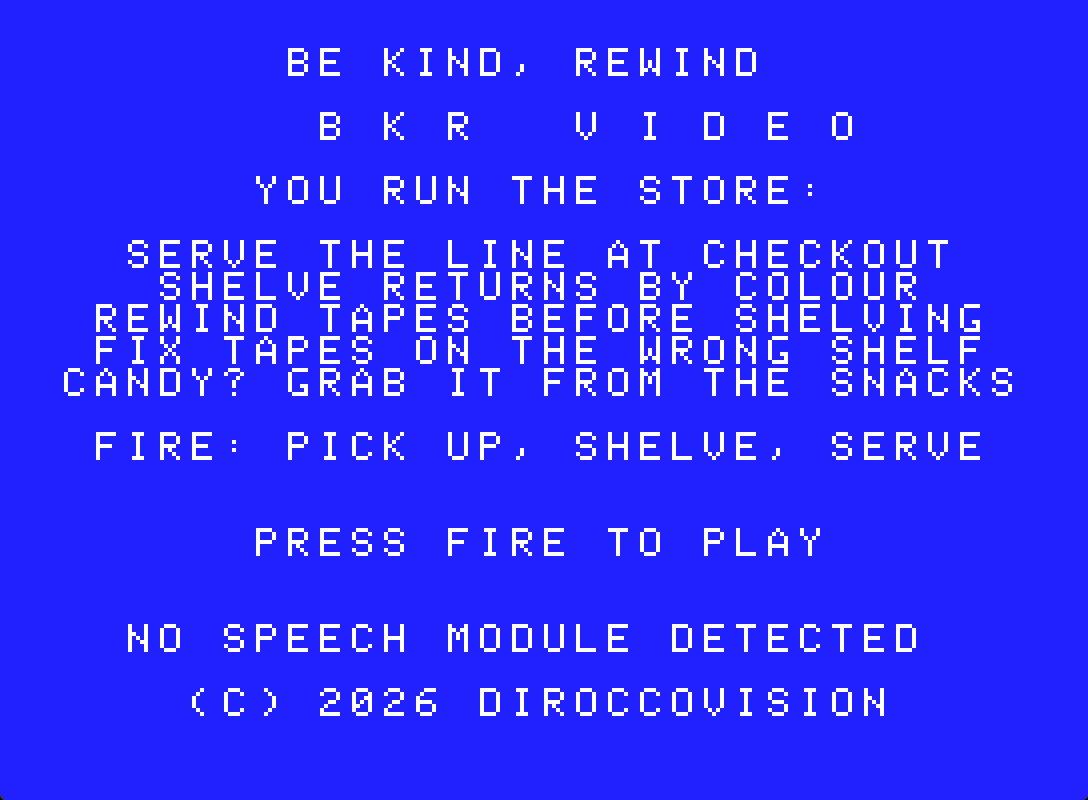
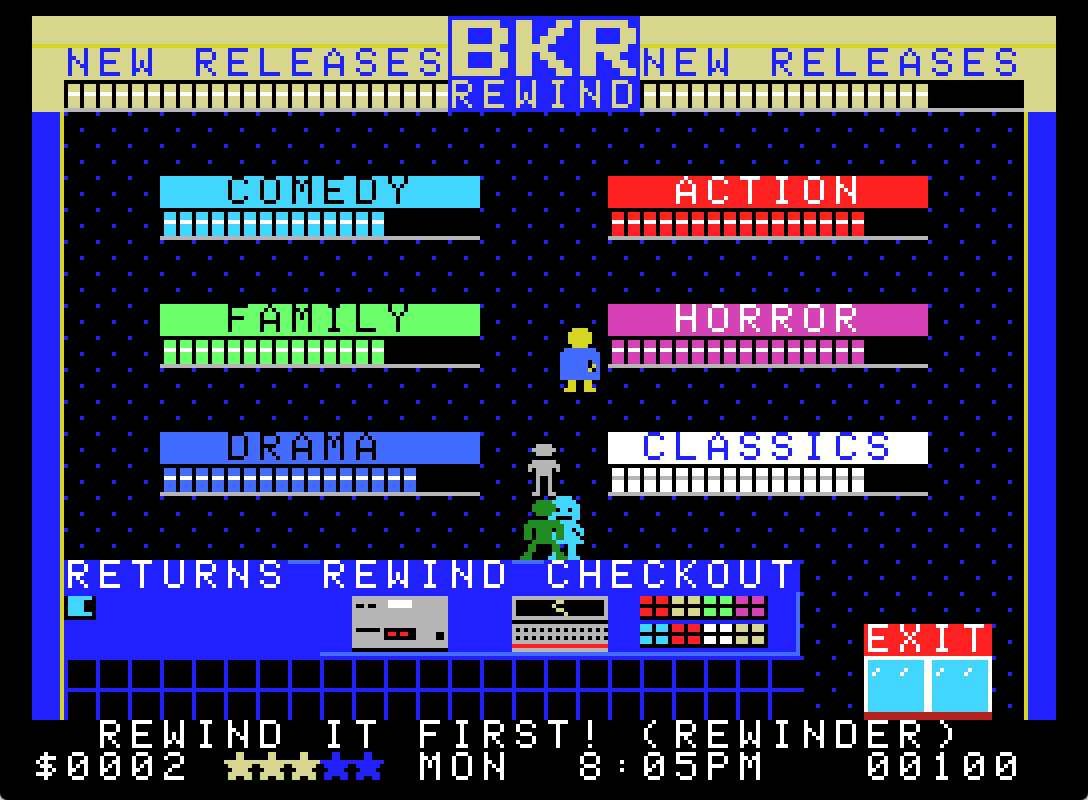
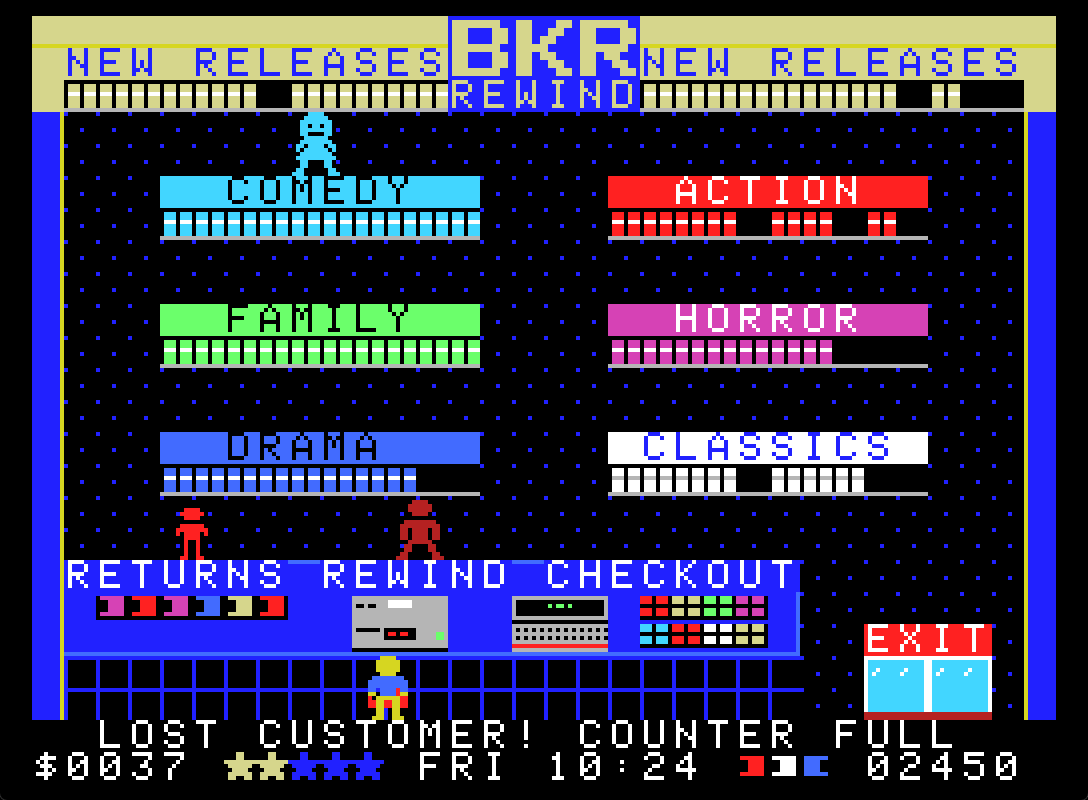
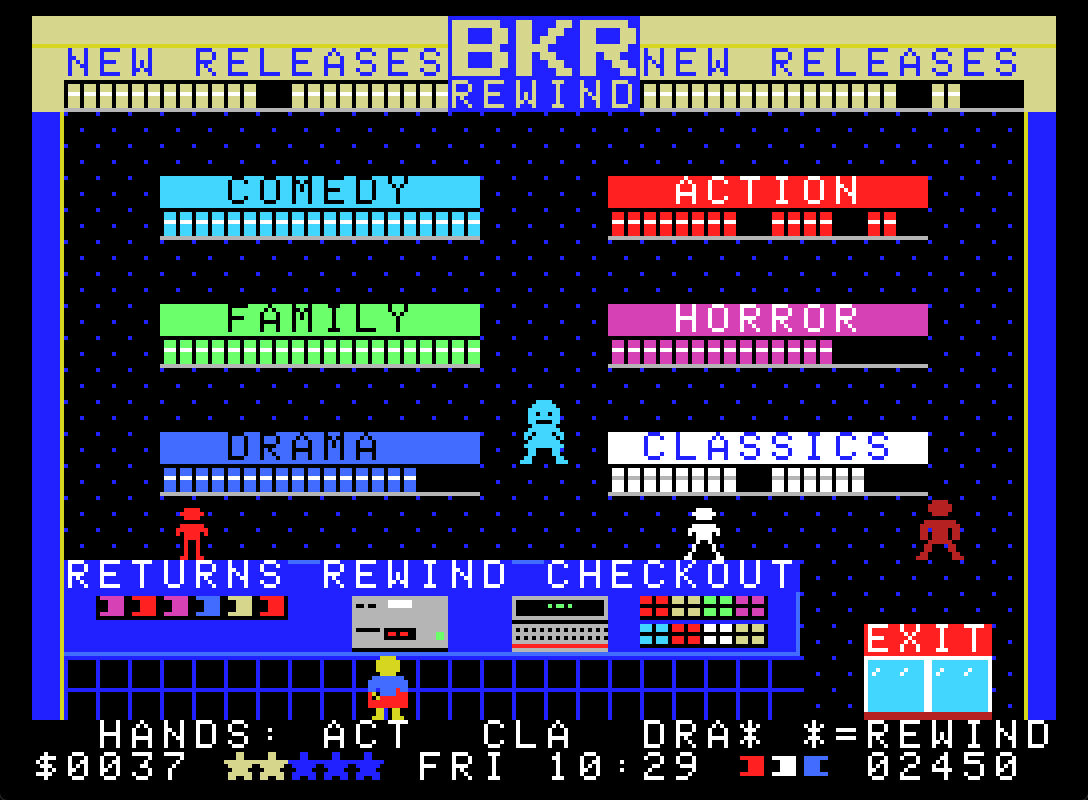
DiRoccoVision has released Be Kind, Rewind, a new ColecoVision game that puts you behind the counter of BKR Video, the neighborhood video store, on the busiest nights of the week. It is .
The store is always falling out of order
Returns pile up on the counter, some of them late and some of them not rewound. Customers browse the racks, line up at the register and walk out if you keep them waiting. Some want candy. Some need help finding a movie. And some put tapes back on the wrong shelf. You can carry three tapes at a time, so where you go next is the whole game.
One store, three nights
- The whole store on one screen: the New Releases wall, six coloured racks, the counter with the returns, the rewinder and the register
- A rewinder that runs by itself while you work
- A returns counter with room for six tapes, and customers who wait for space
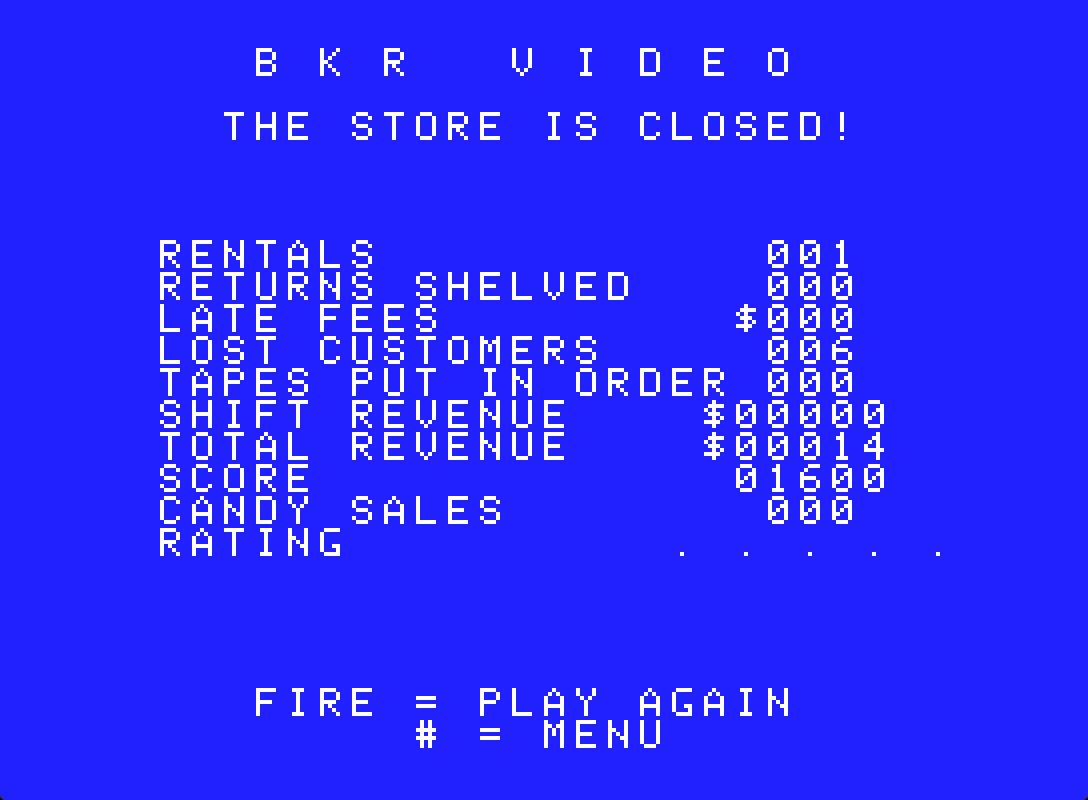
- Monday, Friday night and Saturday night, each busier than the last
- Closing time: the doors lock at 11:00, and every tape has to be back on its shelf before you go home
- A neon BKR sign over the New Releases wall
It talks
With a Lundy speech module the store welcomes you and reminds you to be kind and rewind. The voice can be switched off on the menu.
32KB, one player, standard controller. This is a beta: bug reports and opinions are welcome on the forum.
### ExcerptDiRoccoVision's Be Kind, Rewind is out now in BETA: a 1980s video store on one ColecoVision screen - returns, rewinding, rentals, candy and tapes on the wrong shelf.
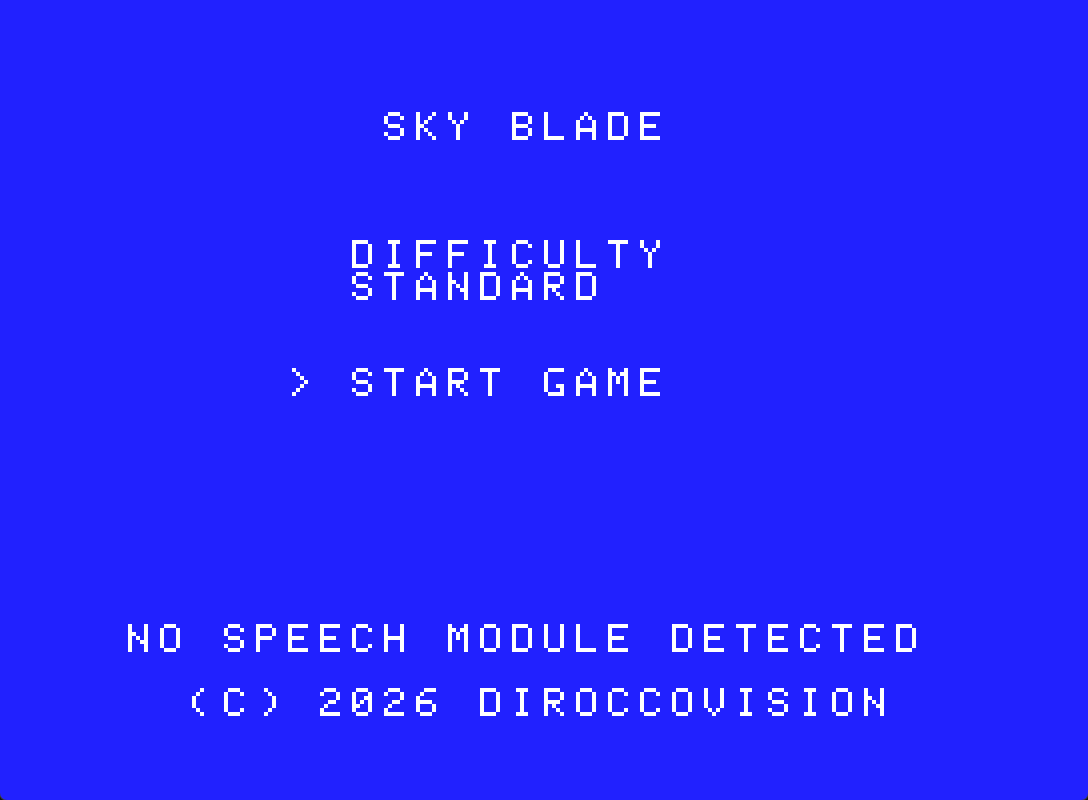
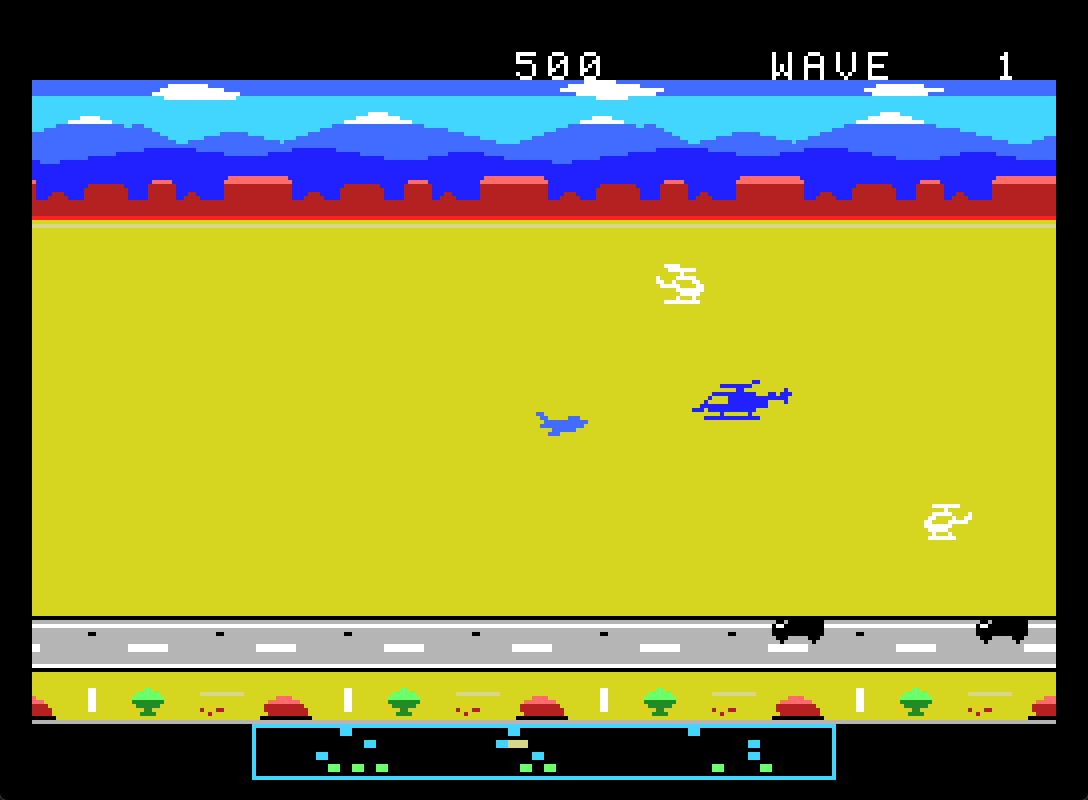
Sky Blade Brings Chopper Command to the ColecoVision
(9/23/2026)
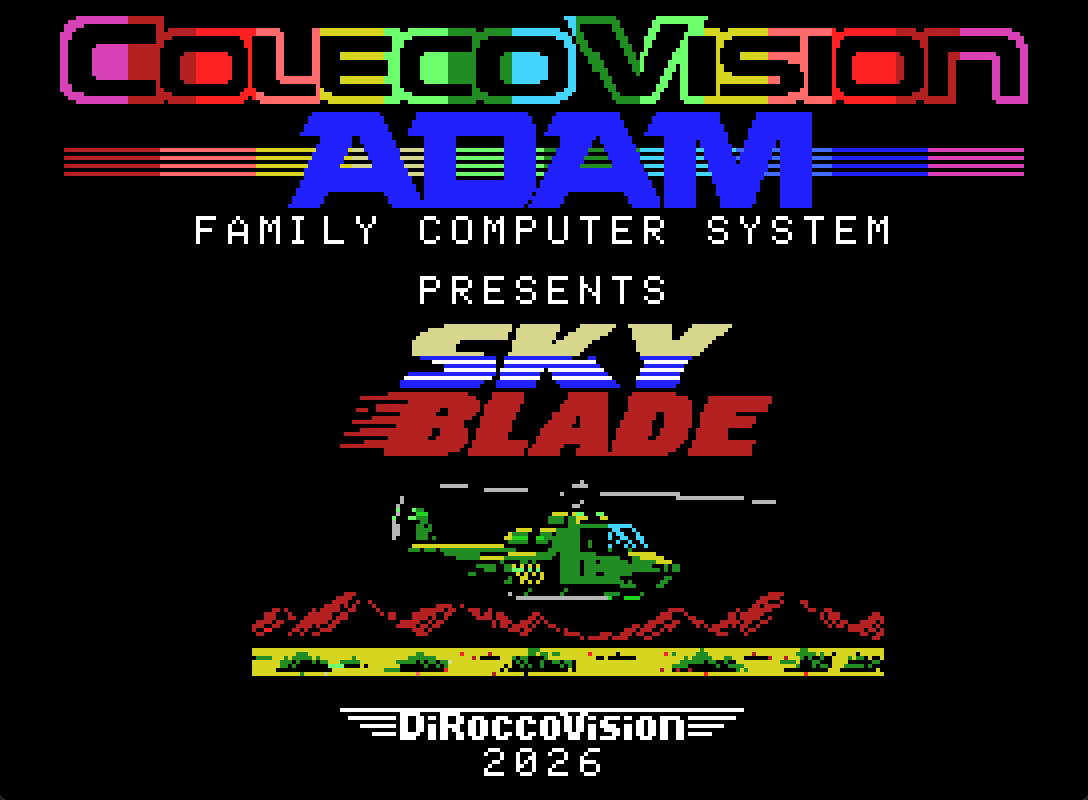
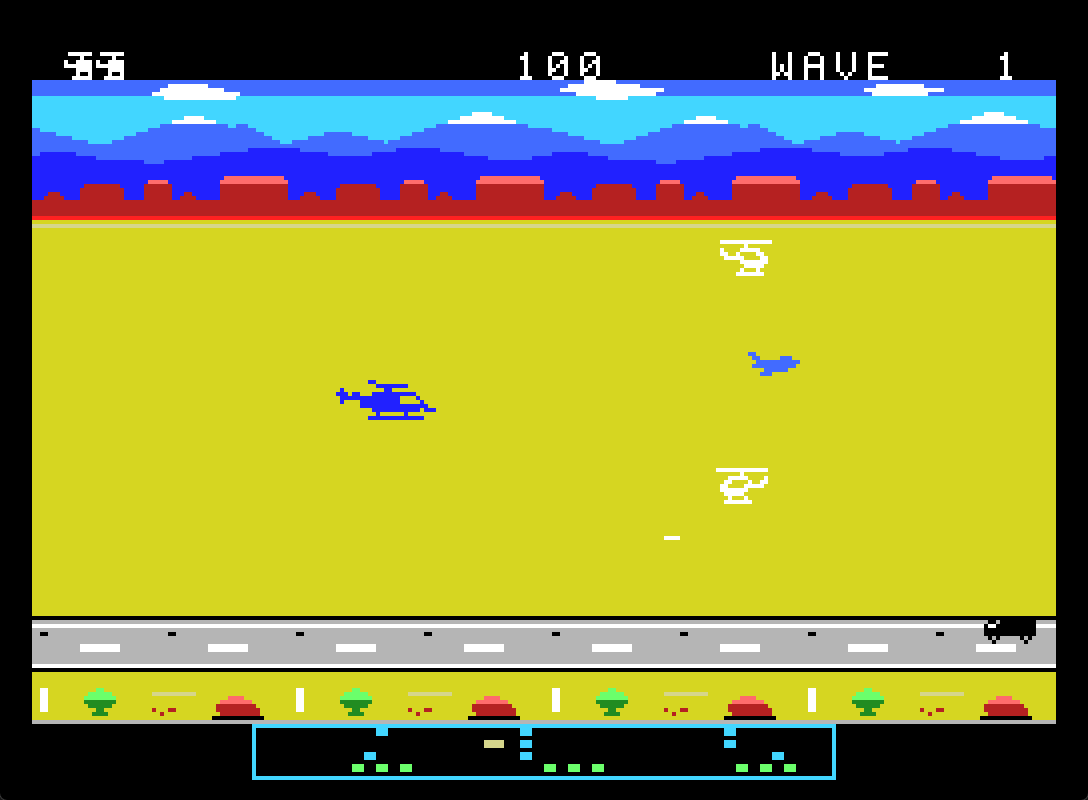
DiRoccoVision has announced Sky Blade, a ColecoVision conversion of Chopper Command, Bob Whitehead's 1982 Atari 2600 game for Activision. You fly a gunship over the desert and protect a convoy of trucks from wave after wave of enemy helicopters and jets. There is a game page with more to come.
Faithful to the original
Sky Blade was checked against the Atari cartridge frame by frame - 8,001 frames on each difficulty setting - and the two match: the gunship's momentum and its long turns, the enemy formations, the missiles that split in two, the hits, the waves and the scoring. Clear a wave of twelve aircraft and every truck still rolling is worth the wave number times 100.
New for the ColecoVision
- A desert redrawn in full colour: scrolling mountains and mesas, a paved road, the convoy's trucks
- Day, sunset and night as the waves go on
- A long-range radar panel showing every aircraft and truck
- A gunship that dips its nose at full speed and flares when it turns
- Sound driven by the original game's own events
- STANDARD and EXPERT - the original's two difficulty settings
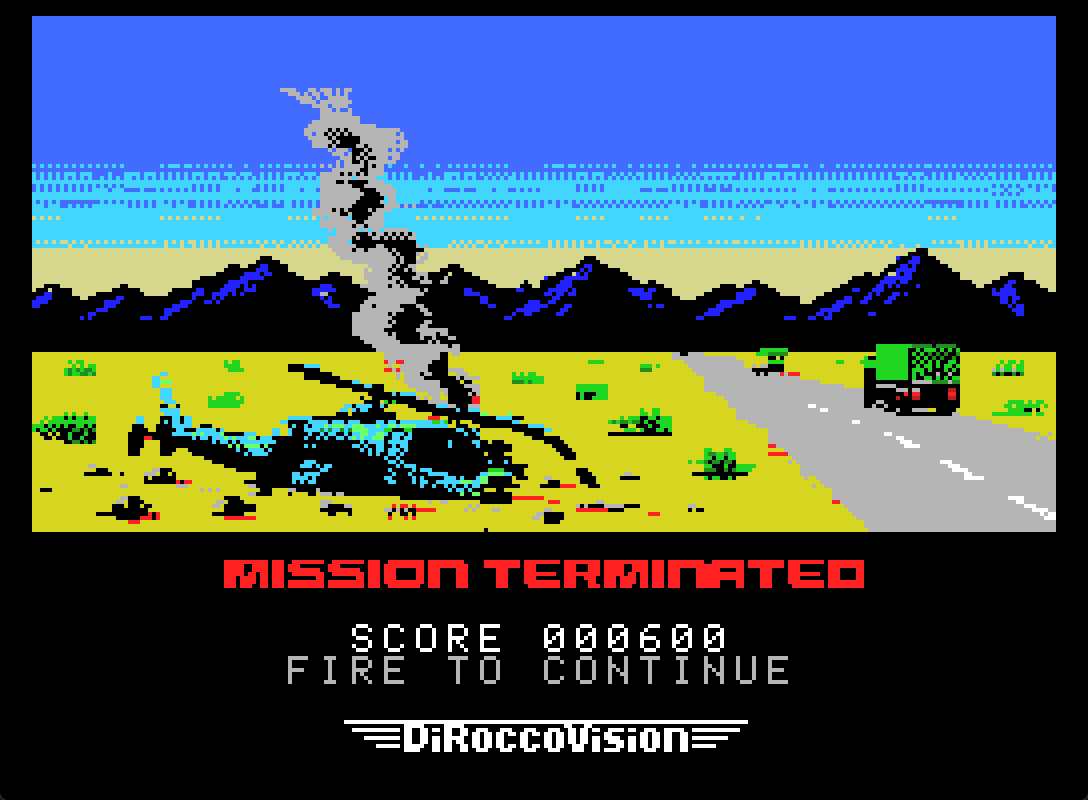
- An attract demo, pause, and a MISSION TERMINATED screen at the hour you went down
It talks
With a Lundy speech module, a command-centre voice calls the action. It can be switched off on the menu.
A 32KB ColecoVision cartridge, one player, standard controller. No release date yet.
Target Town Comes to the ColecoVision
(9/21/2026)
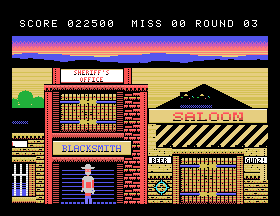
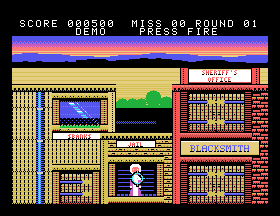
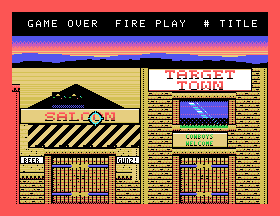
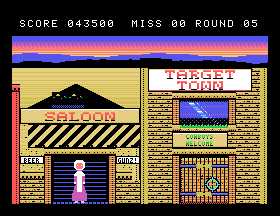
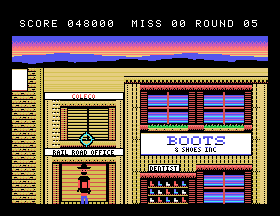
DiRoccoVision has announced Target Town, a ColecoVision shooting gallery based on Coleco's 1978 electric rifle set of the same name. The toy's cardboard Western street, whose doors and windows flipped open to show outlaws, is now a 768-pixel street drawn from scratch in full ColecoVision color.
Shoot the outlaws, spare the lady
The street scrolls from the Sheriff's Office to Boots & Shoes Inc. and stops five times a round. At each stop, doors swing open, windows light up and heads pop over the rooftops. Aim the ring with the joystick and fire before the outlaw draws: 500 points for each one you hit. An outlaw who gets his shot off is a miss, and so is the lady from down the street if you hit her. Ten misses and the outlaws take the town.
A town that fights back
- 17 doors, windows, rooftops and an alley, each a lamplit room or a dark one
- Full figures in the doorways, busts in the windows, heads over the rooftops
- The outlaws draw faster every second round
- A sunset sky over the mountains behind the whole street
- An attract demo that plays the game by itself on the title screen
- Experimental support for the Roller Controller
It talks
With a Lundy speech module, an announcer, the Sheriff and the townsfolk call the action: "Bank robber!", "Trouble at the saloon!", "Don't shoot!", "Watch who you're shooting!" The voice can be switched off on the title screen.
Screenshots and details are on the Target Town page at DiRoccoVision.com.
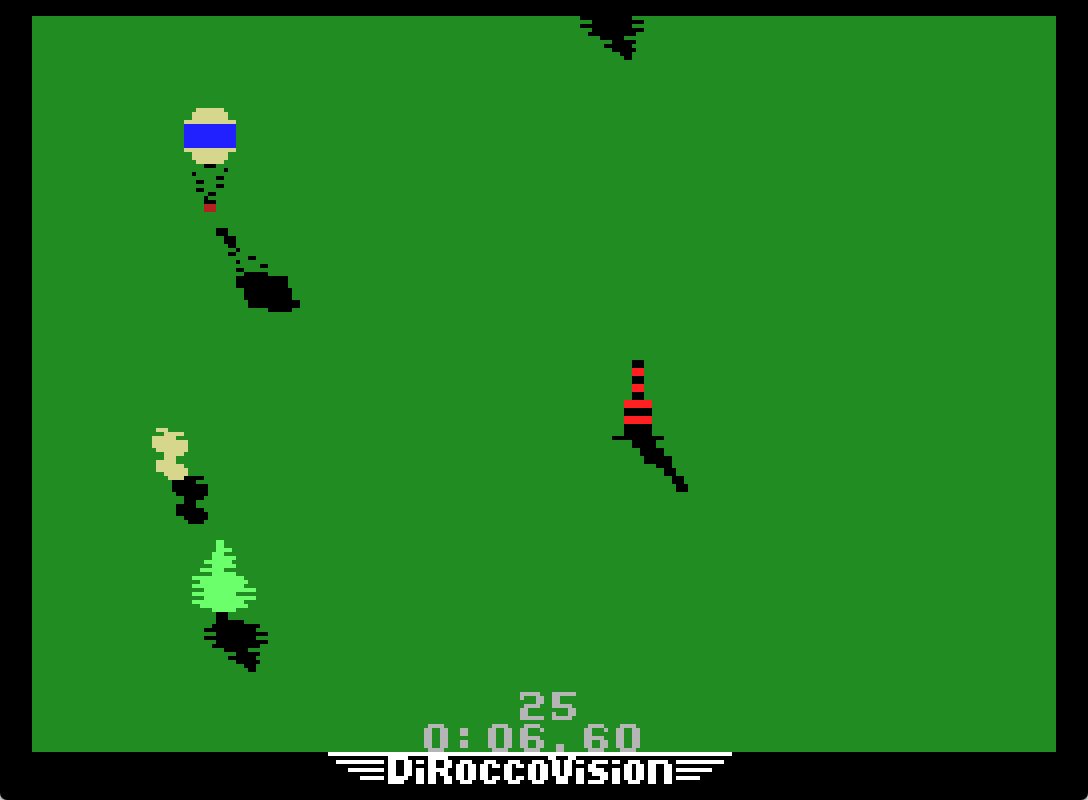
Cloud Racer Brings Sky Jinks to the ColecoVision
(9/15/2026)
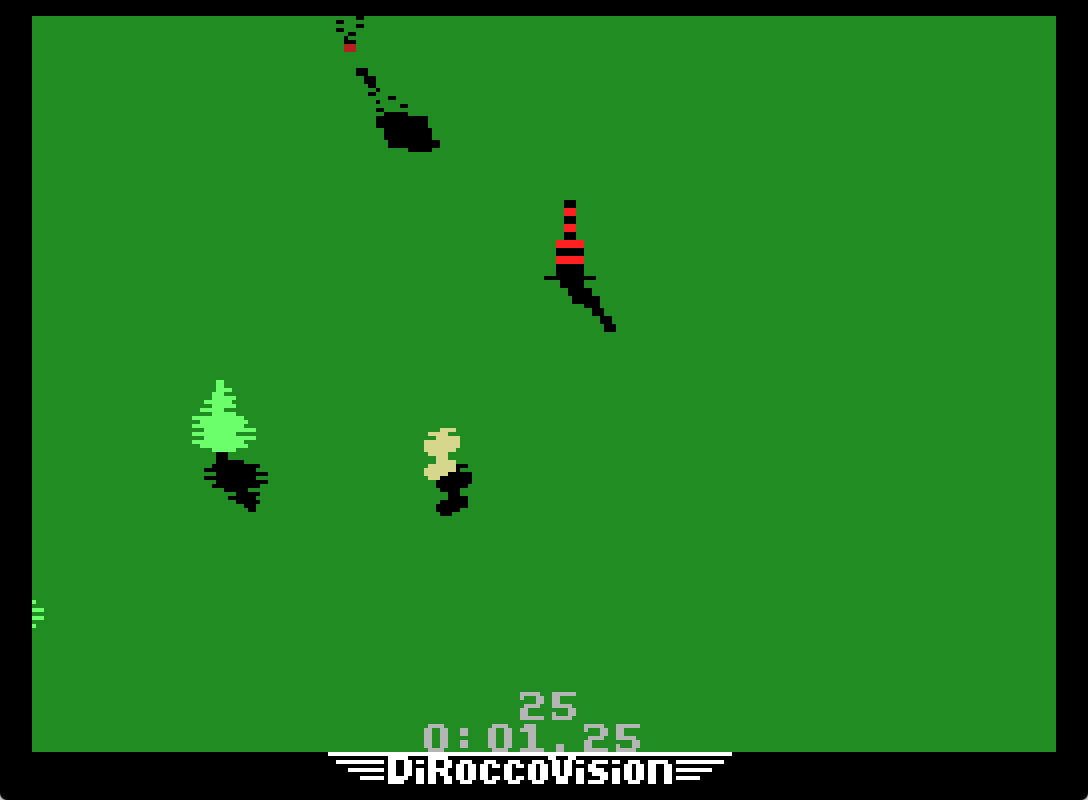
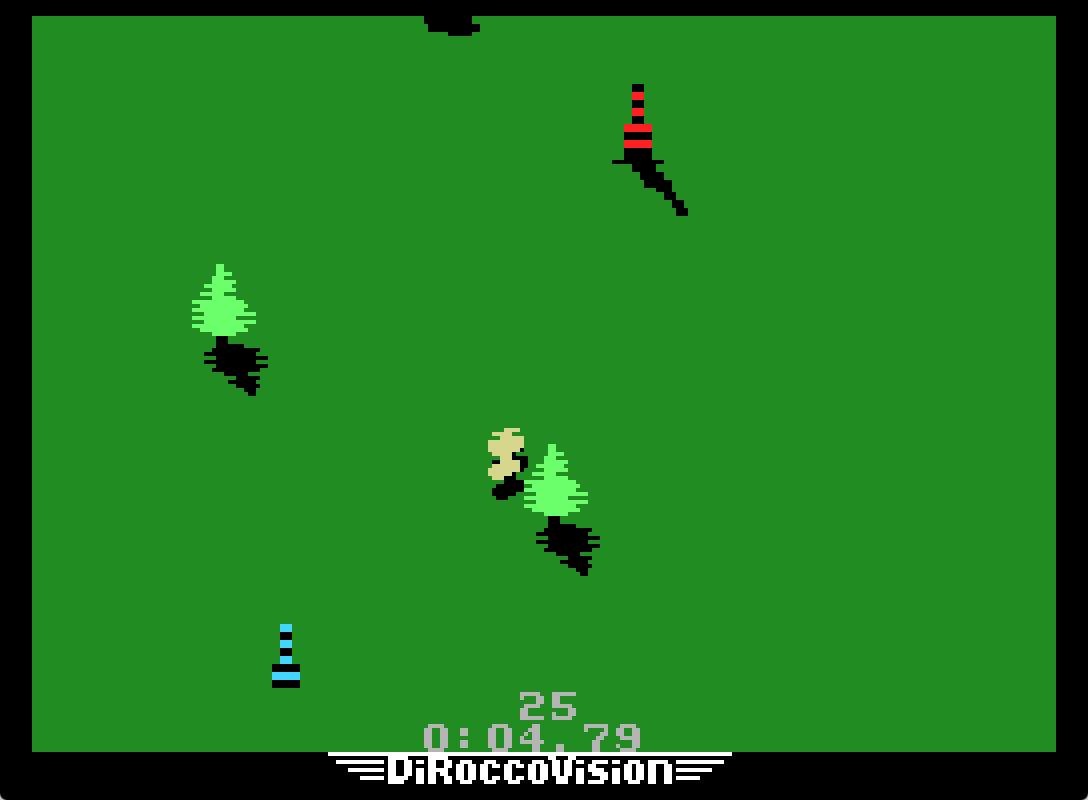
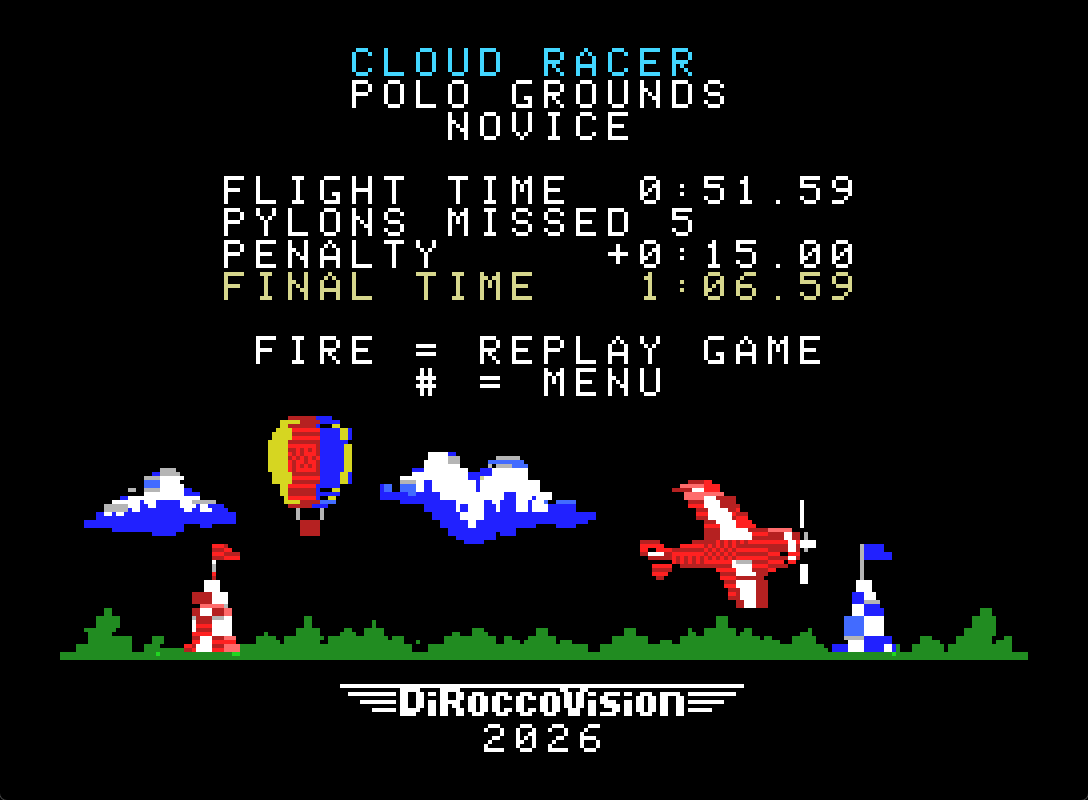
DiRoccoVision has announced Cloud Racer, a new ColecoVision game based on Sky Jinks, Bob Whitehead's 1982 Atari 2600 classic from Activision. You race a P41 through a pylon course against the clock, banking around the pylons and dodging trees and drifting hot air balloons along the way.
Faithful to the original
The rules were read straight from the original cartridge's program, and the ColecoVision version was checked frame by frame against the Atari game in an emulator. Fly to the right of the red pylons and to the left of the blue ones; every pylon you miss adds 3 seconds to your time at the finish. Five courses run from Polo Grounds, with 25 pylons, to Thompson Tourney, with 99 pylons on a new course every time, and Novice and Expert decide whether the trees stay out of your flight path.
New for the ColecoVision
- A results screen with your flight time, missed pylons, penalty and final time
- New title and closing artwork
- An attract mode that flies on its own
- Runs on the ColecoVision and the Coleco ADAM
It talks
With a Lundy speech module, Cloud Racer announces the course and its pylons, calls "Get ready!" and reads out your time at the finish. The voice can be switched off from the menu. Beat 37 seconds on Polo Grounds without missing a pylon and the game names you a Sky Star, a nod to the original manual's Activision "Sky Stars" club.
As the 1982 advertisement put it, "There's no speed limit in the sky!" Screenshots and details are on the Cloud Racer page at DiRoccoVision.com.
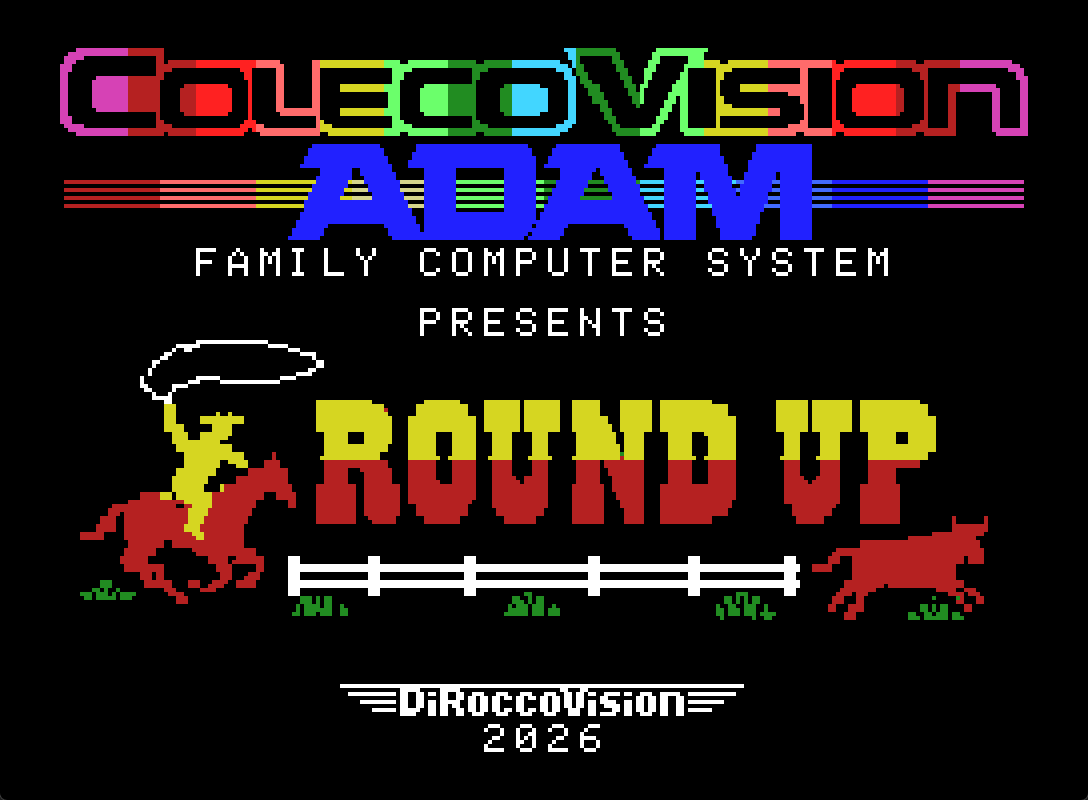
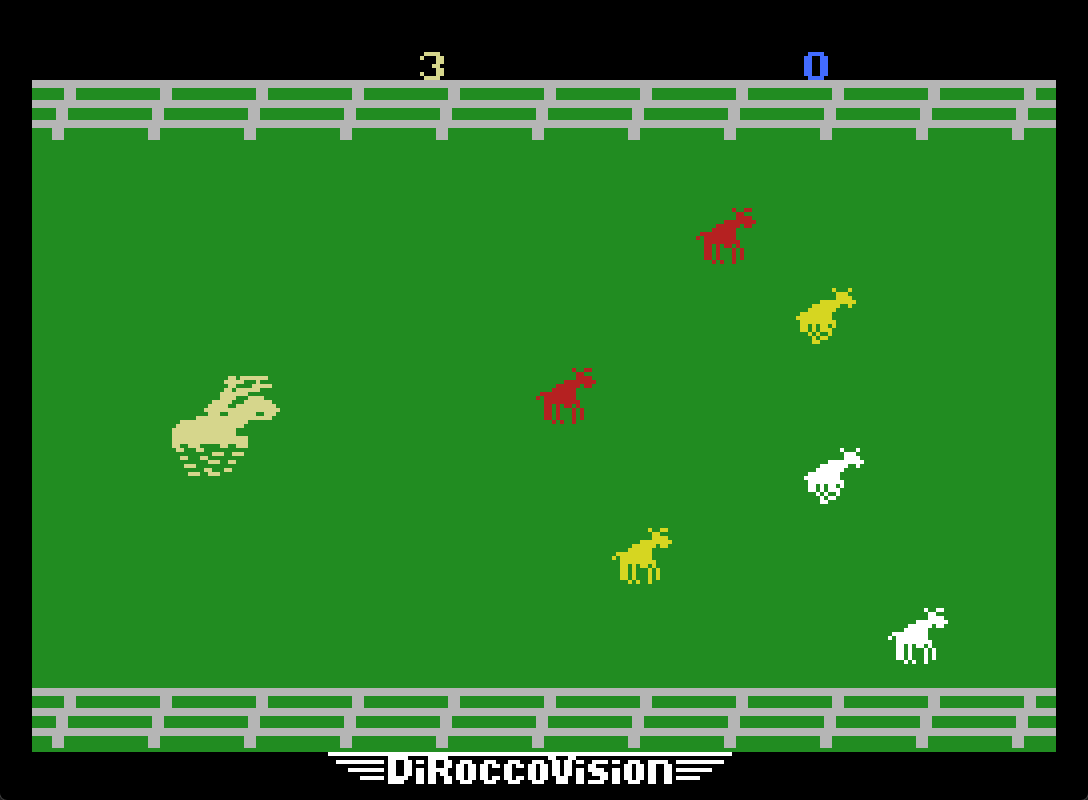
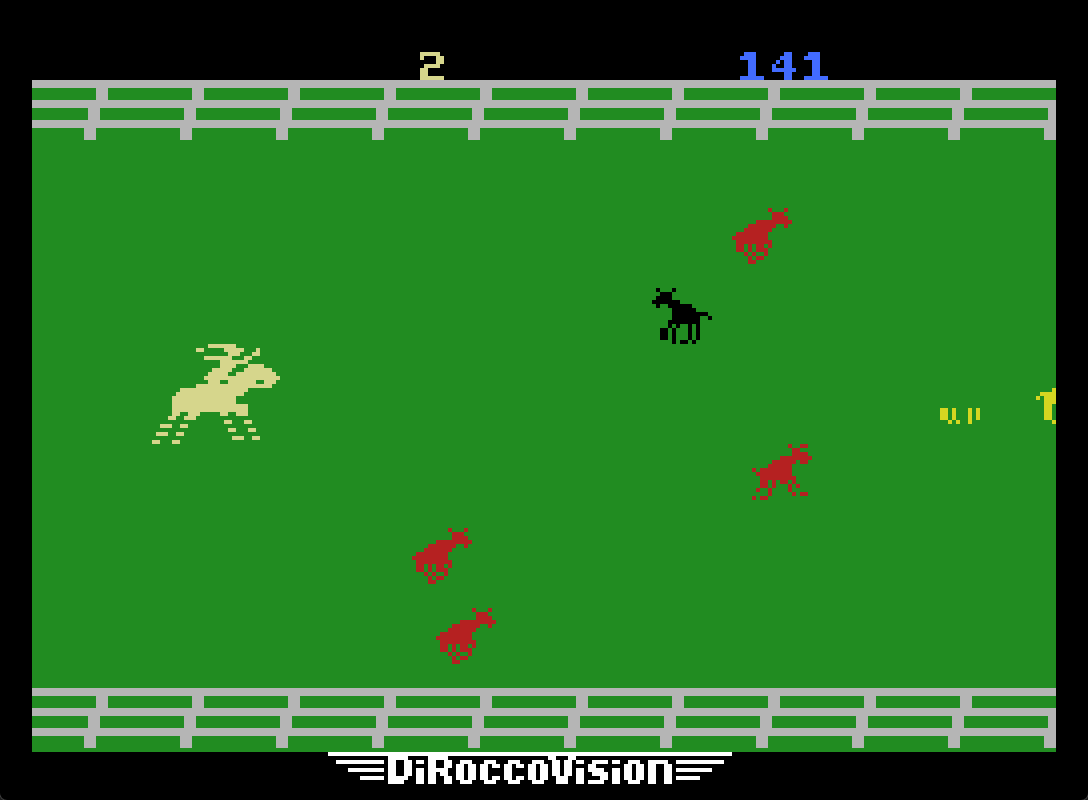
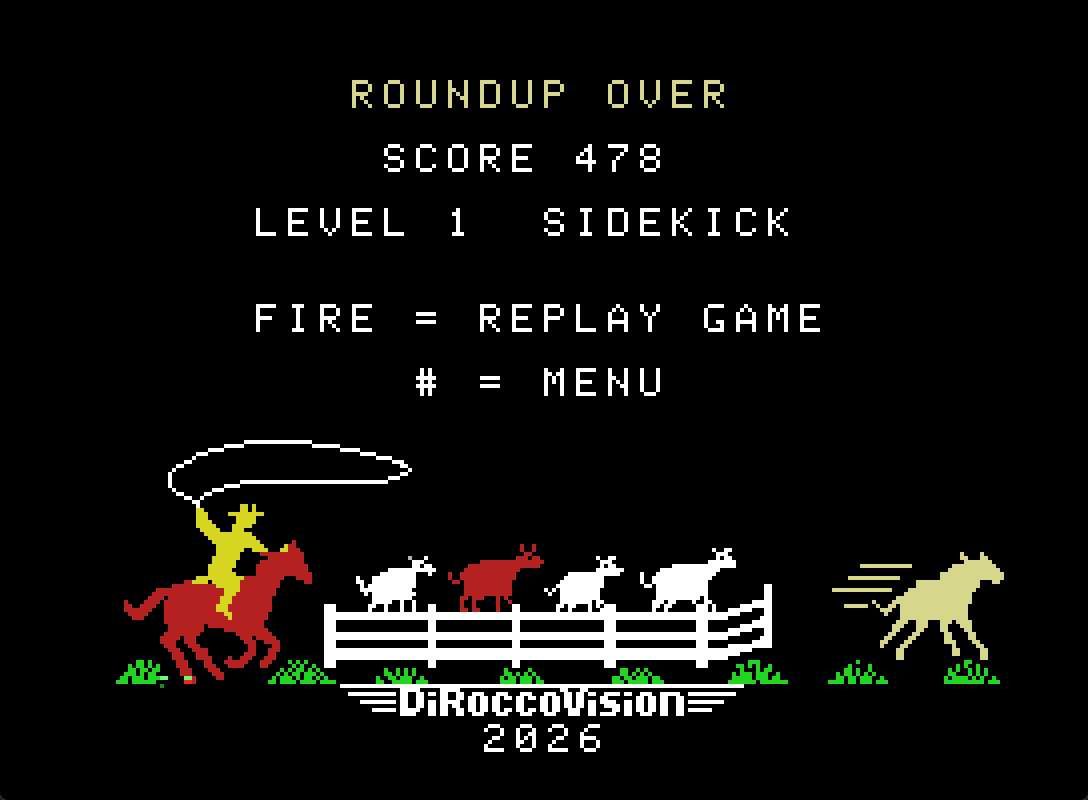
Saddle up! ROUNDUP is riding onto the ColecoVision.
(9/14/2026)
Ride up and down across six lanes of cattle and press fire to throw your rope. Jerseys are worth 25, Guernseys 15 and dark red Herefords 3, and a Black Angus is worth 100 if you can rope it before it rears your horse. Ride into a row to herd it forward, steer clear of the skulls on the trail, and don't let a dogie fall behind: you can afford three strays, plus one more for every 1,000 points.
Highlights:
• Eight levels, from Sidekick to Cattle Baron, with Novice (long rope) and Expert (short rope)
• A herd that picks up speed over about three minutes, just as on the 2600
• Pass 10,000 points and the steer's-head brand appears
• Speech with a Lundy speech module: "Saddle up and head 'em out!", your score at the end, and a voice ON/OFF switch
• New title and closing artwork, and an attract mode that rides on its own
• Runs on the ColecoVision and the Coleco ADAM
More at diroccovision.com/games/roundup.php
#ColecoVision #ColecoADAM #Homebrew #RetroGaming #Atari2600 #Stampede #DiRoccoVision
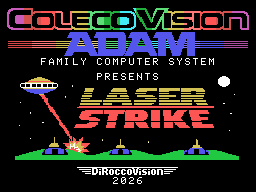
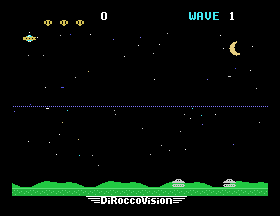
Introducing LASER STRIKE for the ColecoVision!
(9/14/2026)
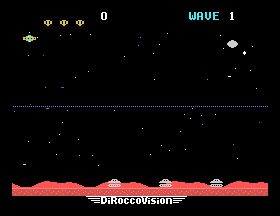
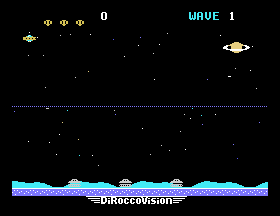
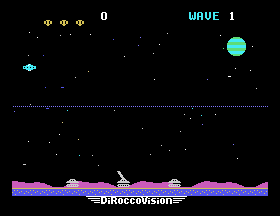
DiRoccoVision has announced Laser Strike, a new ColecoVision game based on Laser Blast, David Crane's 1981 Atari 2600 classic from Activision. You pilot a flying saucer over a hostile planet and destroy the tank squadrons rolling in below before their lasers find you.
Faithful to the original
The rules were read straight from the original cartridge's program, and the ColecoVision version was checked frame by frame against the Atari game in an emulator. Hold the fire button and aim with the joystick, then let go to fire. Your saucer holds still while you aim, and the tanks shoot at the spot where you were when they started charging, so David Crane's advice from the 1981 manual still applies: "Always keep your ship in motion and fire quickly!"
New for the ColecoVision
- A three-layer saucer with spinning windows, and tanks with turrets and rolling tracks
- A twinkling starfield with shooting stars
- A new world every 10 waves: Earth and its moon, a red planet with two moons, an ice world under a ringed planet and an alien world beside a gas giant
- The wave number on screen
- Four ranks, from Cadet, which gives each new ship a moment to get moving, to Commander
- New title and results screen artwork
It talks
With a Lundy speech module, Laser Strike calls out your rank, each attack wave, direct hits, extra ships and your final score. The voice can be switched off from the menu. Reach 100,000 points and the game names you a Laser Ace, a nod to the original manual's Activision Federation of Laser Blasters.
Screenshots and details are on the Laser Strike page at DiRoccoVision.com.
Speak & Spell for the ADAM / ColecoVision
(9/06/2026)
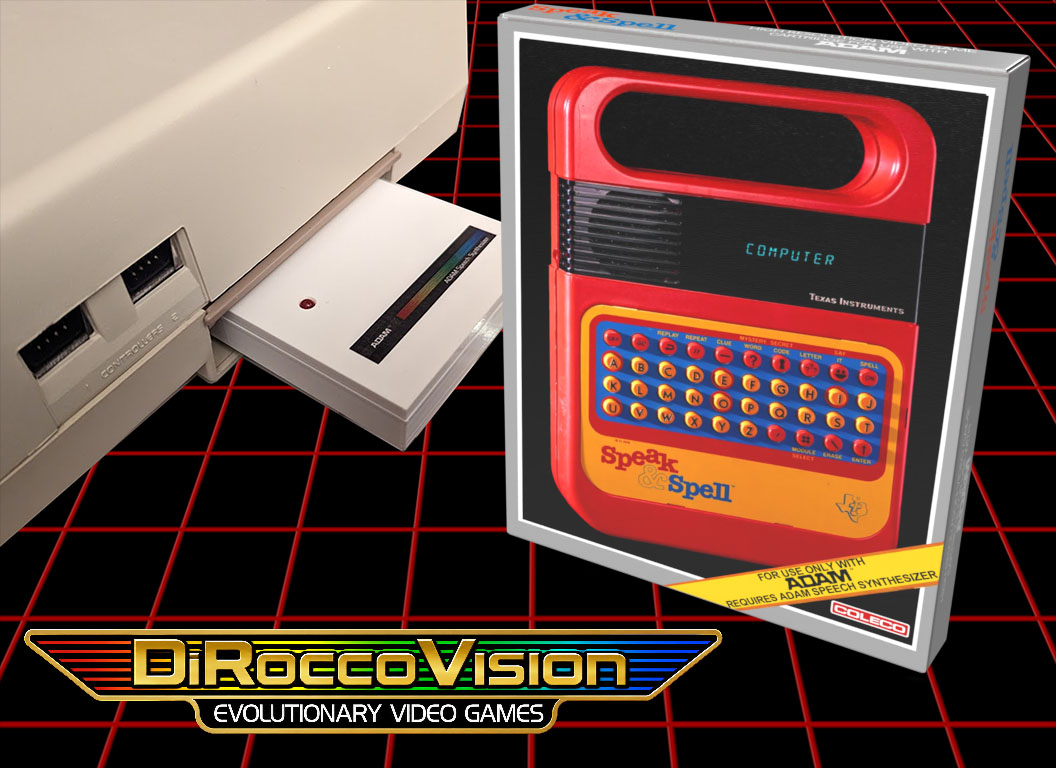
I've been building a tribute to the 1978 Texas Instruments Speak & Spell —
the orange-and-red talking toy that taught a generation to spell, and taught
a lot of us what a computer sounds like.
All five original activities are in: Spell It, Say It, Mystery Word, Secret
Code and Letter. All forty keys of the panel. 155 words across four
difficulty levels, sourced from published research into the original word
lists rather than made up.
The speech is the real thing. Not samples — live synthesis on an SP0256
through the Lundy speech card, built from 64 speech sounds the way that
hardware was designed to work. Which means it can attempt words that were
never programmed into it. Type anything on the idle screen, press ENTER, and
it'll have a go.
On an ADAM you type on the actual keyboard. On a ColecoVision you drive a
cursor round the key grid with the joystick and press fire. The cartridge
works out which machine it's running on and adjusts.
That keyboard support took thirty revisions. Reading the ADAM's keyboard from
a cartridge means switching the memory map in a way that swaps the cartridge
out from under itself mid-instruction — so there's a small routine that
copies into RAM at boot and runs from there, written entirely in relative
jumps because an absolute one would land in a cartridge that isn't there any
more.
Oh, and the display is blue, not green. The original was a vacuum fluorescent
tube, not an LED. Someone was going to notice.
Speech module required. Still in testing — more soon.


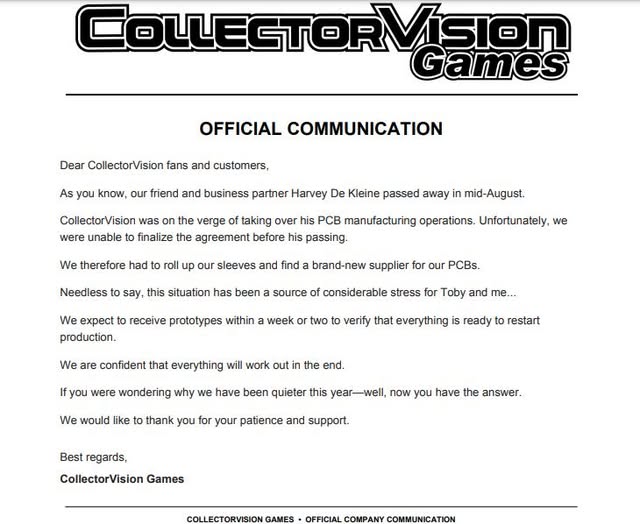
CollectorVision Announcement
(9/05/2026)
In Memoriam: Harvey deKleine (1965–2026)
(8/26/2026)
Harvey Richard deKleine
February 6, 1965 – August 12, 2026
Known throughout the ColecoVision community as 5-11under, Harvey passed peacefully on August 12, 2026 at the age of 61, with his wife Elaine beside him and the sound of his guitar being played. He had been battling colon cancer for several months. He is survived by Elaine and their three children — Alaynah (Tom), Derek (Sennet), and Isaiah (Hannah).
Harvey was a builder, in every sense of the word.
For twenty years — from his first ColecoVision credit in 2006 — Harvey contributed to this community as both programmer and hardware designer. Many will remember his games: Jetpack (JETP4K) in 2006, a side-scroller where players dodged rocks while gathering diamonds; Squares!!; and the ambitious Wrong Way demo. But it's Harvey's hardware work that touches the most homes in this community — often invisibly.
Harvey designed many of the PCBs used in modern ColecoVision cartridges. He produced the analog AV-Out PCB for both the ADAM and ColecoVision — the board that gave our vintage systems clean video, dual mono audio, and separate Y-Pb-Pr color adjustment on modern displays. He built the electronics inside the CollectorVision Arcade Quality Controller. He was the solderer-of-choice for both Team Pixelboy and CollectorVision, which means if you own a modern ColecoVision homebrew cartridge from the last decade or so, there is a very real chance Harvey's hands assembled it.
His most ambitious project — CV 1.2, a full ColecoVision clone — was on hold. But the vision spoke to the engineer he was: someone who saw what was possible for our platform and quietly went to work making it happen.
Harvey was more than his contributions to our community. He was a musician, a husband, a father, and part of a beautiful community in Niagara that meant a great deal to him.
The family has shared the following service information:
Visitation — Saturday, August 15, 4:00–7:00 PM
Jubilee Fellowship Church, 13 Wilholme Drive, St. Catharines, ON L2W 1B9
Celebration of Life — "Tapestry of Light: An Evening of Music & Shared Memories"
Sunday, August 23, 2026 at 6:00 PM (doors open 5:30 PM)
Jubilee Fellowship Church, 13 Wilholme Drive, St. Catharines, ON
Donations in his honor: McNally House Hospice
Arrangements are in the care of Hulse & English Funeral Home & Chapel, St. Catharines.
Harvey wrote a song called Morning. One of its lines:
"It's a brand new day and I feel okay 'cause I'm filled with hope."
That hope is what Harvey helped build into this community for twenty years. It's what he leaves us with.
Rest well, Harvey. Thank you.

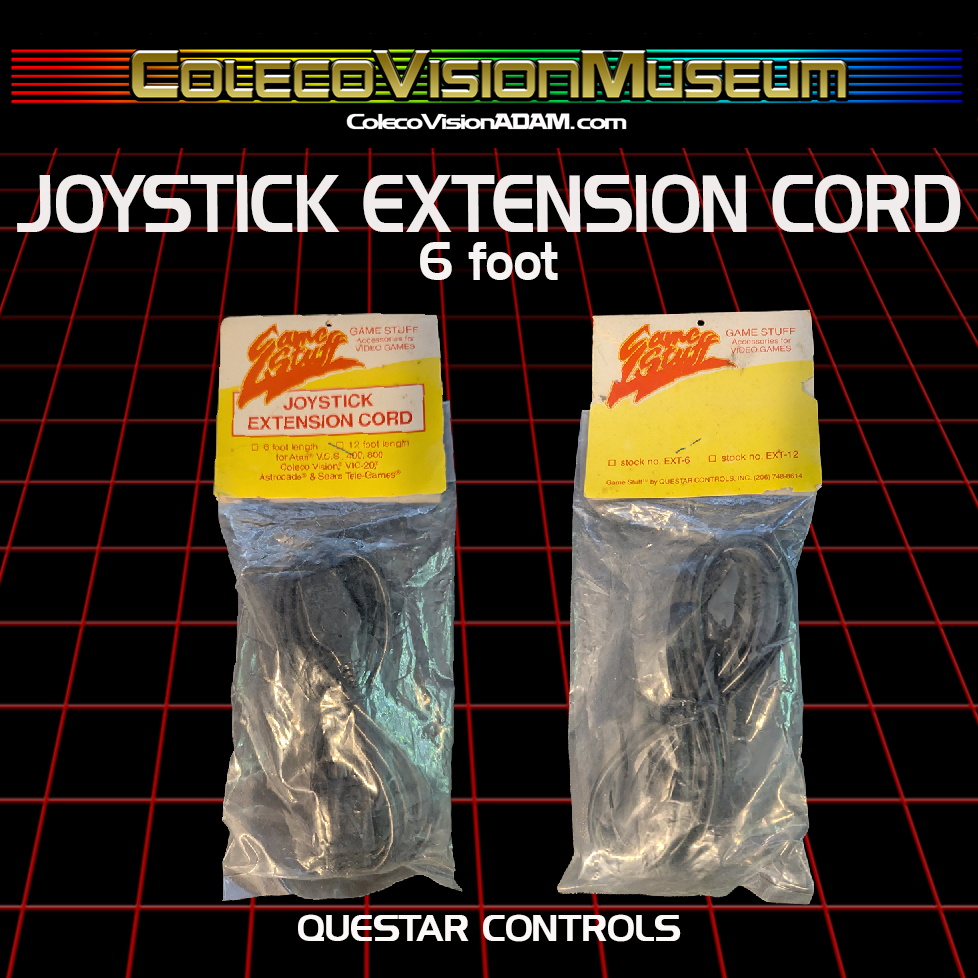
Game Stuff™ Video Game Extension Cord by Questar Controls, Inc.
(8/18/2026)
Fresh into the museum — and this one's a matched pair.
Meet the Game Stuff™ Video Game Extension Cord by Questar Controls, Inc. — a period third-party accessory from the early-1980s home video-game boom. And what makes this pair museum-worthy: ColecoVision compatibility is printed right on the original packaging. Not a generic cable that happened to work — a documented, purpose-marketed ColecoVision accessory.
Both lengths, side by side:
✓ EXT-6 — 6-foot extension (originally $3.95)
✓ EXT-12 — 12-foot extension (originally $4.95)
The pitch back then was simple and universal: sit farther from the TV. The nine-pin plug worked across the era's biggest systems — ColecoVision, Atari VCS / 400 / 800, VIC-20, Bally Astrocade, and Sears Tele-Games — and Questar covered all of them on the package.
A little on the company: Questar Controls was based in Chehalis, Washington, and rode the early-'80s accessory wave with a small but ambitious lineup — the Game Stuff extension cords, arcade-style joystick control consoles, and The Blaster, an adjustable rapid-fire adapter that sat between joystick and console. Questar brought new gear to the 1983 Winter CES, right in the thick of the third-party accessory gold rush.
Most of that gear is gone now. This packaging survived. Both lengths, together, going straight into the museum third-party accessories display.
Every acquisition like this gets logged in the museum's Collection Manager 👇
colecovisionadam.com/collection
What's the most obscure third-party ColecoVision accessory in your collection? Drop it in the comments — I want to hear the deep cuts. 👇
#ColecoVision #Questar #GameStuff #ColecoVisionAccessories #ThirdPartyAccessories #RetroGaming #ColecoVisionADAMMuseum #GamingHistory

Something New Is Coming Soon!!!!
(8/08/2026)
Help Build It
The ADAM Collection Manager is only as good as the data behind it, and no single collection covers everything the ADAM ever had. If you've got shelves of ADAM software, boxes, manuals, or hardware, you can take on one publisher or company at a time — Coleco, Walters Software, Strategic Software, Practical Programs, and dozens more — and help complete that maker's entries.
Titles, variants, catalog numbers, release details, and clear photos of the box, media, and documentation. One company, one shelf at a time, at whatever pace works for you.
Get Involved

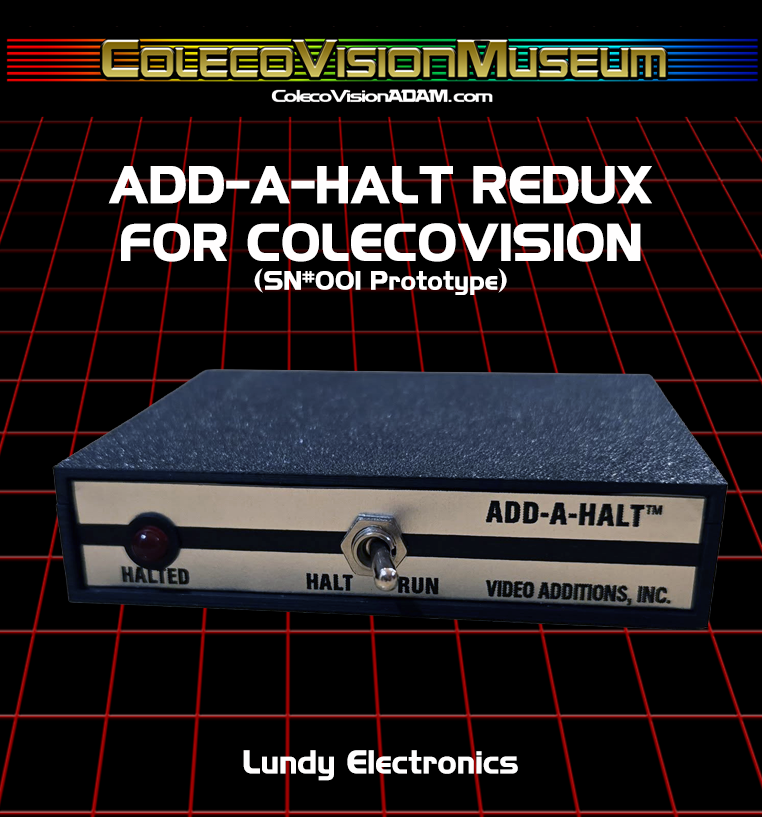
ADD-A-HALT REDUX Possible???
(8/03/2026)
Only needed to do a quick modification of my speech synthesizer case CAD design file to print, modified speech synthesizer PCB (cut an area out for room for the SPDT switch), and a quick metalized label with clear spray protection. Looks great and works like a champ!
For those quick to say they hope I make and sell them, It’s kind of a useless device because it hogs the I/O port where people would rather have their SGM installed. That, and the audio staying latched on when halted is very annoying! My fear is it would also take away from my superior Lundy Electronics Ultimate Pause Kit sales that actually have the ability to mute the audio while the console is paused.
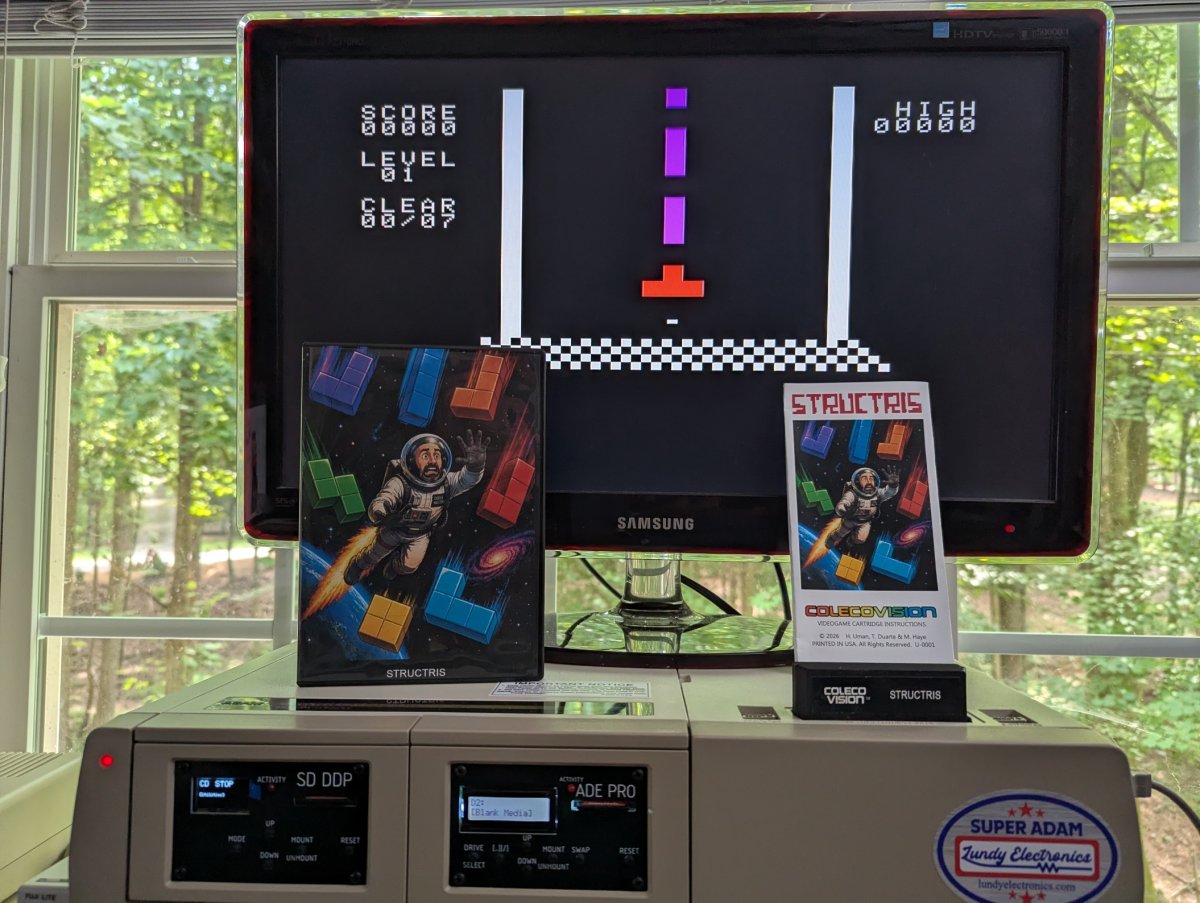
STRUCTRIS, a brand-new ColecoVision homebrew
(8/03/2026)
The ColecoVision homebrew scene is alive in 2026 — and here's fresh proof.
Just landed at the museum: STRUCTRIS, a brand-new ColecoVision homebrew from H. Uman, T. Duarte, and M. Haye — published through Tim Duarte's 2600 Connection.
STRUCTRIS is a block-stacking puzzle game ported to the ColecoVision from Martin Haye's original Apple II design. Pull the cart, plug it in, and the museum TV lights up with LEVEL 01, CLEAR 00/07, pieces falling in a narrow well. Clean, sharp, brand-new gameplay — running on 43-year-old console hardware. That never gets old.
Massive respect to H. Uman, Tim Duarte, and Martin Haye for keeping the scene alive. Going straight into the museum display and logged into the Collection Manager as CIB/new.
If you're a CV homebrew builder or publisher with a release coming up — get in touch. The museum wants everything preserved.
Where to get one: 2600 Connection 👇
https://timduarte.blogspot.com/
What's the newest homebrew on your shelf? Drop it below — I want to see it. 👇
#ColecoVision #Homebrew #ColecoVisionHomebrew #Structris #2600Connection #LundyElectronics #ColecoVisionADAMMuseum #RetroGaming
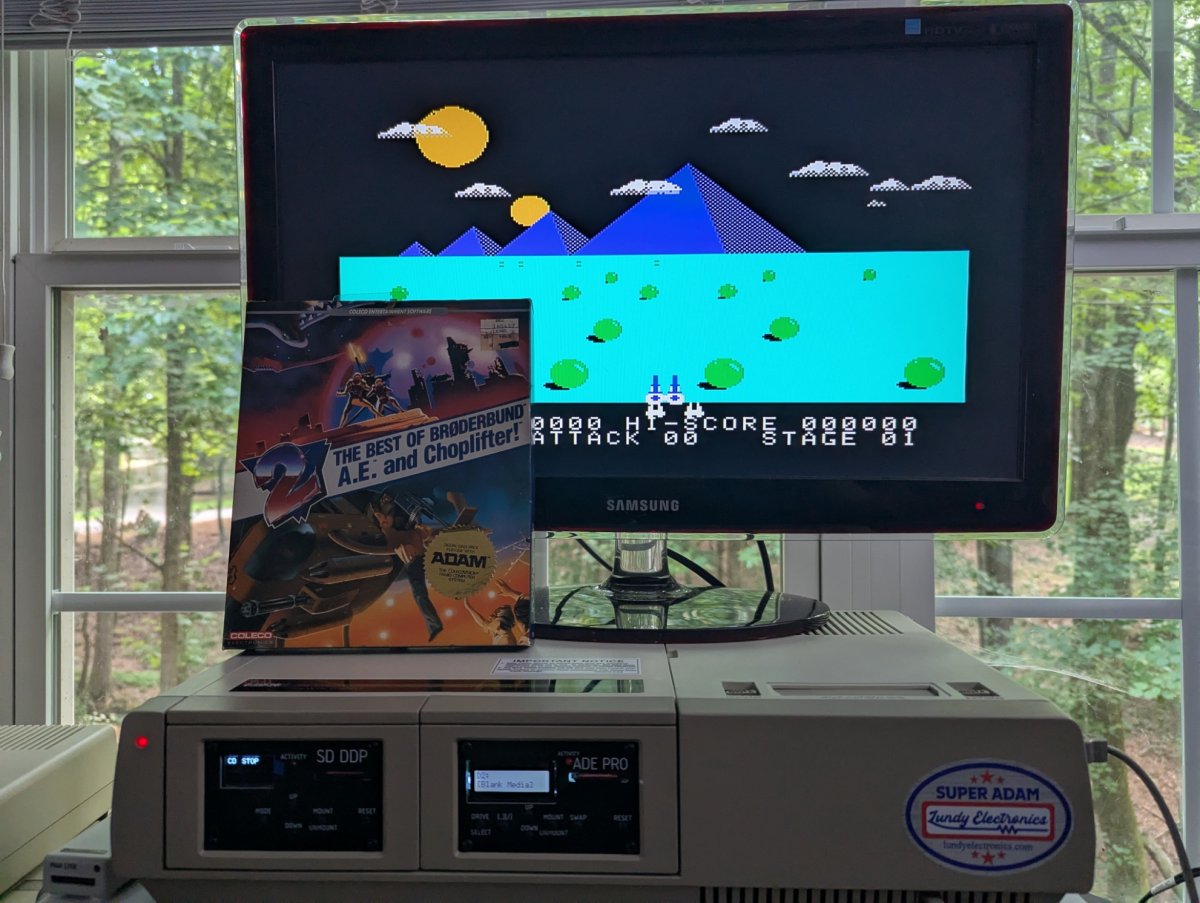
Sealed Best of Brouderbund!!
(8/03/2026)
The ColecoVision homebrew scene is alive in 2026 — and here's fresh proof.
Just landed at the museum: STRUCTRIS, a brand-new ColecoVision homebrew from H. Uman, T. Duarte, and M. Haye — published through Tim Duarte's 2600 Connection.
STRUCTRIS is a block-stacking puzzle game ported to the ColecoVision from Martin Haye's original Apple II design. Pull the cart, plug it in, and the museum TV lights up with LEVEL 01, CLEAR 00/07, pieces falling in a narrow well. Clean, sharp, brand-new gameplay — running on 43-year-old console hardware. That never gets old.
Massive respect to H. Uman, Tim Duarte, and Martin Haye for keeping the scene alive. Going straight into the museum display and logged into the Collection Manager as CIB/new.
If you're a CV homebrew builder or publisher with a release coming up — get in touch. The museum wants everything preserved.
Where to get one: 2600 Connection 👇
https://timduarte.blogspot.com/
What's the newest homebrew on your shelf? Drop it below — I want to see it. 👇
#ColecoVision #Homebrew #ColecoVisionHomebrew #Structris #2600Connection #LundyElectronics #ColecoVisionADAMMuseum #RetroGaming
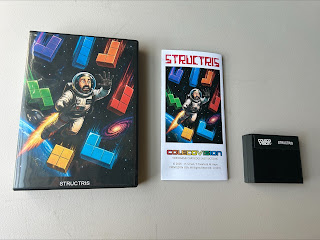
STRUCTRIS for the COLECOVISION now available for purchase!
(7/25/2026)
Wait a sec...Instead of dodging asteroids, these look like TETRIS pieces.
Could I be daydreaming?
Oh, wow, I’m not going to take the chance. I’m avoiding them.
Look below! I don’t believe it!
They are stacking up!
And I can clear them once a row is made!
Navigate your way,
slide, duck, and climb through the gaps in space...
Can you make your way through all 10 levels?
It won’t be easy. It will take skill...
It will require agility and quick reflexes
What could possibly go wrong? Do you want to know?
You could be buried alive... if you make a mistake!
STRUCTRIS for the Colecovision includes:
a durable black plastic storage box with a color-printed insert
a color-printed game manual
a brand new 3-D printed game cartridge with label
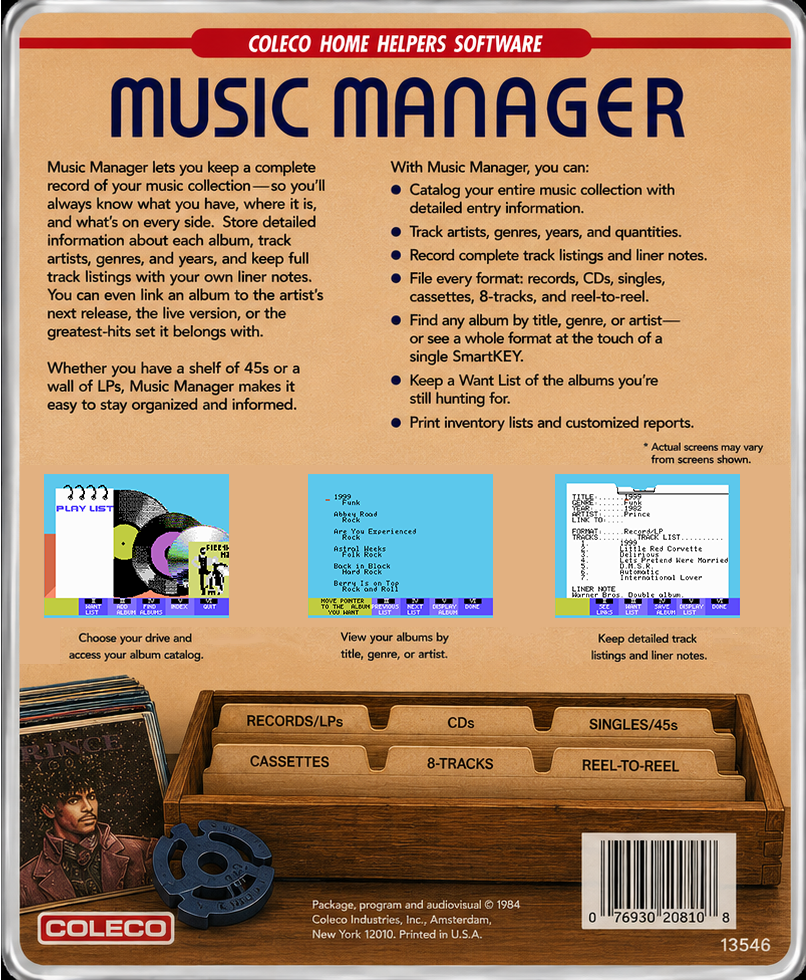
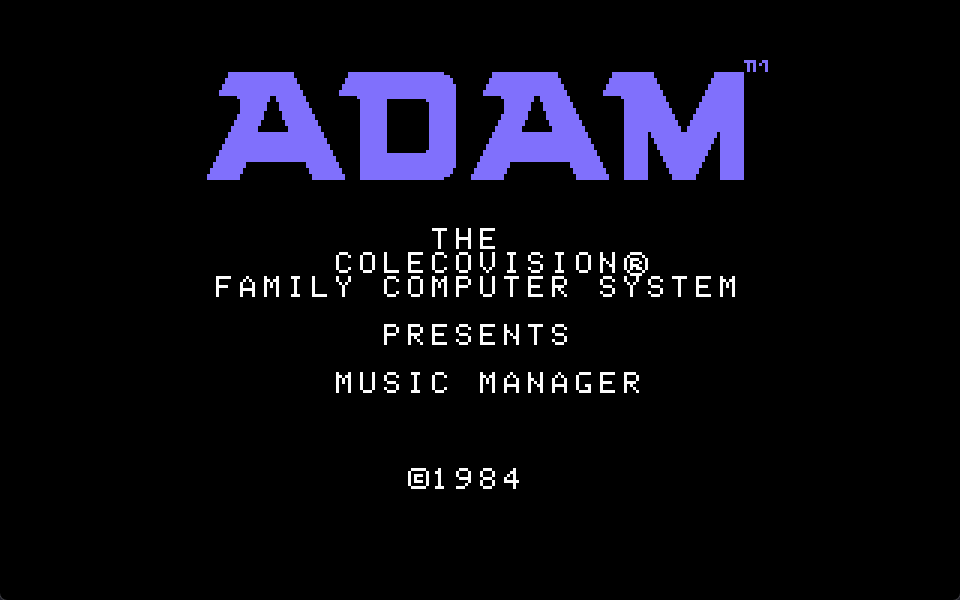
It's 1984. You just bought your first CD. Now what?
(7/19/2026)
Or you could let your ADAM do it.
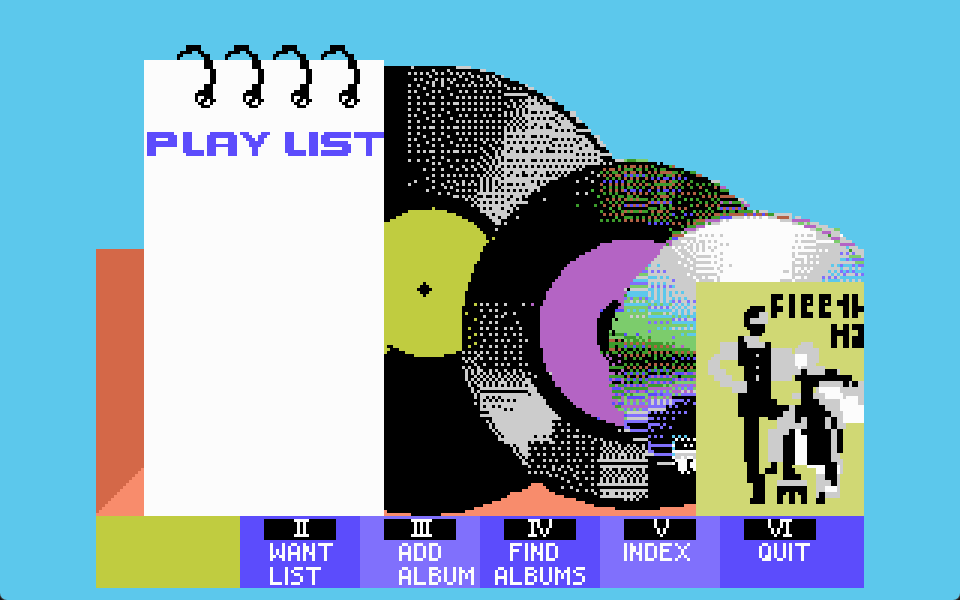
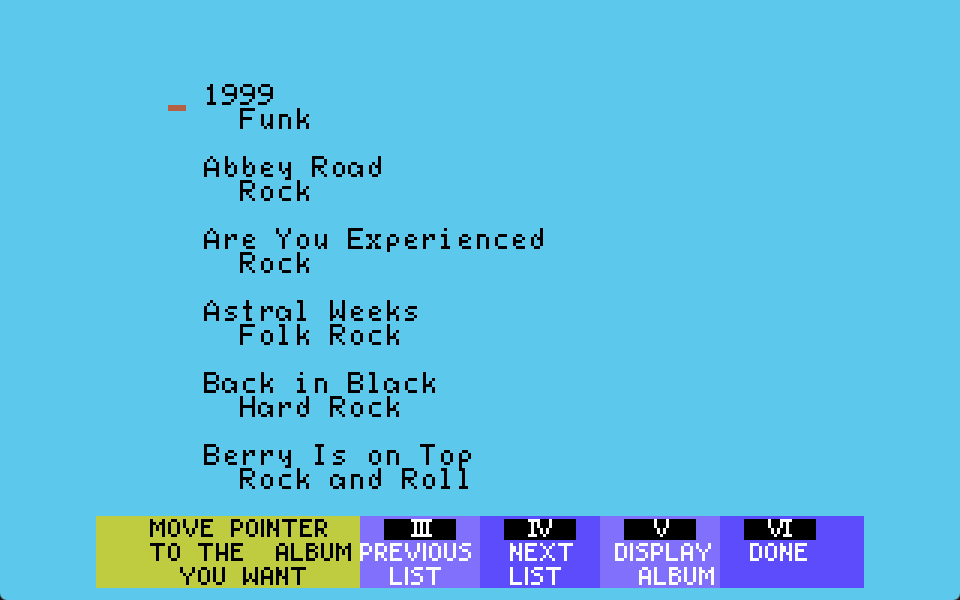
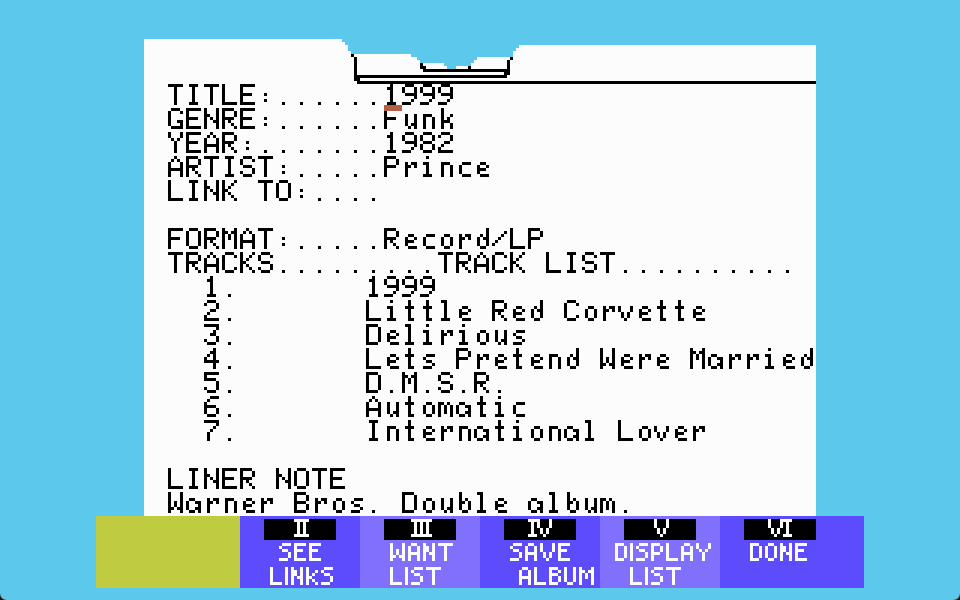
Music Manager could have been Coleco's answer to the music lover's cataloging problem. Load it up, punch in your albums — vinyl, cassette, CD, it didn't matter — and suddenly your entire collection was searchable, sortable, and printable. Build playlists. Track liner notes. Find that one Prince album you know you own but can't locate.
Abbey Road. Are You Experienced. Back in Black. If it was on your shelf, it belonged in your ADAM.
This was database software disguised as something fun — and in 1984, most people didn't even know what a database was yet. We'll just call it Music Manager and let you organize your records.
The CD era was just starting. Your ADAM was ready for it.
🔗 ColecoVisionADAM.com • AdamArchive.org
#ColecoADAM #MusicManager #RetroComputing #1984 #Coleco #VintageComputer #VinylCollection #CompactDisc #CD #RecordCollection #80s #HomeComputer #Database #Preservation #RetroSoftware


MAIL CALL: The Dynasound Organizer – Video Game • Computer Center
(7/17/2026)
Your ColecoVision needed it.
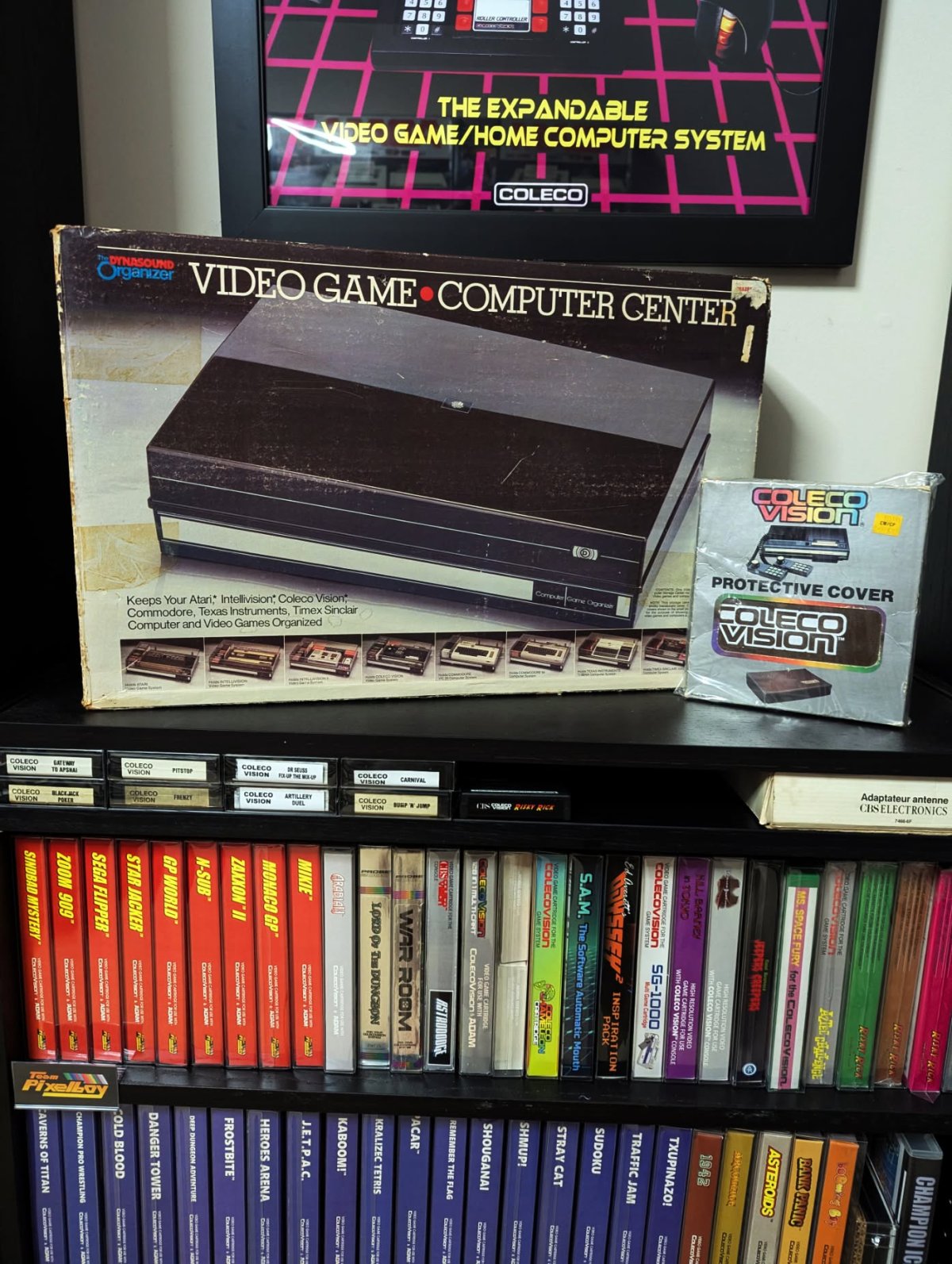
Most collectors focus on the consoles and games — but some of the most interesting pieces from the early 1980s were the accessories designed to organize and protect them. I recently added these two ColecoVision-related accessories to the collection:
📦 The Dynasound Organizer – Video Game • Computer Center
This wasn't made just for the ColecoVision. It was a universal storage center produced around 1983–1984 for many of the biggest systems of the era, including Atari, Intellivision, ColecoVision, Commodore, Texas Instruments, and Timex Sinclair. Built from heavy molded plastic with a hinged dust lid, it kept your console, controllers, power supply, and cartridges neatly organized. The same basic design was later adapted for other consoles, making it an interesting snapshot of how the industry treated gaming hardware — not as toys, but as home electronics worth taking care of.
📦 ColecoVision Protective Cover
Something many collectors have never seen in person — a ColecoVision Protective Cover still in its original retail packaging. Made from brown vinyl with a soft backing and the classic ColecoVision logo, it was designed to keep dust off your console while it sat connected to the TV. Although it carries ColecoVision branding, accessories like this were often produced by licensed third-party manufacturers rather than Coleco themselves. Finding one loose isn't impossible. Finding one still sealed in the original package has become a different story.
These accessories remind us that in the early 1980s, companies sold much more than games. Organizers, dust covers, cartridge racks, controller holders — even furniture — all designed to make your setup look clean and sophisticated.
So here's my question for fellow collectors:
👉 Did you own either of these back in the day?
👉 What's the rarest non-game ColecoVision accessory in your collection?
I'd love to see photos in the comments. Sometimes the accessories tell just as much of the story as the games themselves.
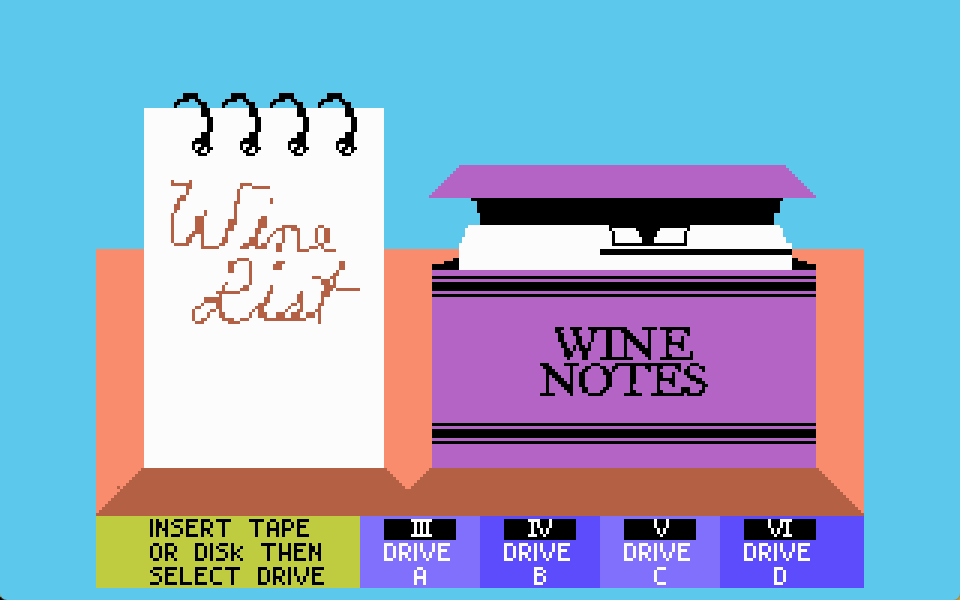
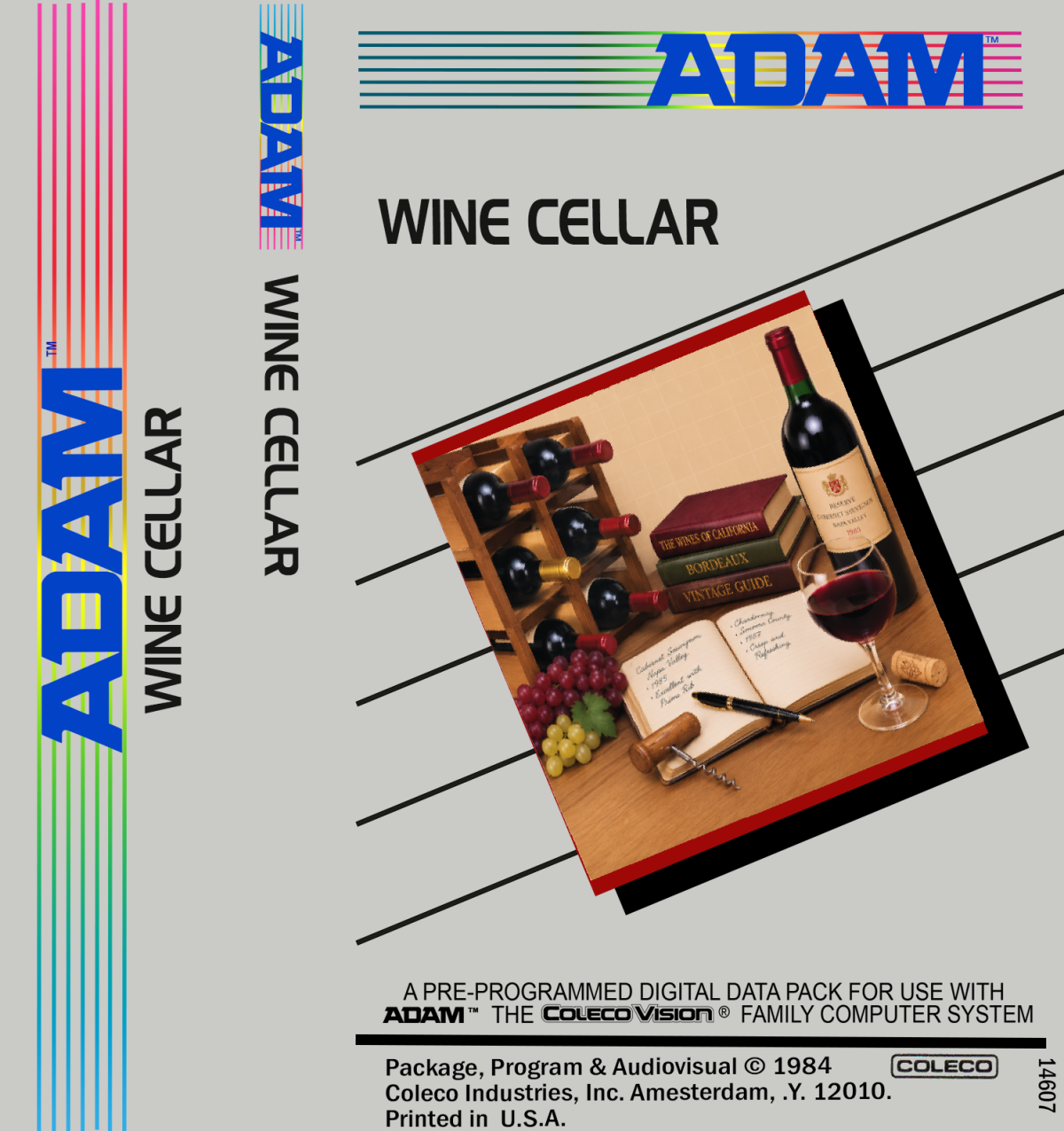
🍷 WINE CELLAR — a new program for the Coleco ADAM
(7/17/2026)
Great idea. Rough ride.
So I decided to build the version Coleco would have made. SmartKeys. Disk. The works.
Here's the trick: I didn't start from scratch. I started from Coleco's own Recipe Filer.
Because here's the thing about the Recipe Filer — it isn't really about recipes. Strip the labels off and it's a filing cabinet. It stores records, links them, searches them, sorts them, prints them. Coleco just happened to fill it with lasagna.
So I taught it about wine instead.
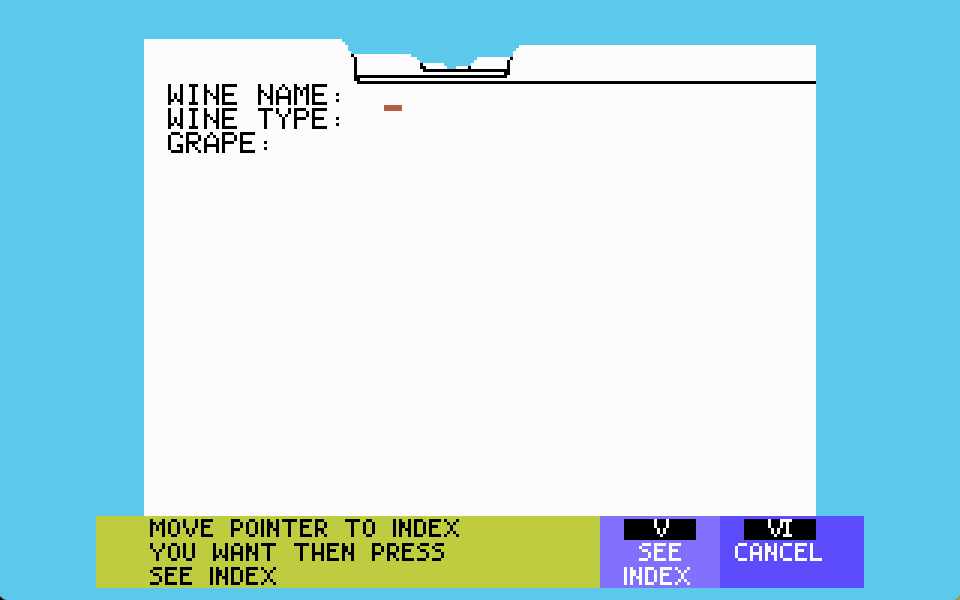
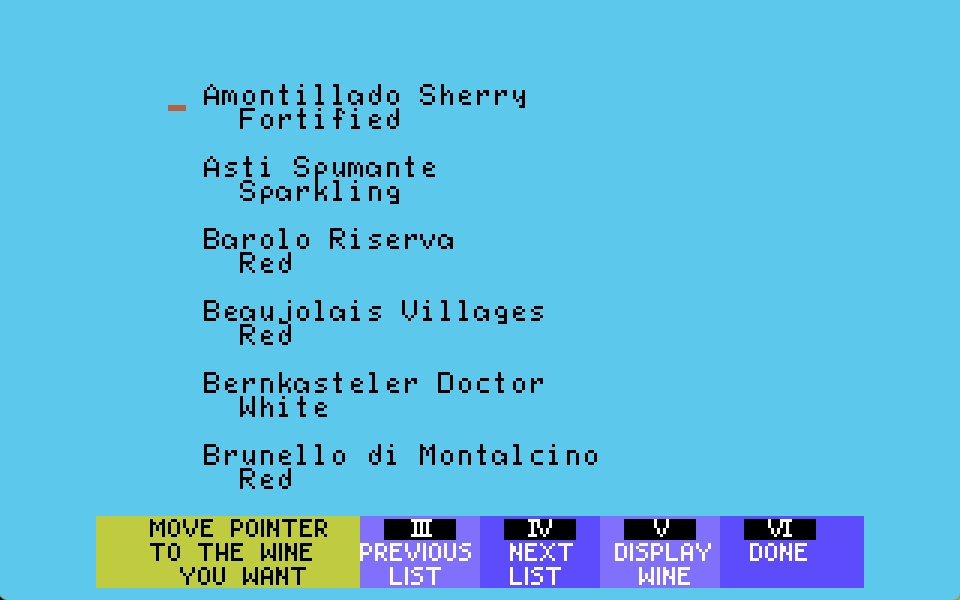
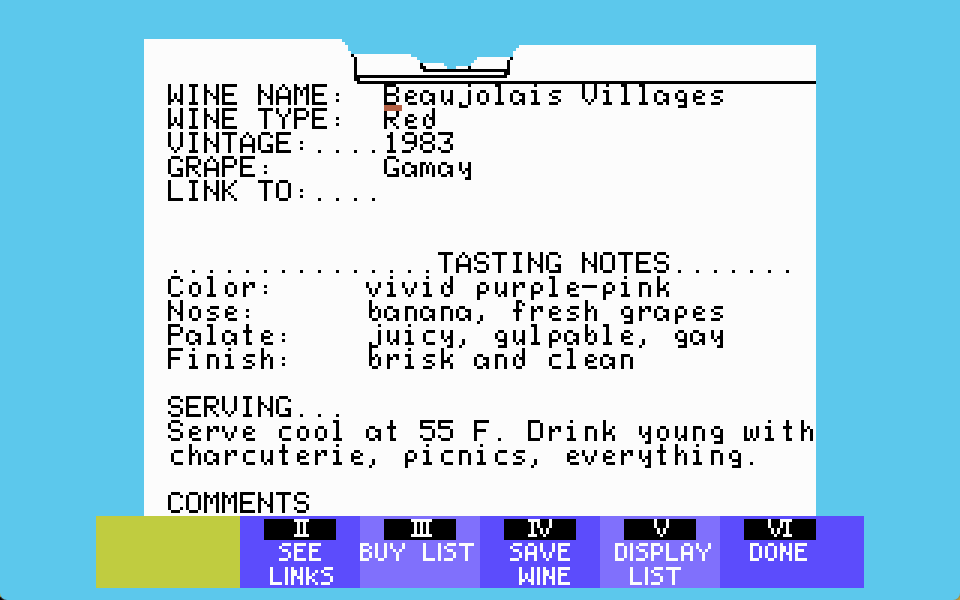
RECIPE NAME became WINE NAME. TIME became VINTAGE. MAIN INGREDIENT became GRAPE. INGREDIENTS became TASTING NOTES. The recipe box sitting on the menu screen is now a box of wine notes. Same engine. Different appetite.
My favorite moment in the whole project: I renamed one section from DIRECTIONS to SERVING, and the shopping list quietly broke. Turns out something buried in the code was watching for the letters D-I-R-E to know where a record stopped. Change the word, and it just… kept going. Forever. Looking for directions it was never going to find.
Three bytes fixed it. Three, because DIRE and SERV share the R. Sometimes 1984 is kind to you.
And then the best part.
Buried in the program header, in bytes no user was ever meant to see, the original team signed their work:
JAMES I. MARTINEZ — Programmer DAN T. THOMPSON — Project Leader BOB ZAWISLAK — Programmer (Print / Delete) ERIC BILLINGS — Programmer (Lists / Search) LEO F. GRAY — Programmer (Graphics)
Five people in a room in 1984, tucking their names into a corner of a recipe program, almost certainly assuming nobody would ever look.
Forty-two years later, gentlemen — I looked. And your recipe filer is pouring wine. 🍷



ColecoVision and ADAM Museum Debuts Official Facebook Page
(7/16/2026)
The Page joins the existing ColecoVisionADAM.com Facebook Group, which continues as the primary community hub for discussion among ColecoVision and Coleco ADAM enthusiasts.
Two Places to Follow
ColecoVision and ADAM Museum — Facebook Page. Museum news, acquisitions, restoration work, and exhibit updates.
ColecoVisionADAM.com — Facebook Group. Community discussion, questions, and show-and-tell. 255+ members and growing.
Both are open to anyone with an interest in the ColecoVision and Coleco ADAM platforms — collectors, developers, historians, and the merely curious are all welcome.
If you previously followed the museum on Facebook through a personal profile, please take a moment to follow the new Museum Page — that's where museum content will live going forward.
We look forward to seeing you there.

Lundy Electronics Internal ADE Mini Keyboard — Second Prototype
(7/10/2026)
What's Integrated
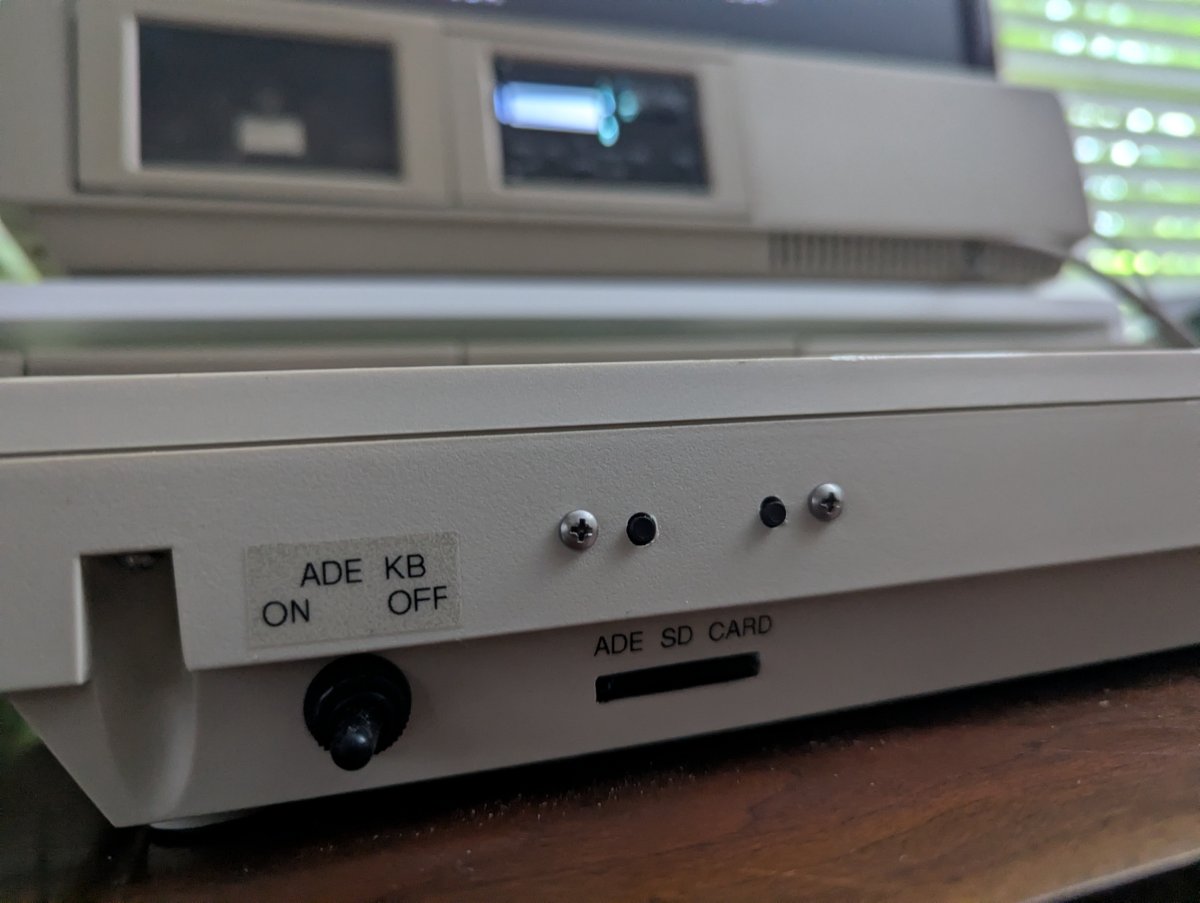
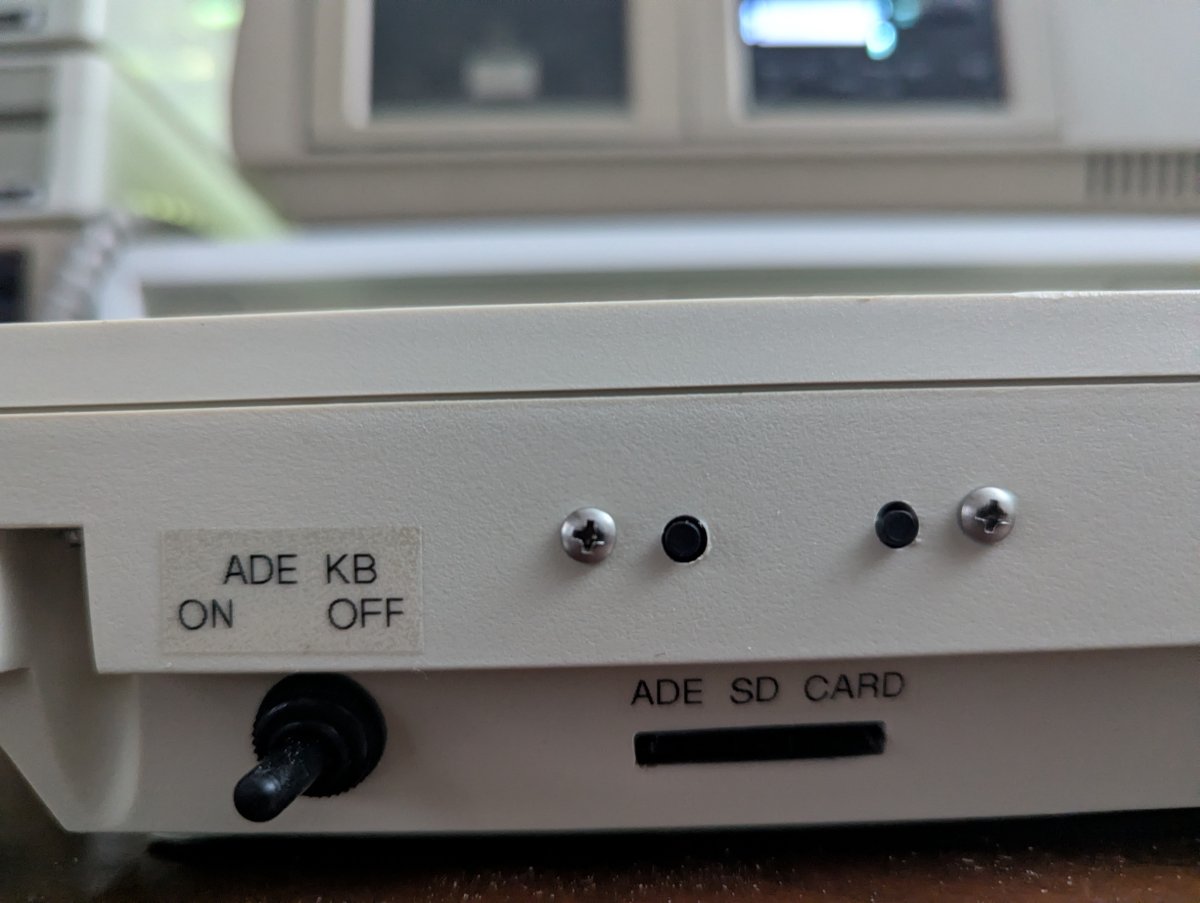
The prototype exposes a minimal set of controls along the rear edge of the keyboard:
ADE KB toggle switch (ON / OFF) — enables or disables the internal ADE circuit, allowing the keyboard to operate as a stock unit when desired
Two flush-mount buttons — the ADEM drive select and swap functions, neatly seated between the case screws
ADE SD Card slot — cleanly labeled and cut into the rear apron for direct access without opening the case
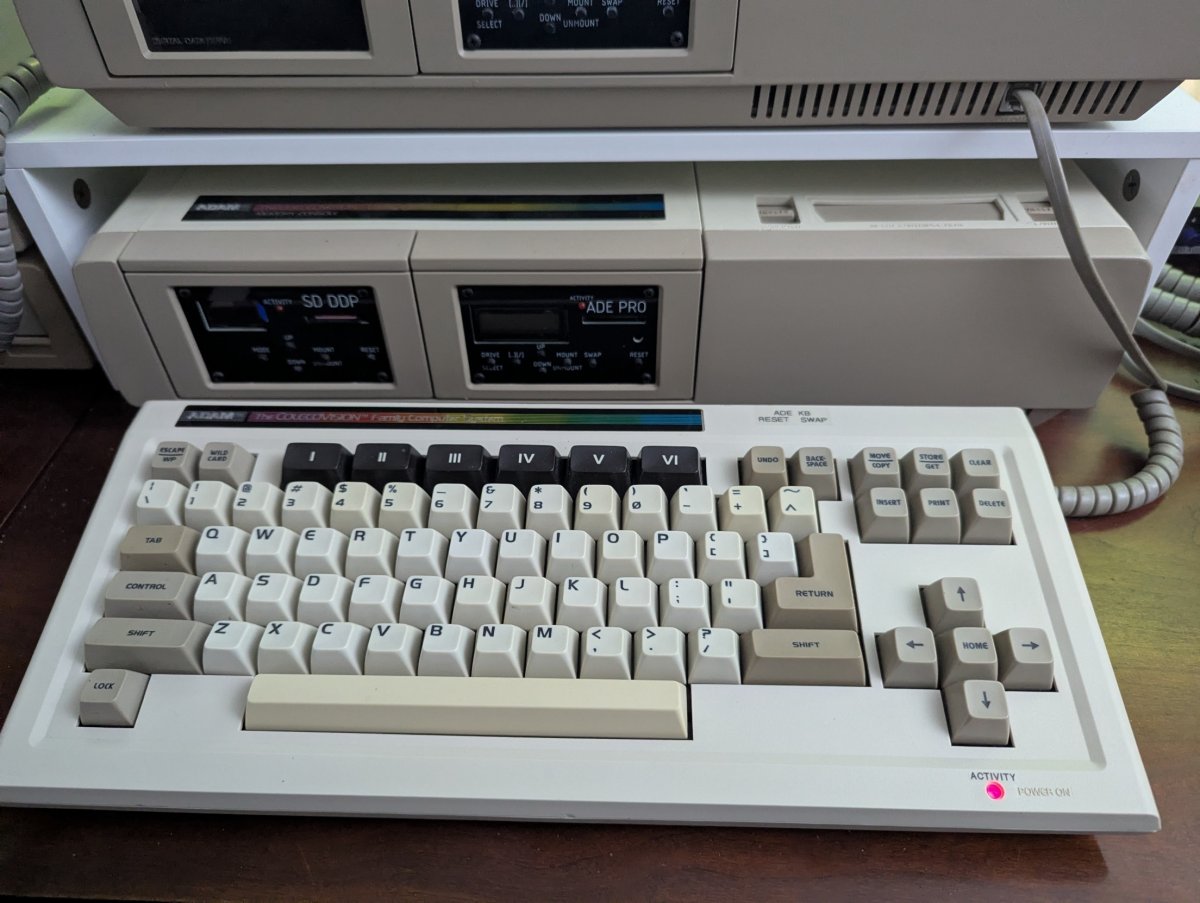
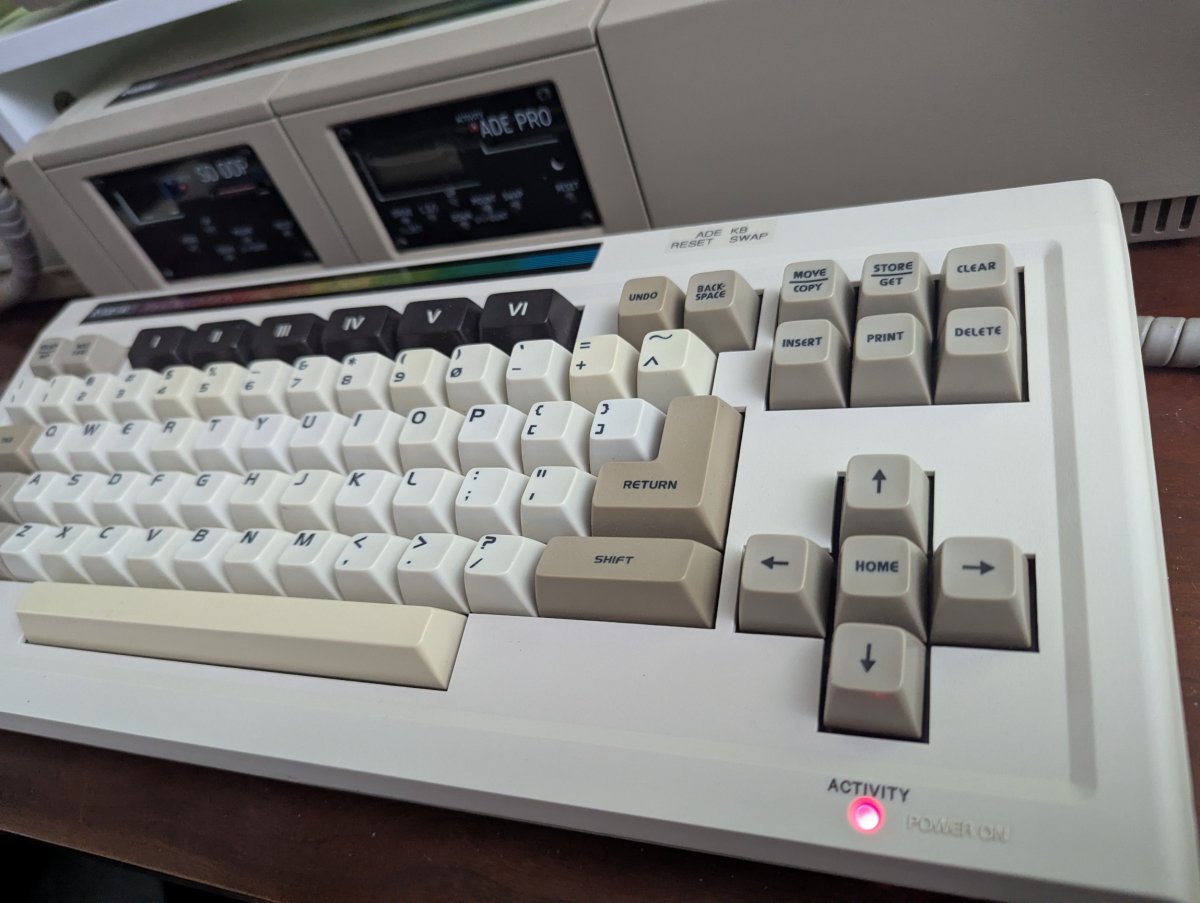
On the top surface, adjacent to the ADAM logo strip, the keyboard is legended ADE KB RESET / SWAP, mapping the standard ADEM reset and swap functions to the top plane for convenience.
Perhaps the most elegant detail: the ADEmini activity indicator has been merged into the keyboard's existing POWER ON LED. The single lens now serves double duty — steady for power, flashing to signal ADE activity — with no added indicator hole in the case.
Retained ADEmini Feature Set
Because the internal module is a full ADE Mini, the prototype inherits the complete standard feature set:
* Powered directly from ADAMnet
* Emulates up to four disk drives simultaneously, individually configurable for coexistence with physical drives
* Compatible with .dsk, .ddp, and .rom / .col images (32K or smaller)
* Up to 300 images/directories per directory on the SD card
* Full ADE Commander support with SD command codes, including auto-boot from boot.dsk
* Multi-disk swap sets (.dsk / .ds2 / .ds3 / .ds4) selectable via the swap button
Observations
From a preservation and daily-use standpoint, this second prototype is a clear improvement over any external ADEM configuration. The keyboard remains visually stock from the front, the desk stays clear, and the operator gains an SD-based drive emulator without the ADAMnet splitter arrangement that a physical Drive 2 setup would otherwise require. The consolidated activity/power LED is a particularly well-considered detail — the kind of decision that separates a proof-of-concept from a polished prototype.
For ADAM users already running an ADE variant elsewhere in their setup, this build makes a strong case as a permanent daily-driver keyboard.
Face to Face Baseball (BETA)
(7/09/2026)
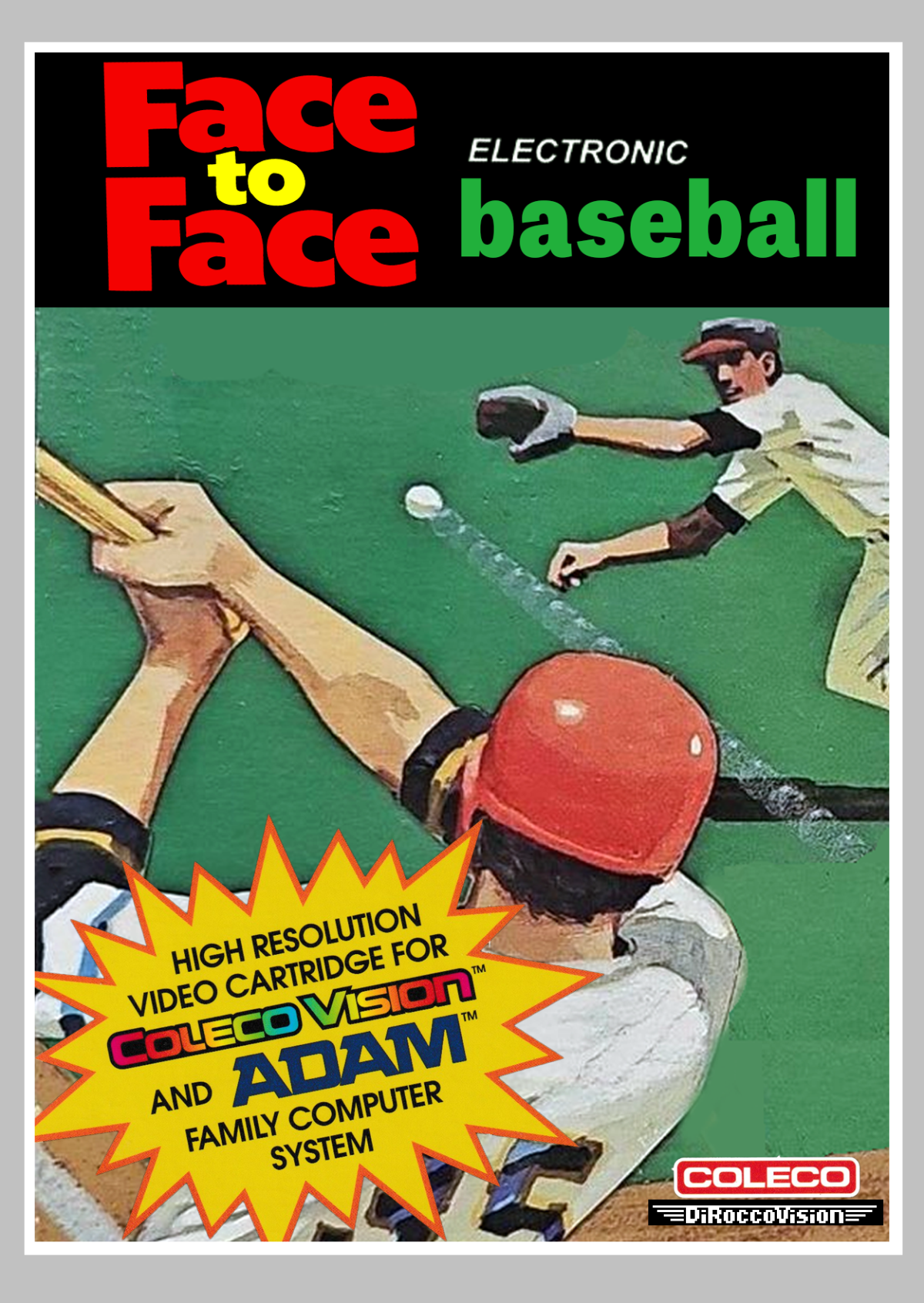
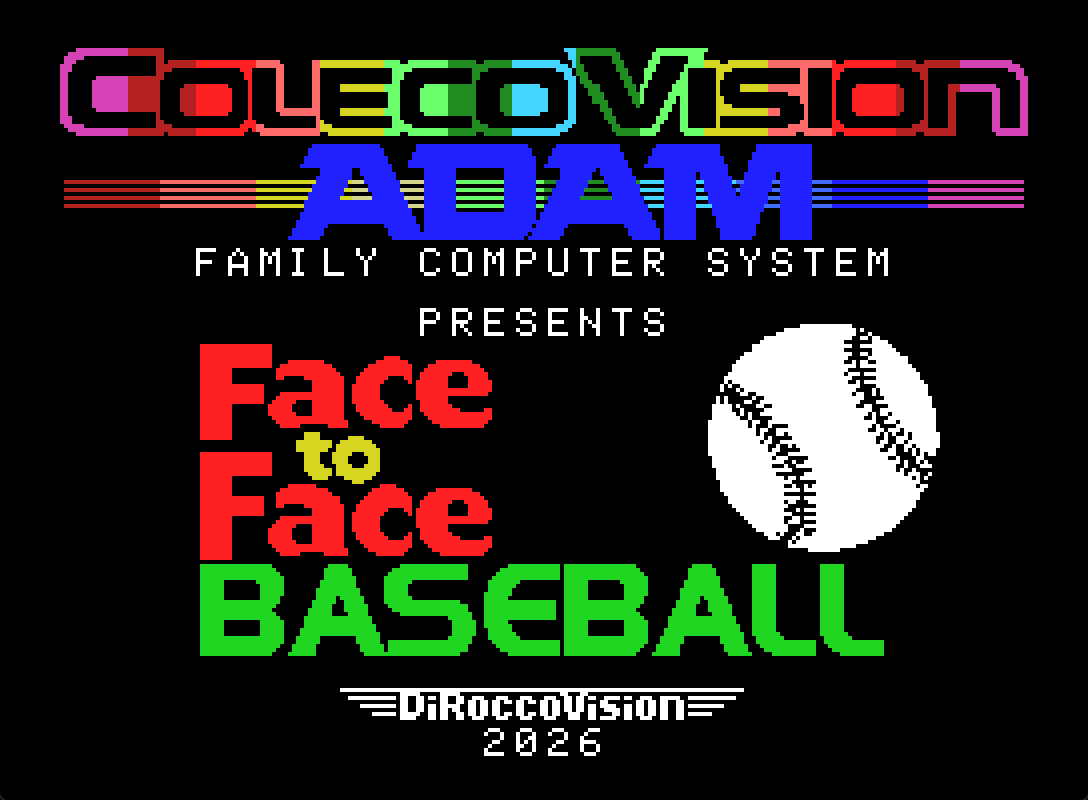
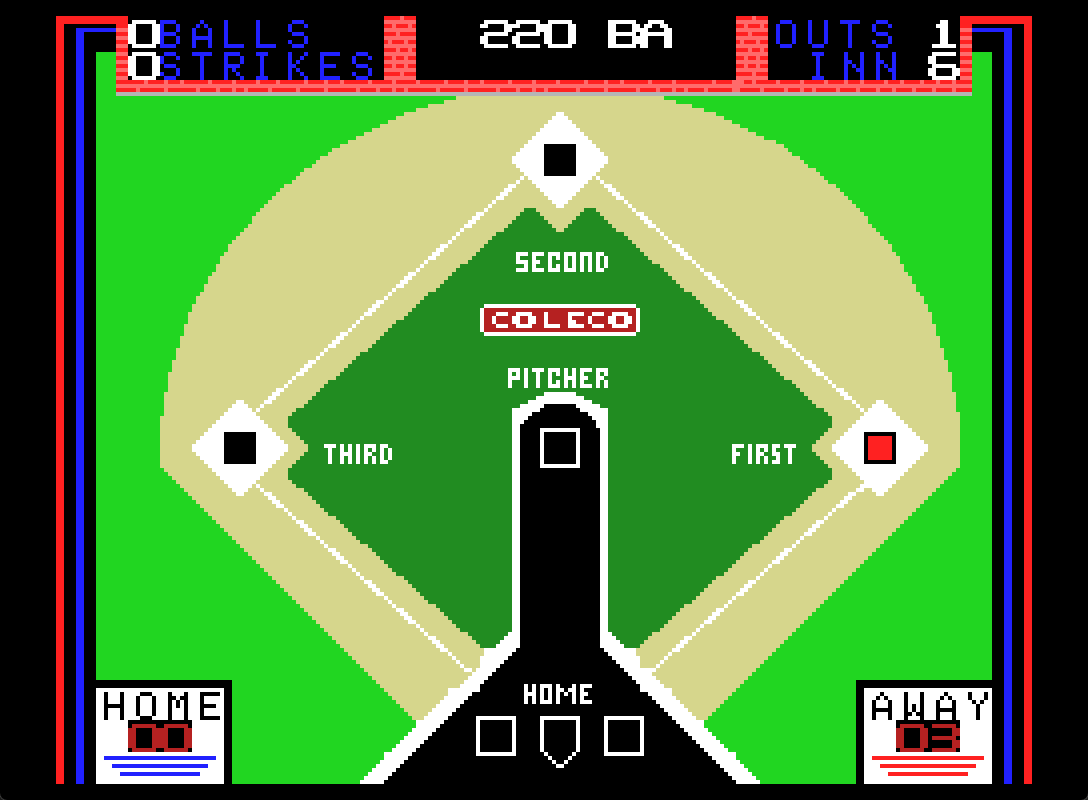
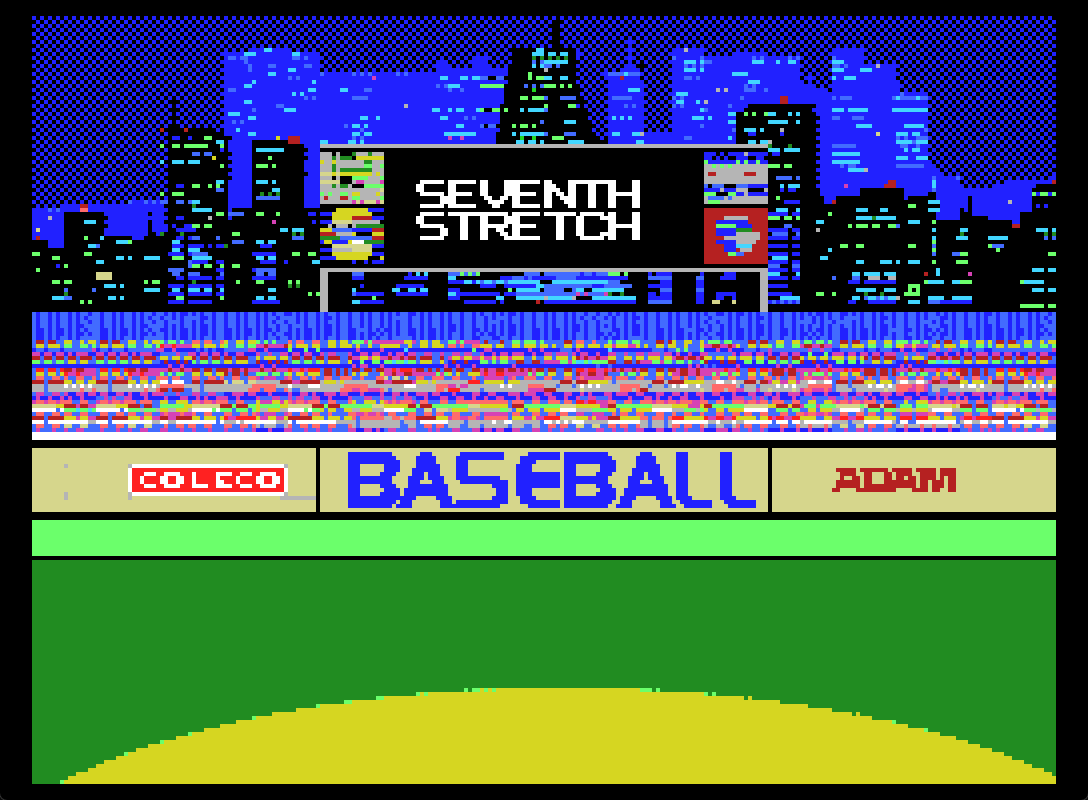
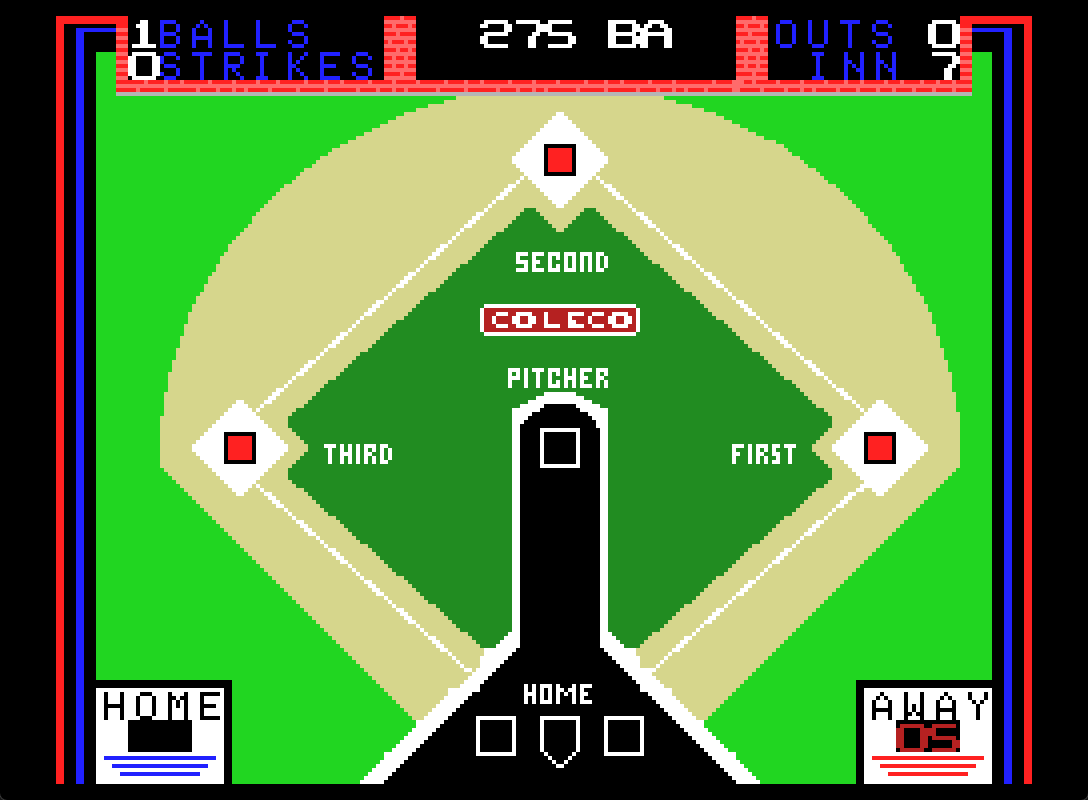
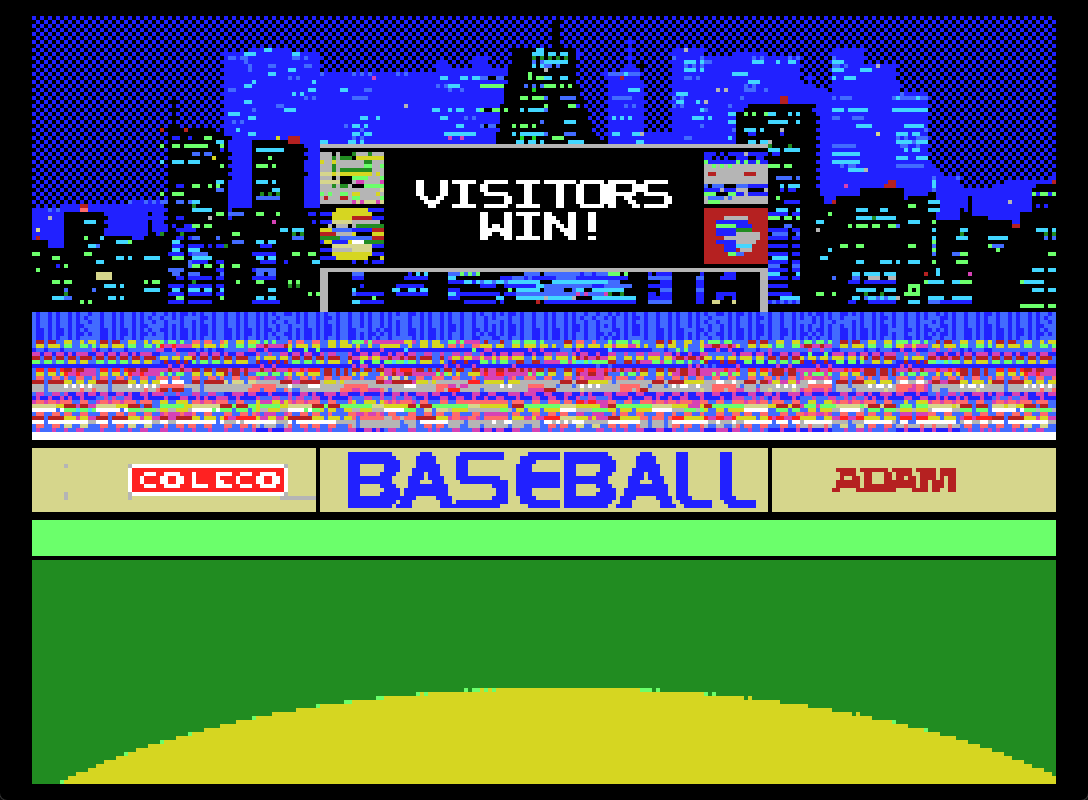
The original H2H Baseball pitted two players against each other across a shared handheld, calling pitches, swinging at the light, and managing the bases with bunts, steals, and the power swing. Face to Face Baseball brings the complete experience to the ColecoVision with full-color bitmap graphics, a living stadium scoreboard, and every rule from the original instruction manual faithfully preserved — pitchouts, tag-ups, hit-and-run, sacrifice bunts, extra innings, and walk-off wins included.
Choose your pitch: fast ball, curve, slider — or hold back and let the slow one fool them. At the plate, work the count, hit for power, or put the steal on and gamble against the pitchout. Every run parades around the bases to the roar of the crowd, home runs light up the stadium jumbotron, and the seventh inning stretch brings the full "Take Me Out to the Ball Game" — lyrics and all — on the big board.
One or two players. Nine innings. No batteries required.
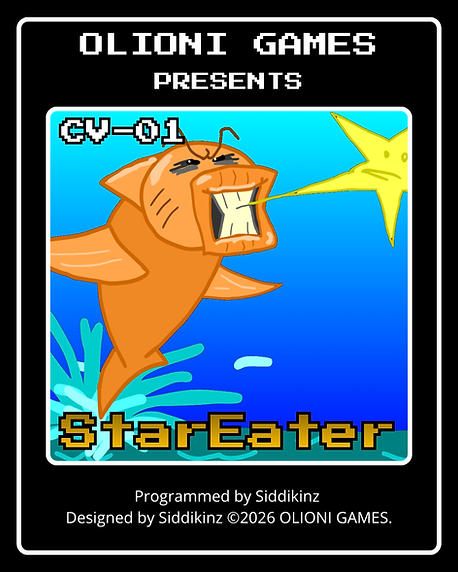
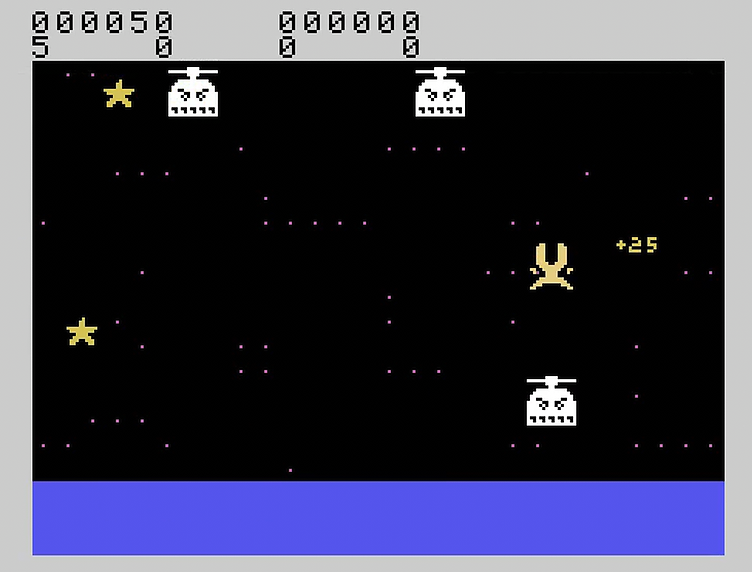
New Homebrew Release: Star Eater (Colecovison) From Olioni Games
(7/06/2026)
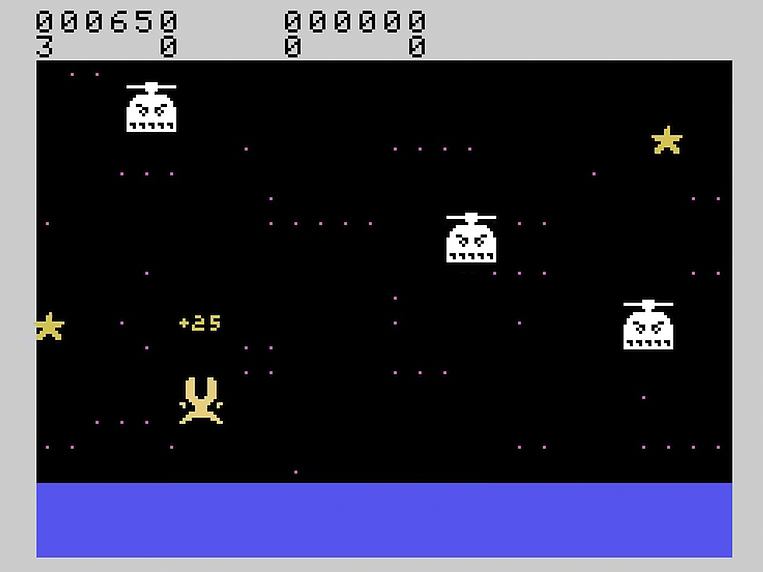
Star Eater is now available for the ColecoVision, so don't miss this ROM release; a physical version is also on the way.
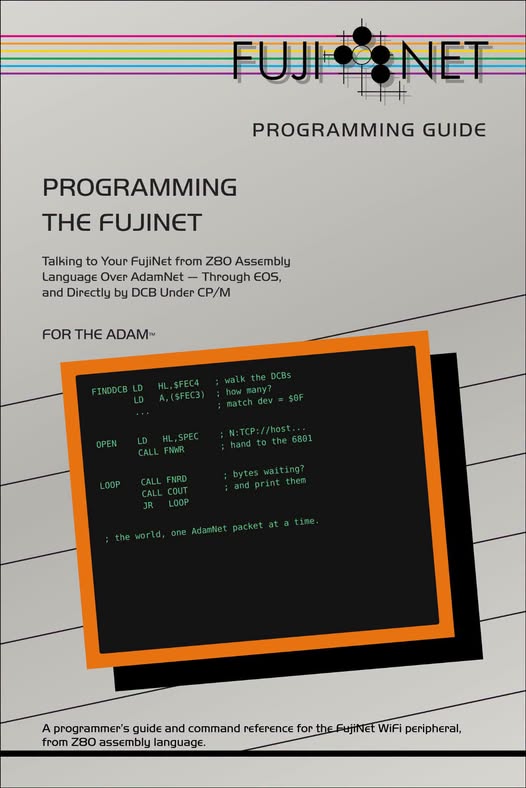
The first version of the #ColecoAdam #FujiNet Programmer's Manual is released
(7/04/2026)
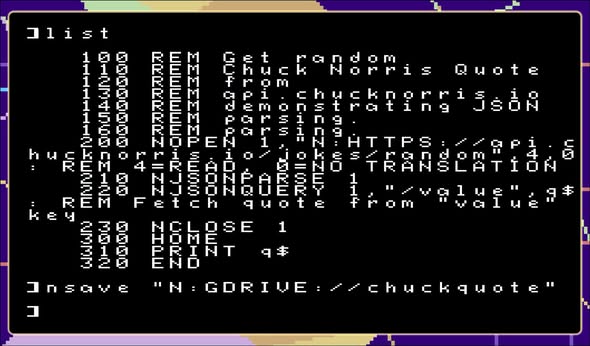
SmartBASIC 1.x R21 released with FujiNet commands!
(7/02/2026)
https://github.com/.../releases/tag/smartbasic-1.x-R21-v1.0
Software in DDP, Documentation in PDF. Enjoy!
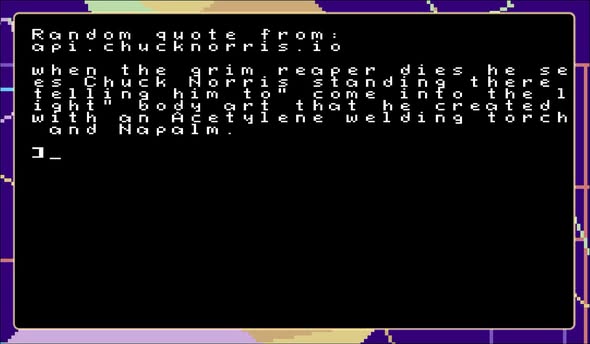
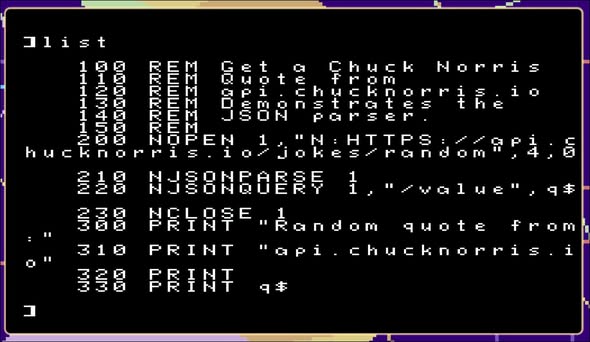
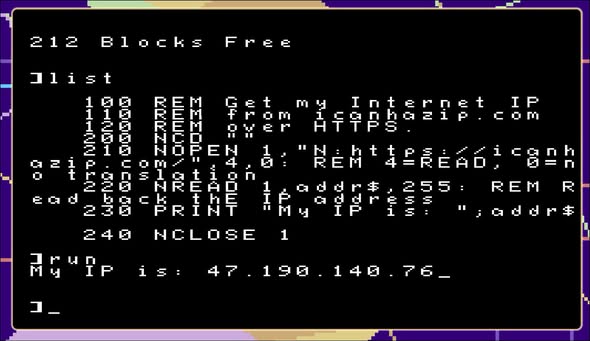
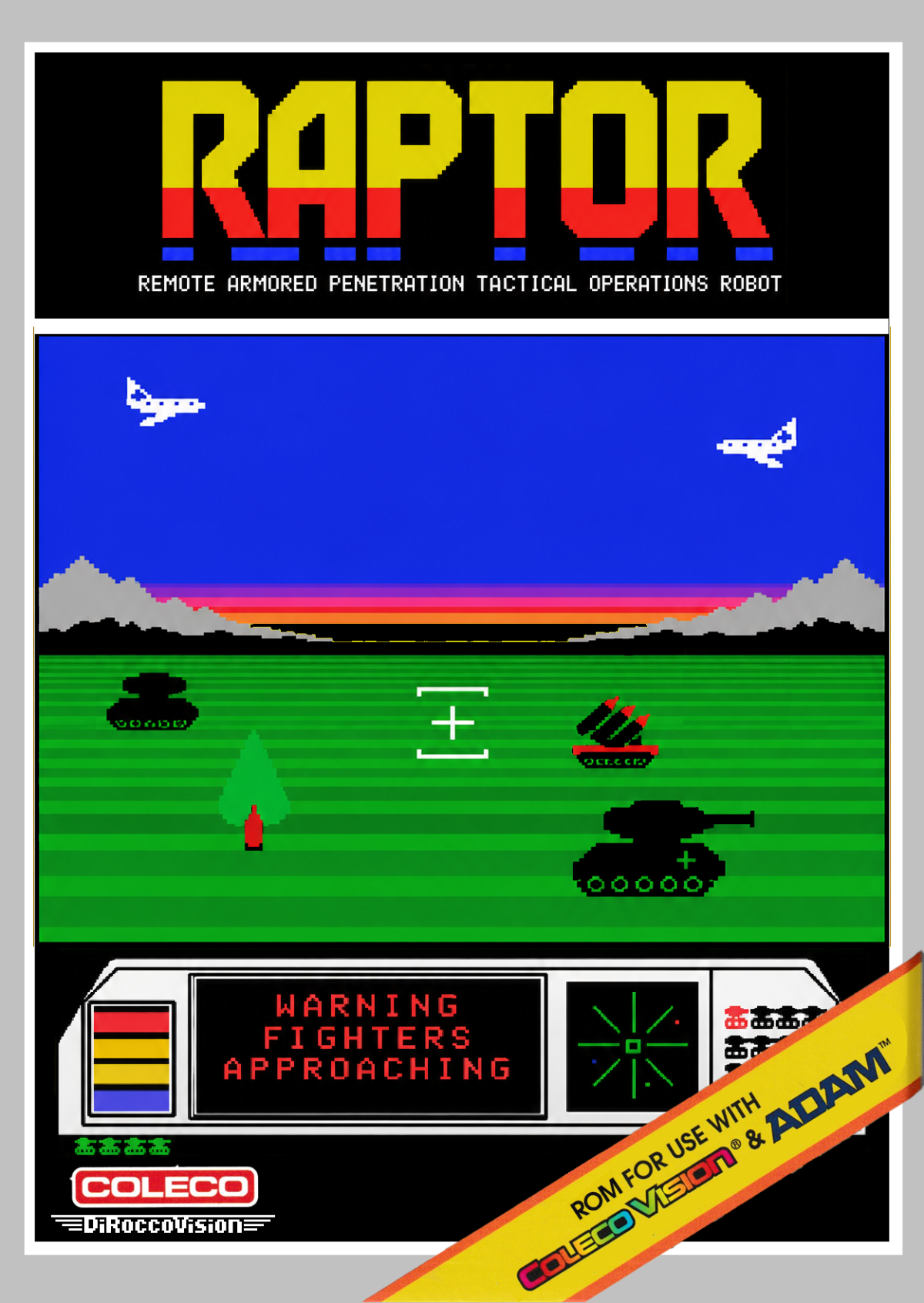
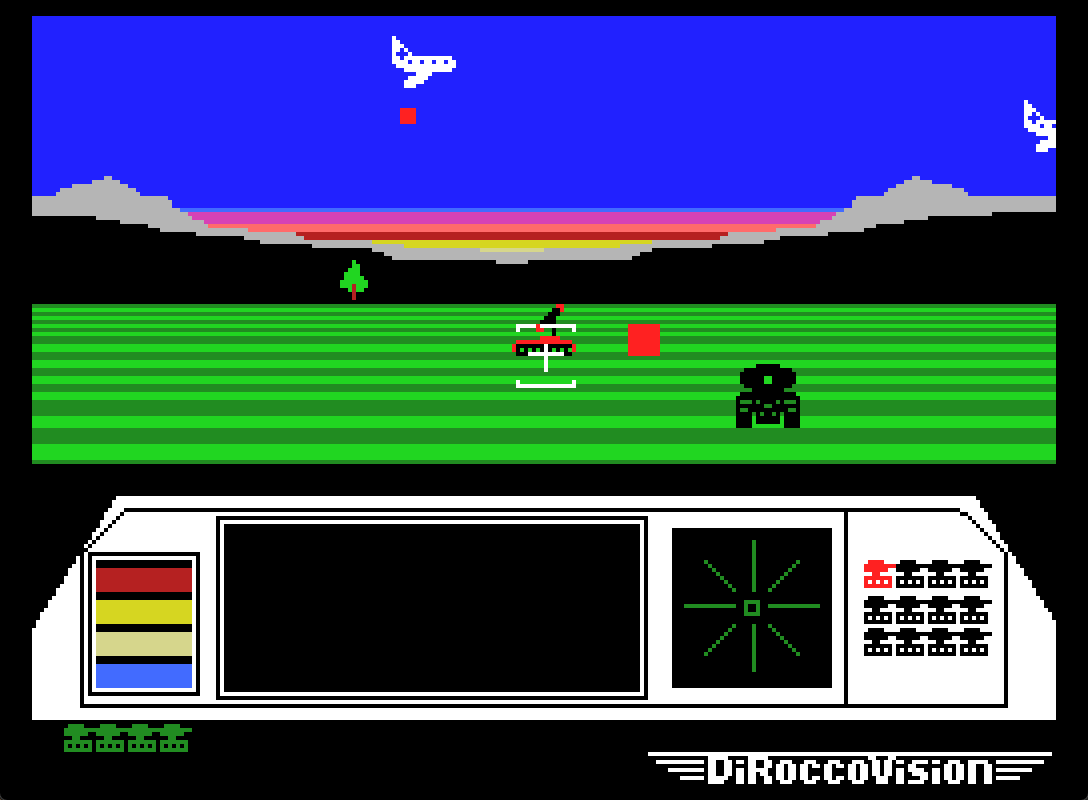
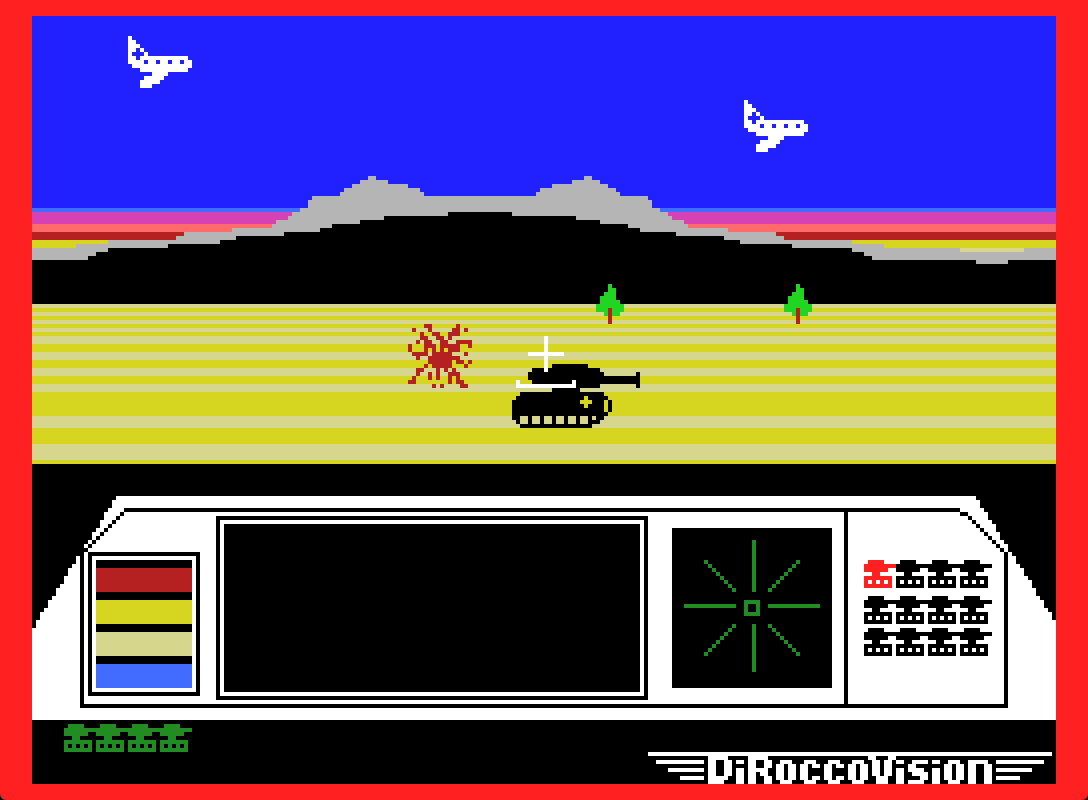
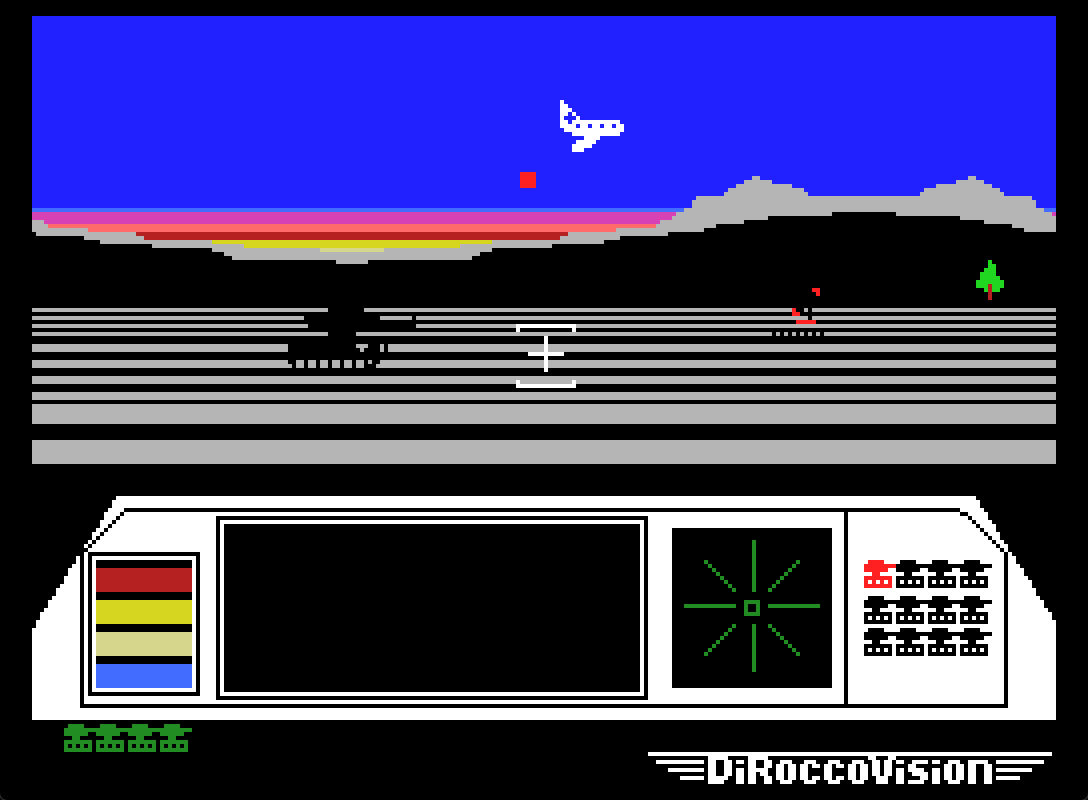
R.A.P.T.O.R. - Remote Armored Penetration Tactical Operations Robot
(7/02/2026)
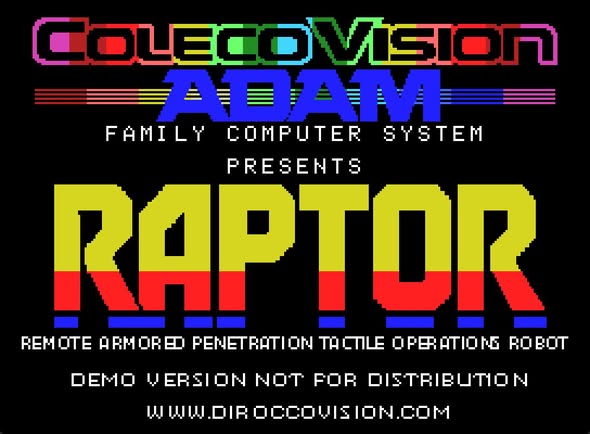
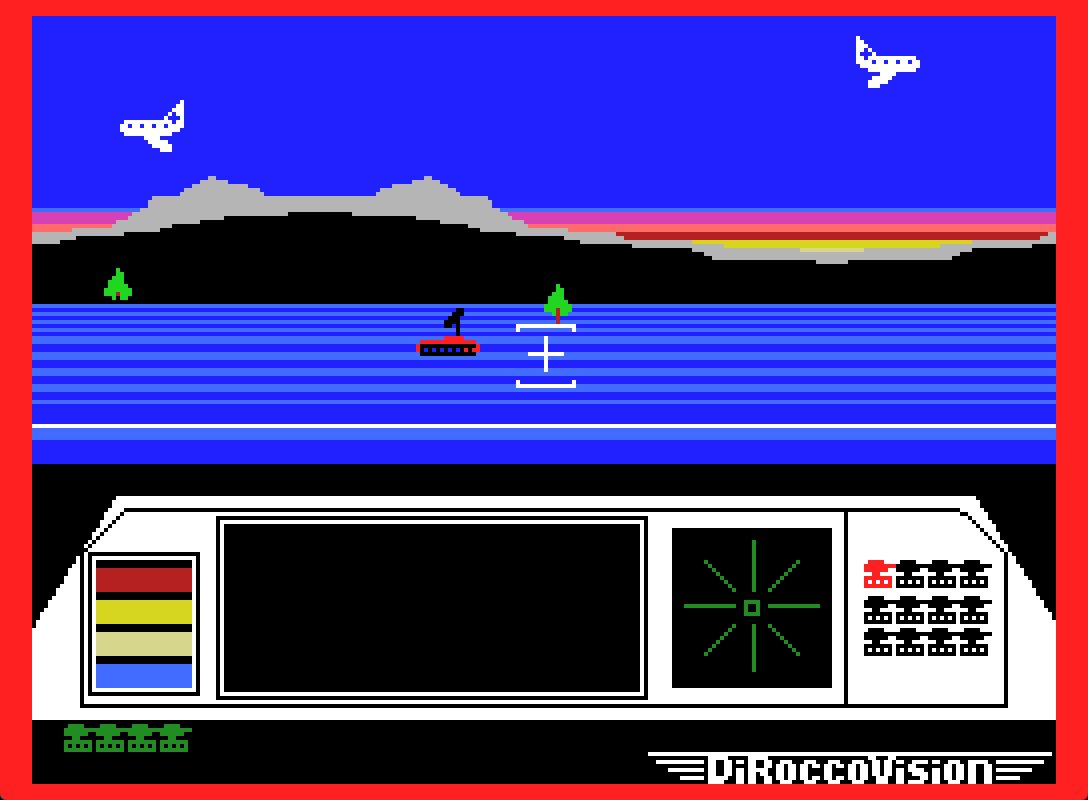
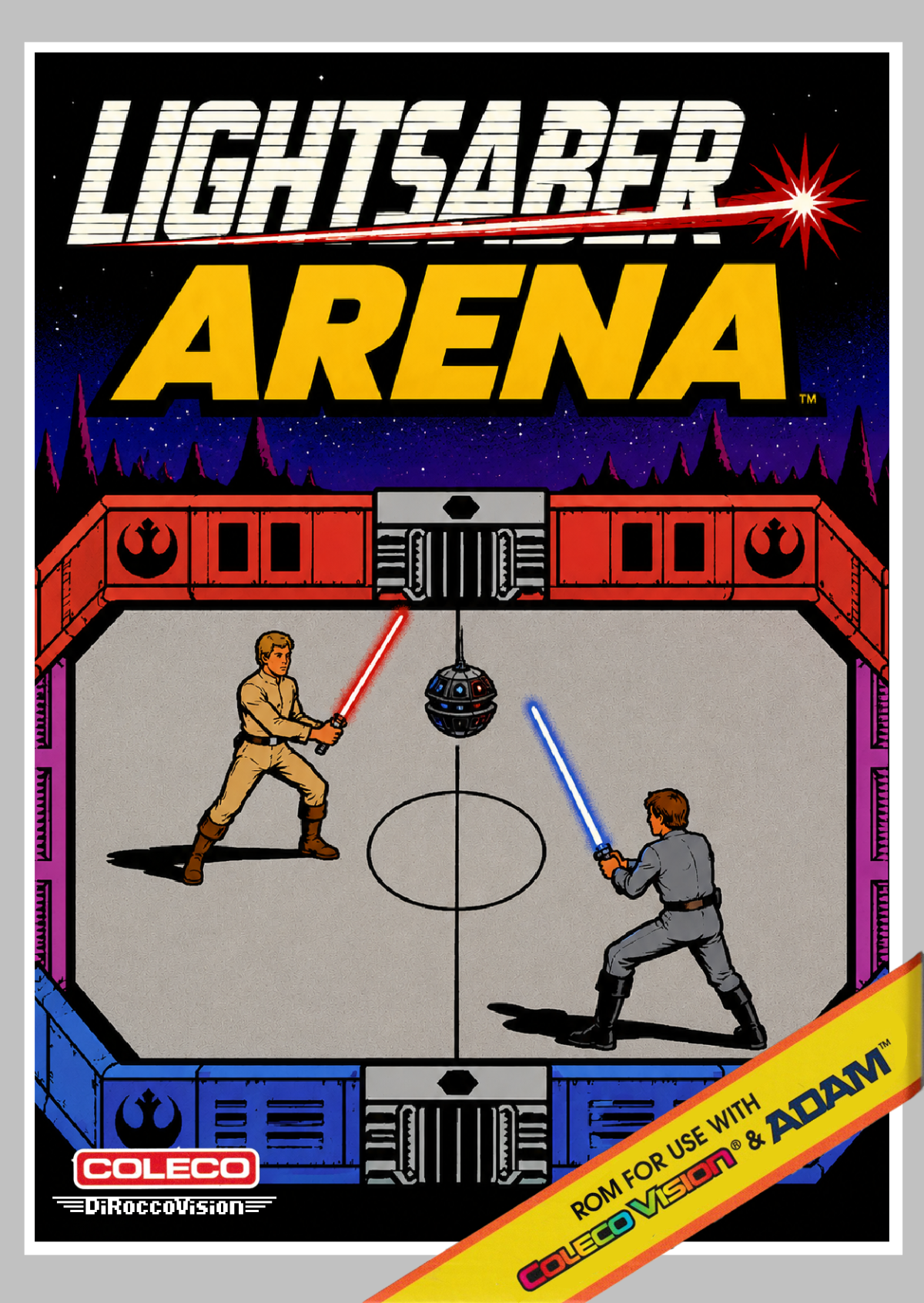
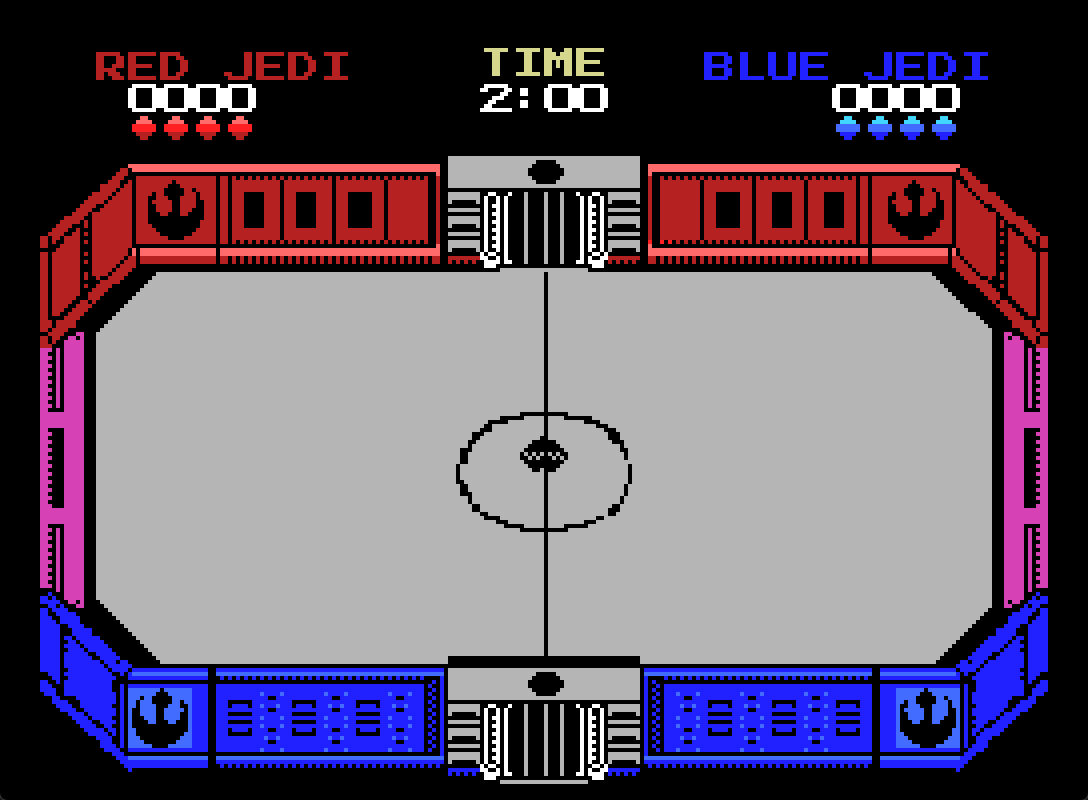
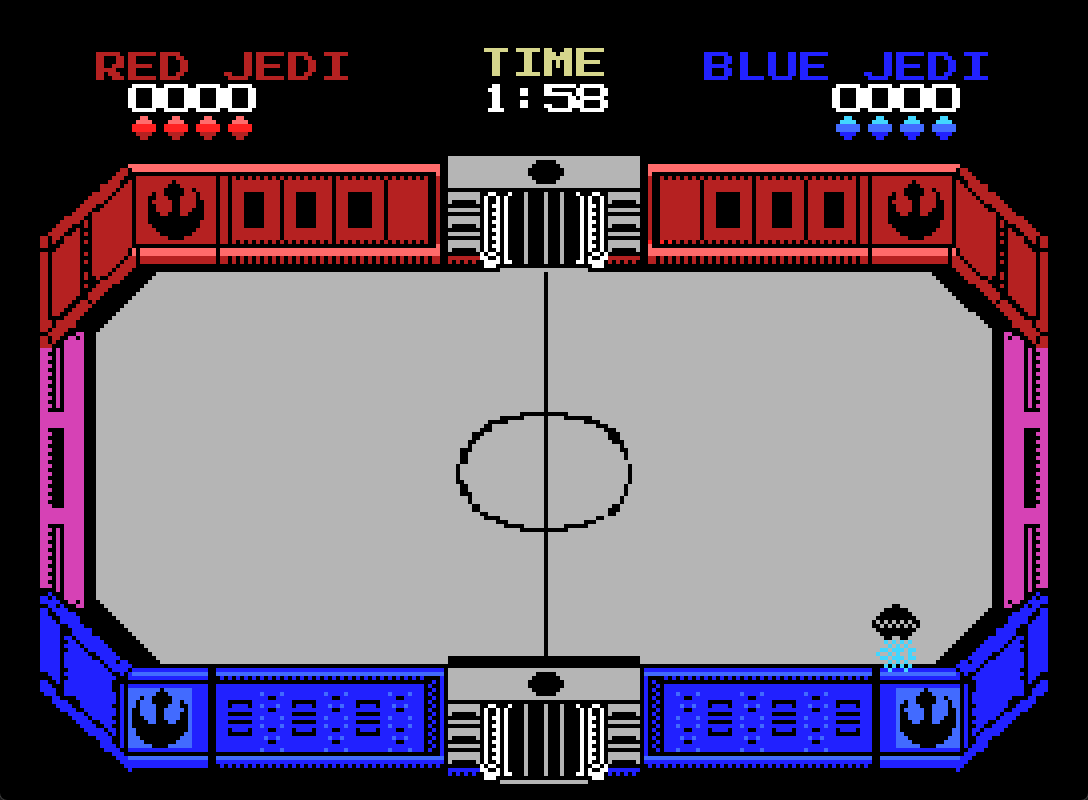
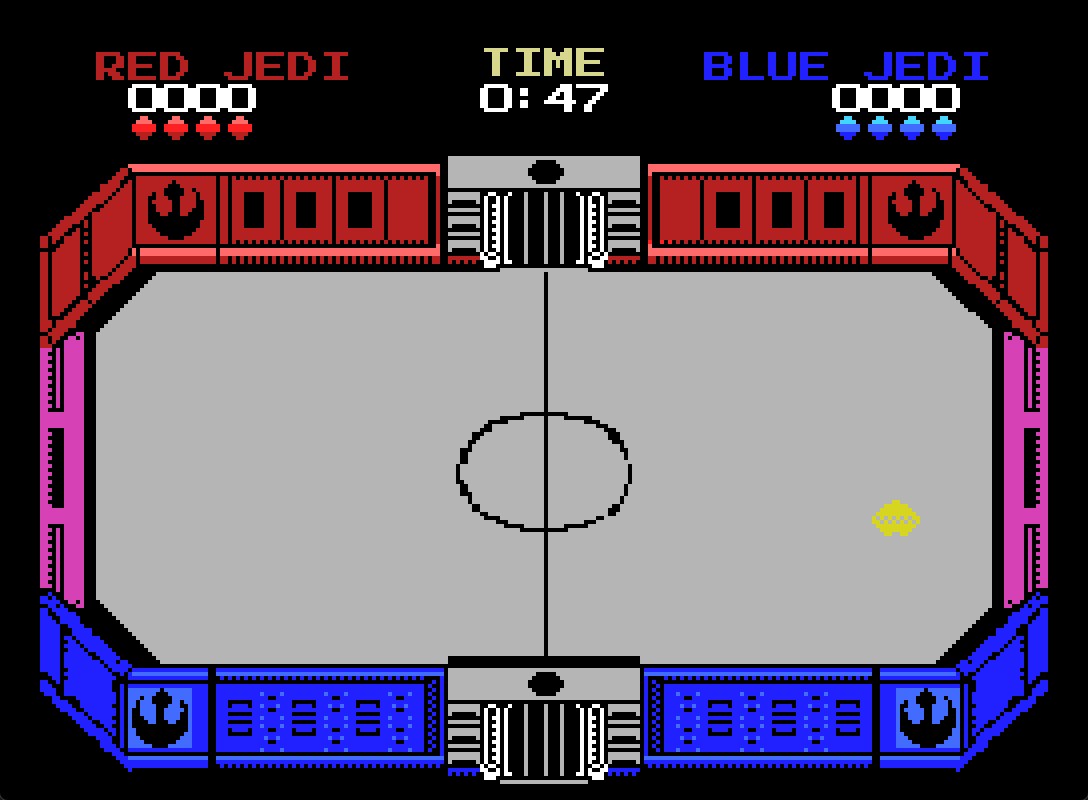
Lightsaber Arena (Working Title)
(6/29/2026)
Now it's 2026, and it's time to take on something much more challenging. 🙂

FACEBOOK MODERATION
(6/28/2026)
So you may not see much content from me there 🙁 or other Facebook groups.
We will keep to our Facebook page which we can moderate.
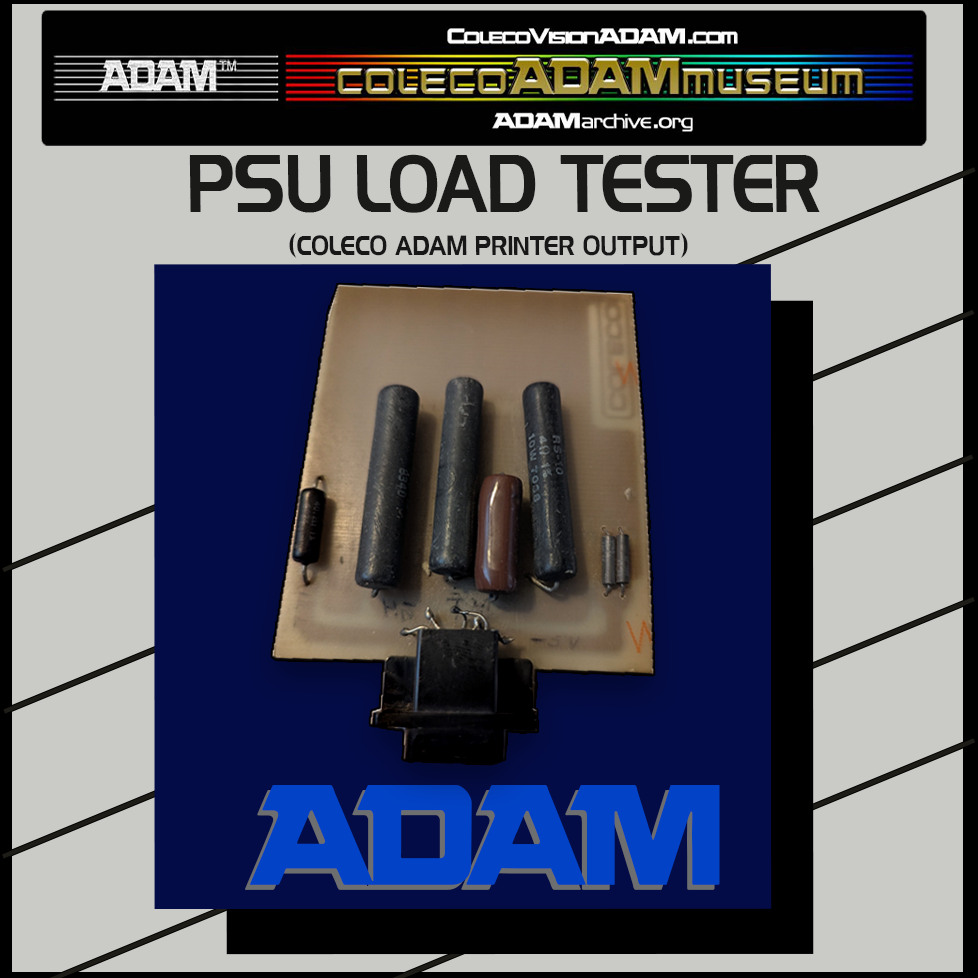
Coleco ADAM Printer PSU Tester Arrives
(6/28/2026)
EURO H.E.R.O.
(6/25/2026)
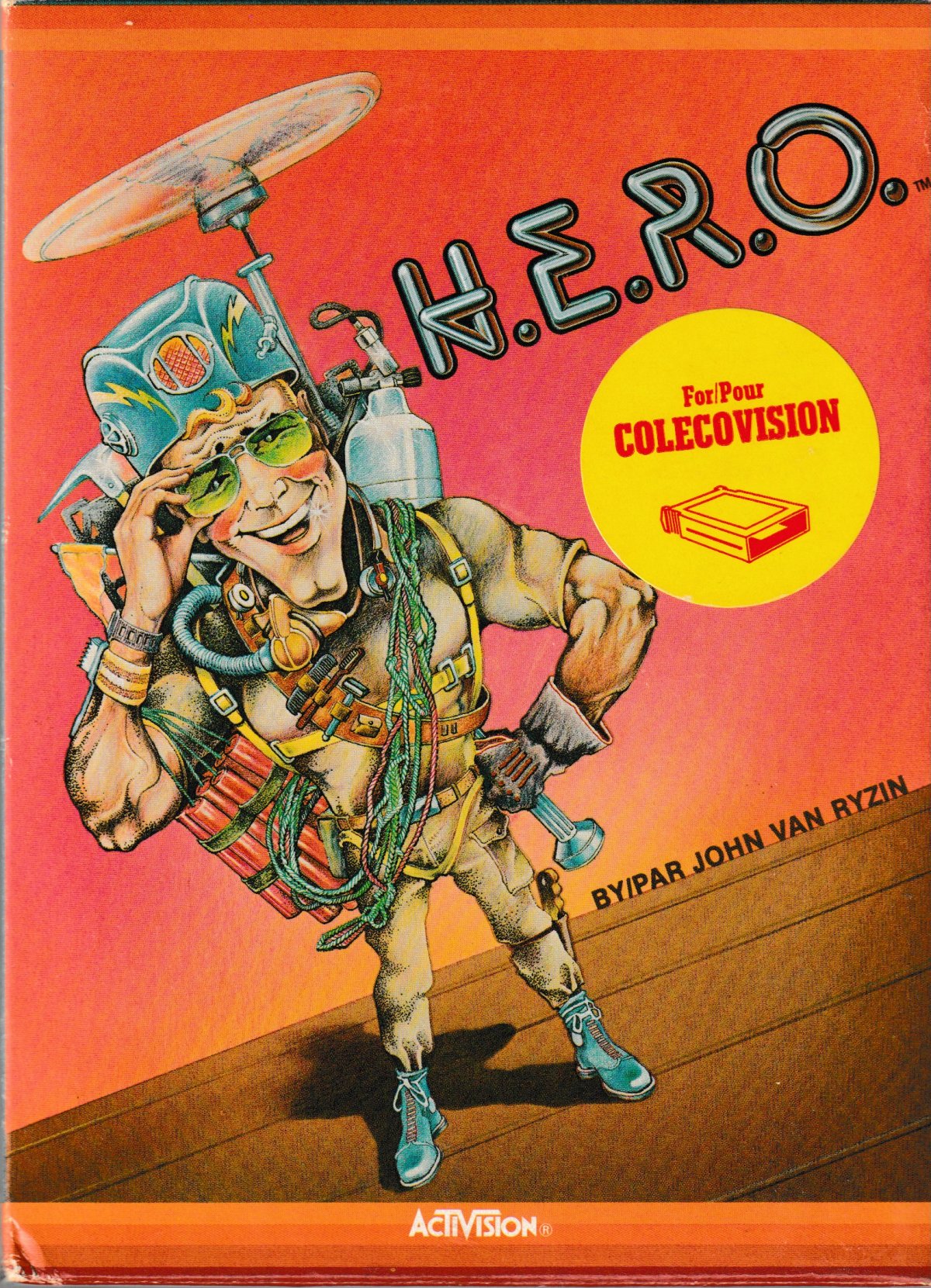
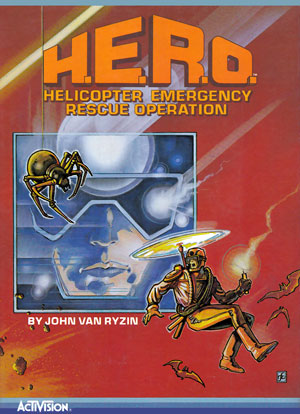
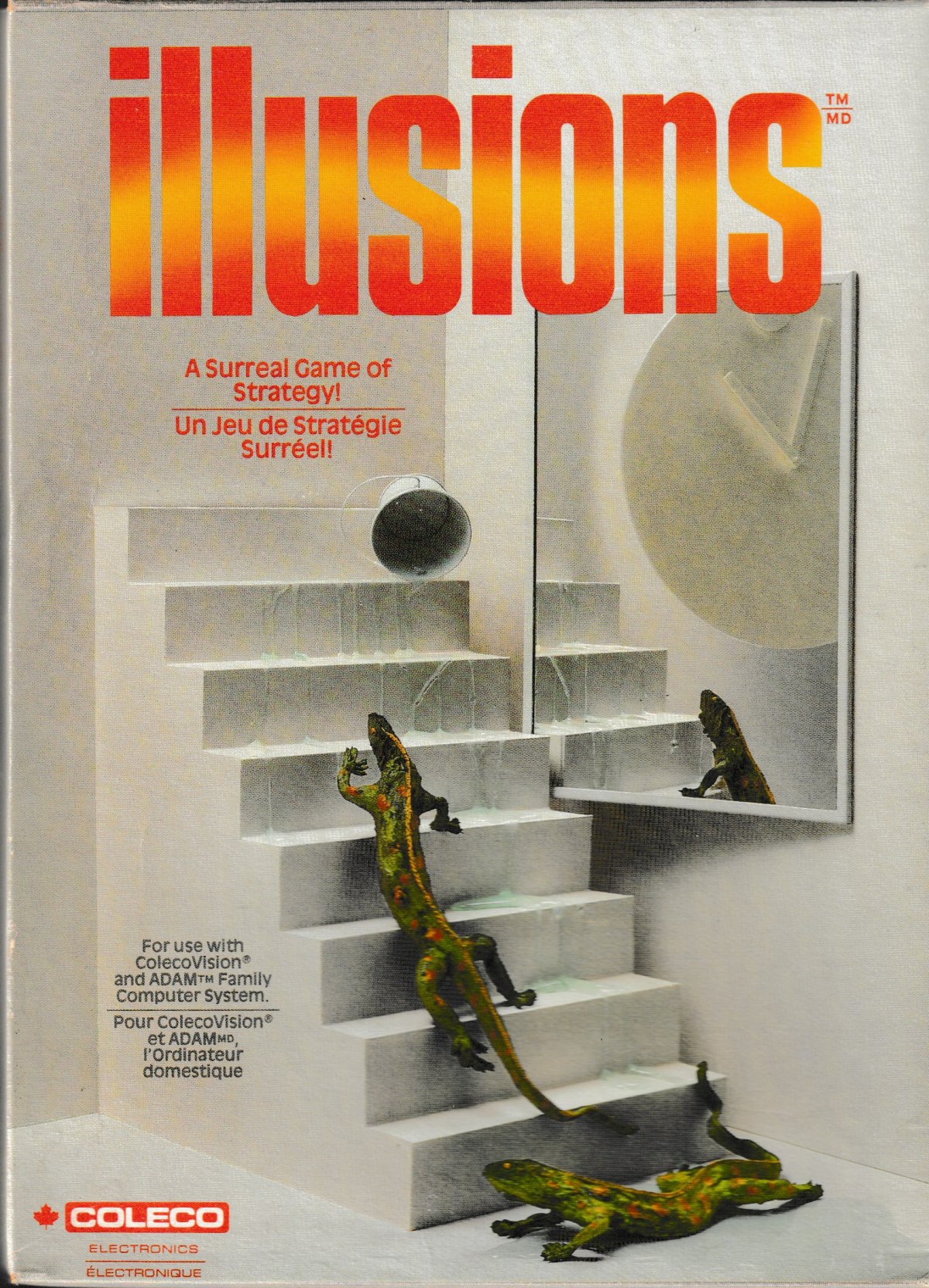
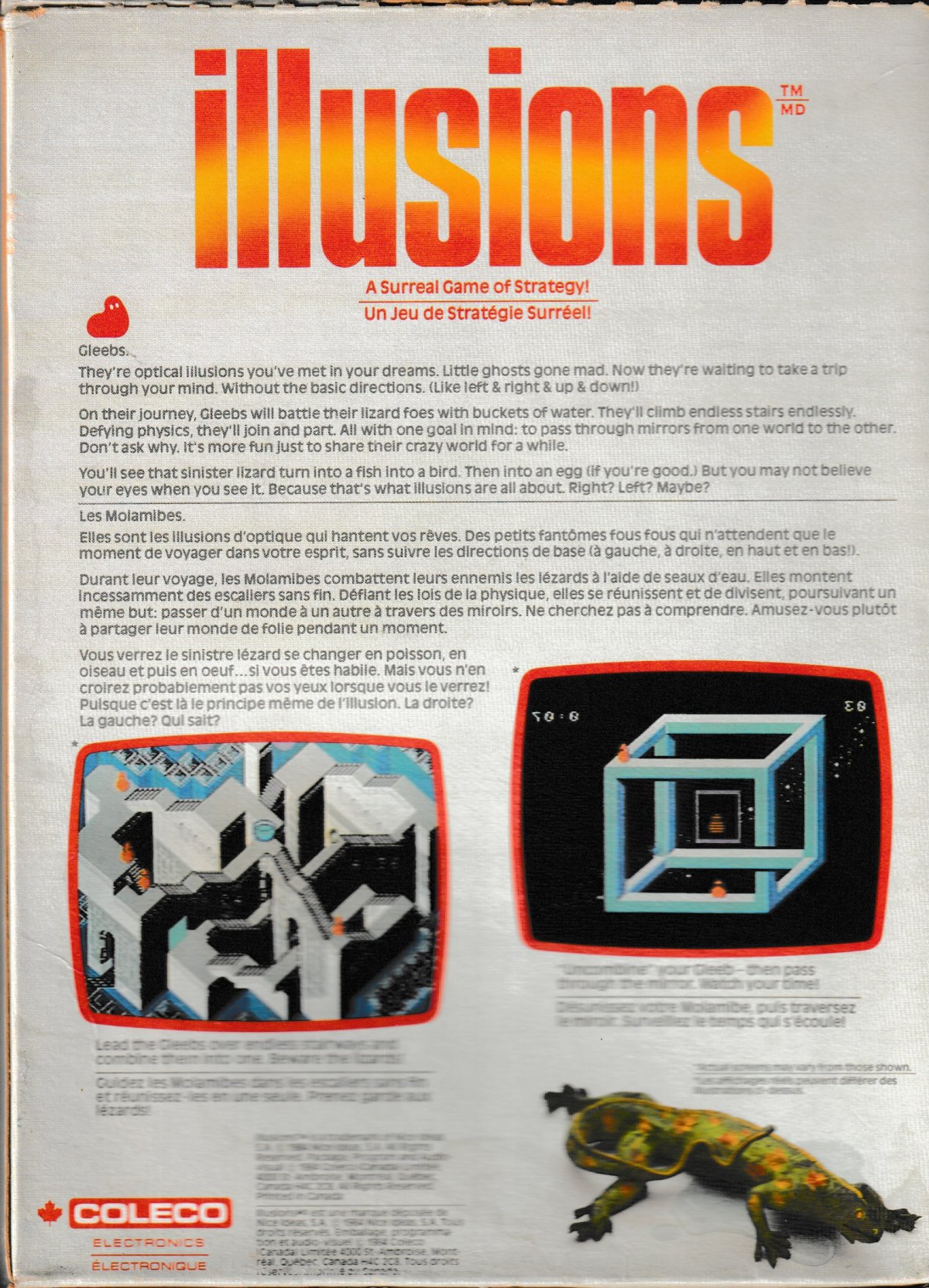
The Illusive Canadian Illusions!!
(6/25/2026)
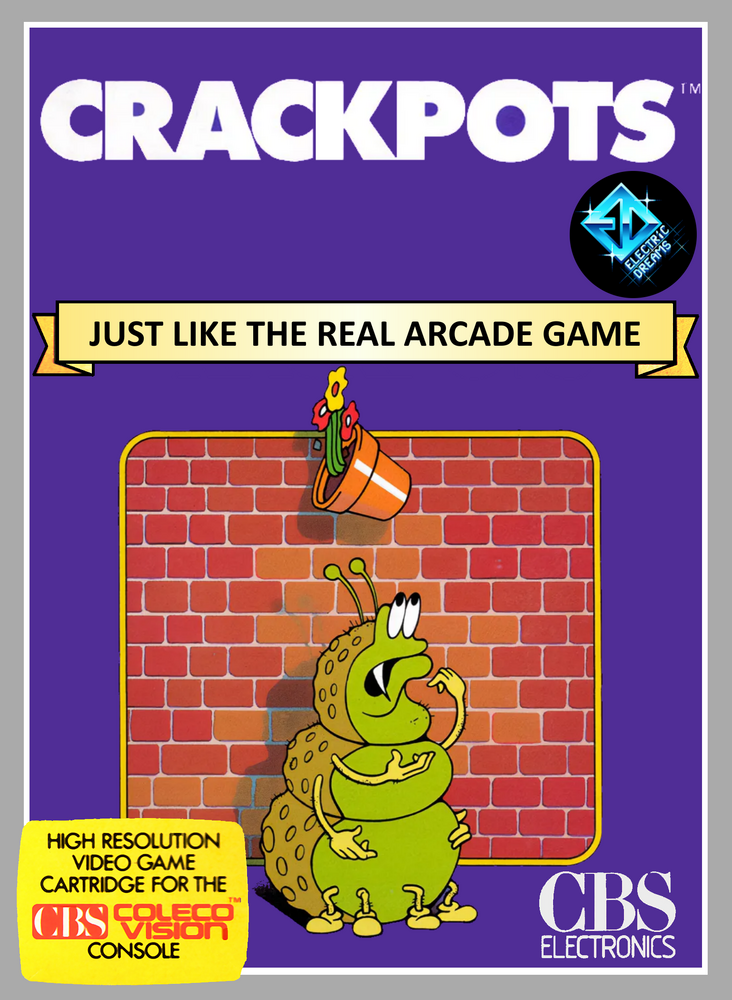
CrackPots for the ColecoVision!!!
(6/24/2026)
You play as Potsy, a Brooklyn gardener whose building is under siege. Bugs are swarming out of the sewers and climbing toward your windows — and your only weapon is a rooftop full of flower pots. Move left and right, drop your pots at the right moment, and crush the invaders before they break through.
But if too many bugs get inside, the building crumbles — one floor at a time — until there's nothing left.
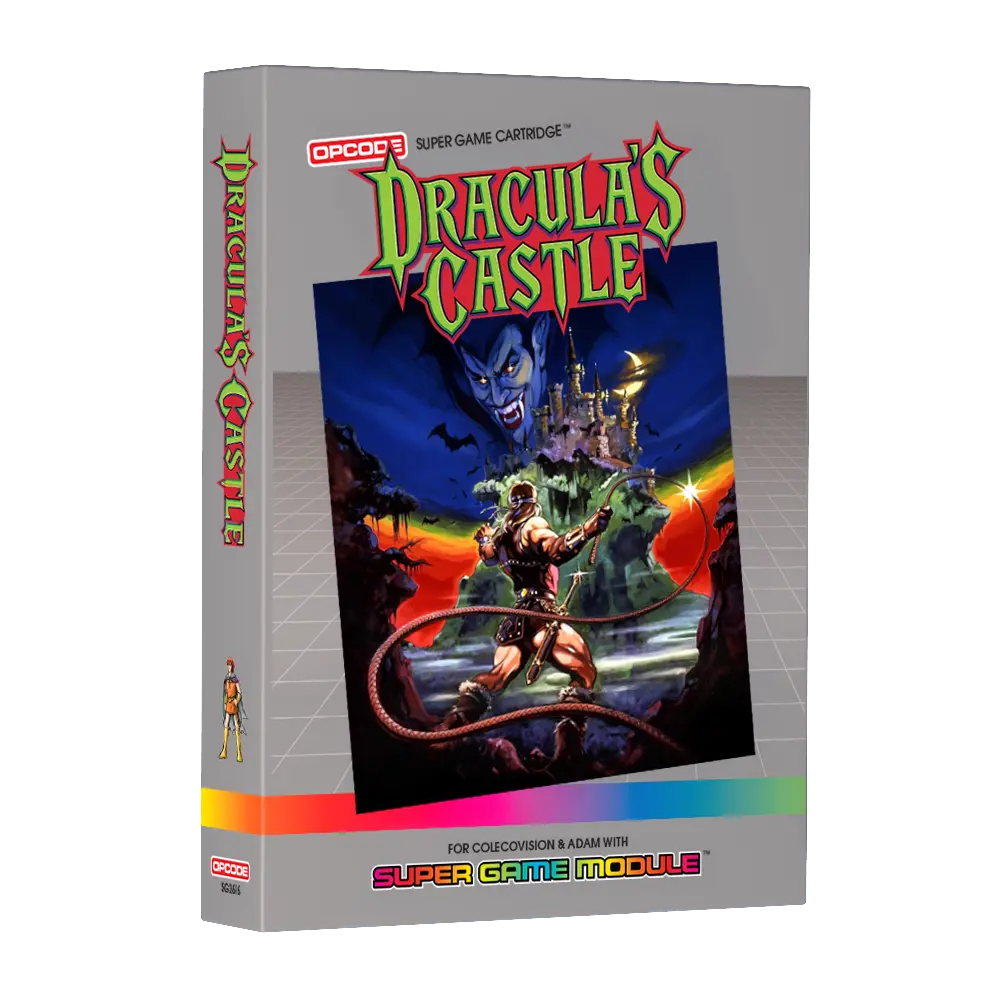
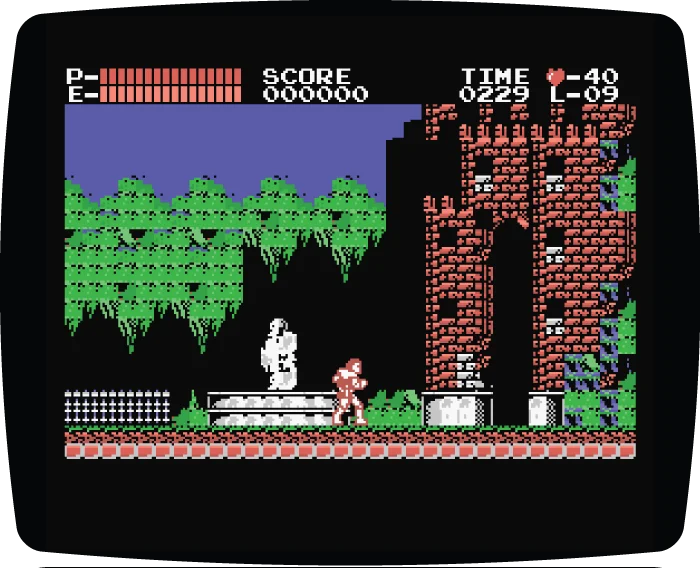
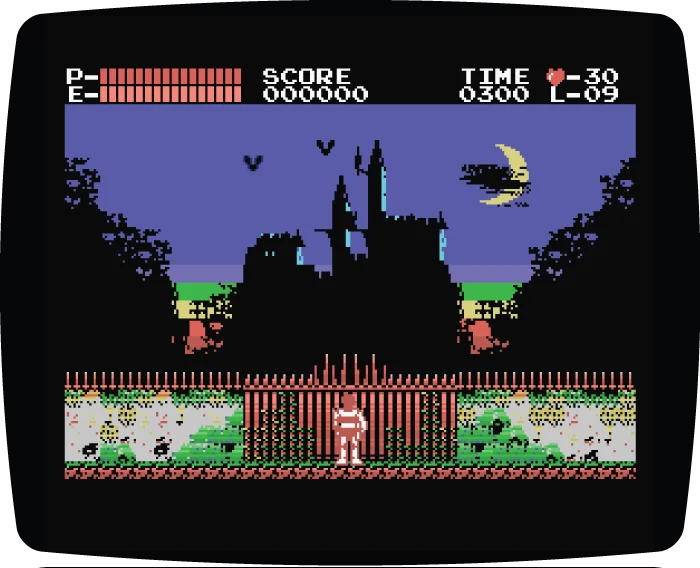
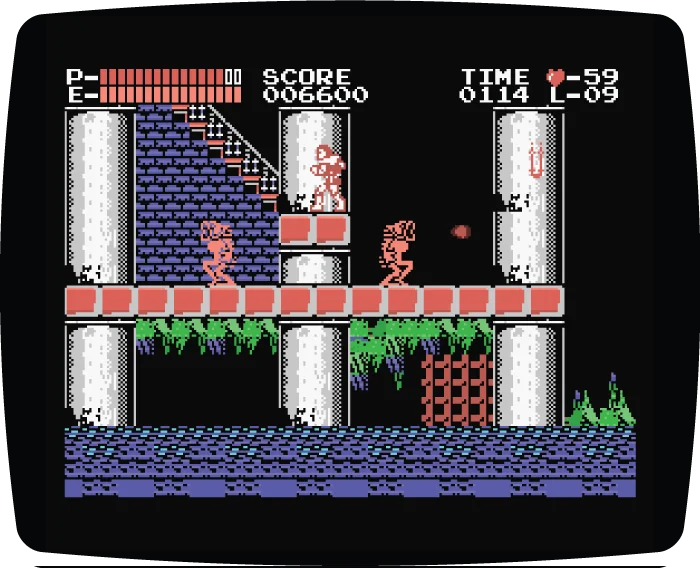
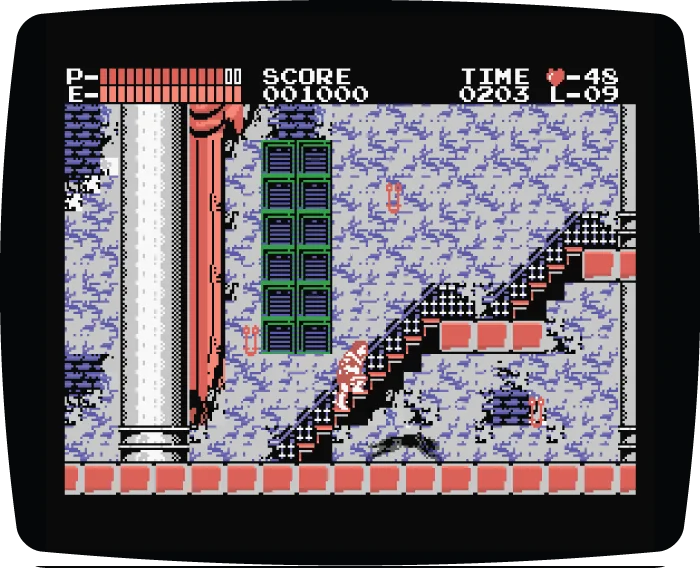
OPCODE announces Dracula's Castle for 2027
(6/20/2026)
In an ancient castle in Transylvania, a small kingdom in medieval Europe, lightning tears through the darkness as monsters rise once again. A sinister black mass, performed by a cult of heretics, marks the beginning of a new age of terror.
Simon, a young warrior who carries the bloodline of the legendary hero Christopher Belmont, stands ready to face the threat. To protect the peaceful kingdom now endangered by Dracula’s resurrection, he takes up the whip passed down from his father, a weapon said to hold mysterious power, and sets out alone for the demon castle.
Coleco RS-232/Centronics Prototype Interface — Complete Technical Analysis
(6/19/2026)
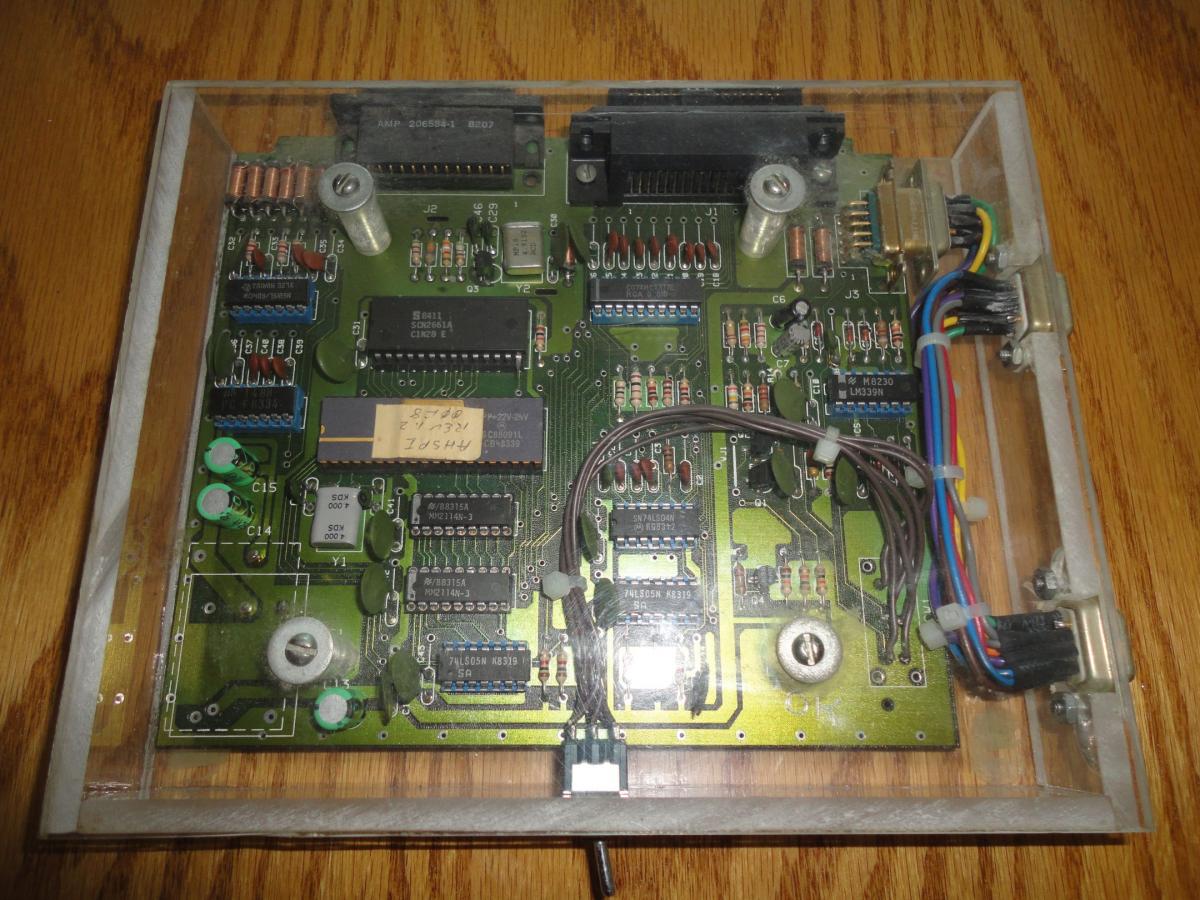
We have substantially expanded our analysis of the Coleco engineering prototype previously profiled here as the X00257 RS-232 / Centronics interface. Evidence from inside Coleco's own application software, from an existing FujiNet implementation, and — newly — from a complete period disassembly of the device firmware lets us tell the full story and name the device the way Coleco's marketing team did: the ADAM Universal Interface (RS-232 / Parallel).
This is the engineering precursor to an unreleased production peripheral. The prototype is built on a Coleco-manufactured PCB (X00257 REV 0, silkscreened with the boxed COLECO logo) — not a hand-built one-off. It contains a Motorola 6801 microcontroller, a Signetics SCN2661A USART, RS-232 line drivers, and a full Centronics parallel output stage, housed in a clear acrylic enclosure with a three-position mode switch (Serial / Parallel / SmartWriter pass-through). The socketed 2716 EPROM is hand-labelled "AHSPI REV 1.2," likely "ADAM Host Serial Parallel Interface" — the working engineering name for the product marketing called the Universal Interface.
Headline findings:
• The device lives on AdamNet device 14 ($0E) for its serial port and device 13 ($0D) for its parallel port — two independent AdamNet identities, one per port. The third switch position is a SmartWriter pass-through.
• The AdamCalc spreadsheet (Coleco, 1984) already detects this device at boot. Its device-probe table at $32AB explicitly names $0E "Serial" and $0D "Parallel" — period Coleco application software was aware of the Universal Interface even though it never shipped.
• The FujiNet project (open-source ESP32 AdamNet emulator) independently implemented this device in December 2021, reconstructing the AdamNet behaviour from the ADAM CP/M BIOS. Device address, hardware list, and command flow all agree with our analysis.
• The firmware is substantially complete. A full disassembly of the 2KB ROM — originally reconstructed by Chris Braymen, with later annotation by Richard F. Drushel — shows REV 1.2 implements buffered, bidirectional RS-232 through the SCN2661 USART, with both hardware (RTS/CTS) and software (XON/XOFF) flow control, AdamNet running interrupt-driven on the 6801's SCI while the serial port is polled. What Coleco left unwritten is a small block of AdamNet STATUS response routines. The complete disassembly and the reconstruction of those routines are detailed in the document.
• Coleco shipped the host side of this peripheral in retail CP/M 2.2. The ADAM CP/M BIOS contains a complete AUX driver — buffered read with character count, a six-byte serial init block, full status semantics — for a device that never reached stores (disassembled by Richard F. Drushel, 1992). The host driver was finished and in the field; only the device firmware was left incomplete. That is the kind of detail that reframes the story: this was not an idea sketched and dropped, but a peripheral built out on both sides and stopped a few subroutines short of done.
The architecture — AdamNet on the 6801's SCI, user serial via a Signetics EPCI, MC1488 / 1489 line conversion — is the same template that later appeared in the Orphanware, Hi-Tek, and MicroFox RS-232 cards. The third-party cards that became the de facto standard for ADAM serial were built along the path Coleco's own engineering team had already laid down.
The analysis document includes nine high-resolution photographs of the unit, the original Coleco engineering schematic, the complete annotated 6801 disassembly, the AdamNet device map for all three switch positions, the I/O memory map, the AdamCalc icon and device-table extractions, the firmware reconstruction with verification, and a list of open investigations. It is maintained as the living record for this device and is kept current as the work continues, so it — not this announcement — is the place to look for the latest detail.
Available in both HTML and DOCX format.
Restoration & Documentation: Rich DiRocco
Firmware disassembly: Chris Braymen (6801 ROM), with annotation by Richard F. Drushel
Host-side CP/M BIOS disassembly: Richard F. Drushel (1992)
Independent confirmation: FujiNet (Thomas Cherryhomes); Coleco Marketing Communications memo; AdamCalc binary analysis
Schematic & EPROM image: Original Coleco engineering materials
AdamArchive.org | ColecoVisionADAM.com
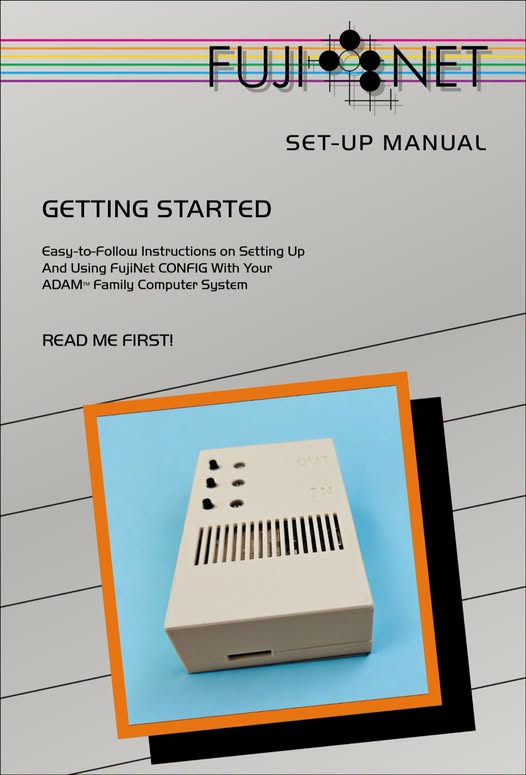
FujiNet Setup Manual is released.
(6/15/2026)
https://fujinet.online/.../fujinet-config-adam-setup...
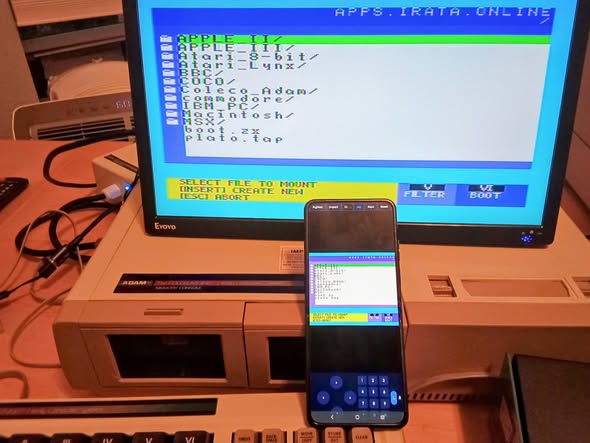
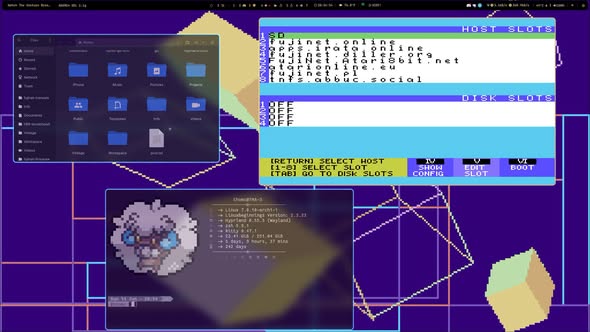
Fujinet-PC can now talk AdamNet with AdamEmSDL!
(6/14/2026)
* Fujinet-PC can now talk AdamNet with AdamEmSDL!
* A new FujiNet Go Adam combines FujiNet-PC + ADAMemSDL into an Android app to run on phone, tablet, or TV!
https://github.com/FujiNetWIFI/fujinet-firmware
https://github.com/FujiNetWIFI/fujinet-go-adam
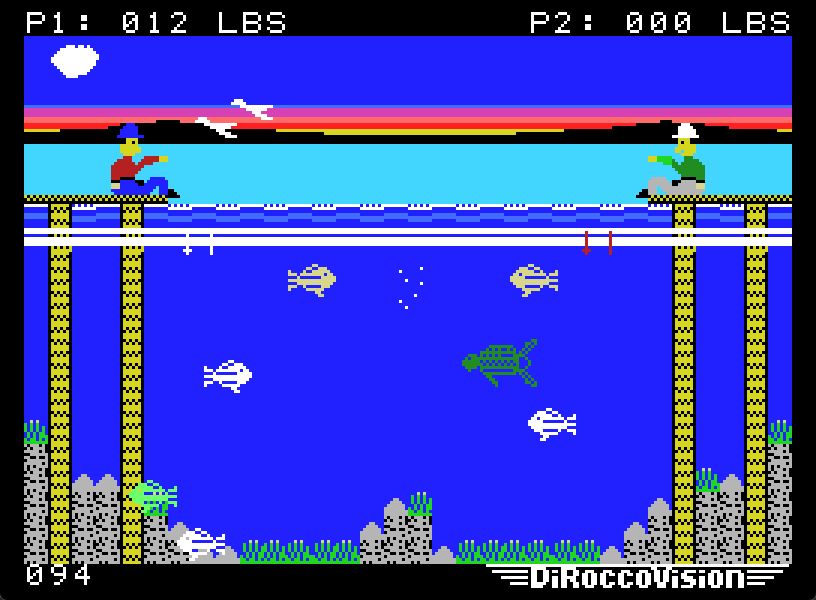
Time to round them up!!!!!
(6/14/2026)

The Duck, Shark, Turtle & Crab are all waiting for you!!!
(6/14/2026)
Had to pull down full demo files due to some trying to post unfinished copies.
Check it out!!!

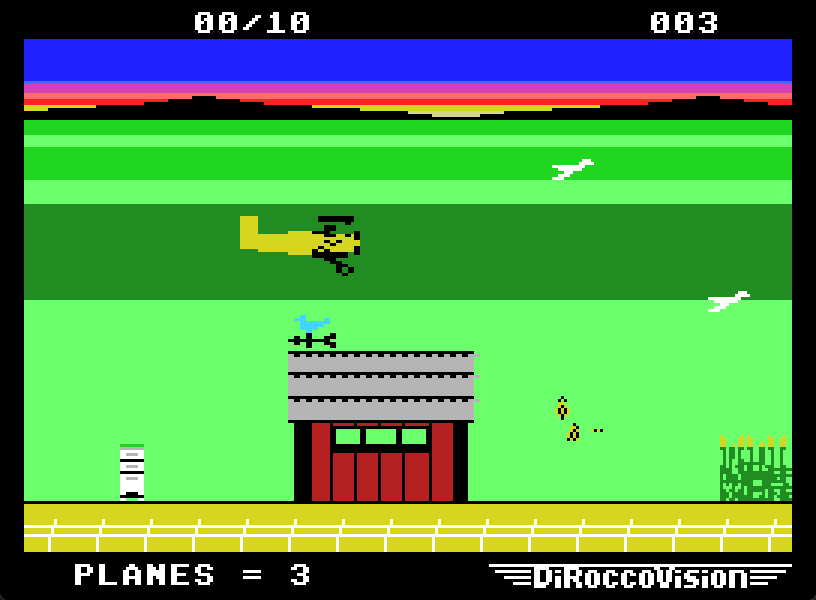
BarnBuster is pretty much complete!!
(6/14/2026)
I have posted a partial copy that allows for demo mode of 3 barn fly throughs. There are other additional screens and functions not included in the demo version.
Check it out!!!

Cool Stuff hidden in the last arrival of Gems from MicroFox Technologies.
(6/12/2026)
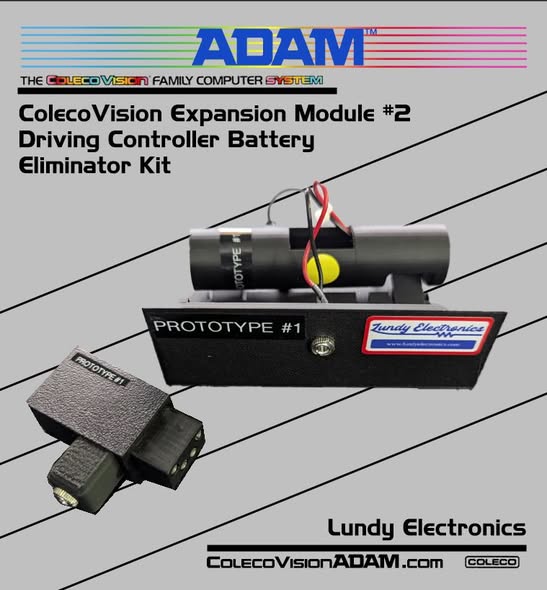
ColecoVision Expansion Module #2 Driving Controller Battery Eliminator Kit
(6/12/2026)
Check out this great device to give you safe perma power!!!
We are proud to have Prototype#1 here at the Museum.
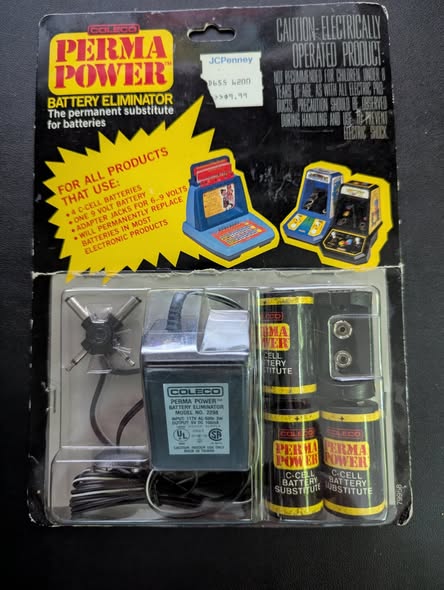
ADAMarchive.org has new and interesting updates for all!!
(6/12/2026)

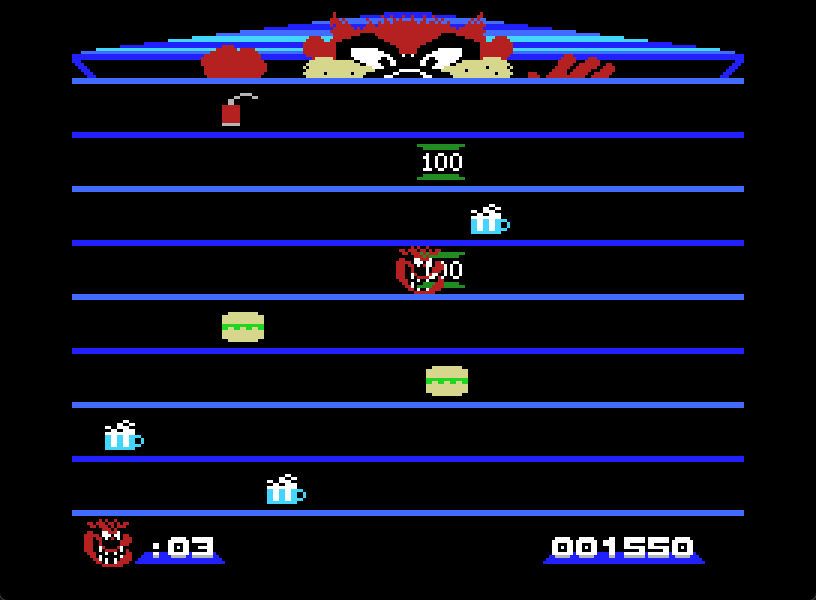
Taz is back — and he's ravenous.
(6/12/2026)
Guide the Tasmanian Devil across eight lanes of non-stop action. Food flies at you from every direction: grab the hamburgers, root beers, ice cream cones, fudgesicles, apple cores, turnips and sundaes before they disappear off-screen. But watch out — dynamite sticks are mixed in with the feast, and one wrong catch will cost you a life.
TAZ for ColecoVision is a faithful and lovingly crafted adaptation of the 1983 Atari 2600 classic developed by Steve Woita and published by Atari. Built from scratch in CVBasic for real ColecoVision hardware, it runs on a standard cartridge with no expansion hardware required.
Could a FROB for the Colecovision/ADAM be made today?
(6/10/2026)
Check out what AI has to say with all the factual evidence we could find.
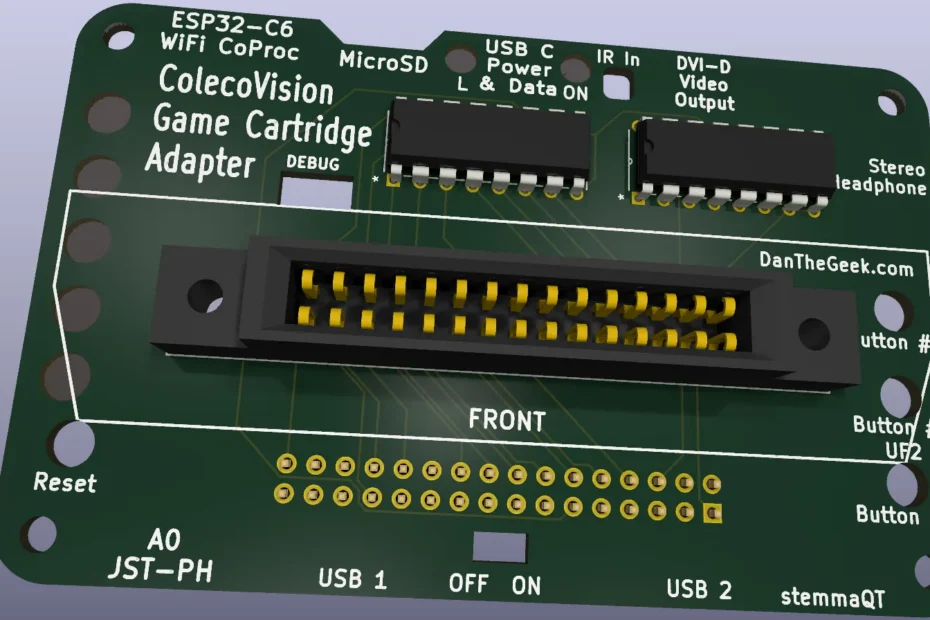
Work in Progress: ColecoVision Game Cartridge Adapter for the Adafruit Fruit Jam by Dan The Geek
(6/08/2026)
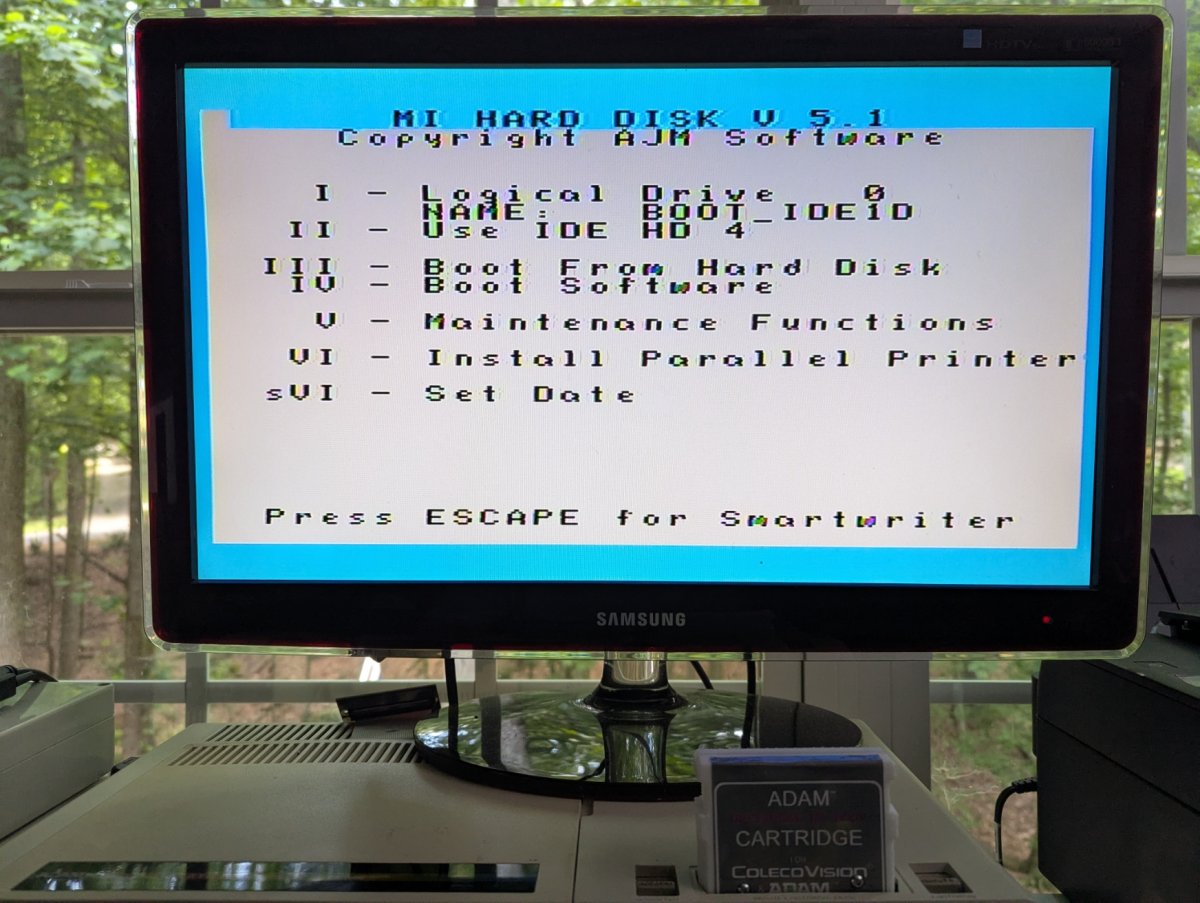
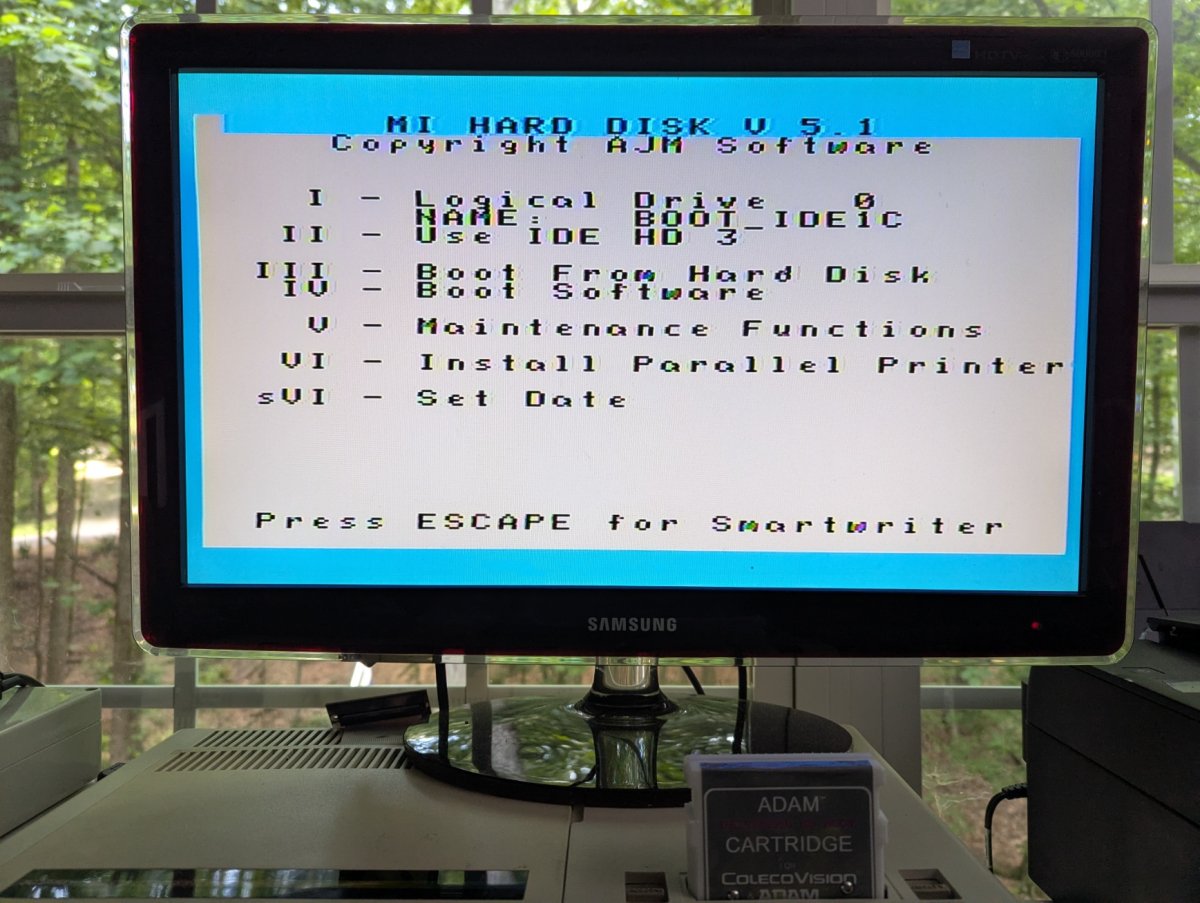
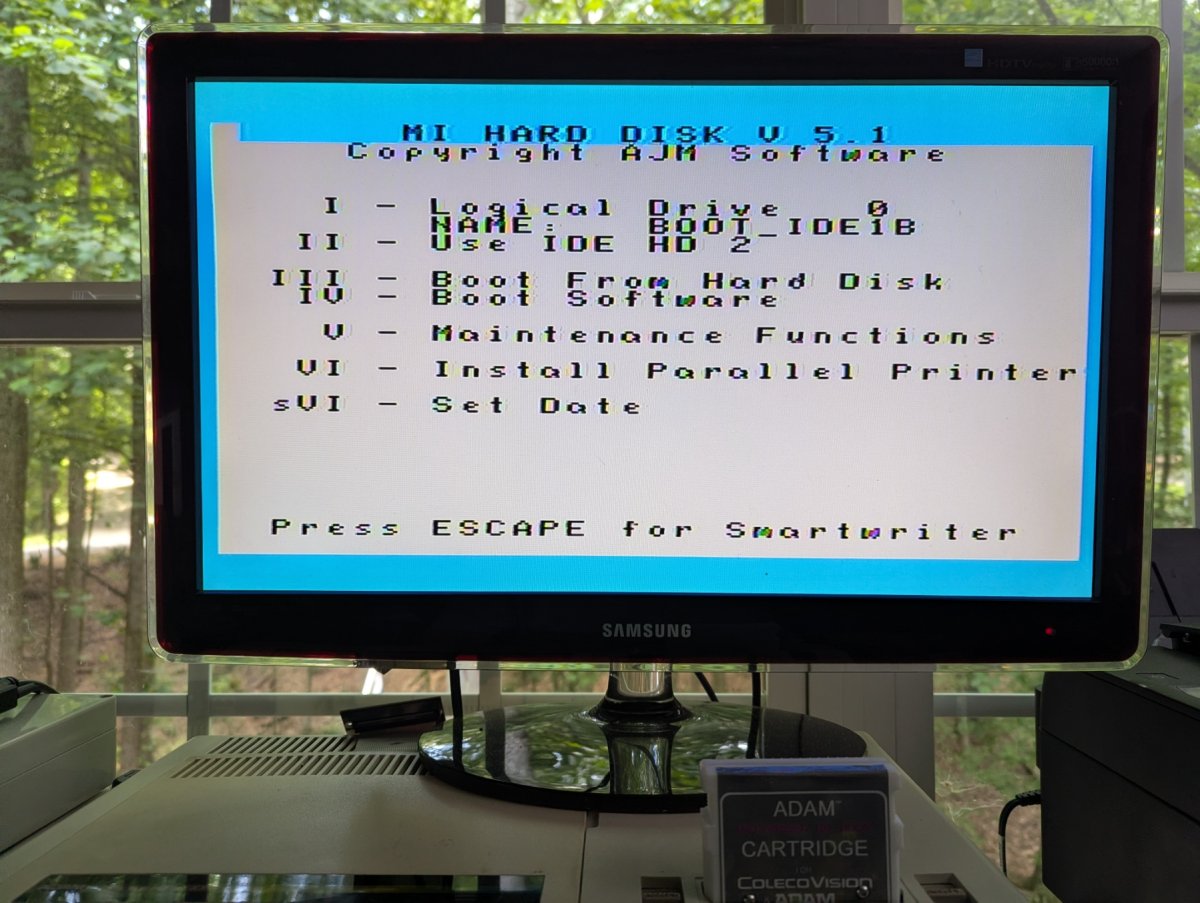
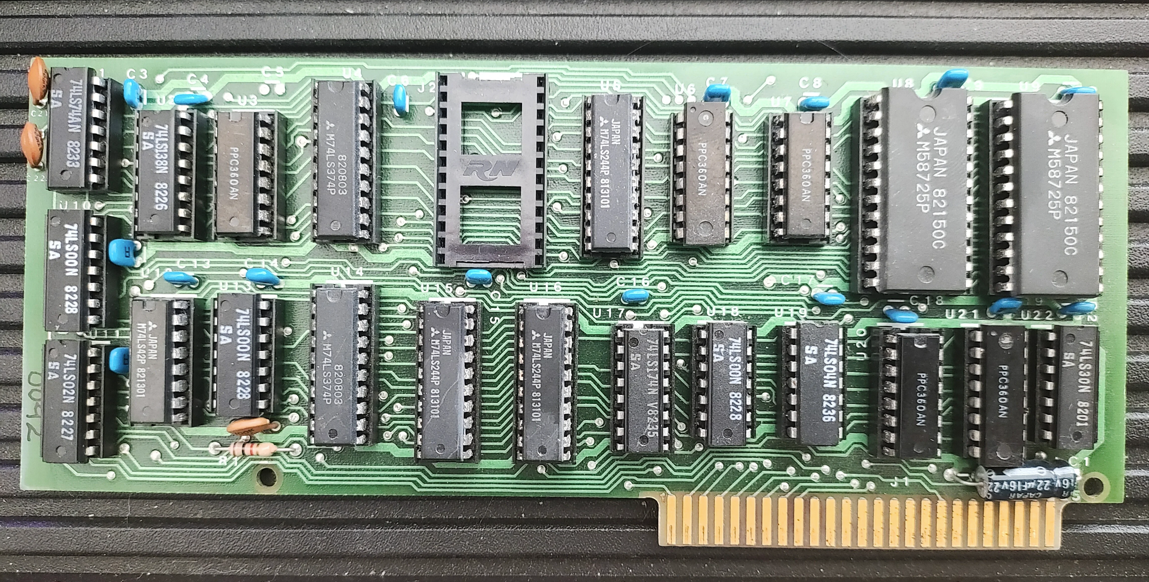
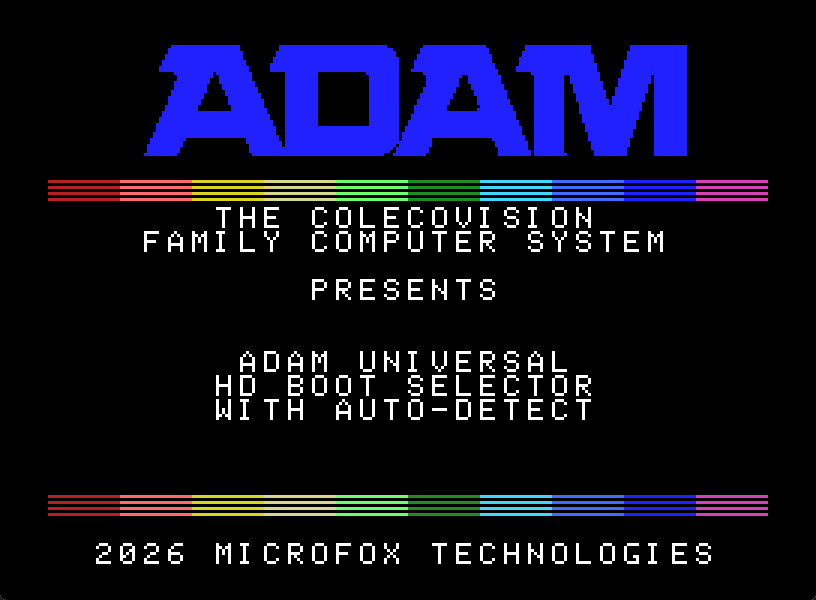
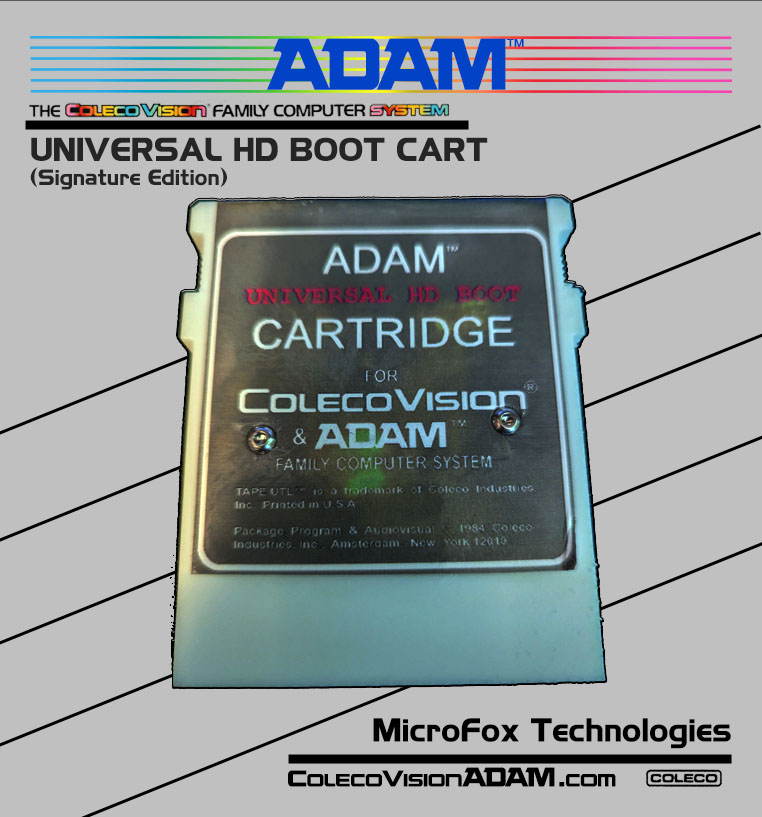
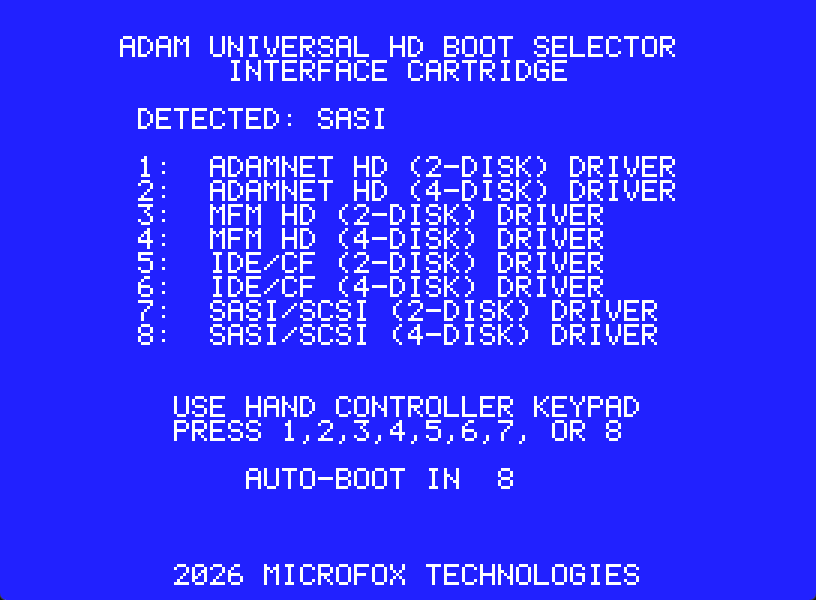
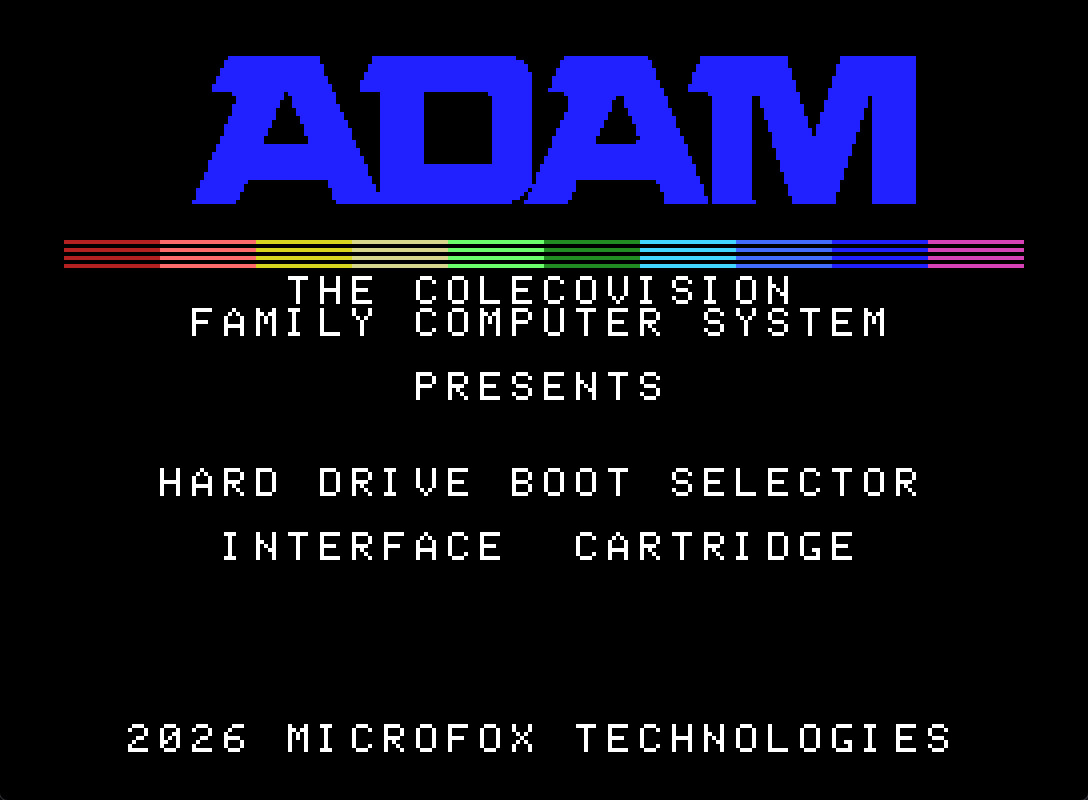
ADAM Universal HD Boot ROM
(6/02/2026)
📀 ADAMnet HD — 2 or 4 disk driver
💾 MFM HD — 2 or 4 disk driver
💿 IDE/CF — 2 or 4 disk driver
🖥️ SASI/SCSI — 2 or 4 disk driver
Select via the hand controller keypad, or just let it auto-boot your previously chosen driver in seconds. No more swapping boot tapes or disk packs just to fire up your hard drive setup — one cartridge handles them all.
Whether you're running a vintage MFM drive, a compact flash IDE setup, or a SASI/SCSI array, MicroFox has you covered with a single universal solution.
The ADAM ecosystem is alive and well in 2026! 🕹️
#ColecoADAM #ColecoVision #VintageComputing #RetroComputing #MicroFox #ADAM #Coleco #RetroTech
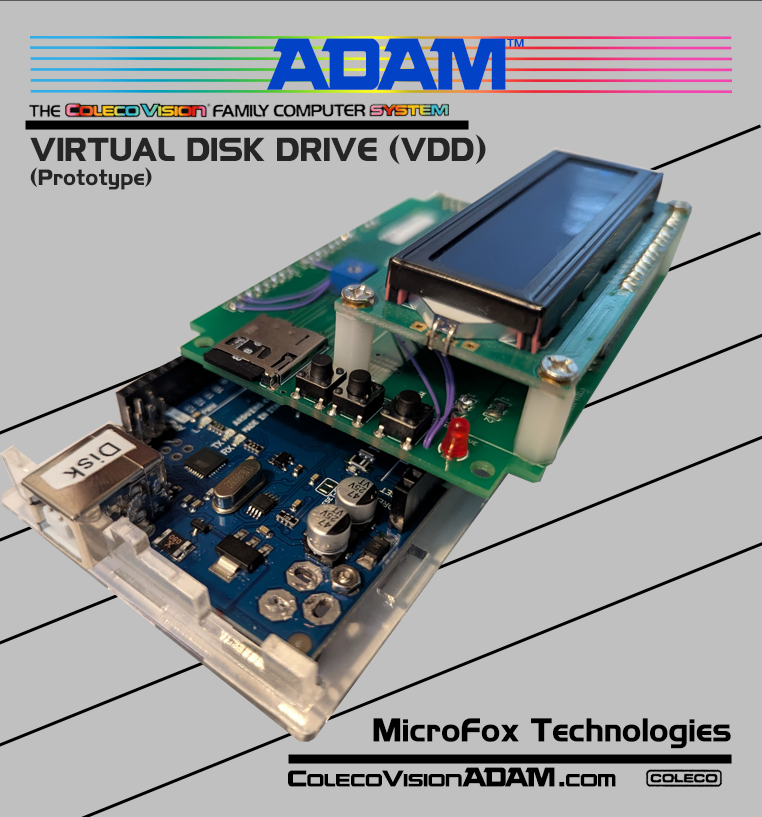
Virtual Disk Drive (VDD) — Prototype
(6/02/2026)
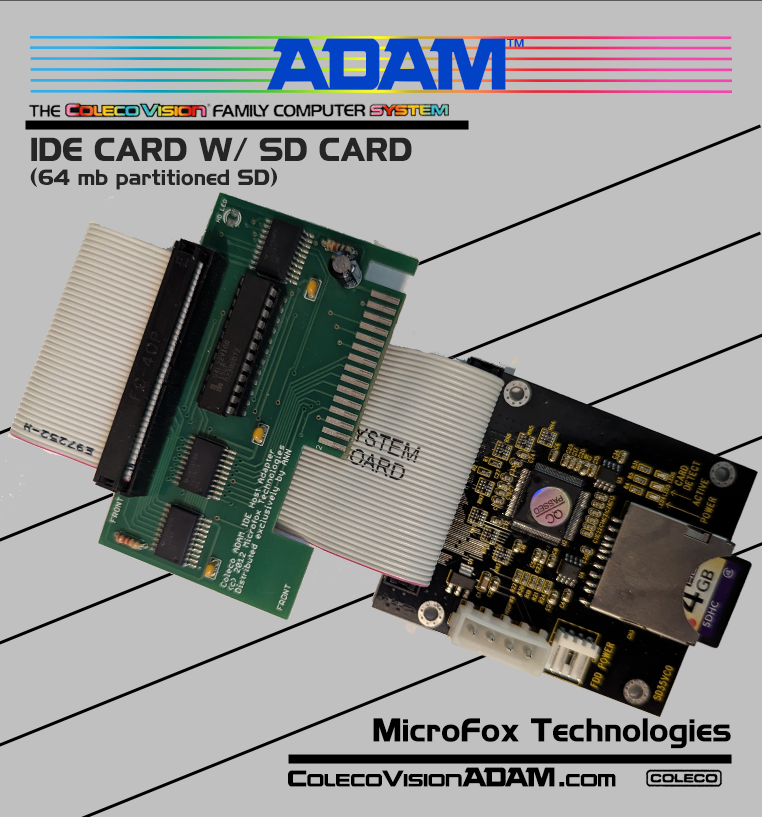
MicroFox IDE Card with SD Storage (SD35VC0) Slot #1
(6/02/2026)
The SD35VC0 is a later-generation adapter in a 3.5" hard-drive form factor: a consolidated FPGA/MCU performs the full IDE-to-SD protocol translation in firmware, with dual power inputs (4-pin Molex and floppy-style FDD), labeled status LEDs (Card Detect, Active, Power), and standard drive mounting holes for clean installation. It supersedes the earlier bare CompactFlash/SD carrier boards that relied on minimal passive logic.
The IDE boot-cart ROM scans device IDs $04–$08, mapping the first five to hard-disk partitions and activating Coleco's dormant 4-drive expansion IDs ($06/$07) via boot-time EOS hot-patches. A typical power-user layout splits the partitioned SD card between EOS partitions (for ADAM SmartBASIC and native software) and TDOS partitions (for the CP/M environment) — for example, 10 EOS + 4 TDOS.
Four Decades of 80 Columns on the Coleco ADAM
(6/02/2026)
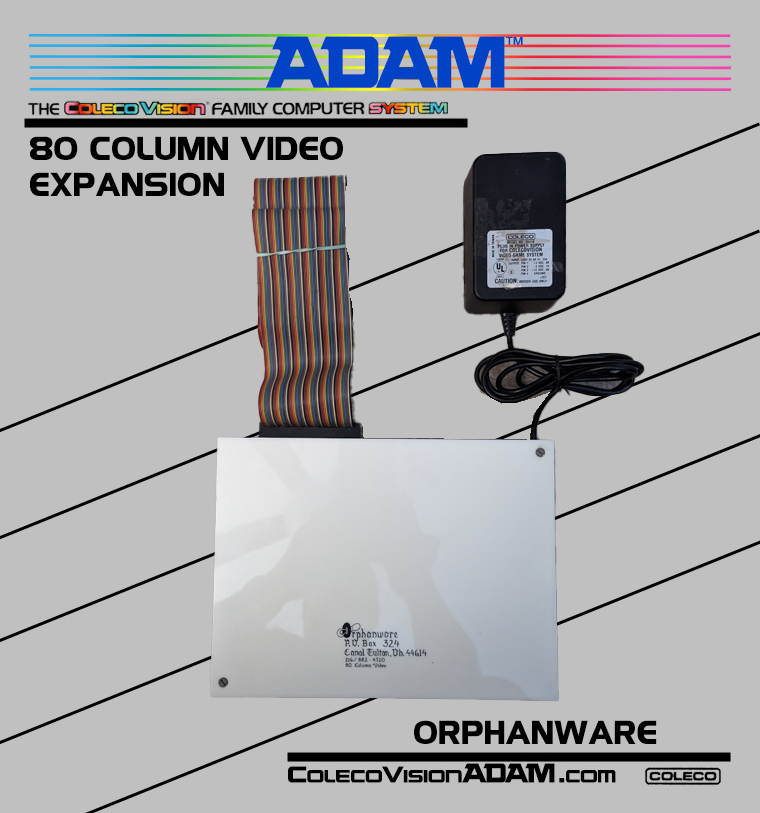
🔹 Orphanware / Digital Research Computers (1983)
Designer: William White
The earliest solution — and the most ambitious. This is a complete ZRT-80 CRT terminal engine on a single board: its own Z80 CPU, terminal monitor ROM, character generator ROM, INS8250N UART, and HD46505 CRTC (Hitachi MC6845 equivalent). The ADAM talks to it via serial; the Orphanware's independent Z80 renders 80×24 text to monochrome composite video. It's literally a second computer dedicated to the display. DIP switches configure baud rate, parity, and video mode. The ZRT-80 was a well-known terminal design in the S-100/hobbyist community — White adapted it for the ADAM market.
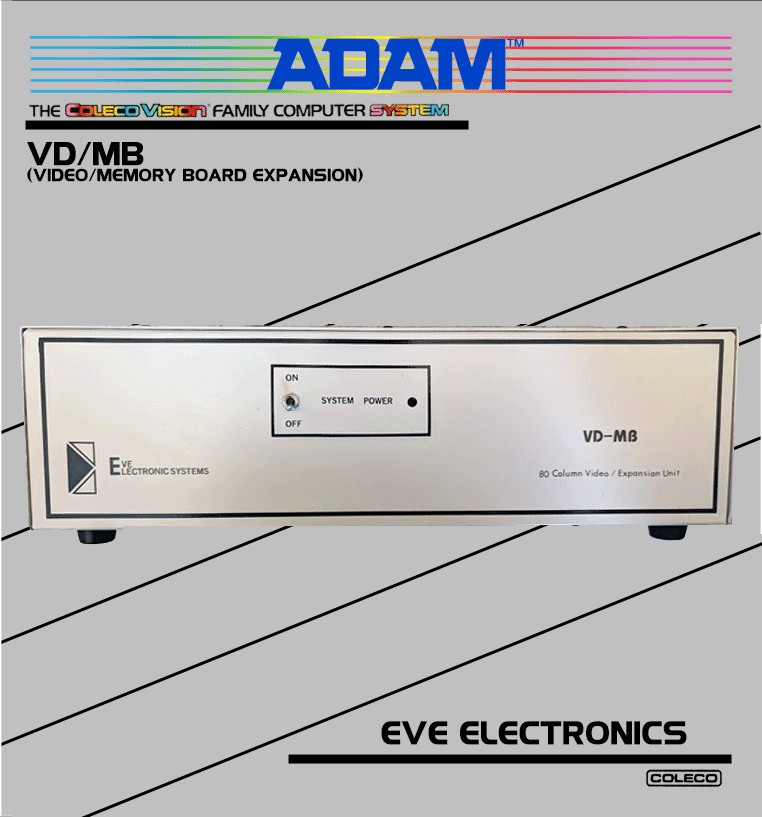
🔹 EVE Electronic Systems VD-MB / MON-80 (1985–86)
Framingham, MA
The commercial polish solution. The VD-MB is a complete expansion chassis with its own multi-rail power supply (replacing the ADAM printer's power function), a 4-slot expansion bus for EVE peripherals (SP-1 serial, SS-CC, and others), and integrated 80-column video. Emulates a Heath H19 terminal superset — not the subset that ADAM's built-in driver used — with VT-100 emulation available as a custom option. Software-selectable switching between ADAM 40-column and EVE 80-column via the CP/M IOBYTE. Composite video output to monochrome or some high-res color monitors. Shipped with modified CP/M that boots directly into 80-column mode. Full escape code support: cursor addressing, insert/delete line/character, reverse video, graphics mode, and wrap control.
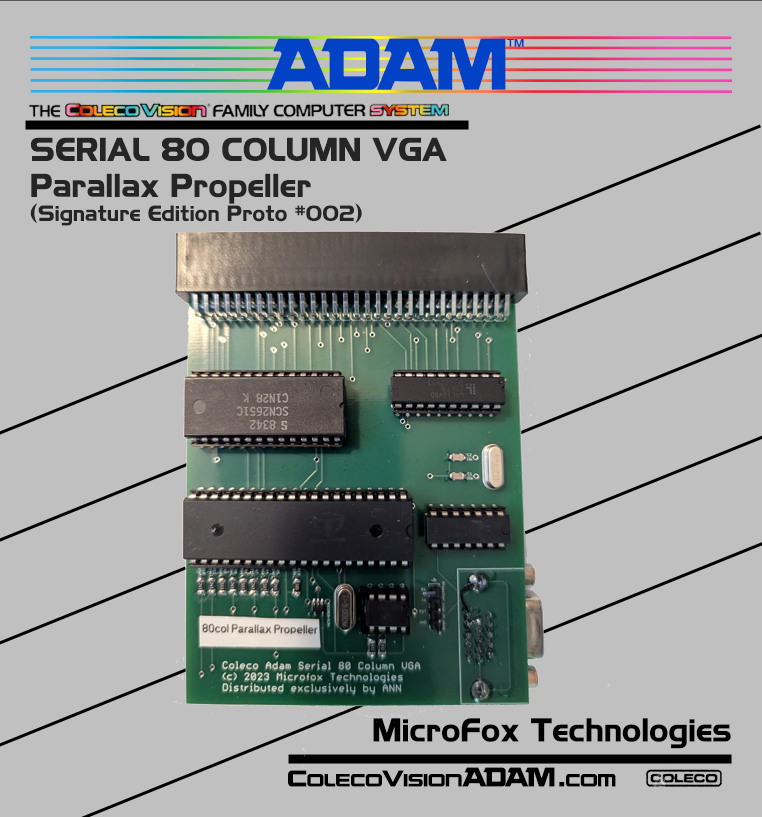
🔹 MicroFox Technologies — Parallax Propeller Version (2023)
Designer: Doug Slopsema — Distributed by ANN
Forty years later, a single expansion card does what took an entire chassis in 1985. Uses a vintage Signetics SCN2651C USART (NOS, 1983 date code) for serial protocol paired with a Parallax P8X32A Propeller 8-core microcontroller for video generation. The Propeller's independent cores generate VGA timing, render the character map, and handle ADAM bus communication simultaneously — no interrupt conflicts. VGA output through DB-9 connector. Professional PCB with silkscreen and solder mask. Connects to the ADAM side expansion port.
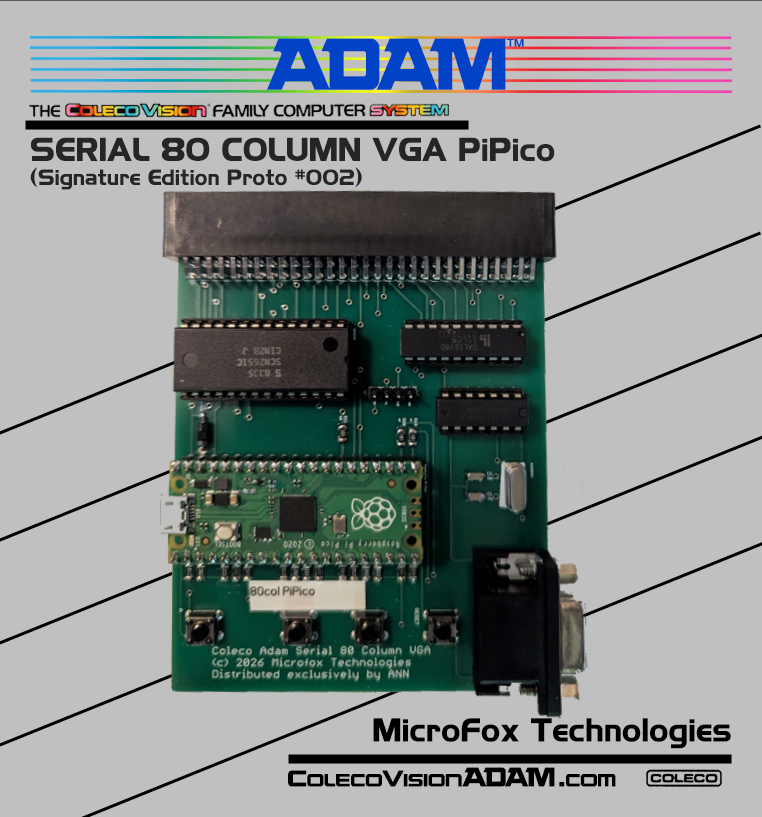
🔹 MicroFox Technologies — Raspberry Pi Pico Version (2026)
Designer: Doug Slopsema — Distributed by ANN
The latest evolution swaps the Propeller for a Raspberry Pi Pico (RP2040 dual-core ARM Cortex-M0+ at 133MHz). The RP2040's PIO state machines generate pixel-accurate VGA timing in dedicated hardware. The Pico module brings USB programming, on-board voltage regulation, and a massive community ecosystem. Same SCN2651C USART, same DB-9 VGA output, same ADAM expansion port connection. Added reset button. Cheaper, more available, easier to update.
What's remarkable is that the core problem never changed: the ADAM's Z80 needs to send character data somewhere that can render 80 columns. In 1983, that required an entire second computer. In 1985, it required a chassis with its own power supply. In 2023, it fits on a card smaller than the original ADAM keyboard connector. In 2026, the video processor costs $4.
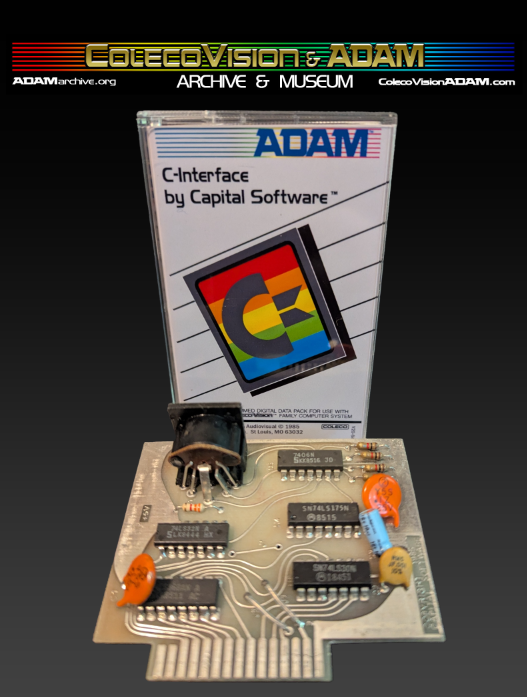
The 2025 Newly Rediscovered C-Interface for The ADAM is shipping!!!
(6/01/2026)
Team Pixelboy Website
(5/24/2026)
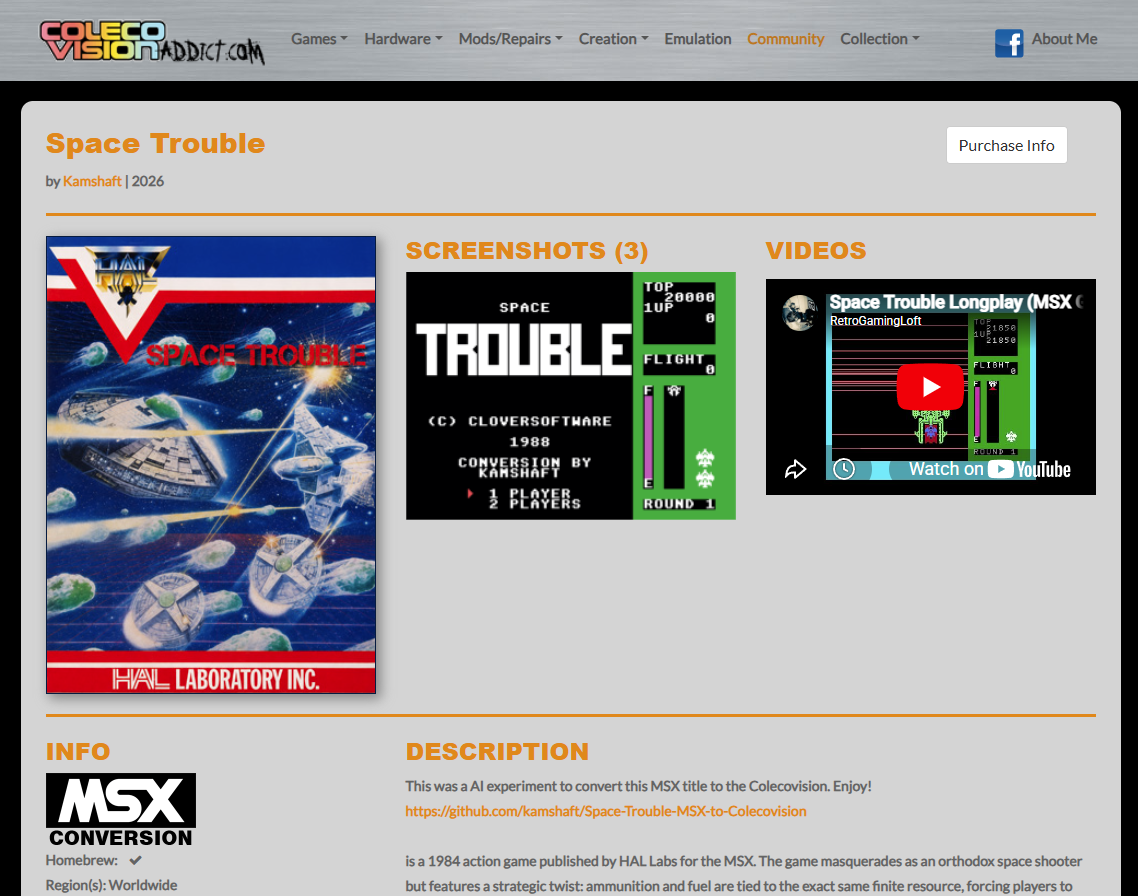
An MSX1 to Colecovision w/SGM of Space Trouble
(5/23/2026)
Coool new use of AI for the CV.
https://forums.atariage.com/.../390433-my-ai-experiment.../
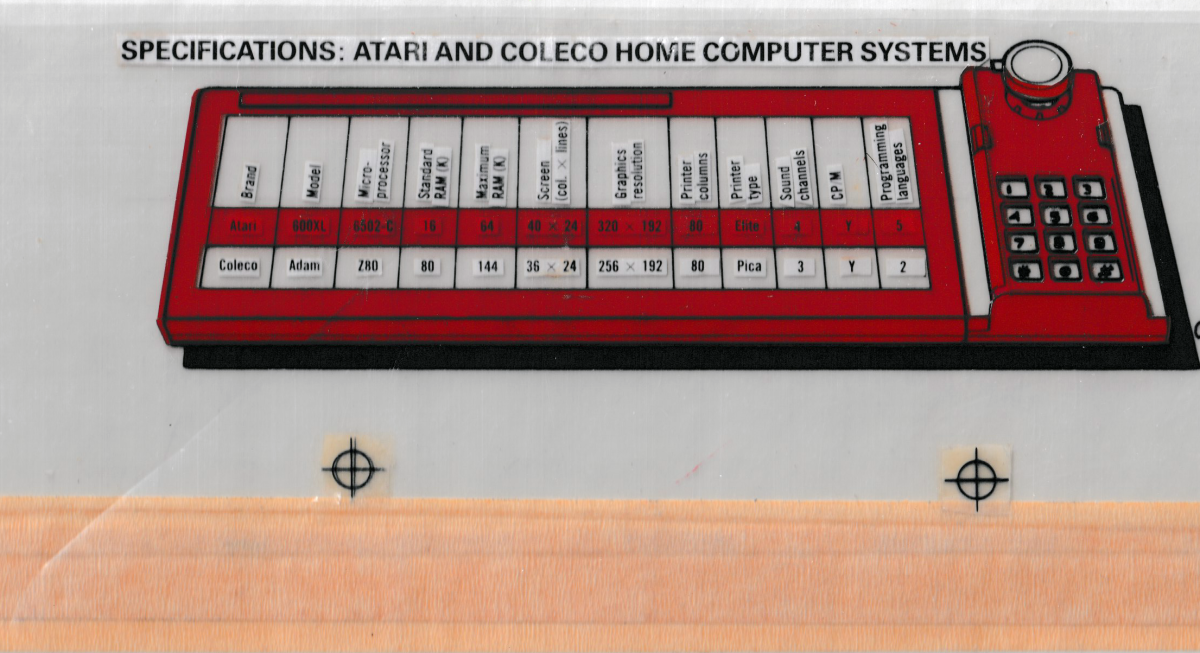
Coleco Industries Marketing Layered AD Slick for the ADAM
(5/19/2026)
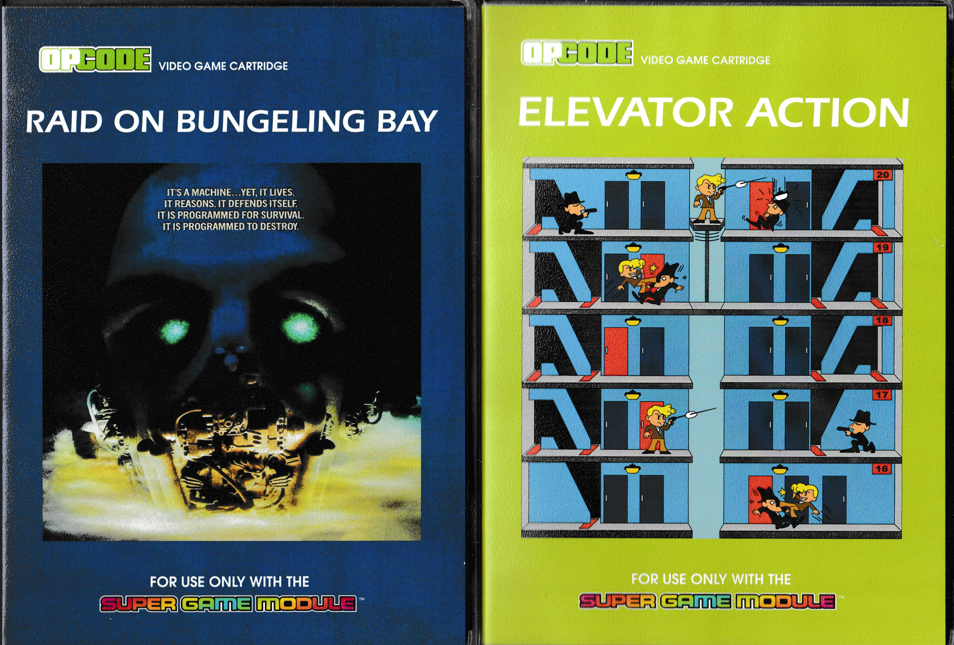
Mail Call: 2 OG Opcode Games
(5/19/2026)
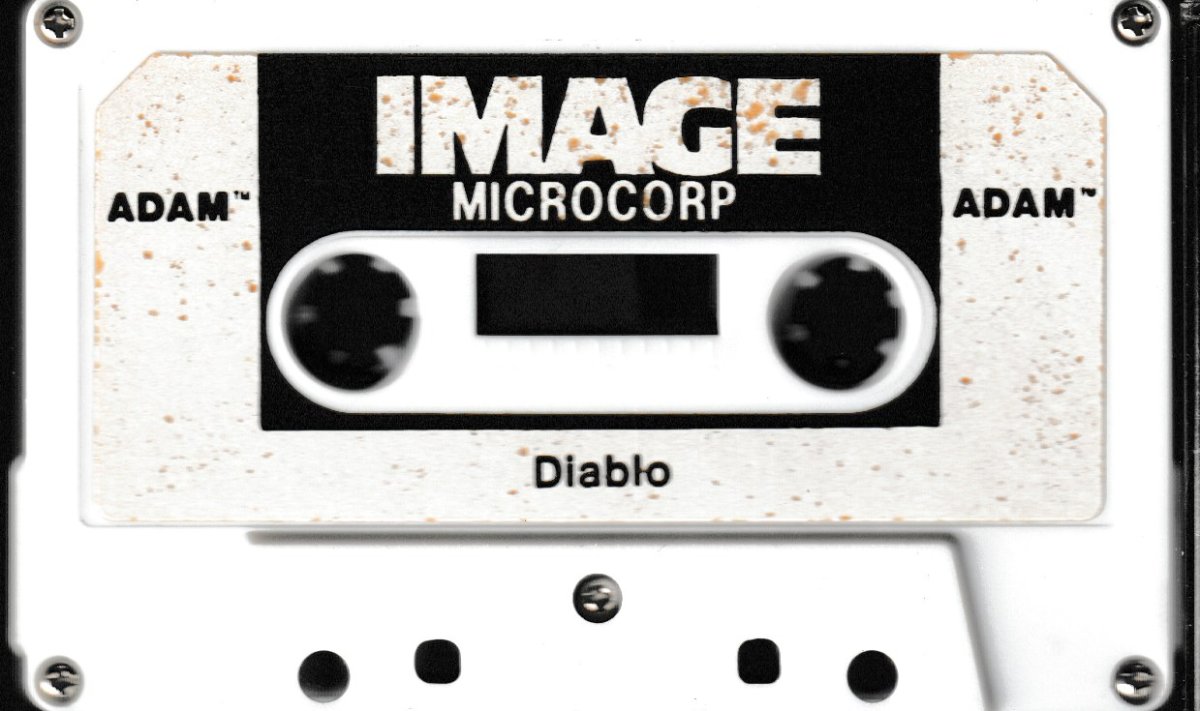
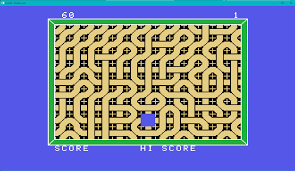
Mail Call: An Original Image Microcorp DDP!!!
(5/19/2026)
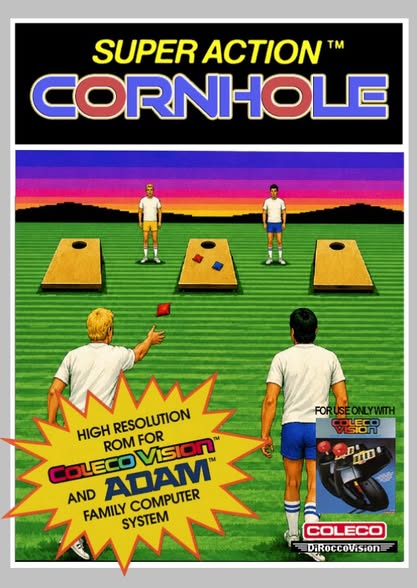
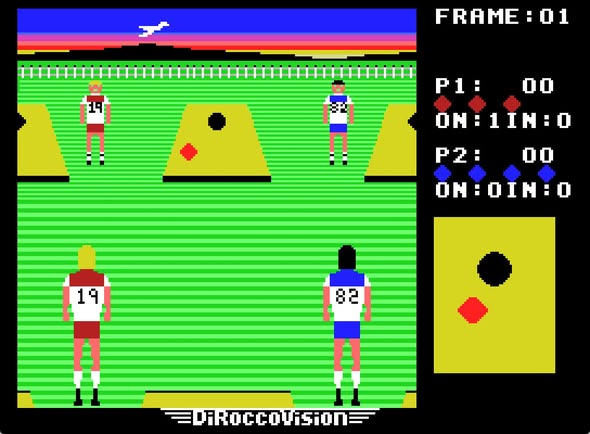
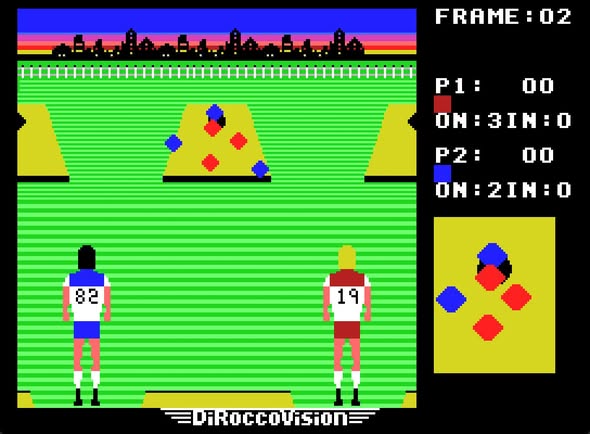
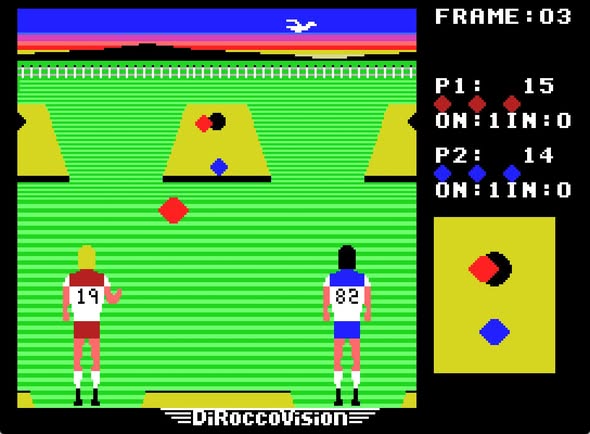
Super Action Cornhole
(5/18/2026)
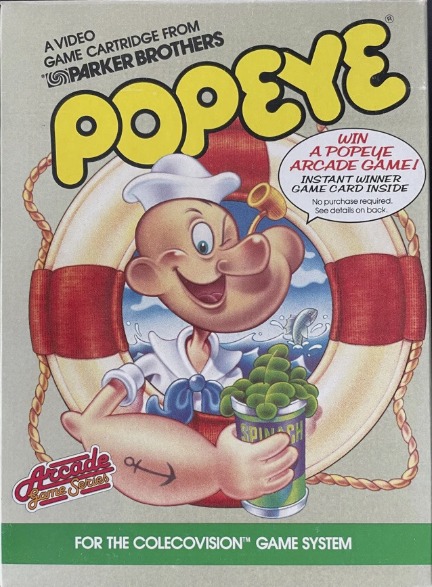
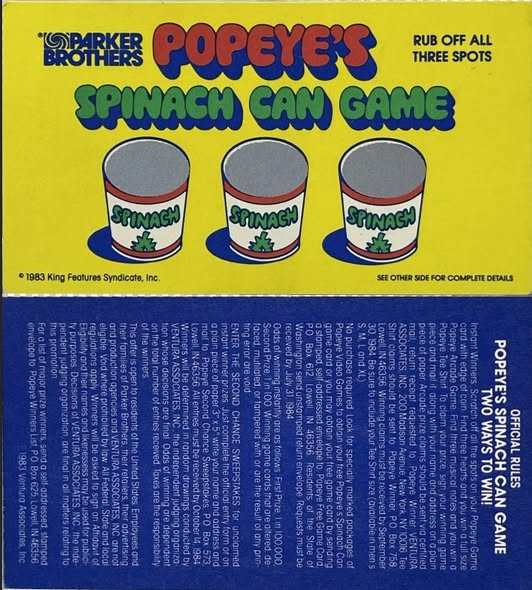
I'm almost tempted to scratch it and see if I WON!!!!
(5/18/2026)
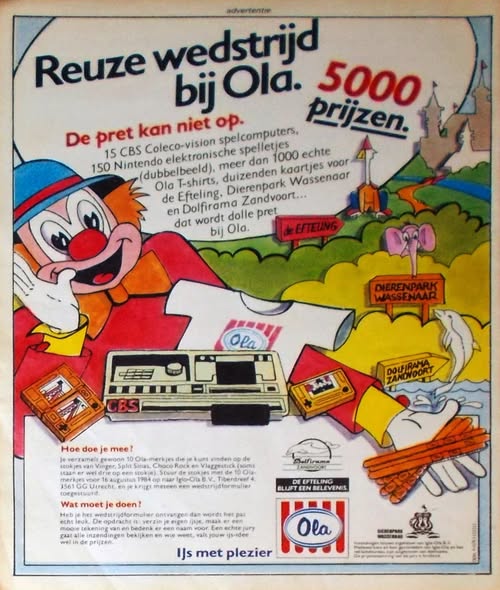
ColecoVision memorabilia from the Netherlands!
(5/18/2026)
This is a Dutch advertisement for Ola (an ice cream brand, part of Iglo/Unilever), promoting a contest. Here's the full translation:
"Giant Contest at Ola. 5,000 Prizes."
The fun never stops.
15 CBS ColecoVision game computers
150 Nintendo electronic games (handheld/Game & Watch style)
More than 1,000 real Ola T-shirts
Thousands of tickets for de Efteling (famous Dutch theme park), Dierenpark Wassenaar (Wassenaar Zoo), and Dolfirama Zandvoort (a dolphin show/aquarium)...
That's going to be a blast at Ola!
How do you participate?
You simply collect 10 Ola brand stickers found on the sticks of Vinger, Split, Sinas, Choco Rock, and Vlaggestick ice creams (sometimes there are three on one stick). Send the sticks with the 10 Ola stickers before August 16, 1984 to Iglo-Ola B.V., Tiberdreef 4, 3561 GG Utrecht, and you will immediately receive a contest entry form.
What do you have to do?
Once you receive the entry form, the real fun begins. The assignment is: invent your own ice cream, make a nice drawing of it, and come up with a name for it. A real jury will review all entries and whoever has the best ice cream idea will win a prize.
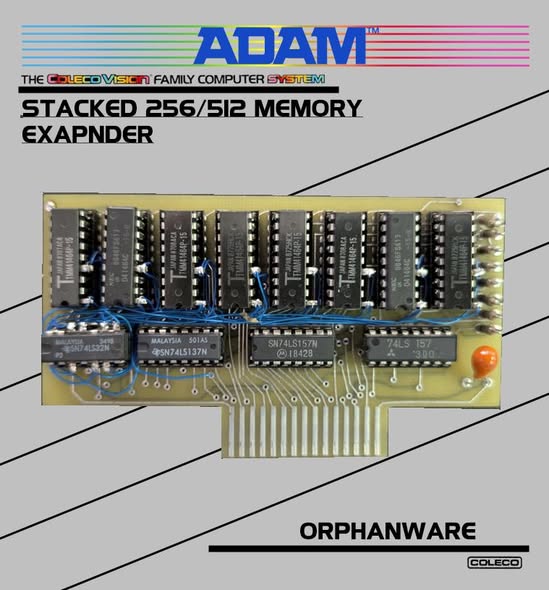
MAIL CALL: Coleco ADAM Orphanware Stacked Chip Memory Expander 256/512
(5/09/2026)
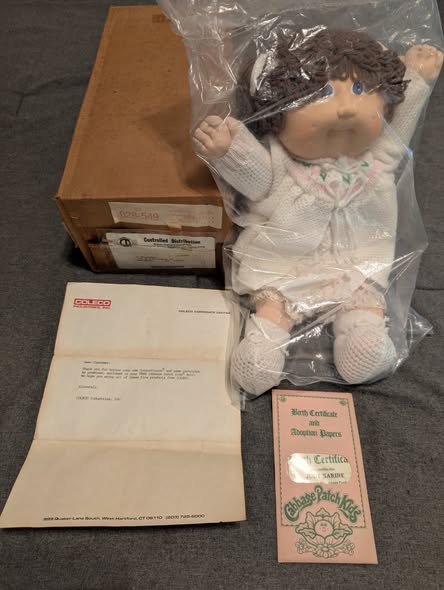
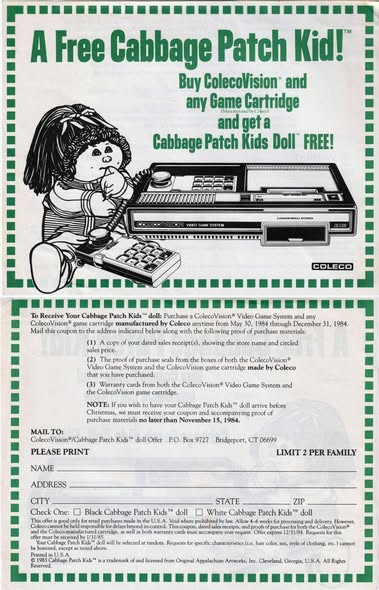
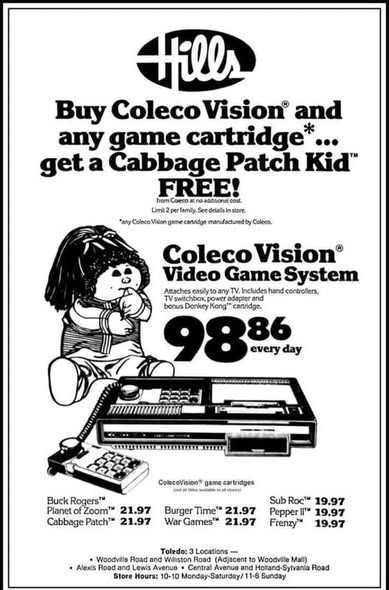
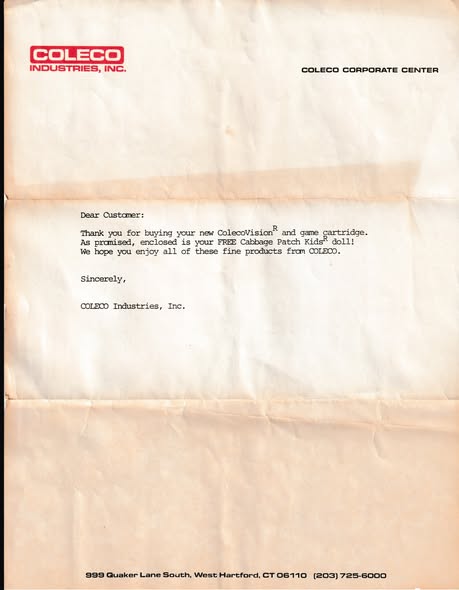
Mail Call: An Original Free ColecoVision Cabbage Patch
(5/08/2026)

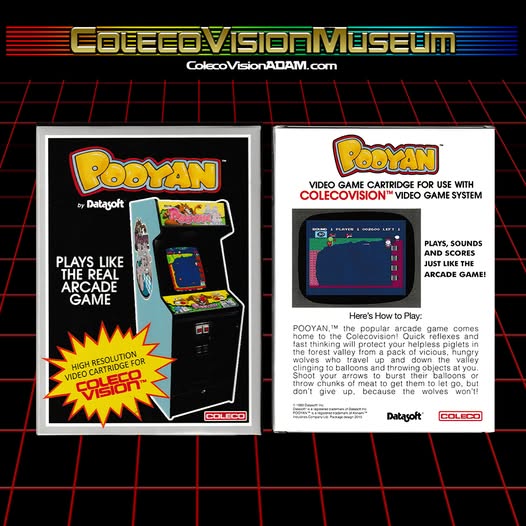
MAIL CALL: Pooyan
(5/06/2026)
Across the locean
(5/06/2026)
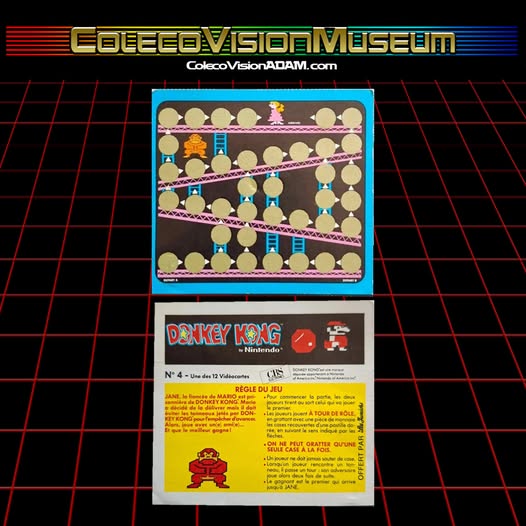
This is a French Donkey Kong scratch card by Nintendo, distributed by CBS Electronics. It's Card #4 of a set of 12 "Vidéocartes" (video cards).
RULES OF THE GAME
Story: Jane, Mario's fiancée, is being held captive by Donkey Kong. Mario has decided to rescue her, but he must avoid the barrels thrown by Donkey Kong to stop him from advancing. So, play with a friend... and may the best player win!
Rules:
To start the game, both players draw lots to decide who goes first.
Players take turns scratching the gold-covered squares with a coin, following the direction indicated by the arrows.
YOU CAN ONLY SCRATCH ONE SQUARE AT A TIME.
A player must never skip a square.
If a player lands on a barrel, they lose a turn — their opponent then plays twice in a row.
The winner is the first player to reach Jane.
It's essentially a two-player scratch-card board game tie-in for the Donkey Kong arcade game, offered by Les Juniors (a French youth/kids brand)
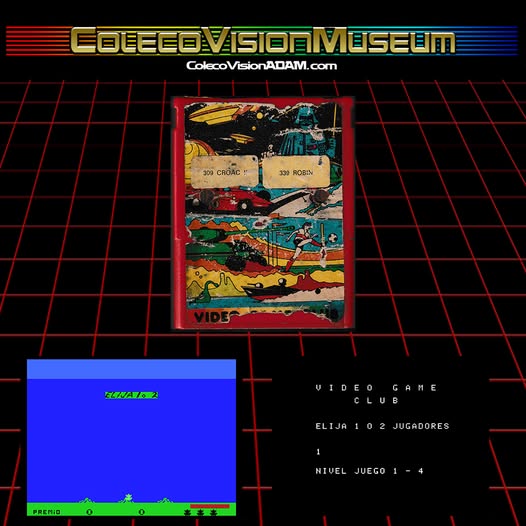
MAIL CALL: Another South American Hack
(5/06/2026)
We will share the roms once the ColecoVisionADAM.com site returns.
Argentinian Mail Call
(4/13/2026)
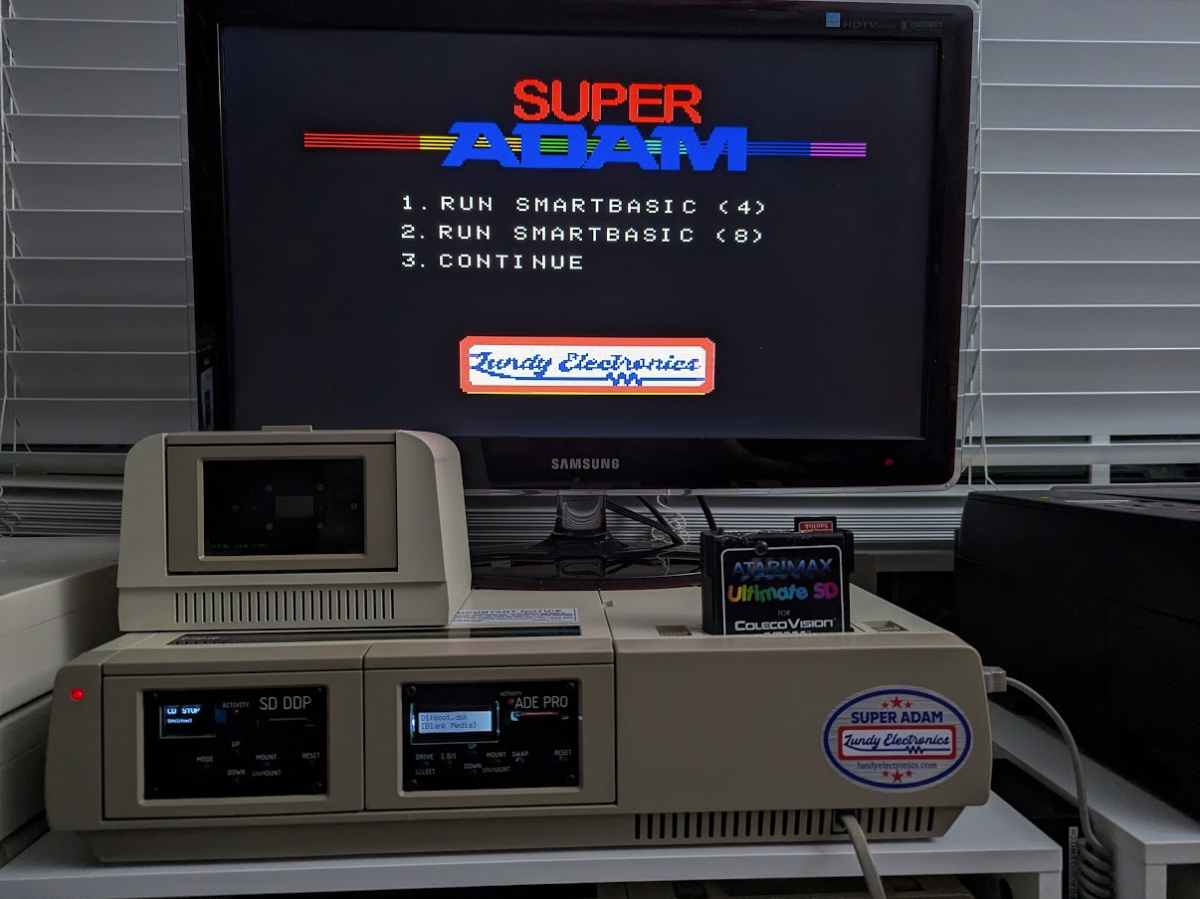
2026 SUPER ADAM is here!!!!
(4/13/2026)
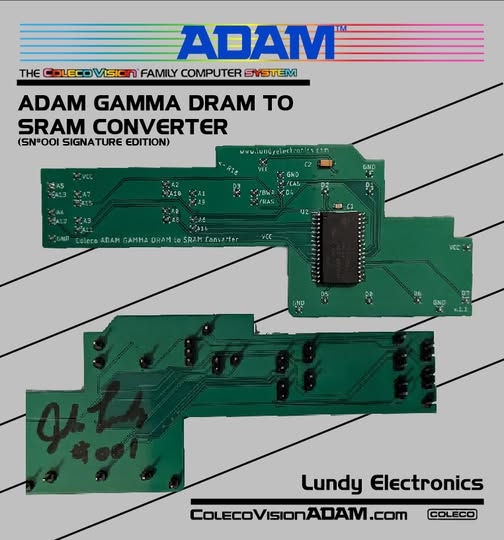
MAIL CALL: ADAM GAMMA DRAM to SRAM
(4/12/2026)
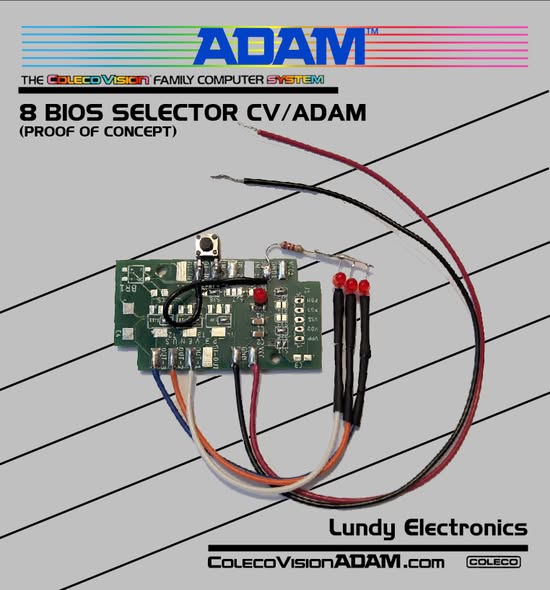
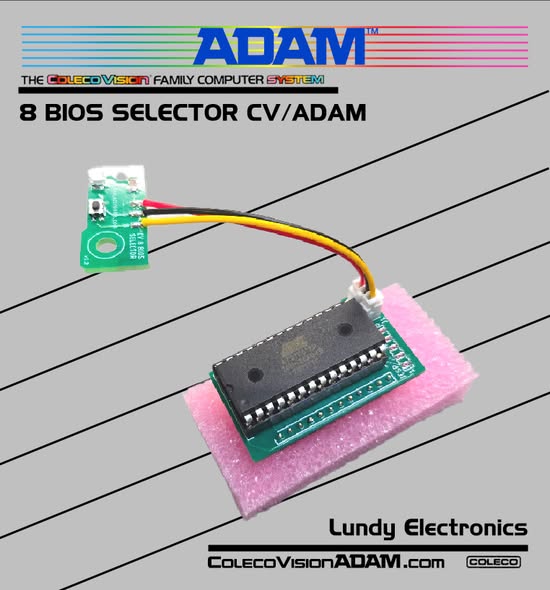
Proof of Concept Unit arrives at The Museum
(4/12/2026)
A really cool devise allowing you to select from 8 different Boot BIOS. https://lundyelectronics.com/product/colecovision-adam-bios/
https://www.colecovisionadam.com/
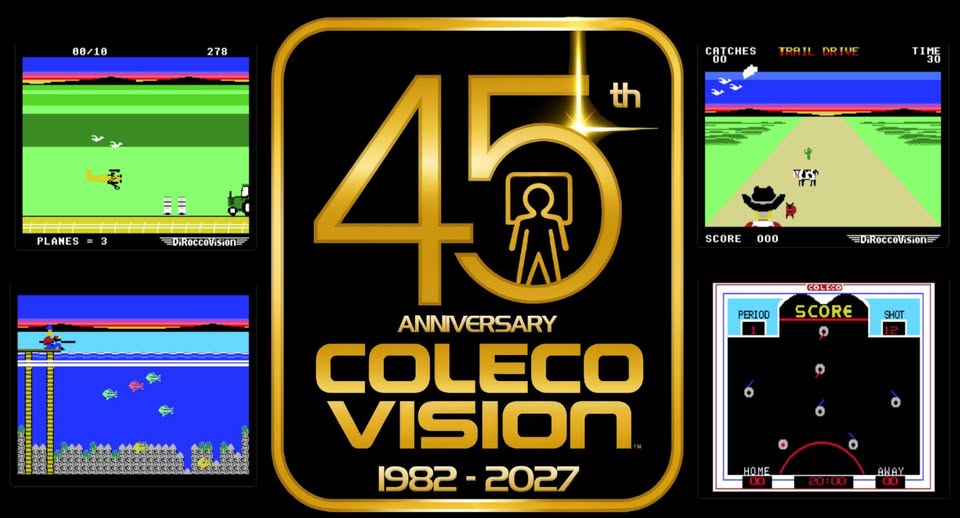
Next year is gonna be great!!!!
(4/11/2026)
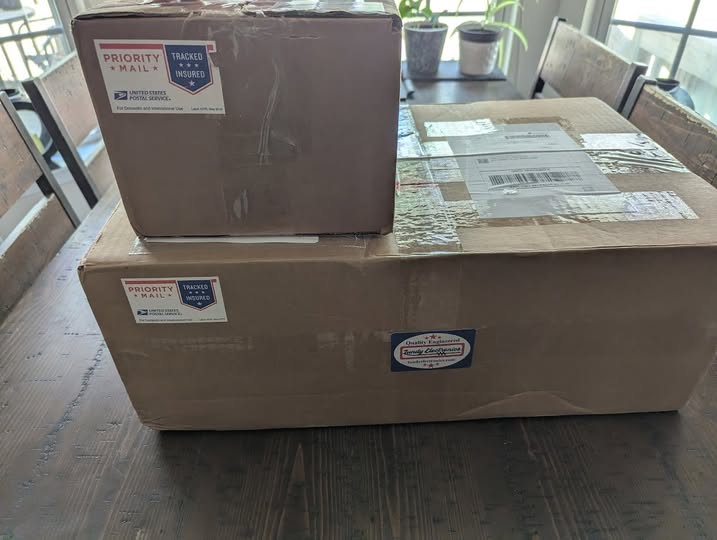
REALLY BIG DAY AT THE MUSEUM!!!!! Stay tuned more to come.............
(4/10/2026)
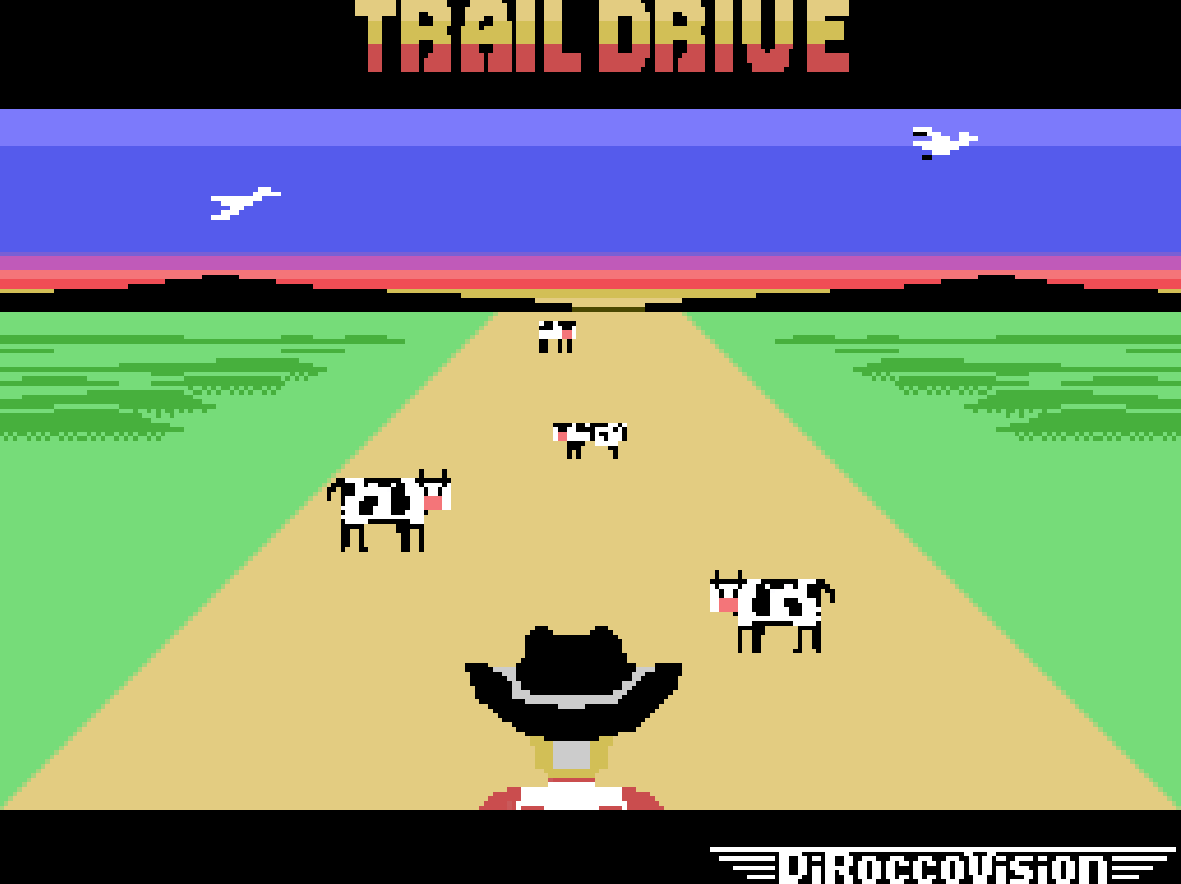
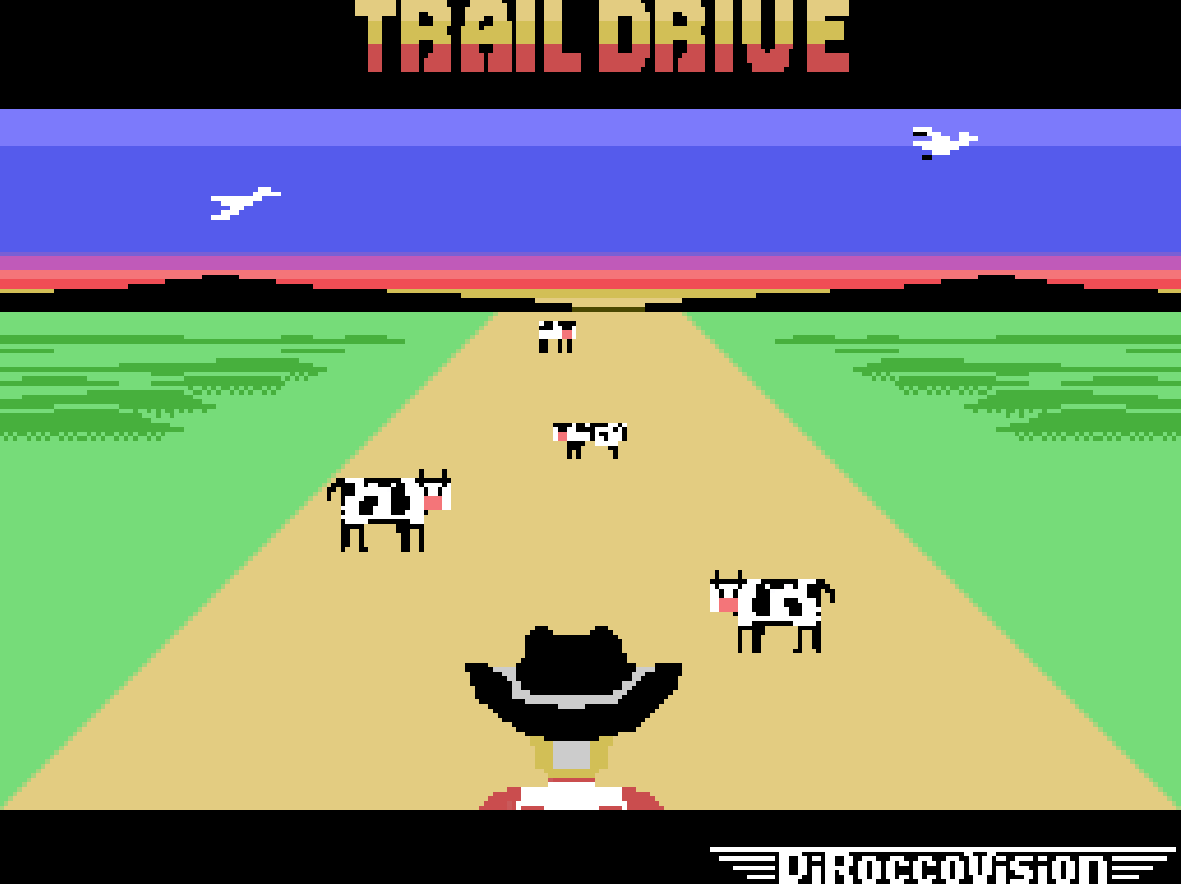
Trail Drive Box Artwork
(4/05/2026)

What could it be???
(4/02/2026)
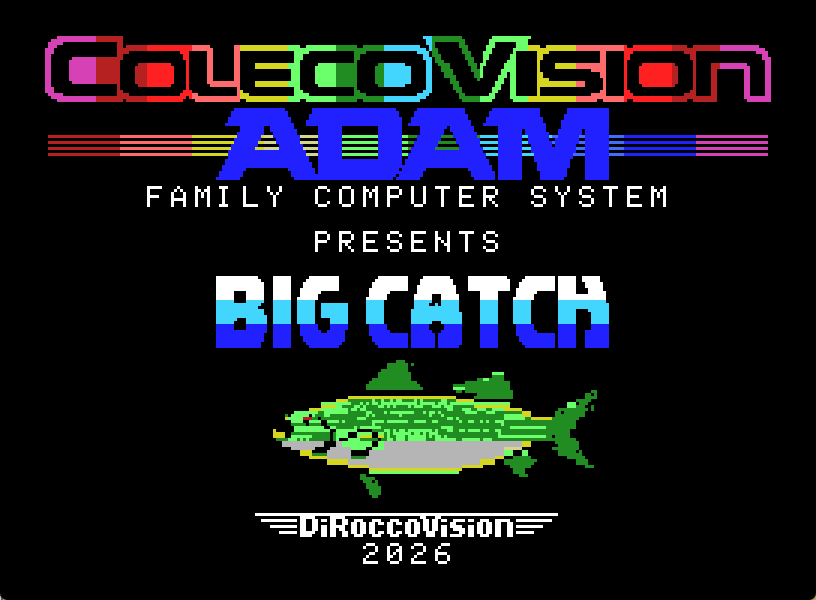
Pretty good score today 🙂!!!!
(3/28/2026)
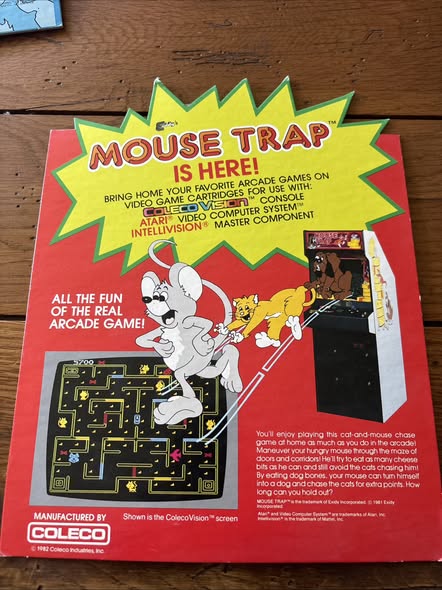
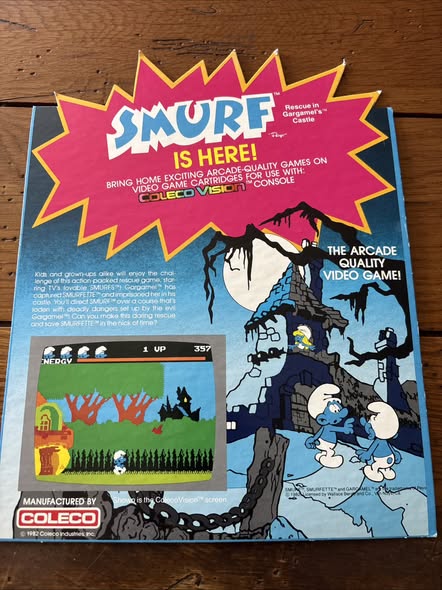
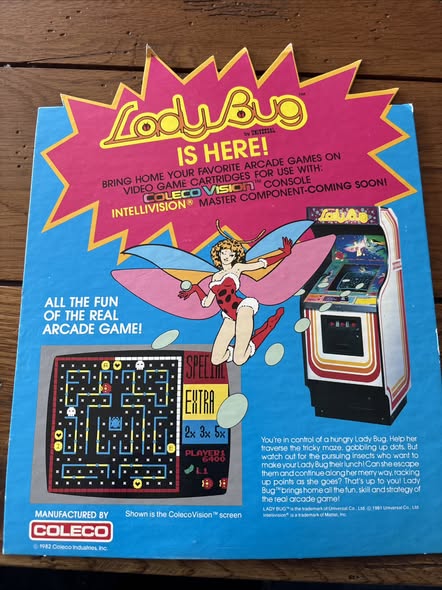
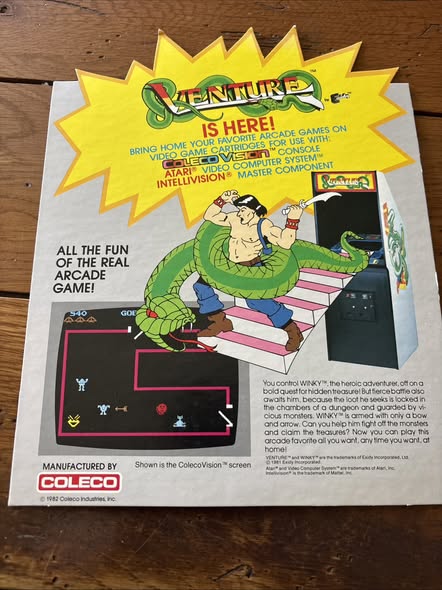
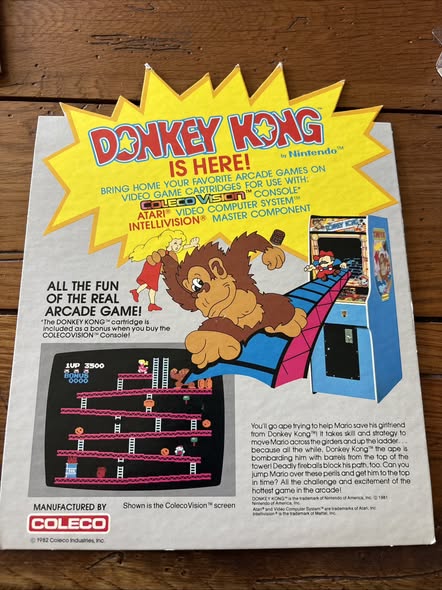
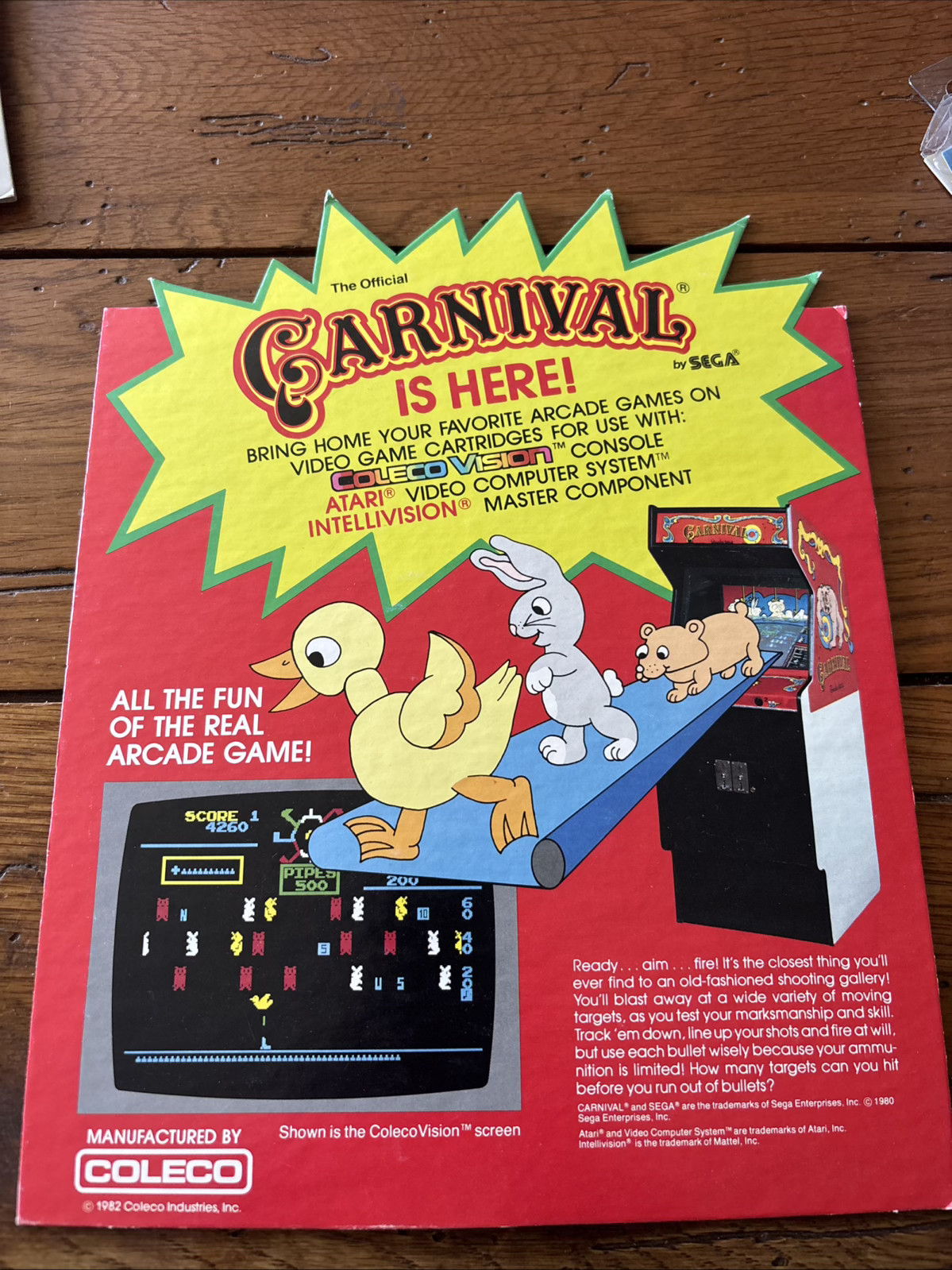
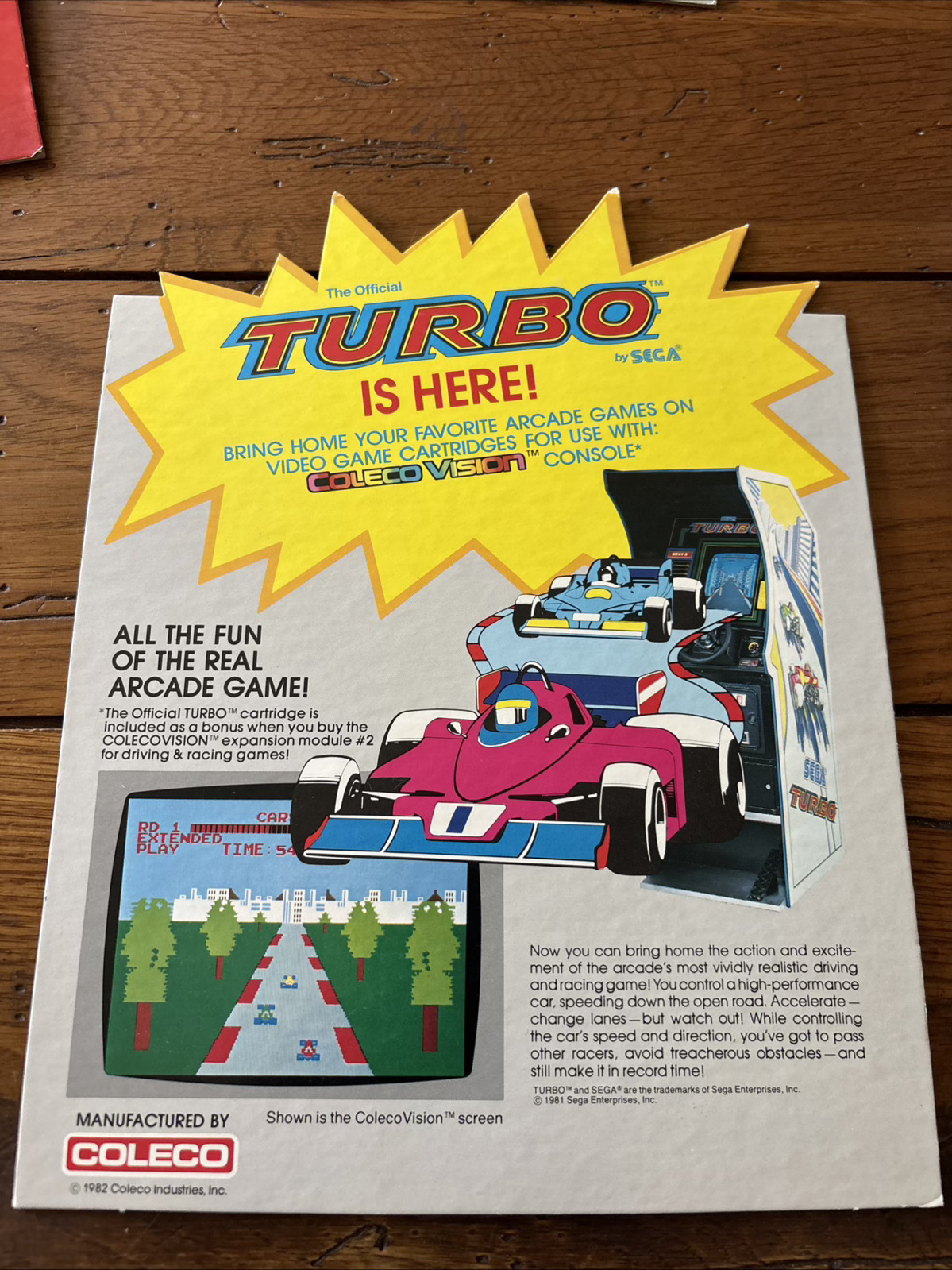
There has been a darn Stampede....Lets round them up!!!!
(3/26/2026)
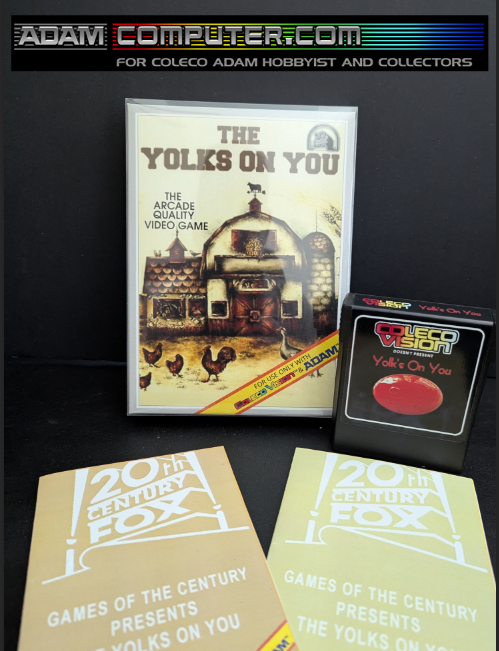
Yolks on You
(3/23/2026)
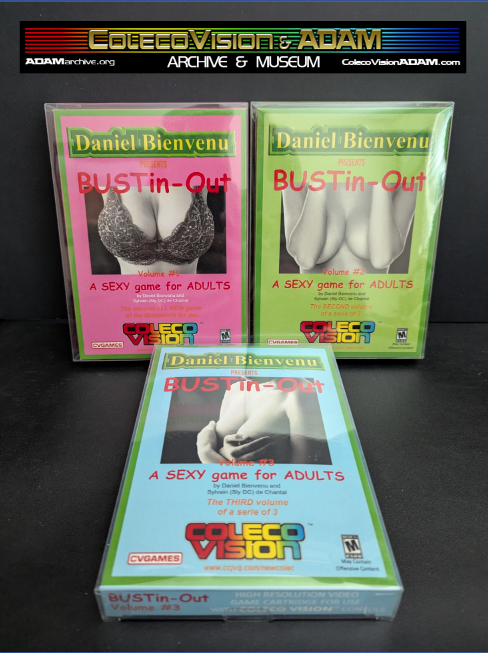
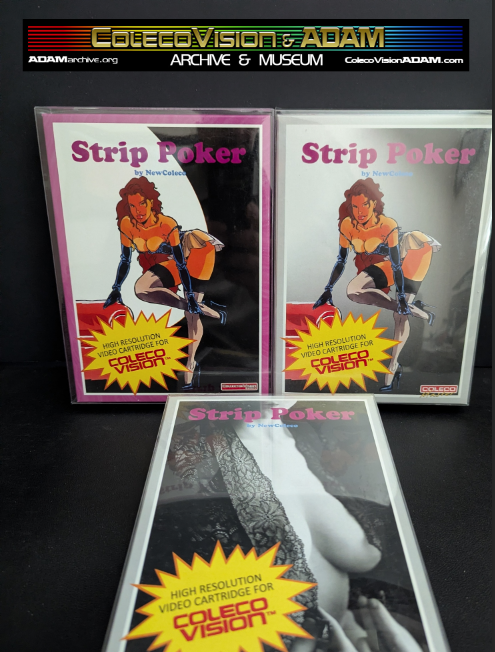
ColecoVision Games for After Hours.......
(3/23/2026)
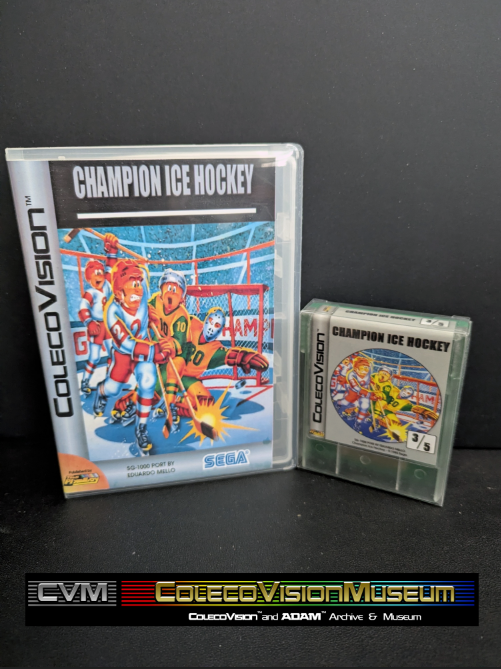
SUPER RARE Champion Ice Hockey (3/5)
(3/23/2026)
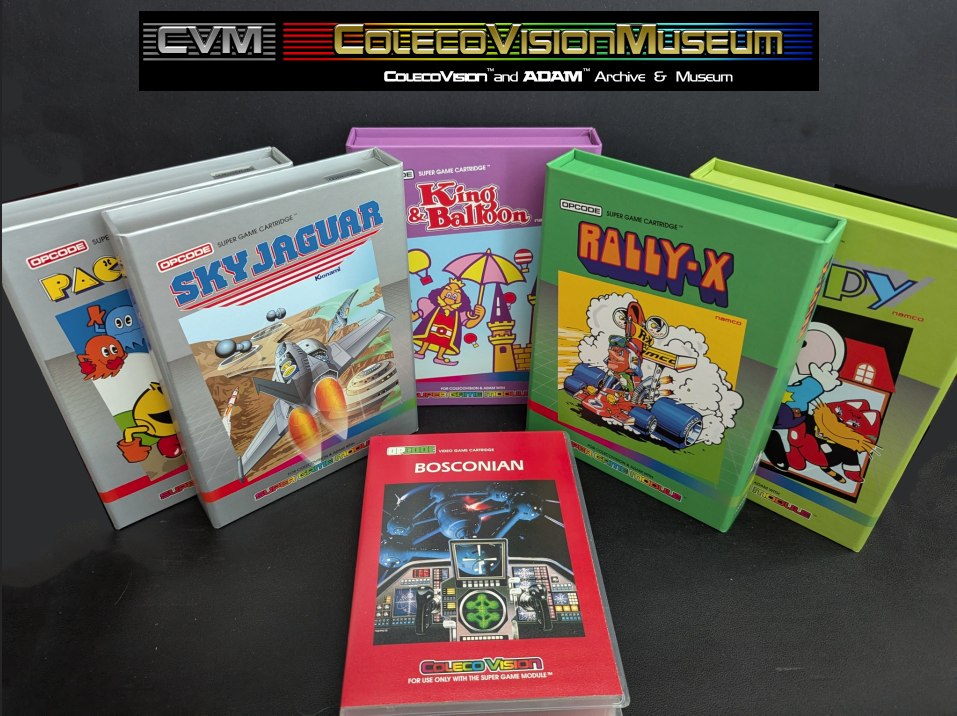
OPCODE Series Games Have Arrived!!!
(3/23/2026)
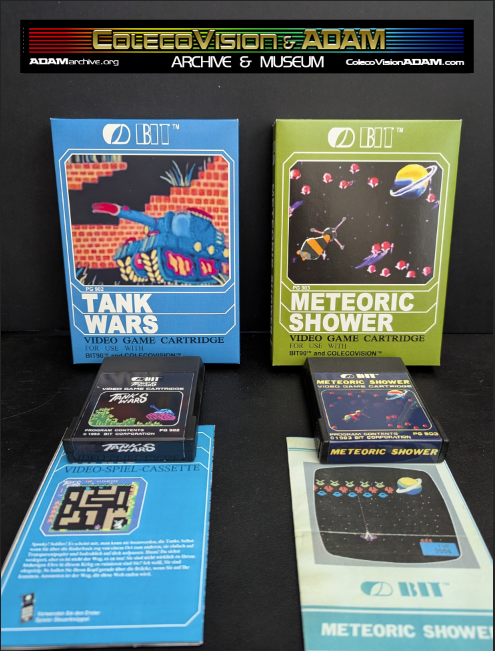
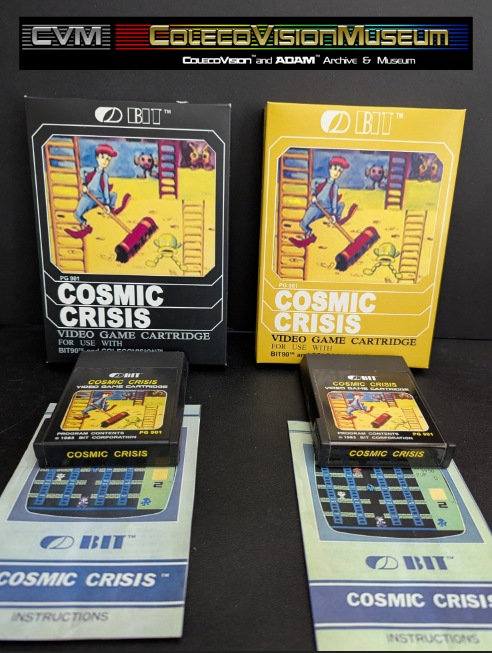
The Bit Corp. ColecoVision Series
(3/23/2026)
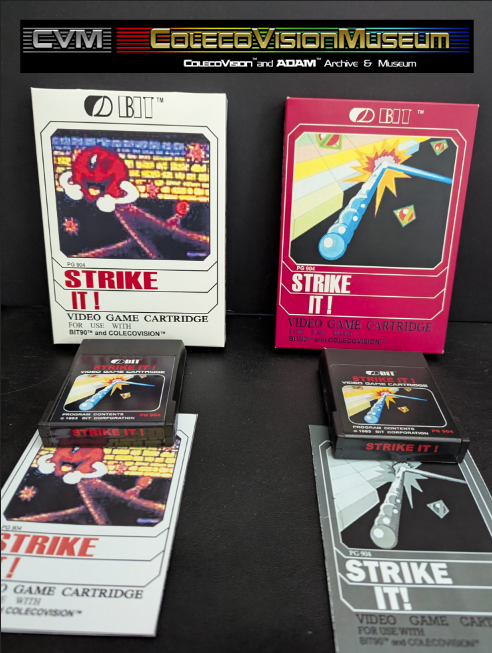
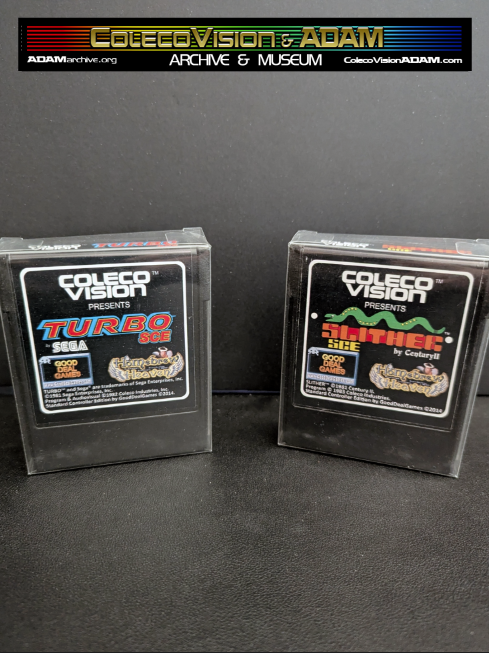
Standard Controller Edition (SCE) ColecoVision Games
(3/23/2026)
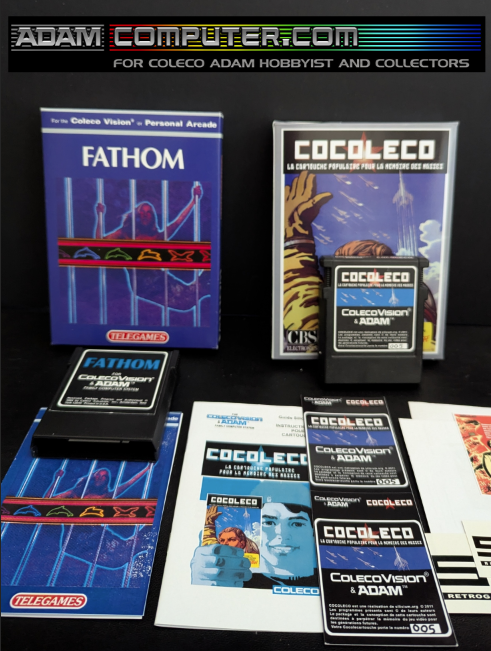
Rare Arrivakls for the Museum (COCOLECO & Telegames Fathom)
(3/23/2026)
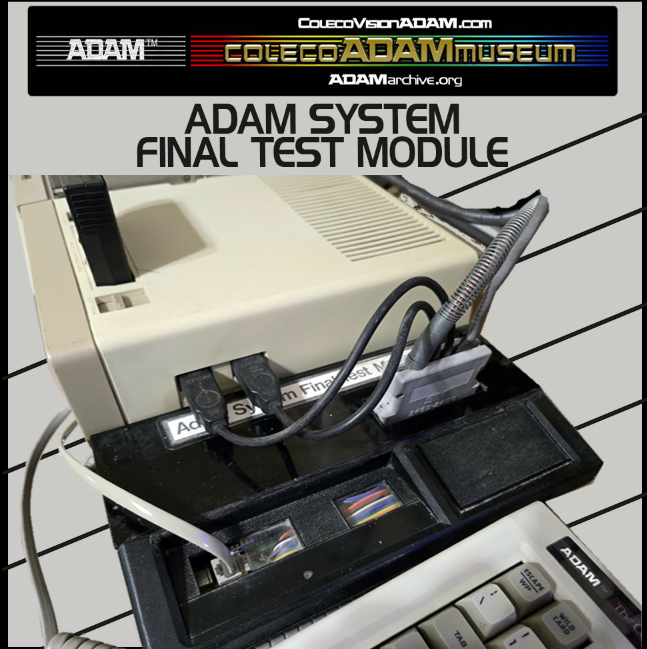
ADAM System Final Test Module
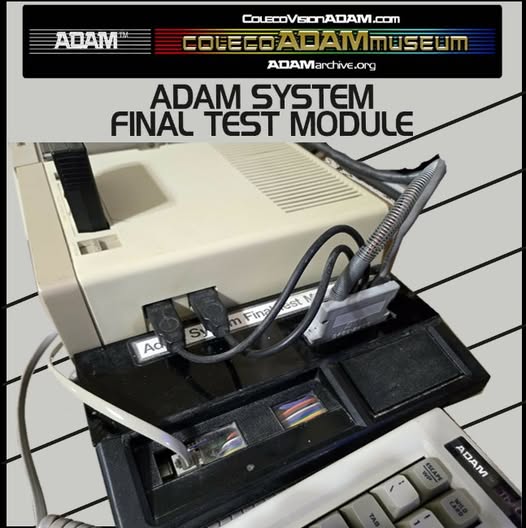
(3/15/2026)
For years, the ADAM community has wondered about the ADAM System Final Test Module - that mysterious T-1638 unit glimpsed at in ebay photos and on AtariAge.
Today we're releasing everything:
Complete technical documentation
Firmware disassembly & analysis
Hardware schematics
Operational theory
One more piece of ADAM history, preserved forever.
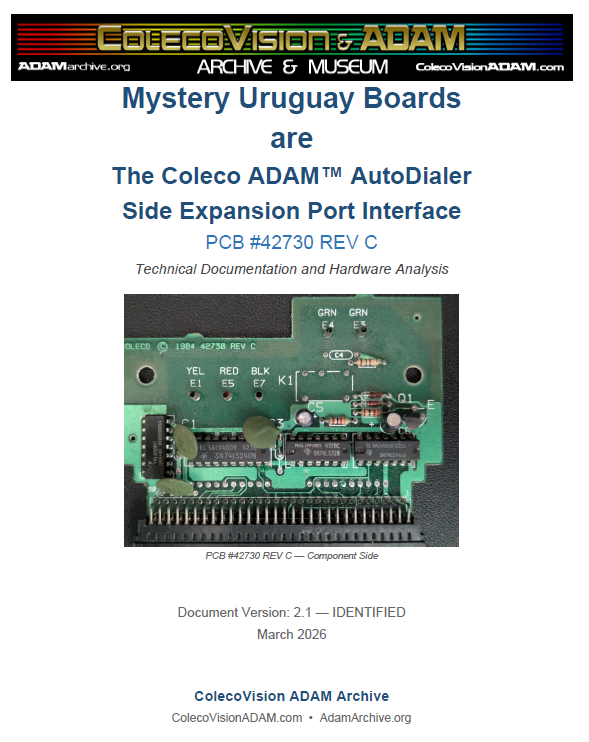
Mystery Coleco Cards in Uruguay Resolved!!!
(3/14/2026)
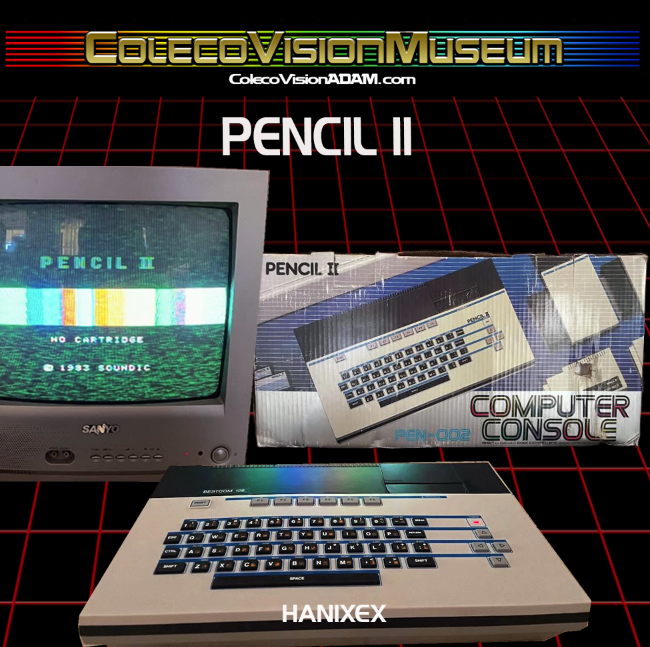
Hanimex Pencil II Located
(3/14/2026)
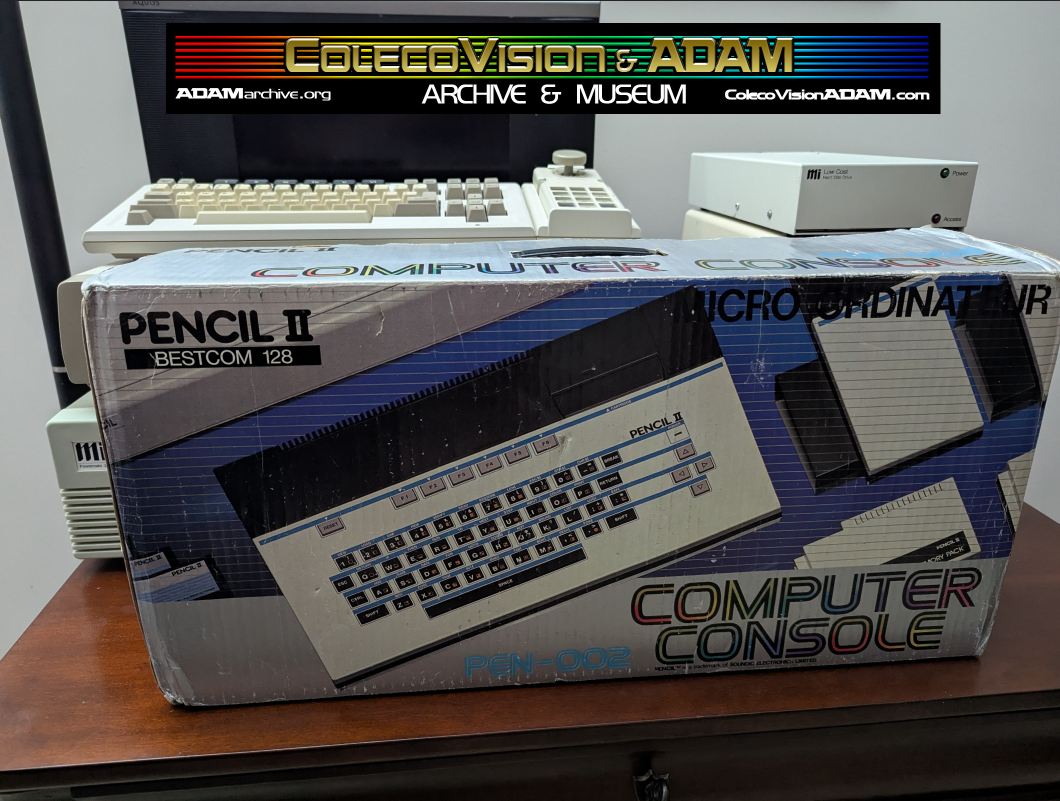
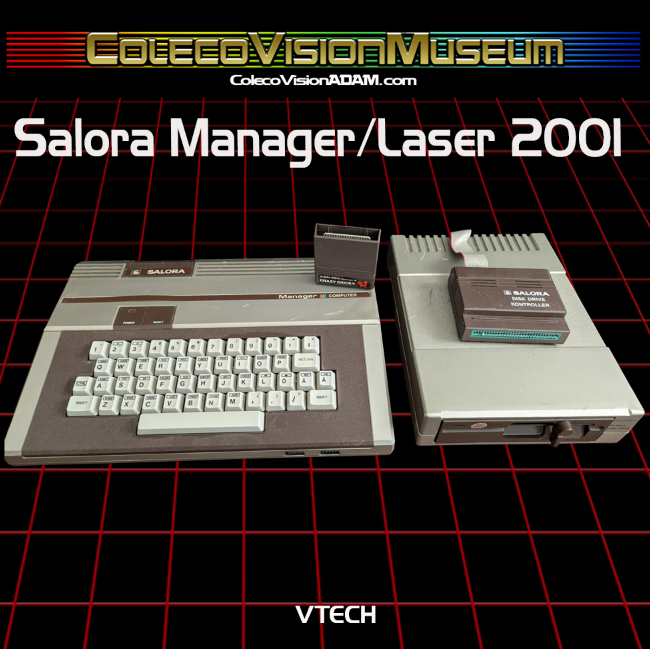
Salora Manager Computer has Arrived
(3/13/2026)
CBS Electronics Window Sticker
(3/10/2026)
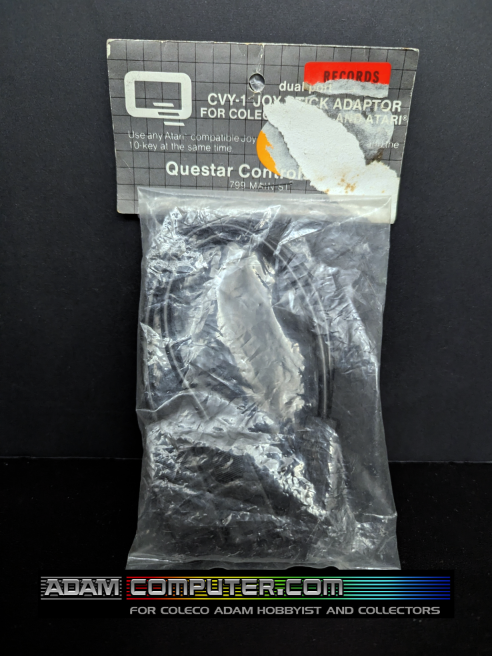
Questar CVY-1 Joystick Adaptor
(3/10/2026)
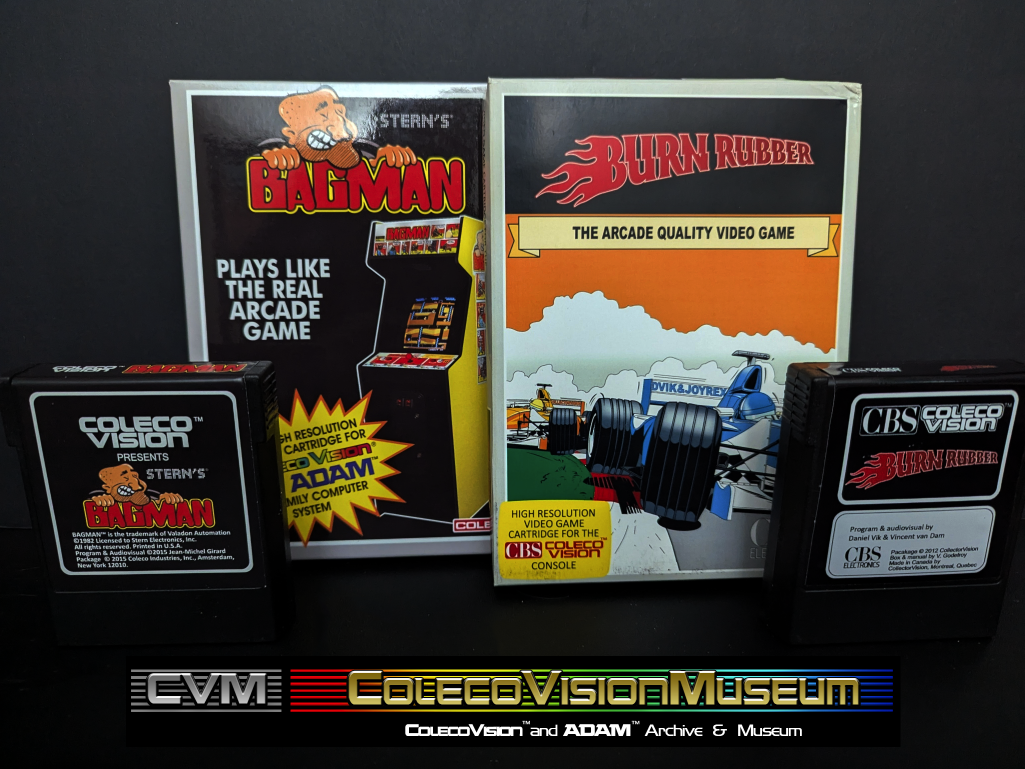
CollectorVision Arrivals
(3/10/2026)
You can always see my wishlist at: https://www.colecovisionadam.com/collection/public_wishlist.php?user=5
Clones Updated!!!!
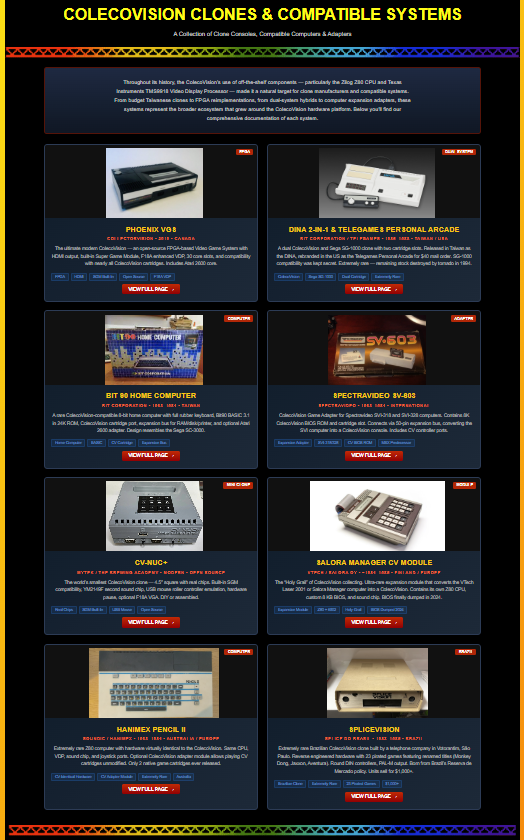
(3/03/2026)
The Planned Collection
(2/23/2026)
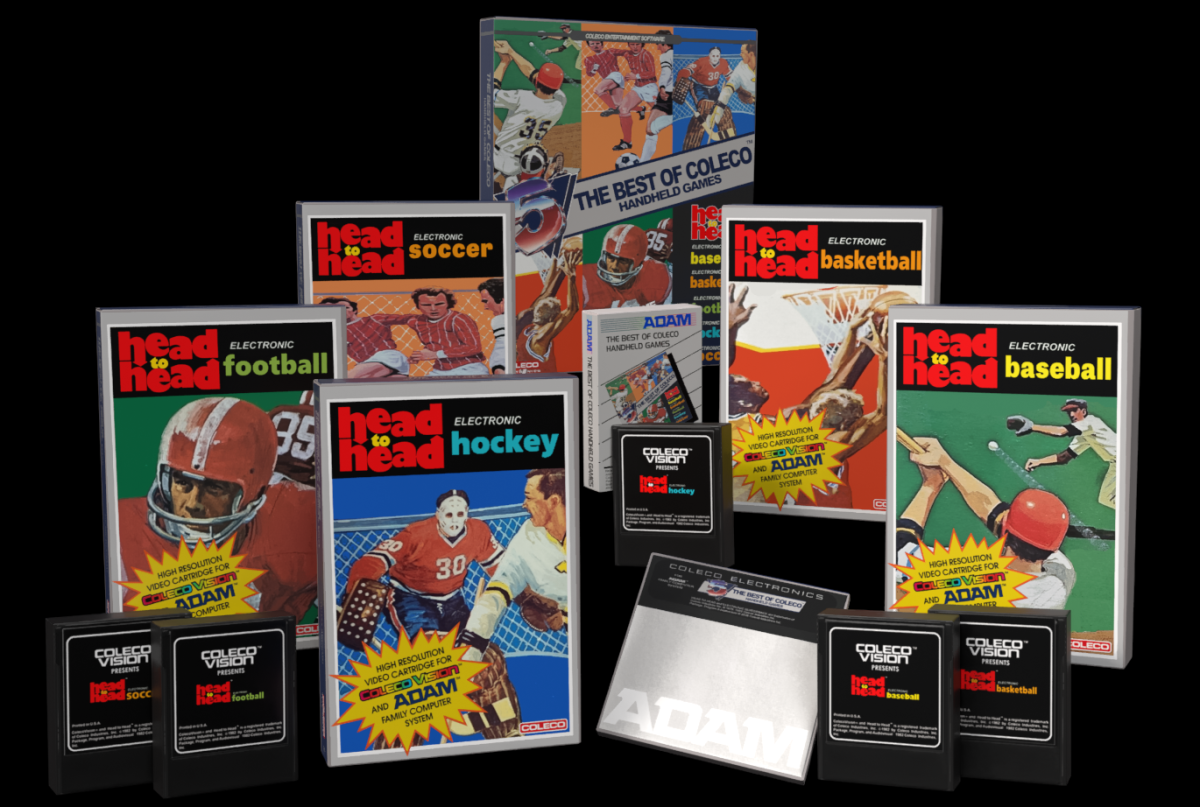
The Best of Coleco Handhelds (DDP/Disk)
(2/23/2026)
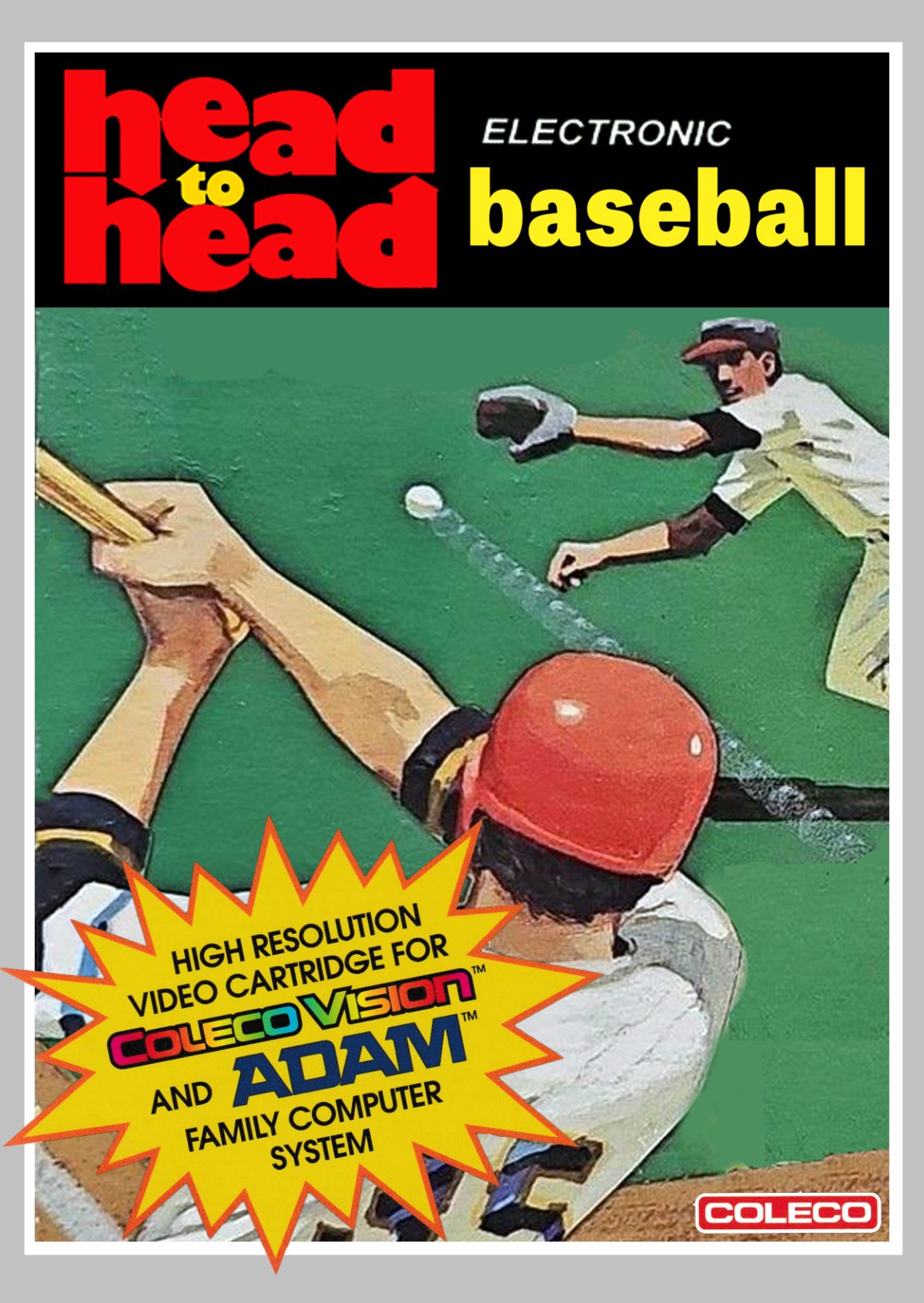


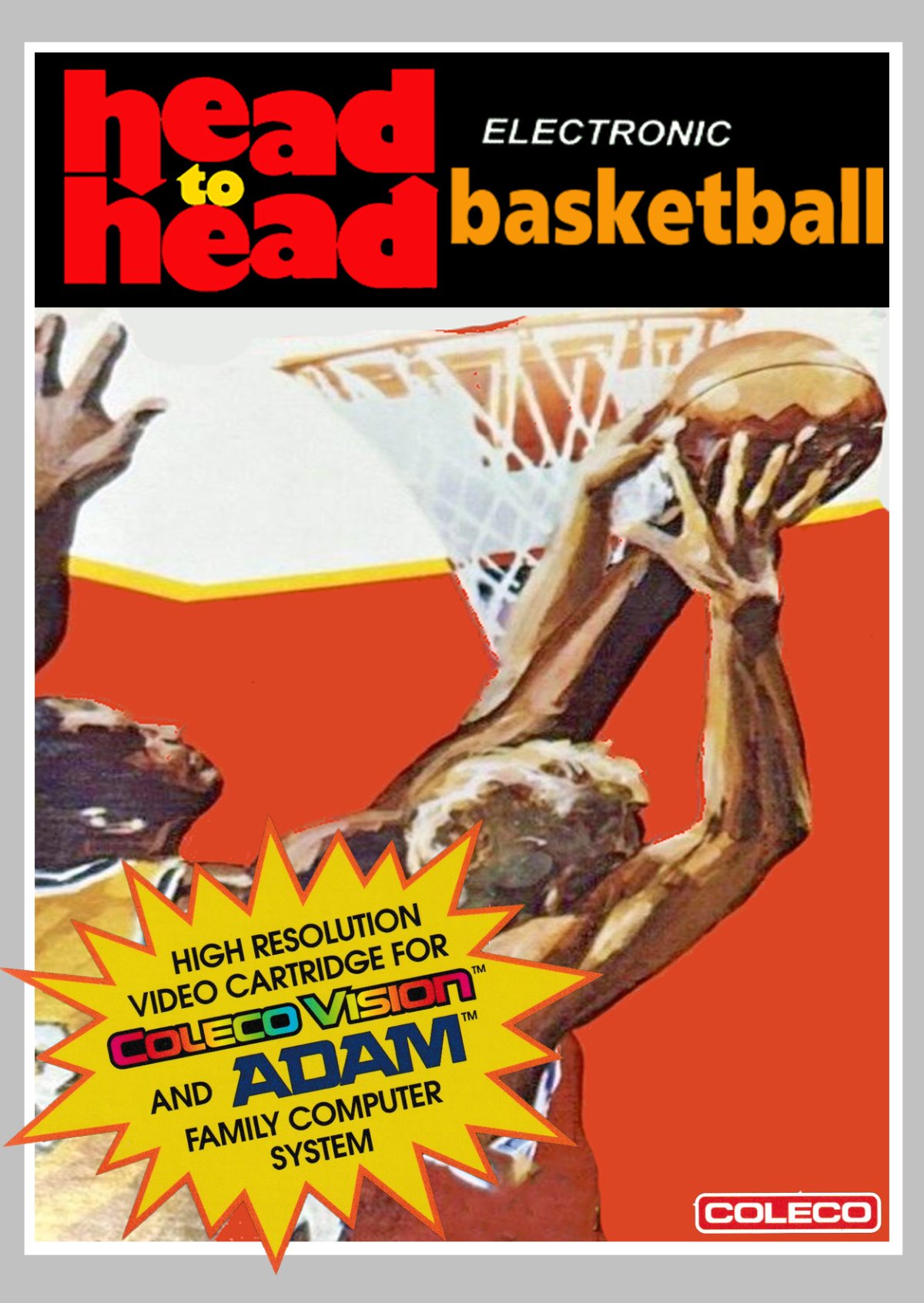
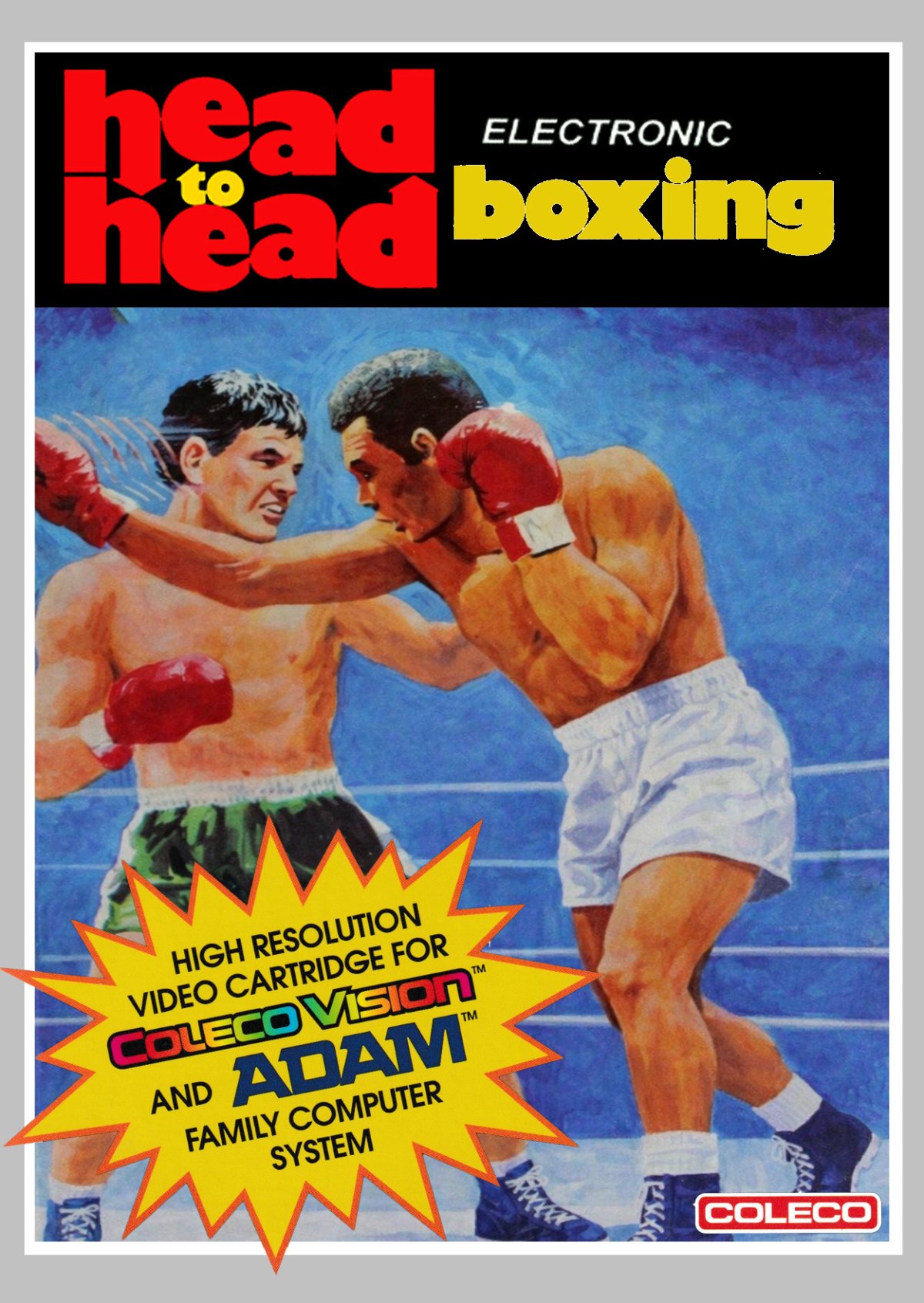

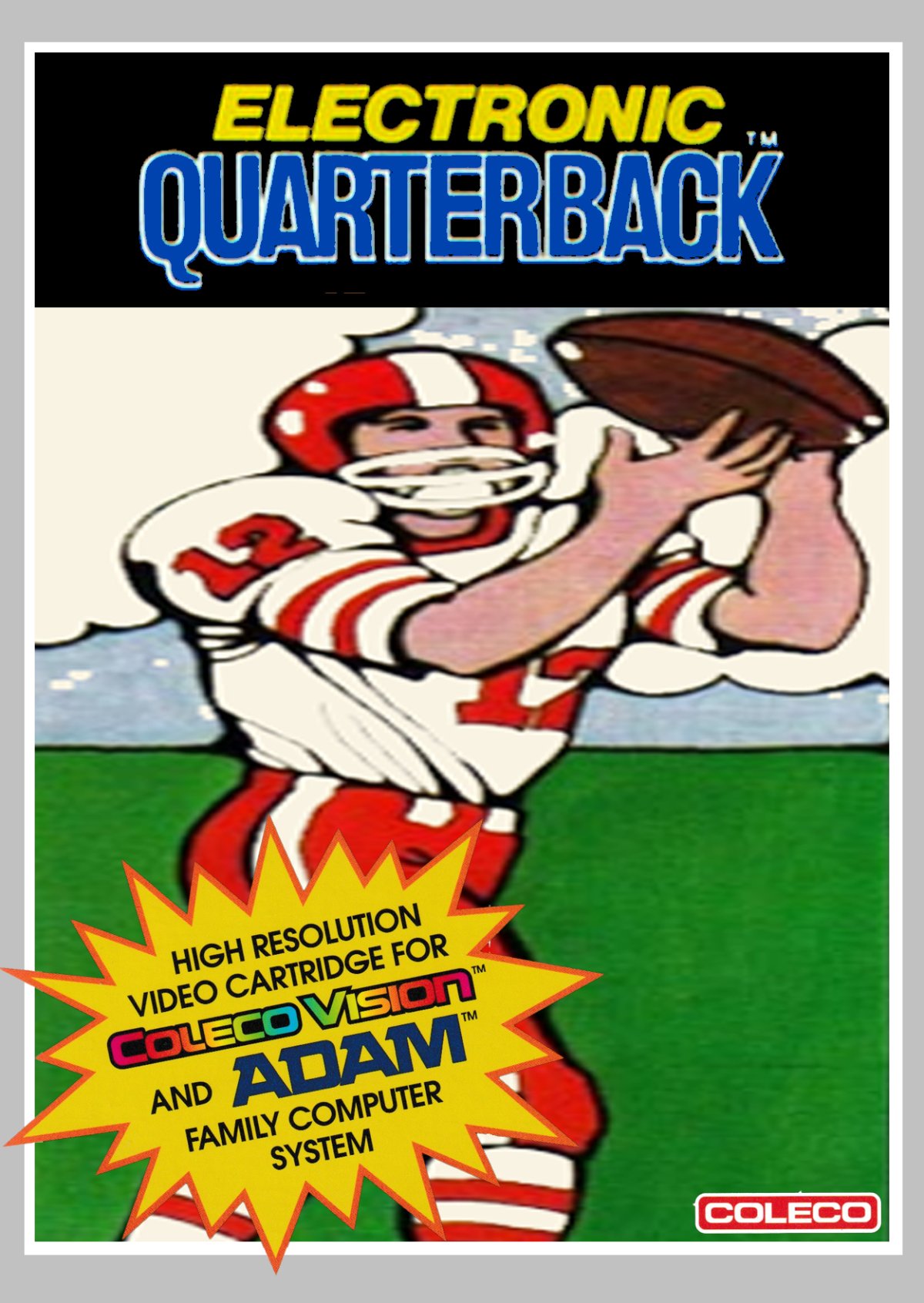
How About Another Coleco Best of Data Pack ??
(2/22/2026)

USA HOCKEY FOR THE GOLD!!!
(2/21/2026)
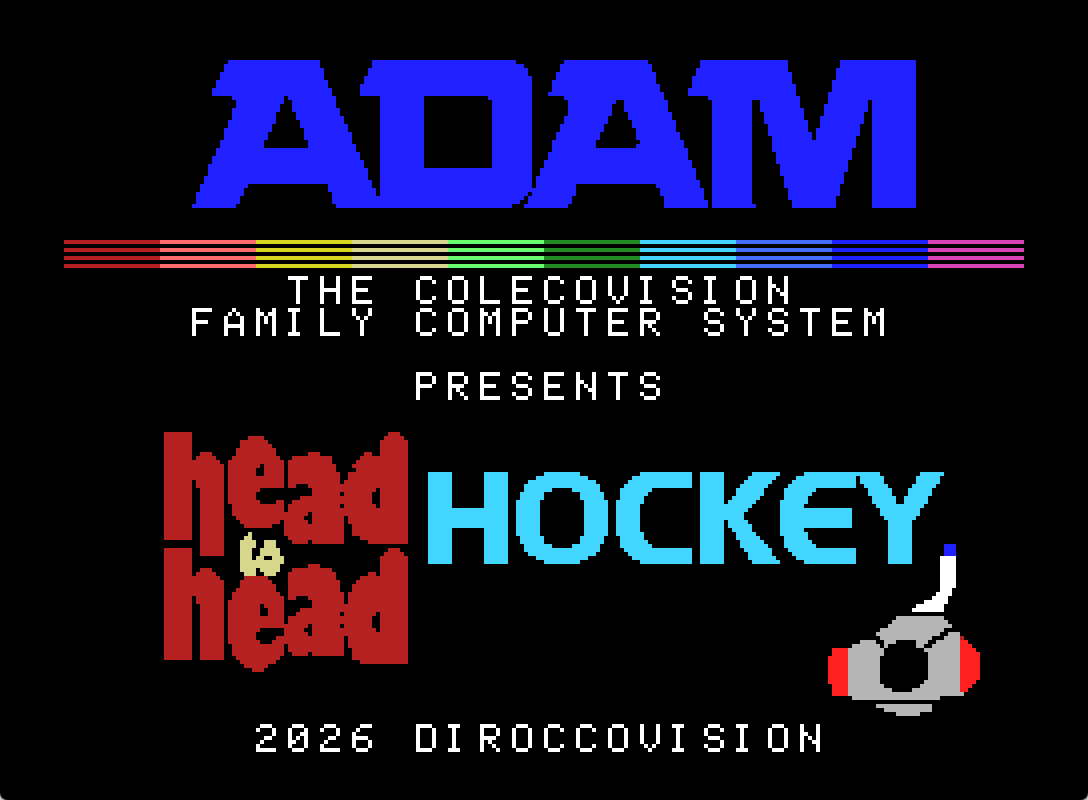
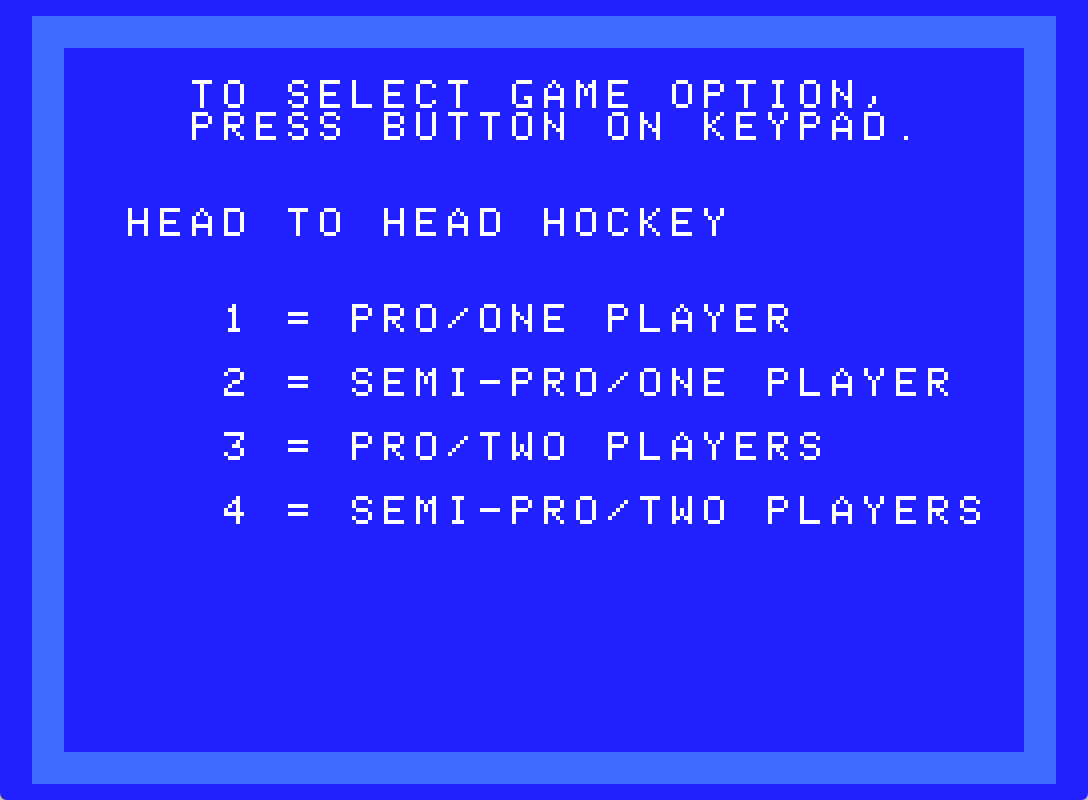
Ever Heard of Capital Software?
(2/21/2026)
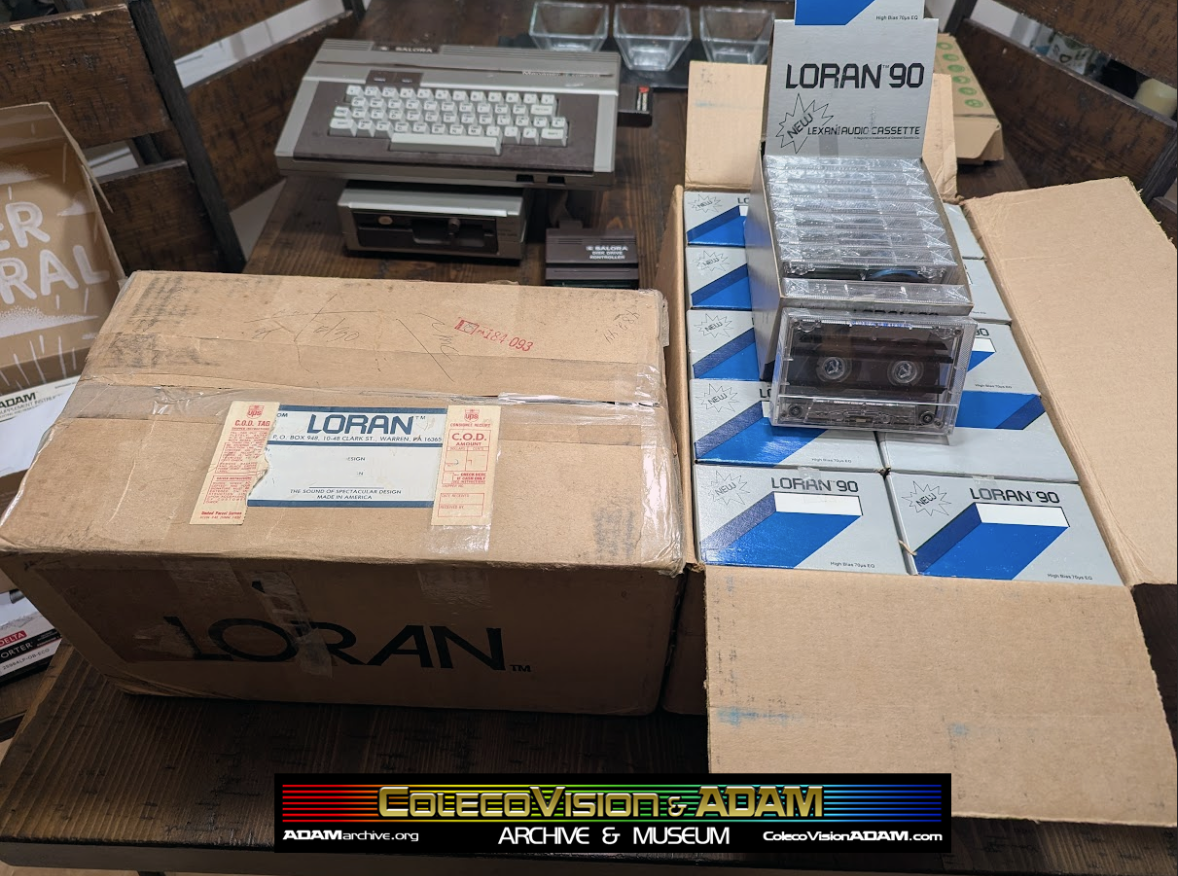
Factory Cases of LORAN DDP's Arrive
(2/21/2026)
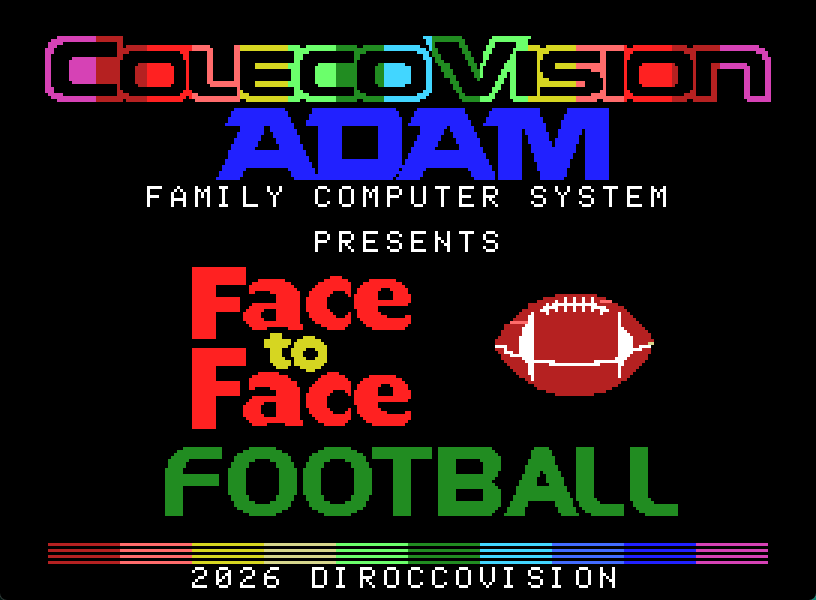
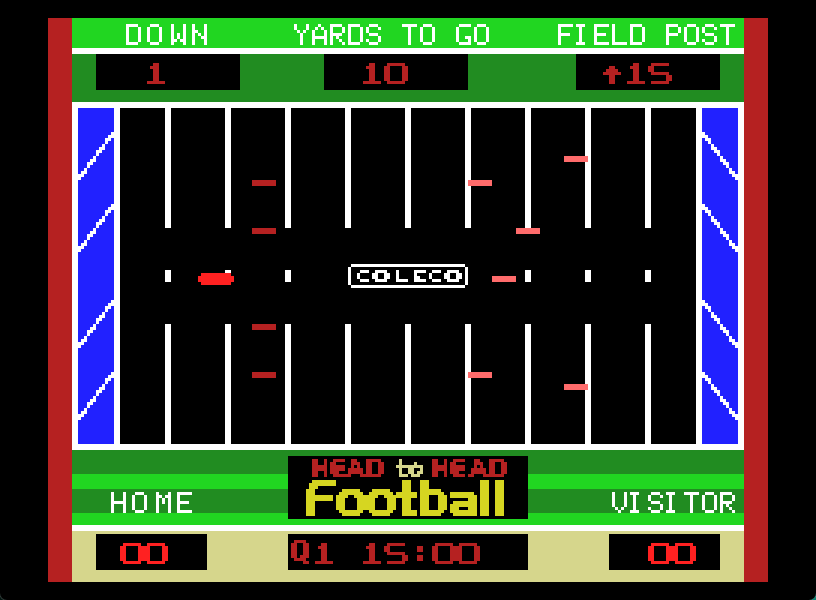
Face to Face (H2H) Football is progressing!!
(2/19/2026)
In Memory of Joe Blenkle — A Pillar of the Coleco ADAM Community
(2/17/2026)
Joe was an ADAMite from the very beginning. He was active in the ADAM community since the computer's release in 1983 and never stopped contributing. For nearly three decades, he maintained ColecoAdam.net — "The ADAM Family Computer System" page — which he founded in 1997. The site became one of the most important preservation resources in the ADAM world, housing the complete digitized run of all 24 issues of Expandable Computer News (ECN), the beloved ADAM newsletter published by Sage Enterprises from 1984 to 1988. Joe received personal permission from the widow of ECN founder Darrell Sage to reproduce the newsletter's contents online, ensuring this vital piece of ADAM history would never be lost.
Joe was himself a regular contributor to ECN and other ADAM publications during the 1980s, writing numerous software and game reviews that helped fellow ADAM owners make informed decisions about their purchases. The ADAM News Network described him as "an ADAMite from WAY BACK" and "an avid gamer" who contributed reviews throughout the early ADAM years.
In more recent years, Joe became prolific in creating original multimedia disks for the ADAM — interactive presentations combining graphics and MIDI music that showcased what the humble 8-bit computer could still do. His output was remarkable: holiday-themed disks for Christmas, Halloween, Valentine's Day, St. Patrick's Day, and the 4th of July, released year after year. He created trivia game volumes covering topics from Star Trek to James Bond, multimedia tributes to classic TV shows like Battlestar Galactica, The Invaders, Kolchak: The Night Stalker, and Space: 1999, and educational presentations on the U.S. space program. His very first multimedia effort, the Ghostbusters disk, went through multiple revisions over the years — a testament to his perfectionism and ongoing dedication. His most recent release, a Valentine's Day 2026 disk, was uploaded just weeks before his passing.
Joe also preserved and made available the complete ADAM's Jukebox music collection, the Multimedia Utilities created by Chris Brayman, and maintained a comprehensive ADAM news section on his site that kept the community informed about new hardware from Lundy Electronics, the FujiNet project, and other developments keeping the ADAM alive in the 21st century.
Joe proved that a small community, sustained by passionate individuals, can keep a platform alive and vibrant long after the manufacturer has gone. The ADAM community is smaller today without him, but immeasurably richer for everything he built and preserved.
Rest in peace, Joe. The ADAM world will miss you.
Todays Canadian Mail Call!!
(2/17/2026)
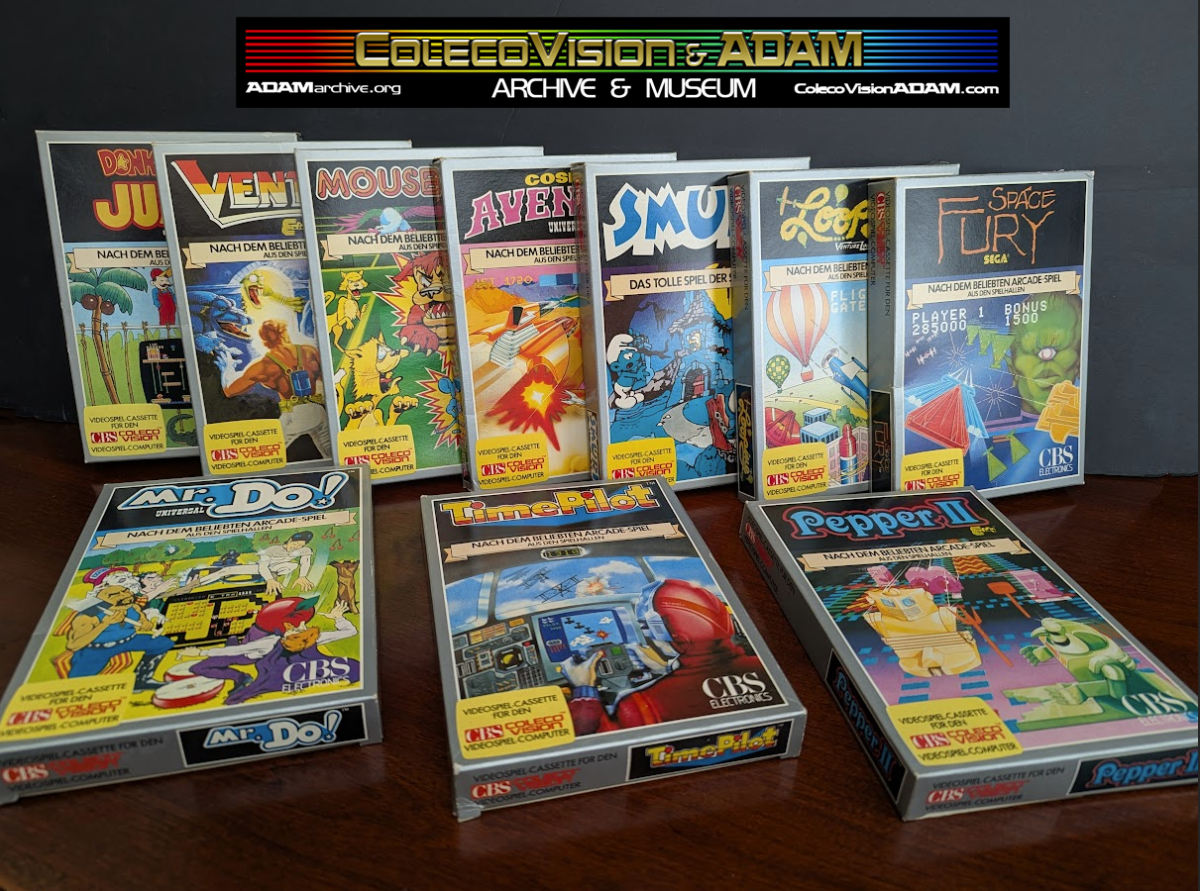
German Titles Have Arrived!!
(2/16/2026)
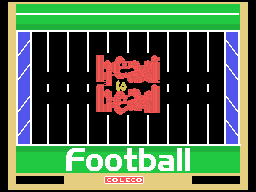
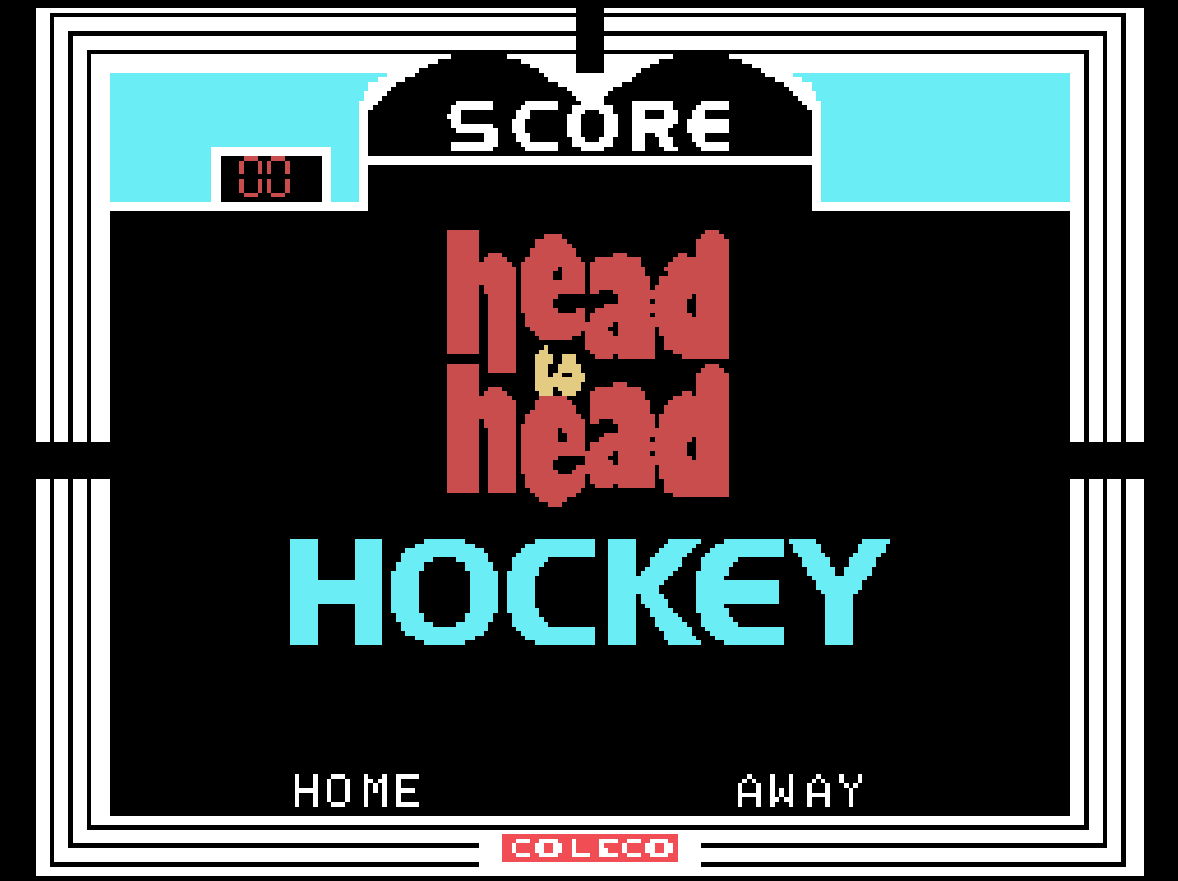
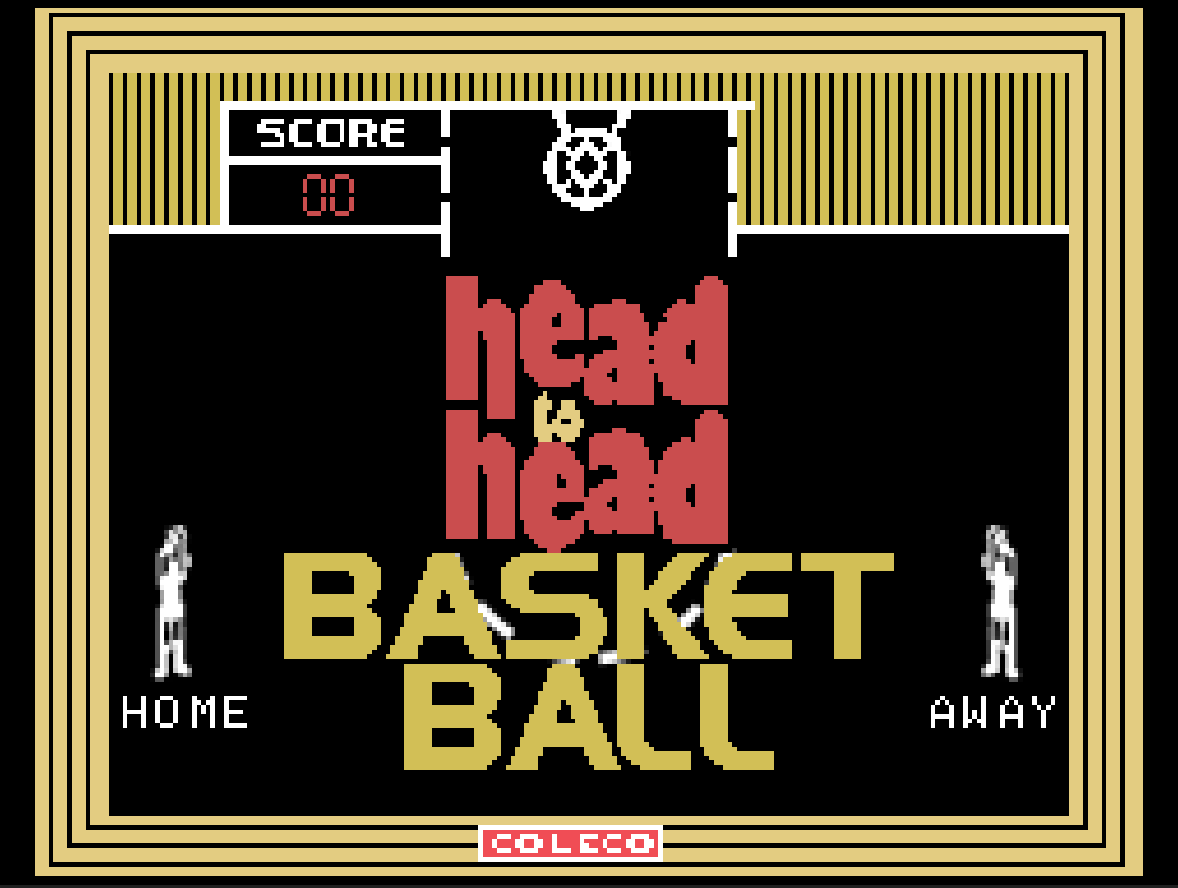
Work Has Started Again On The HeadtoHead Series of Games!!!!
(2/15/2026)

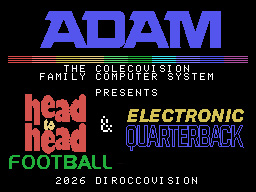
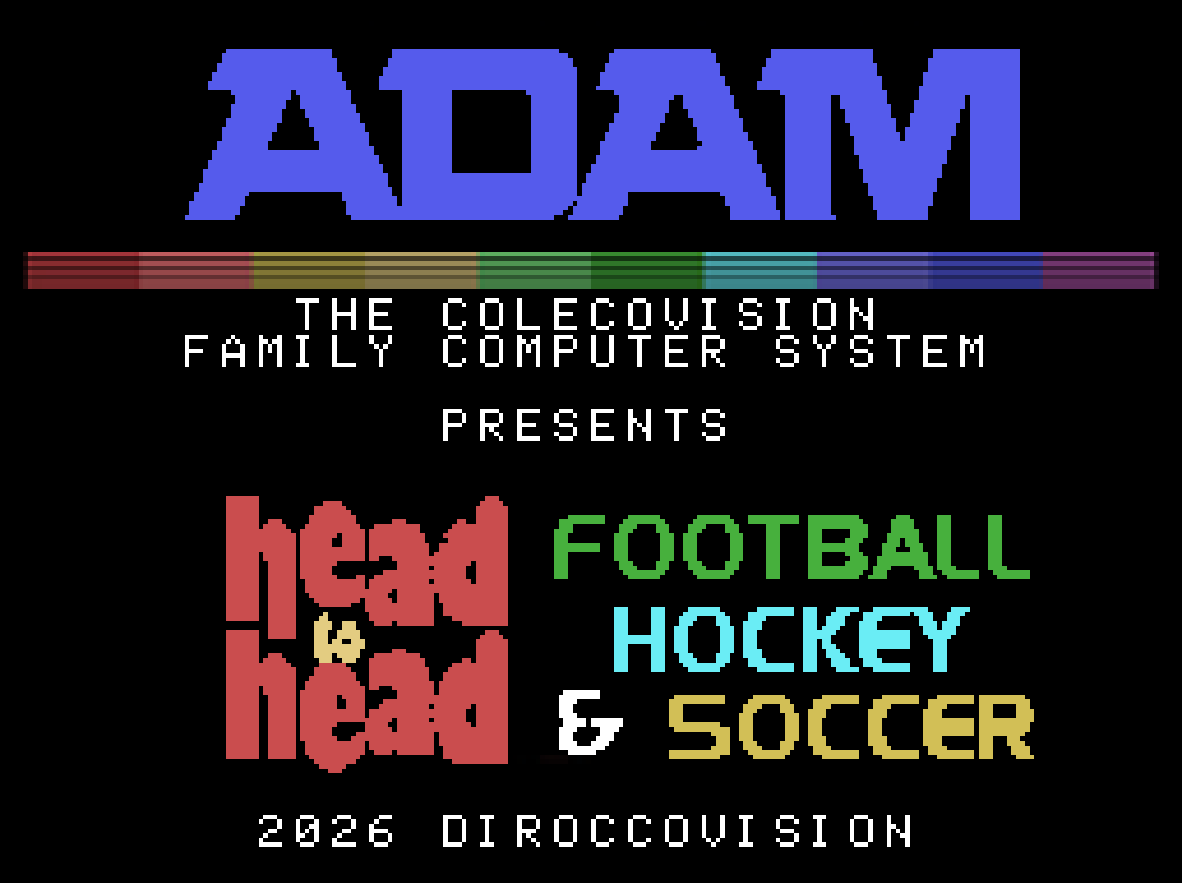
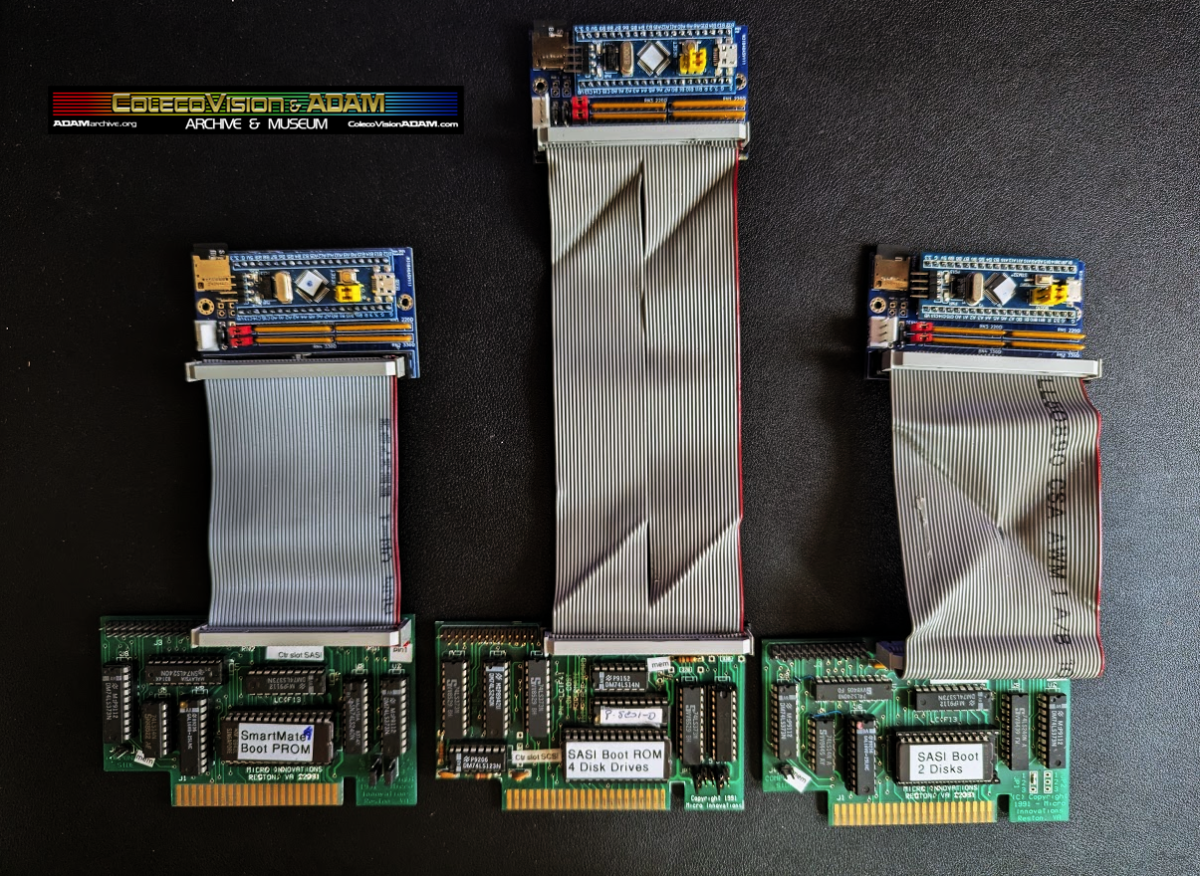
Combined ADAM Hard Drive Boot Cart
(2/14/2026)
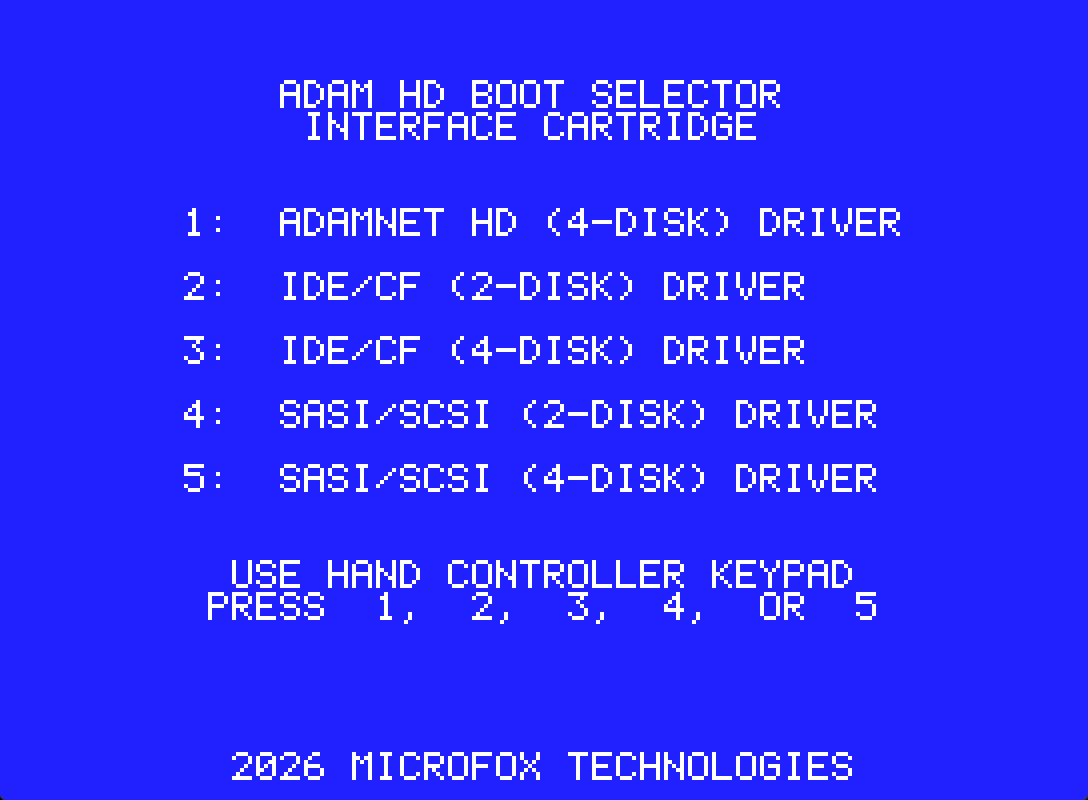
SASI Drives and Mutiple Boot Configirations
(2/12/2026)
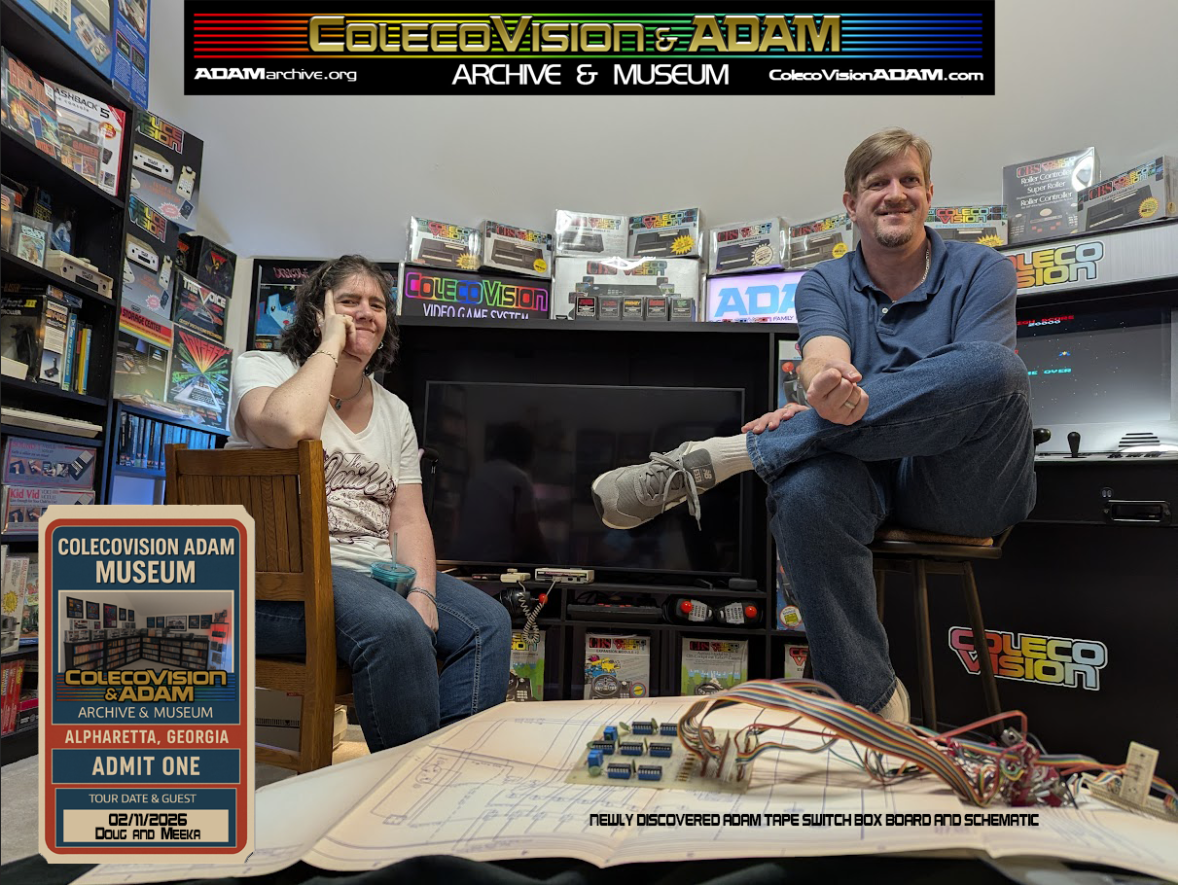
GREAT DAY IN THE MUSEUM. DOUG & MEEKA FROM ADAMCON AND MICROFOX TECHNOLOGIES VISIT!!!
(2/11/2026)
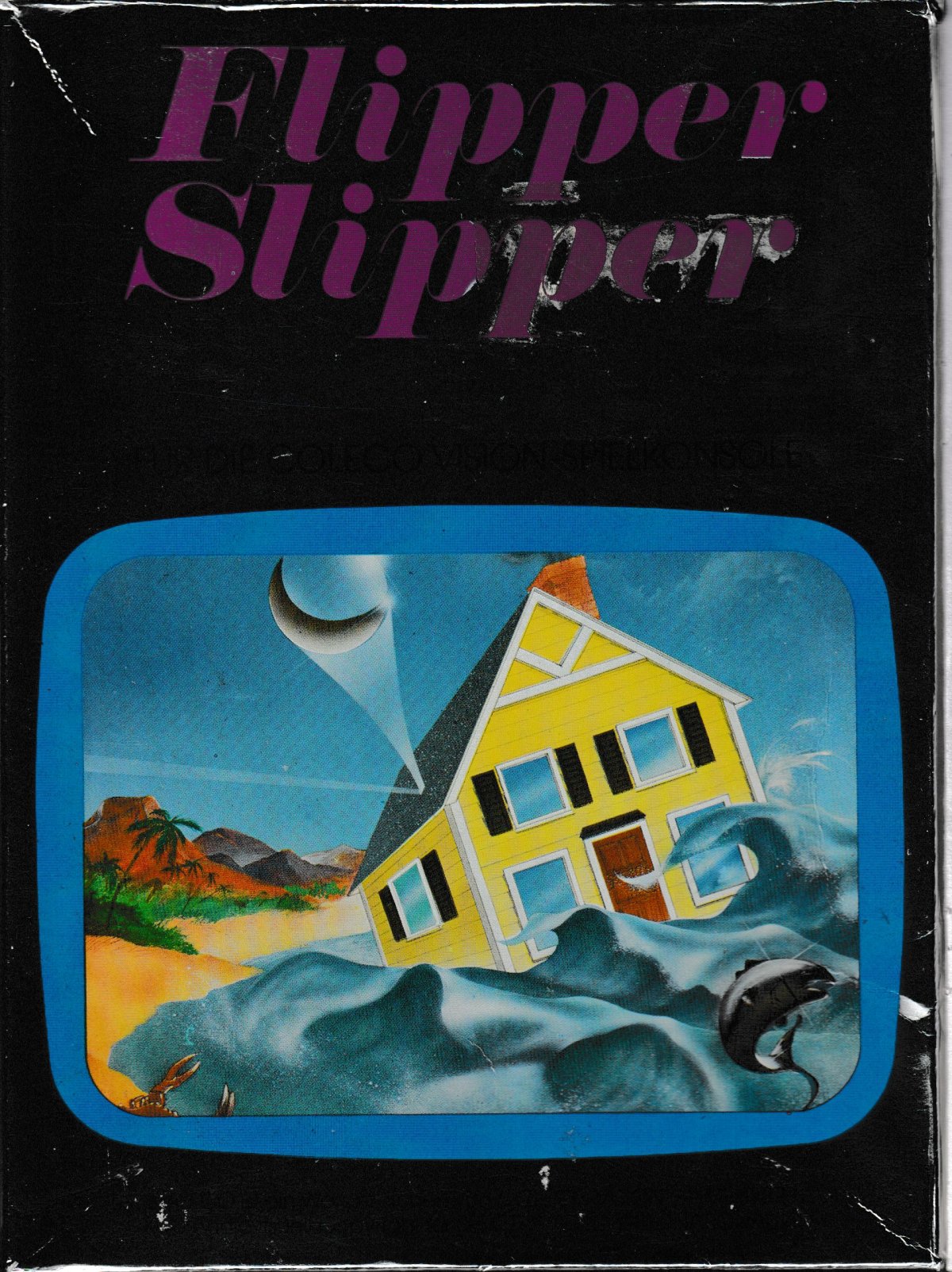
German Flipper Slipper by Spectravideo
(2/07/2026)
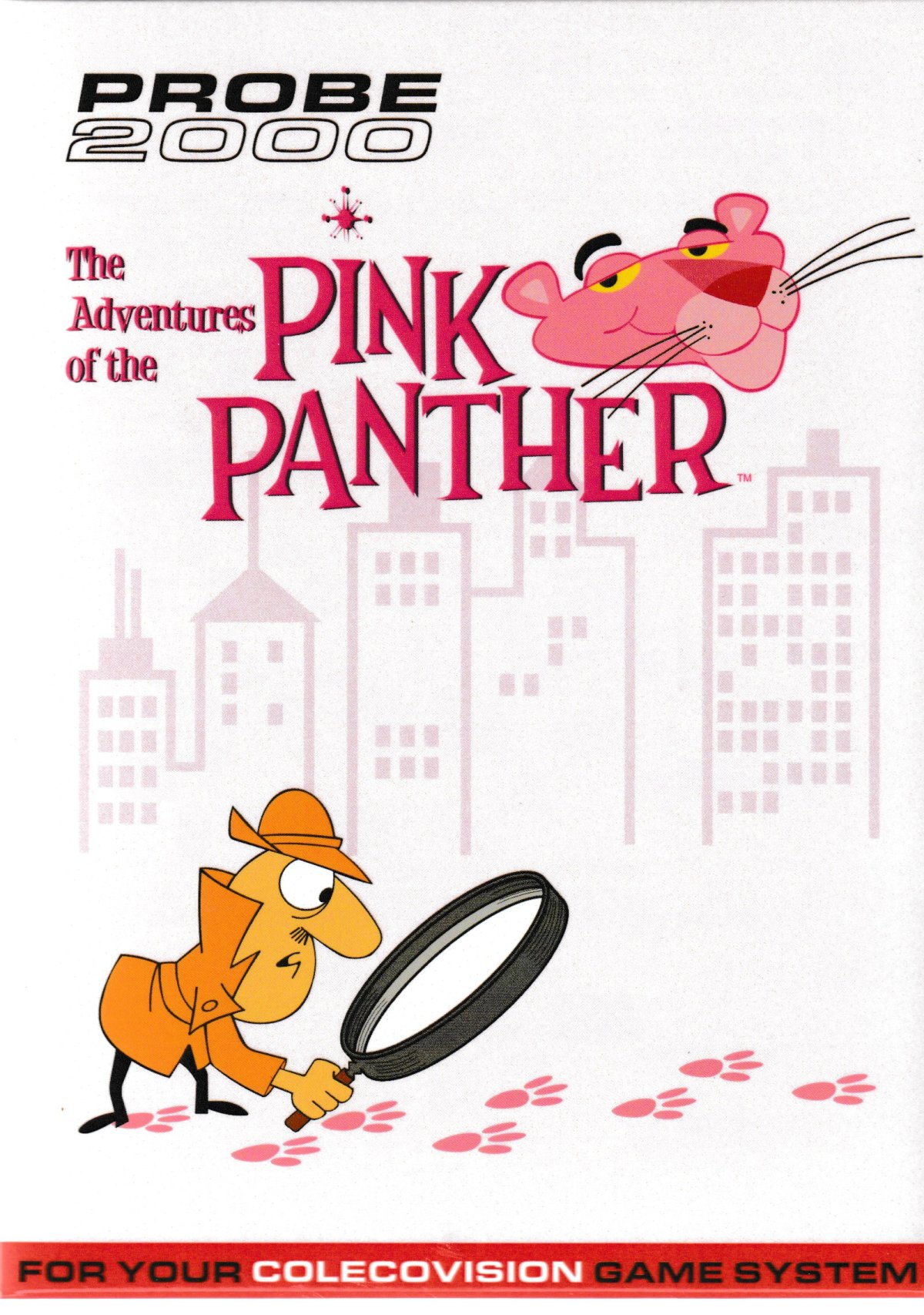
The Pink Panther (Alternate Version) Arrived!!!
(2/07/2026)
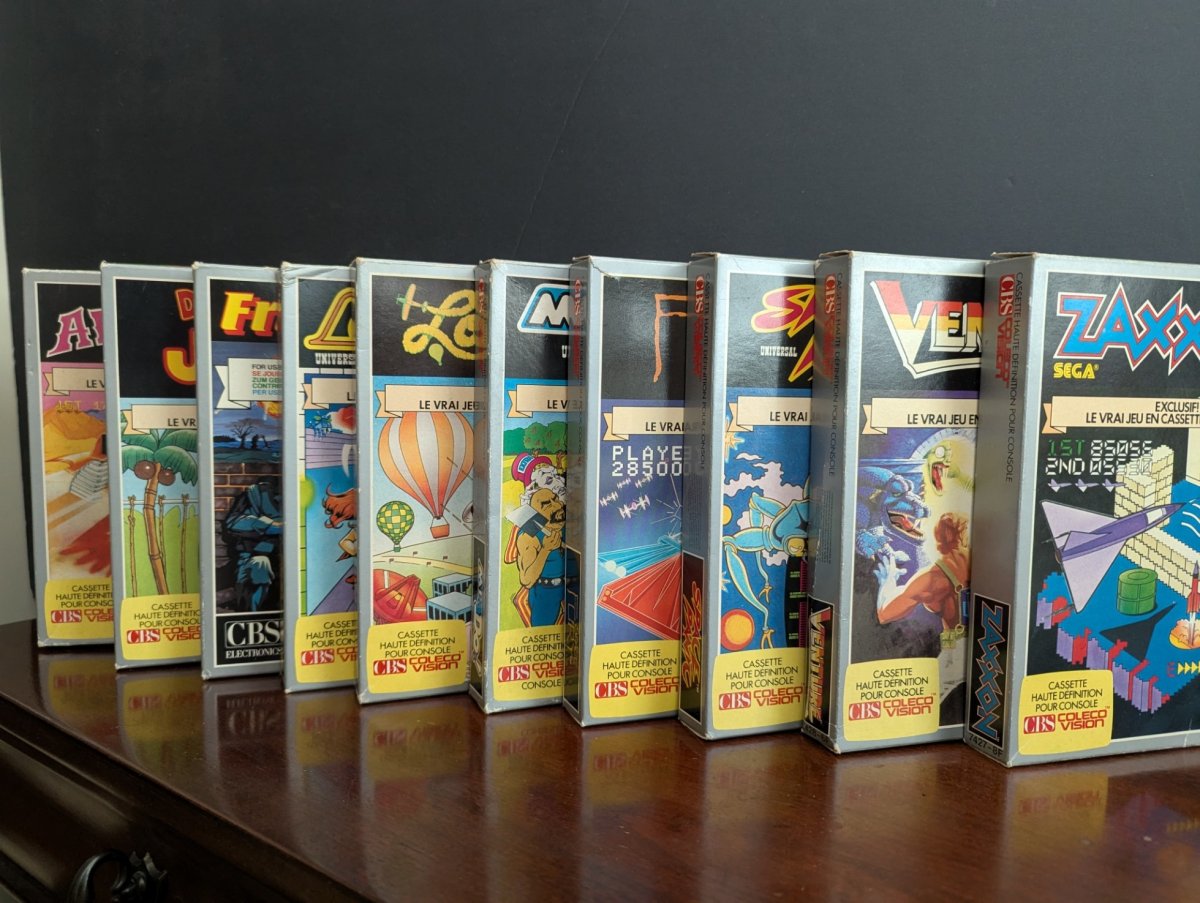
CBS French Edition Mail Call !!!
(2/07/2026)
JerryG's Guide to the Classic VideoGames
(2/07/2026)
FLUX is in the house!!!!
(2/07/2026)
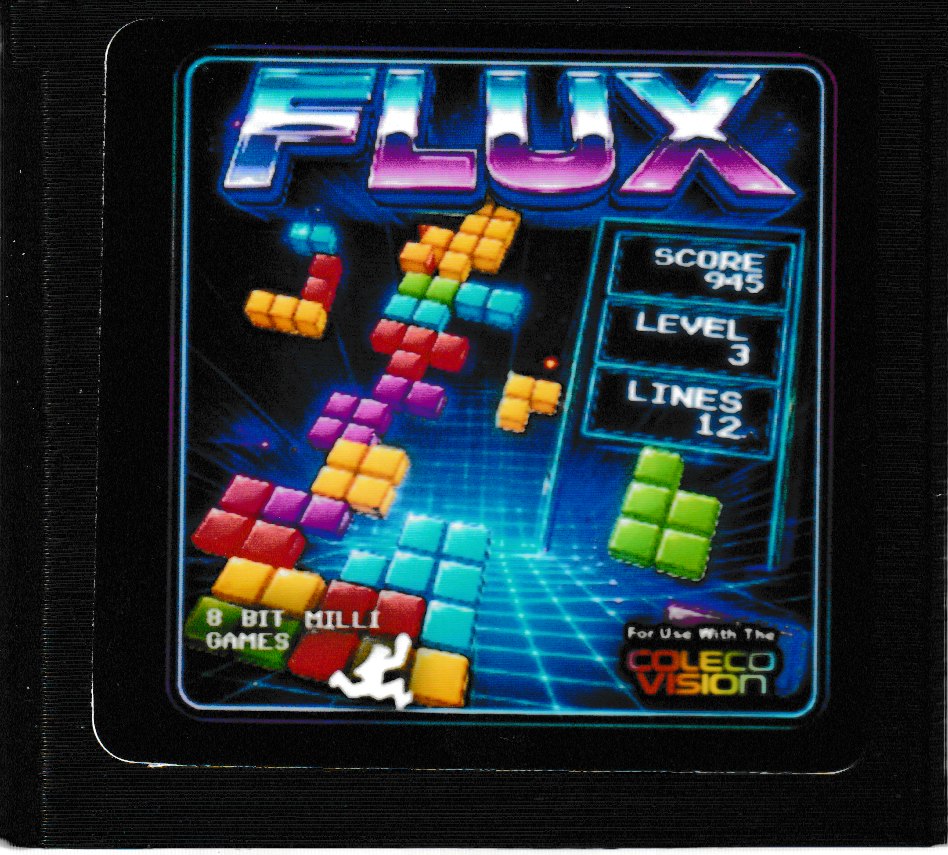
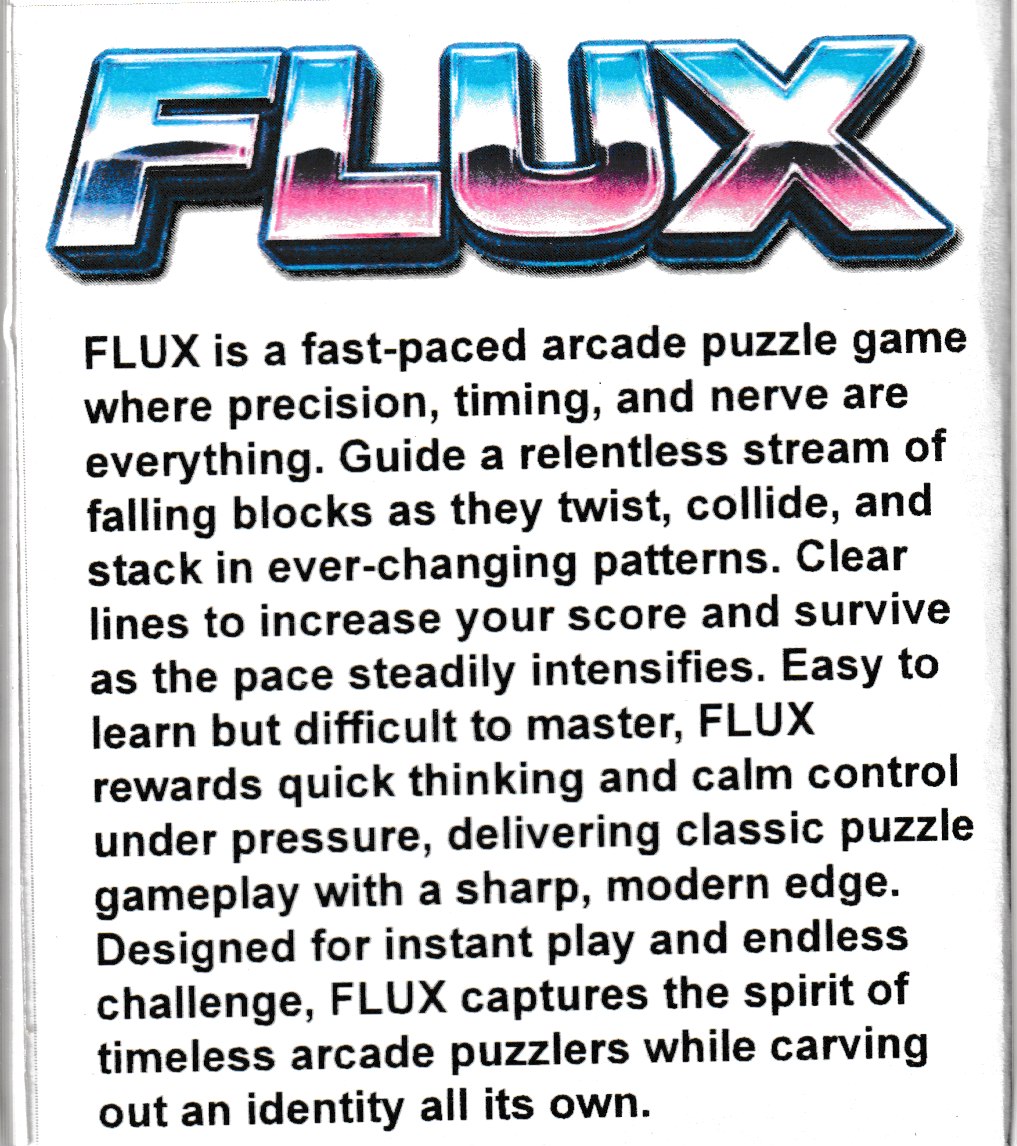
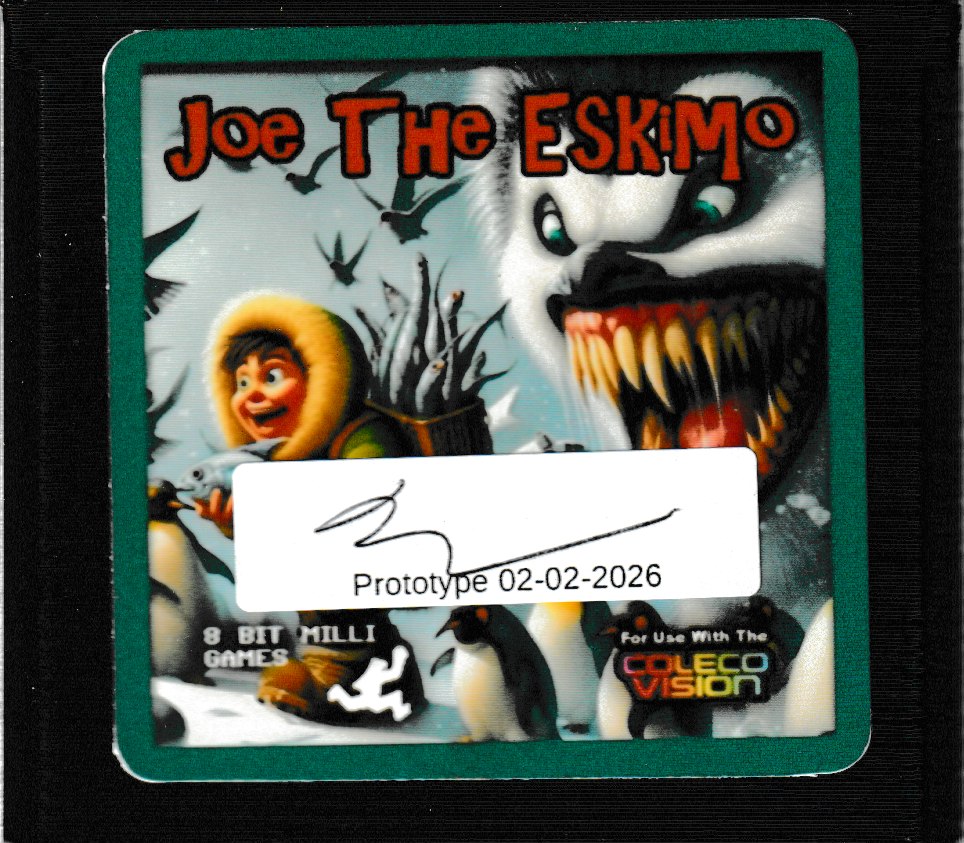
Prototype - Joe The Eskimo
(2/07/2026)


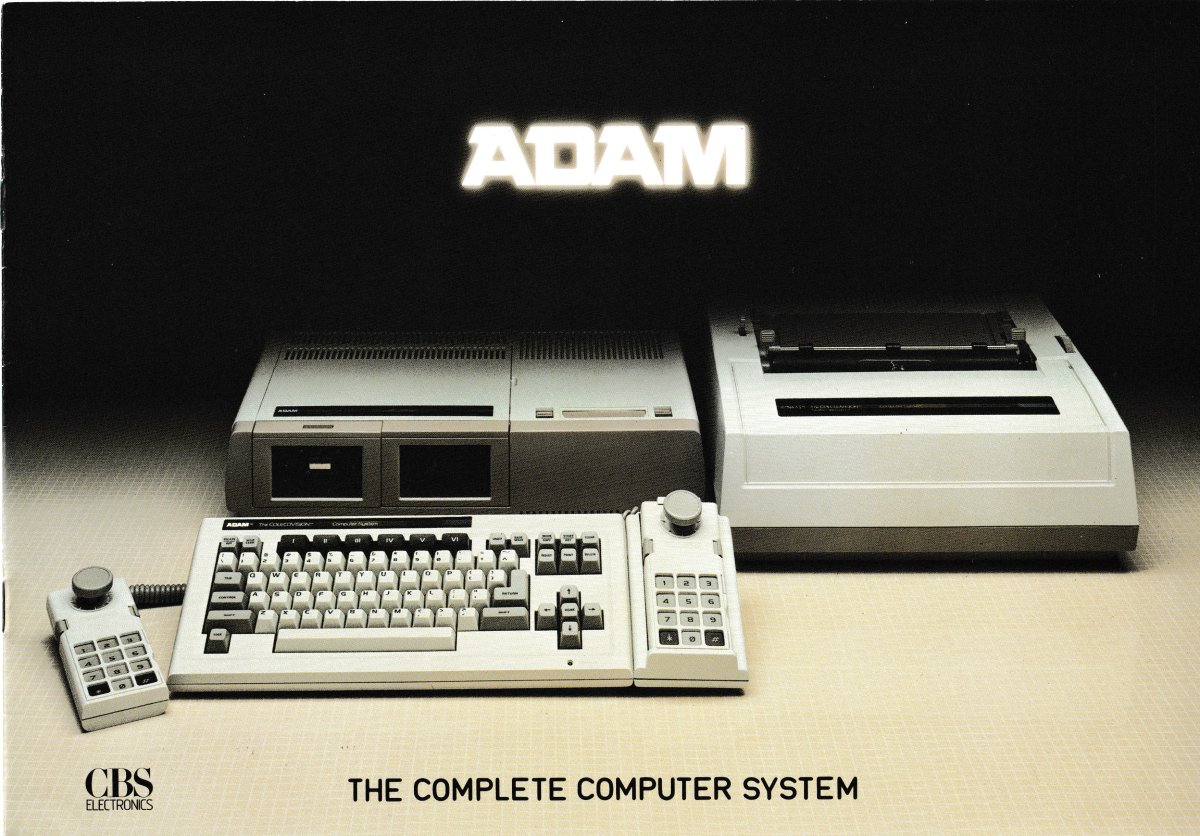
CBS (UK) ADAM Sales Brouchure
(1/28/2026)
Canadian Address Book Filer and AutoDialer
(1/26/2026)
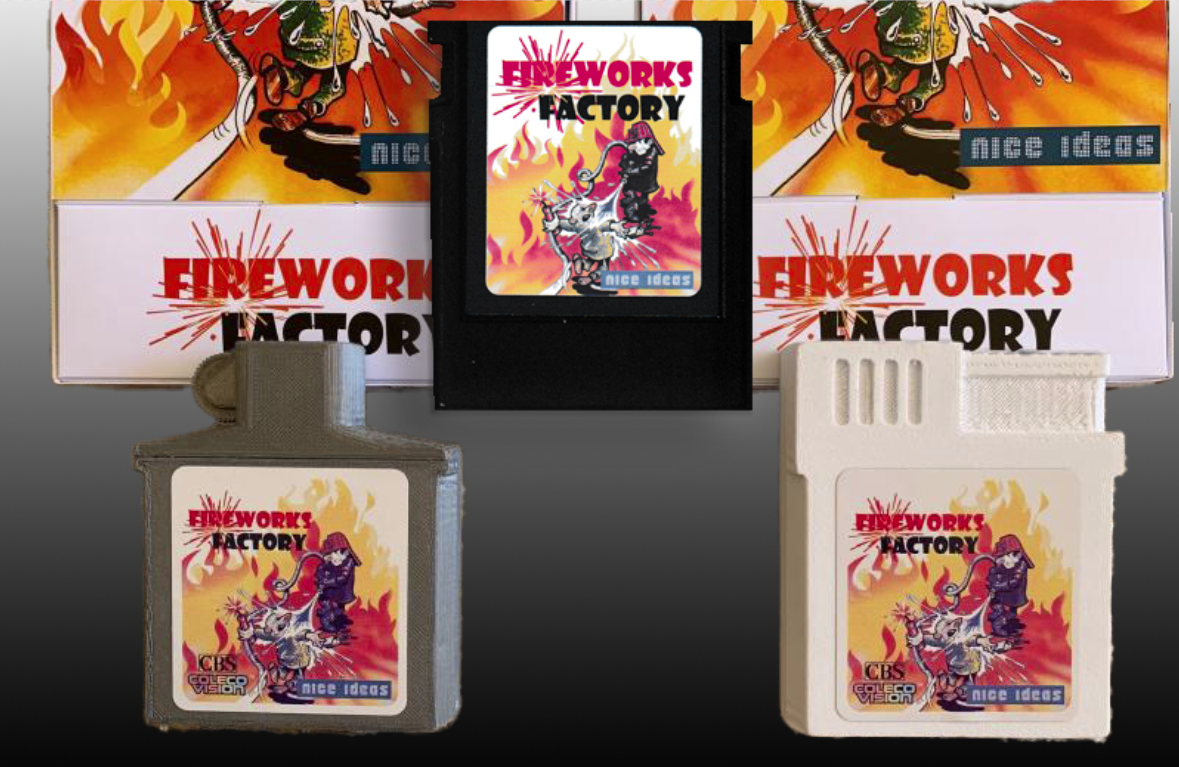
Firworks Factory
(1/25/2026)
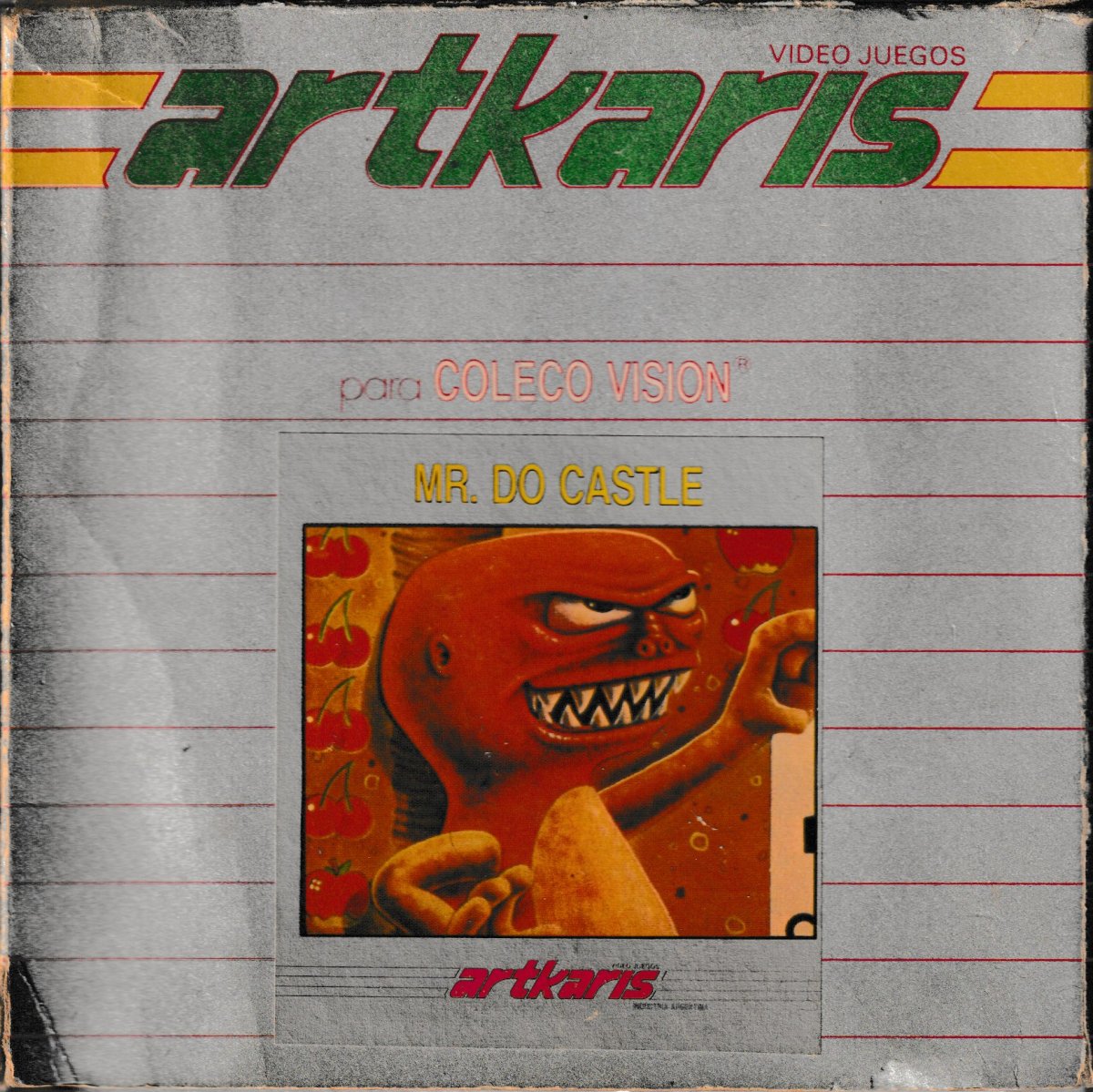
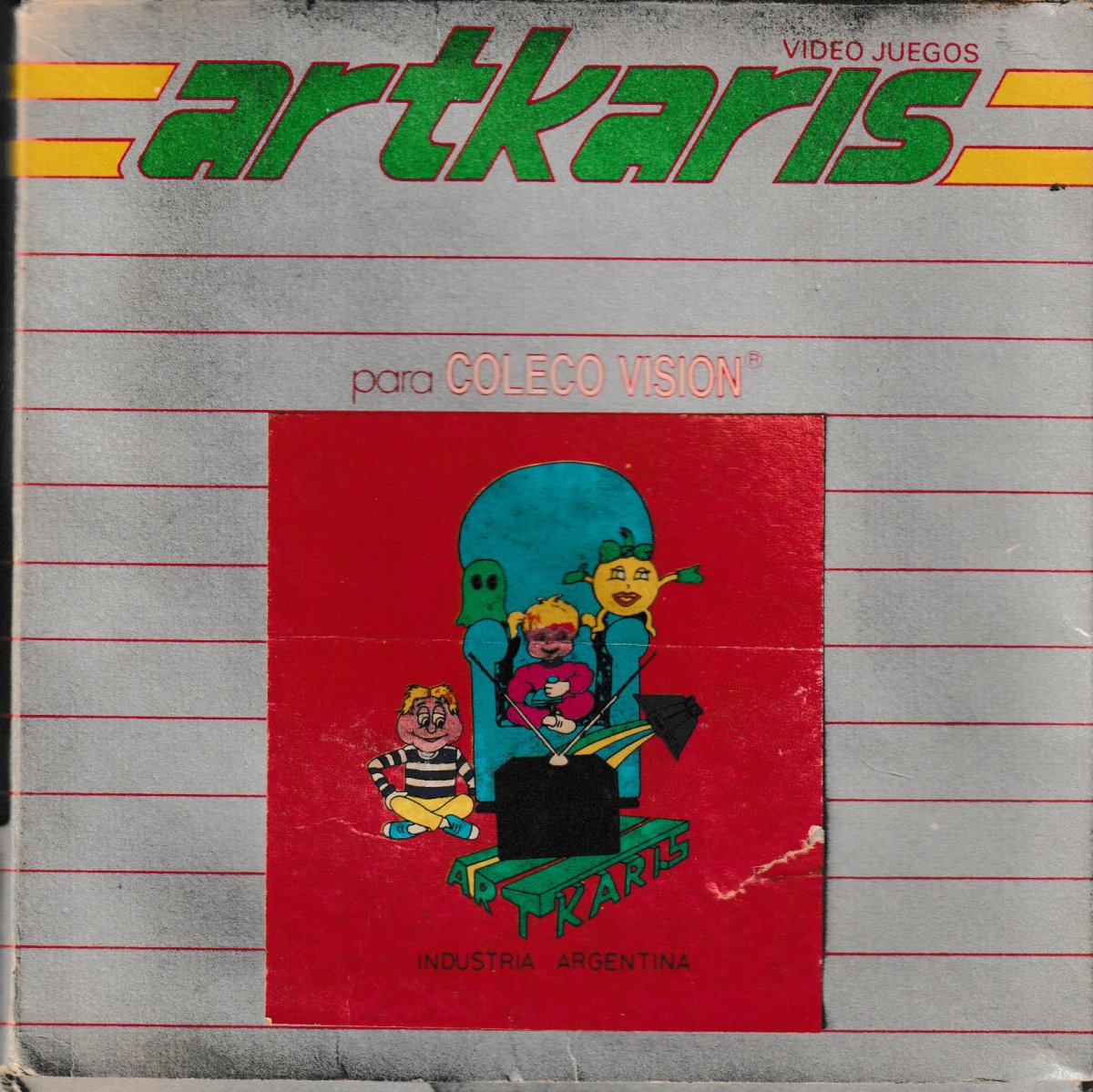
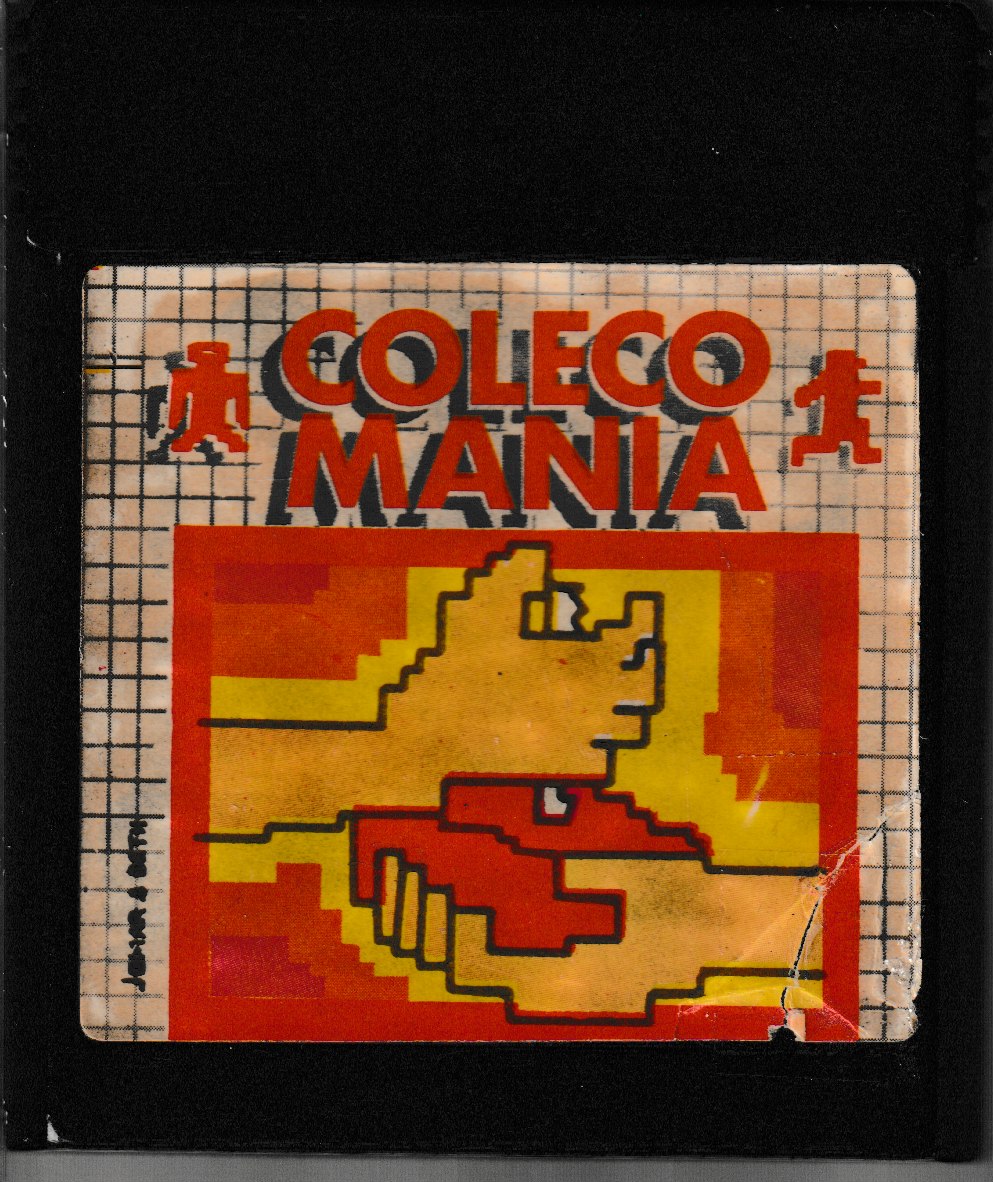
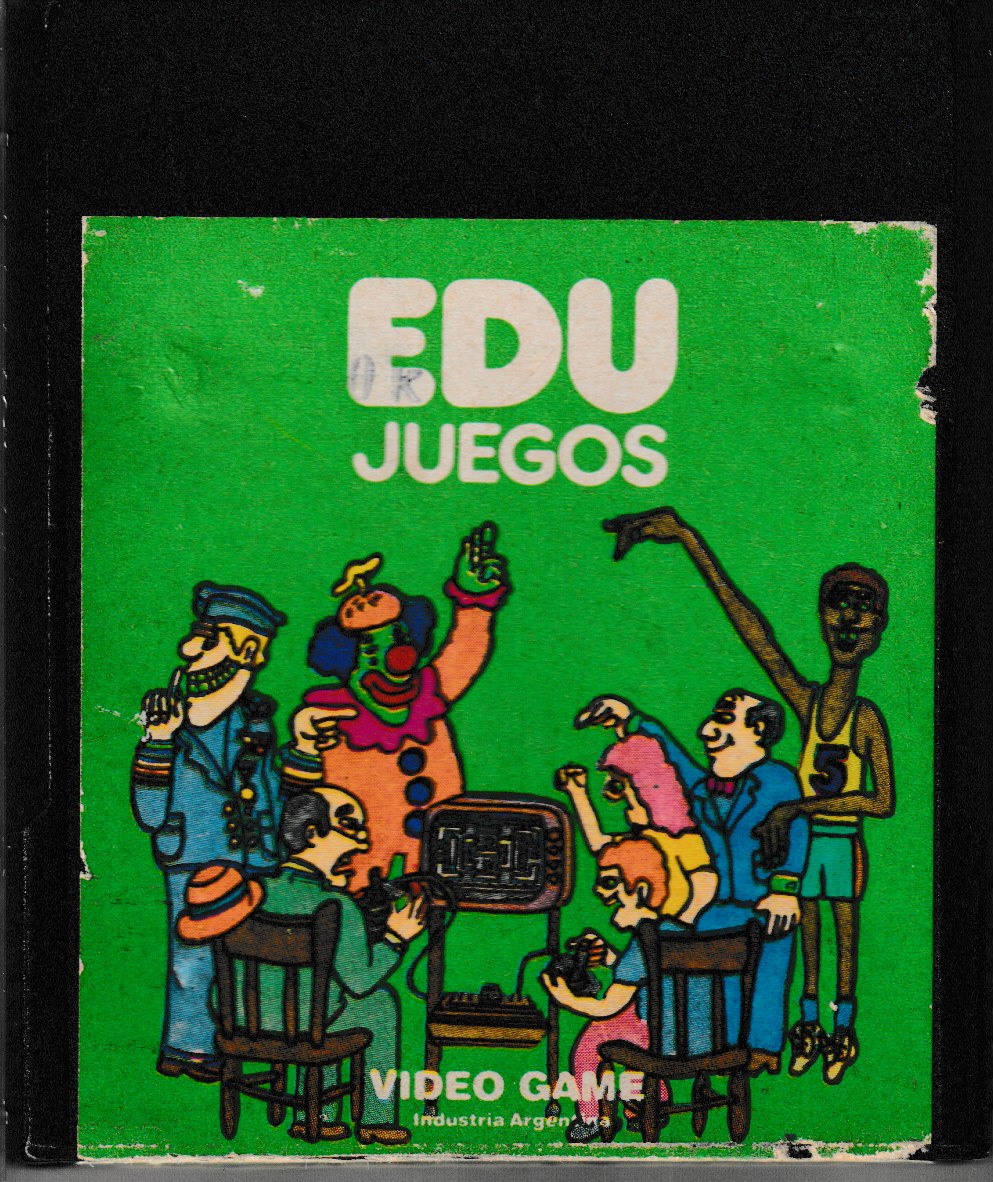
South American Bootlegs/Hacks
(1/25/2026)
Check Out the ROMS/Game play.
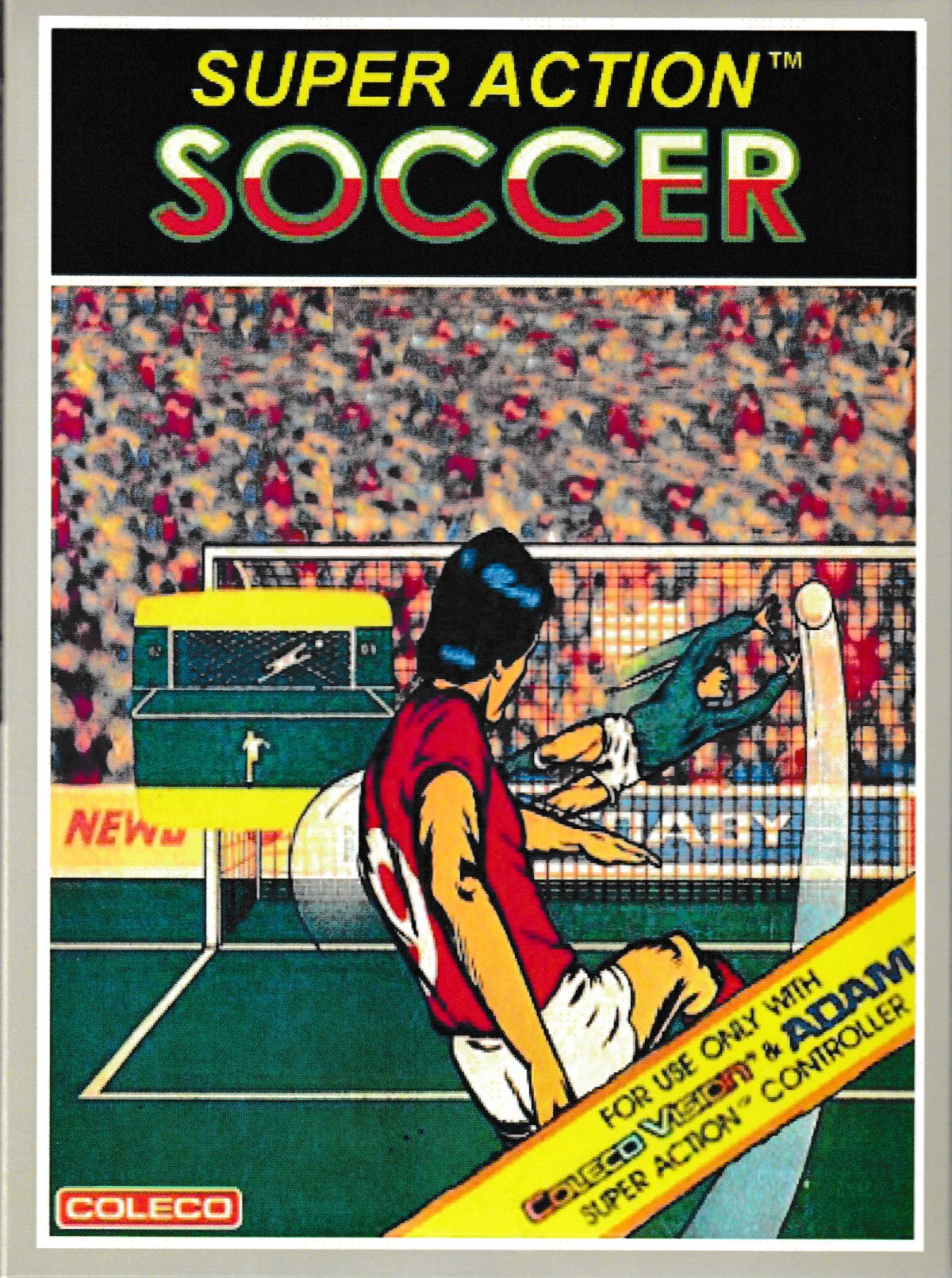
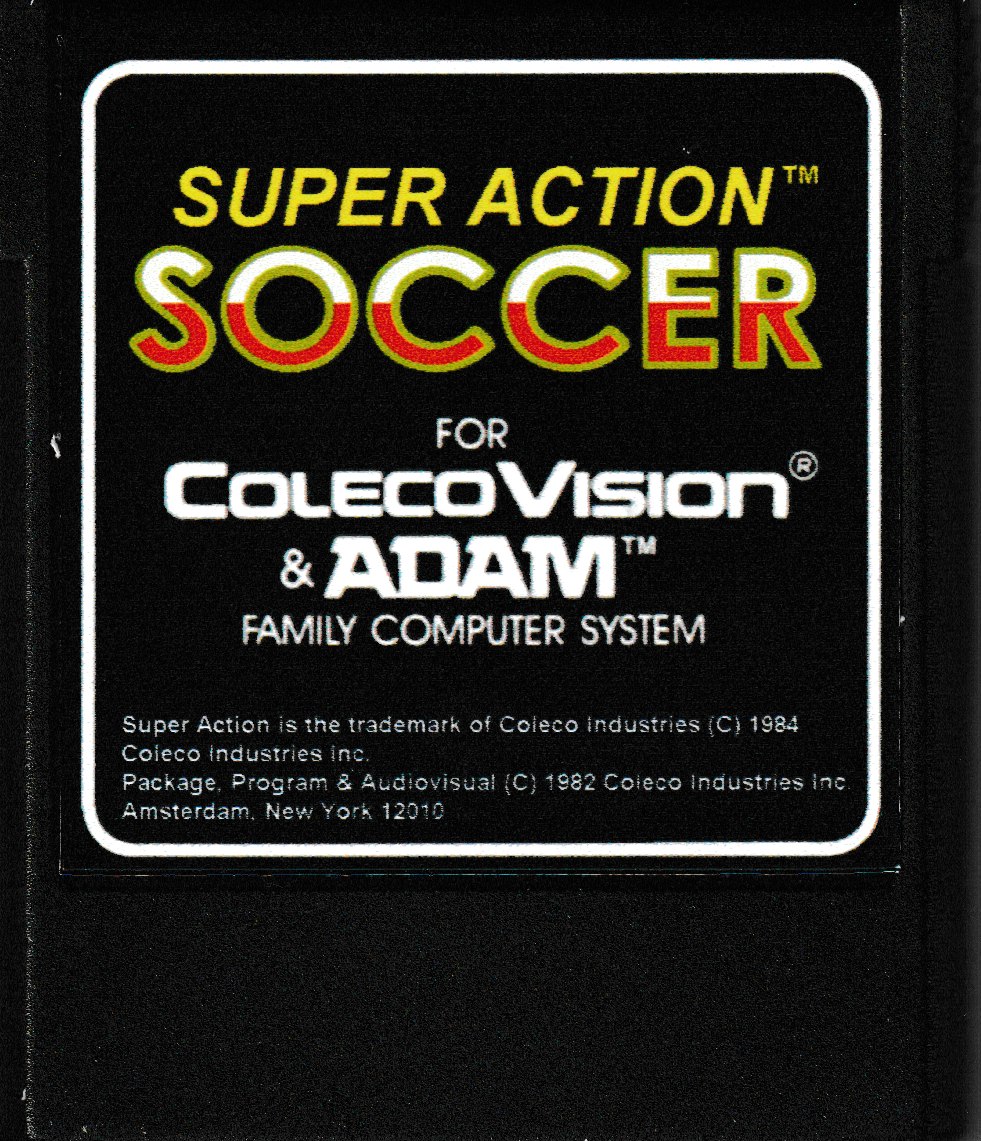
Super Action Soccer
(1/25/2026)
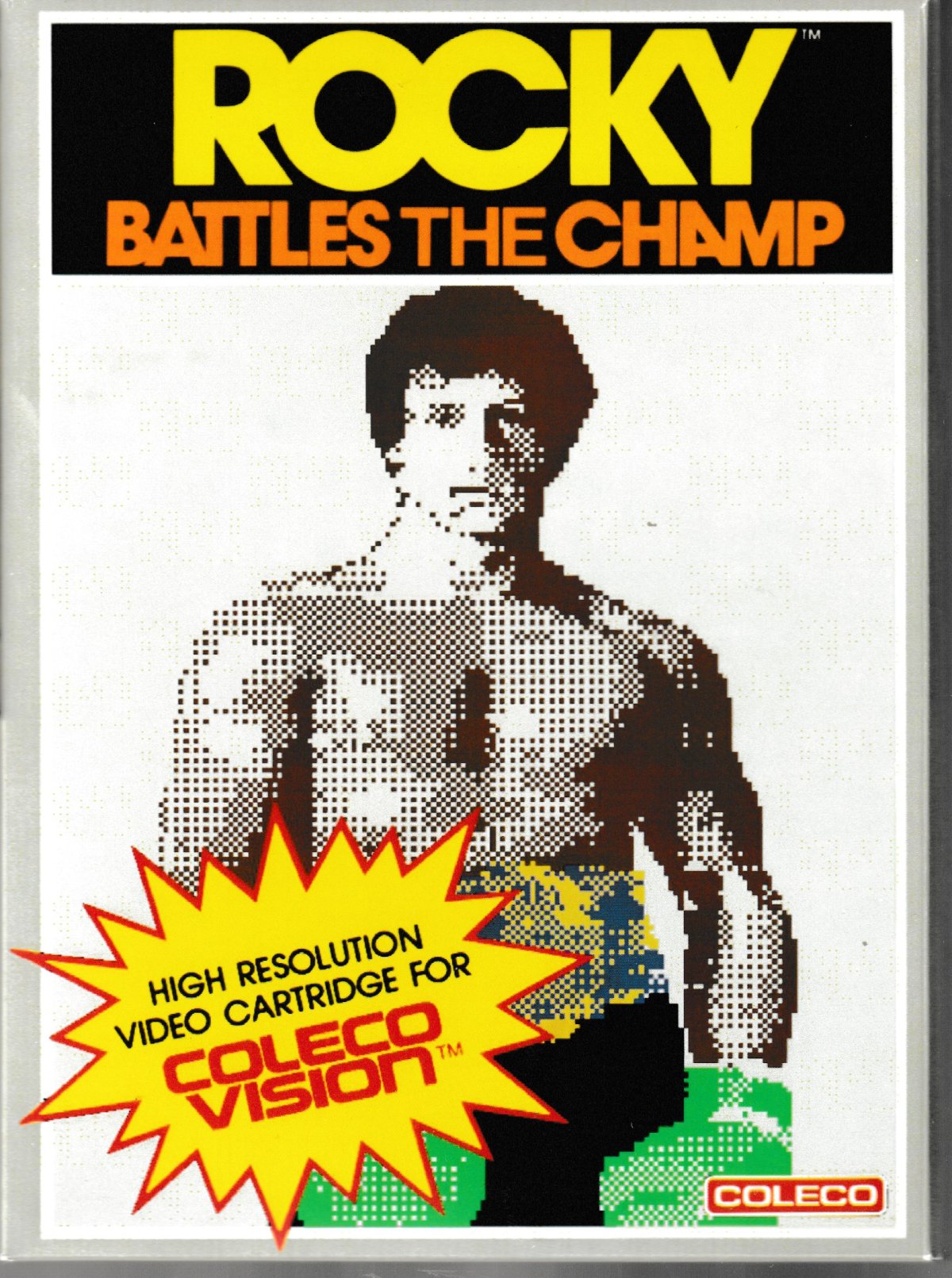
Pretty Cool Alternate Box for ROCKY arrives!!!!
(1/25/2026)
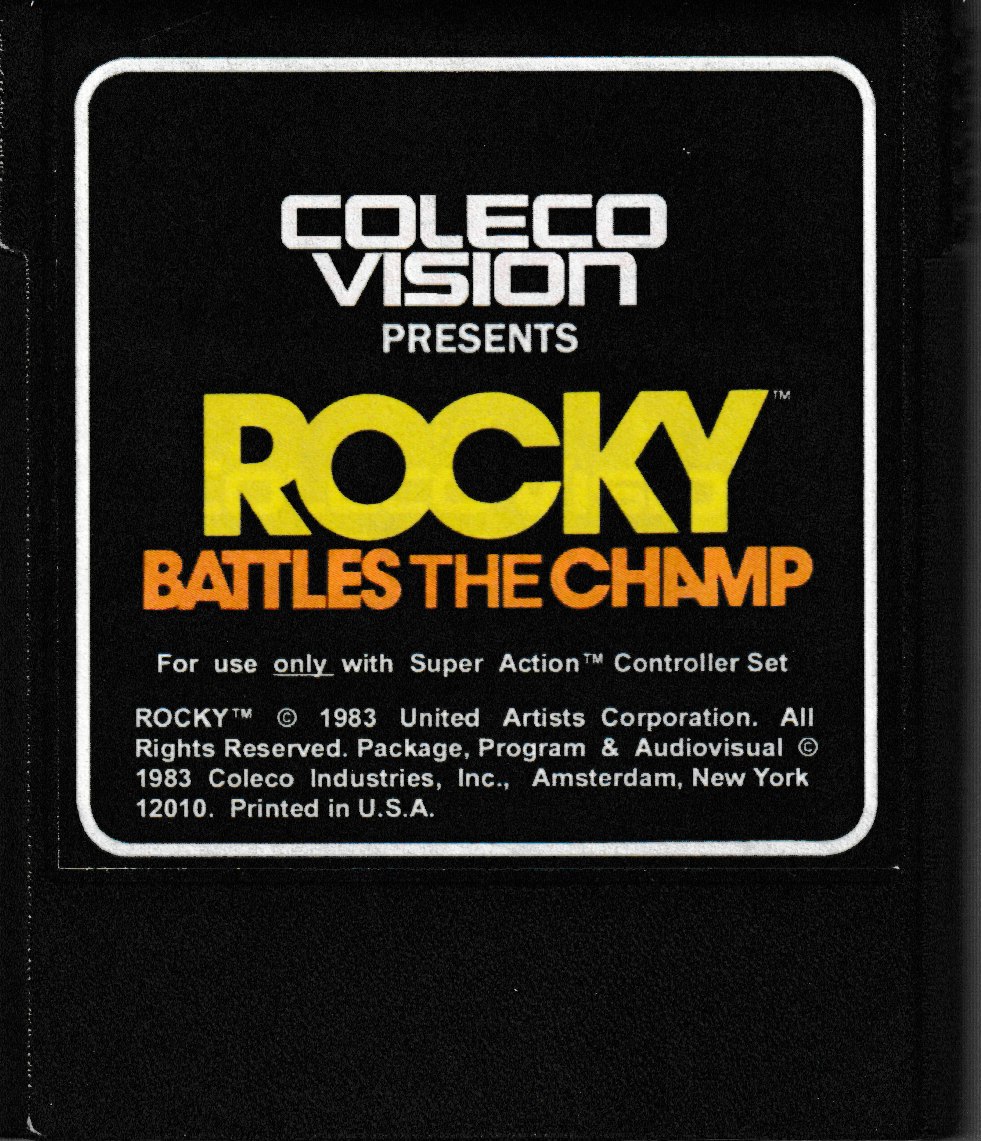
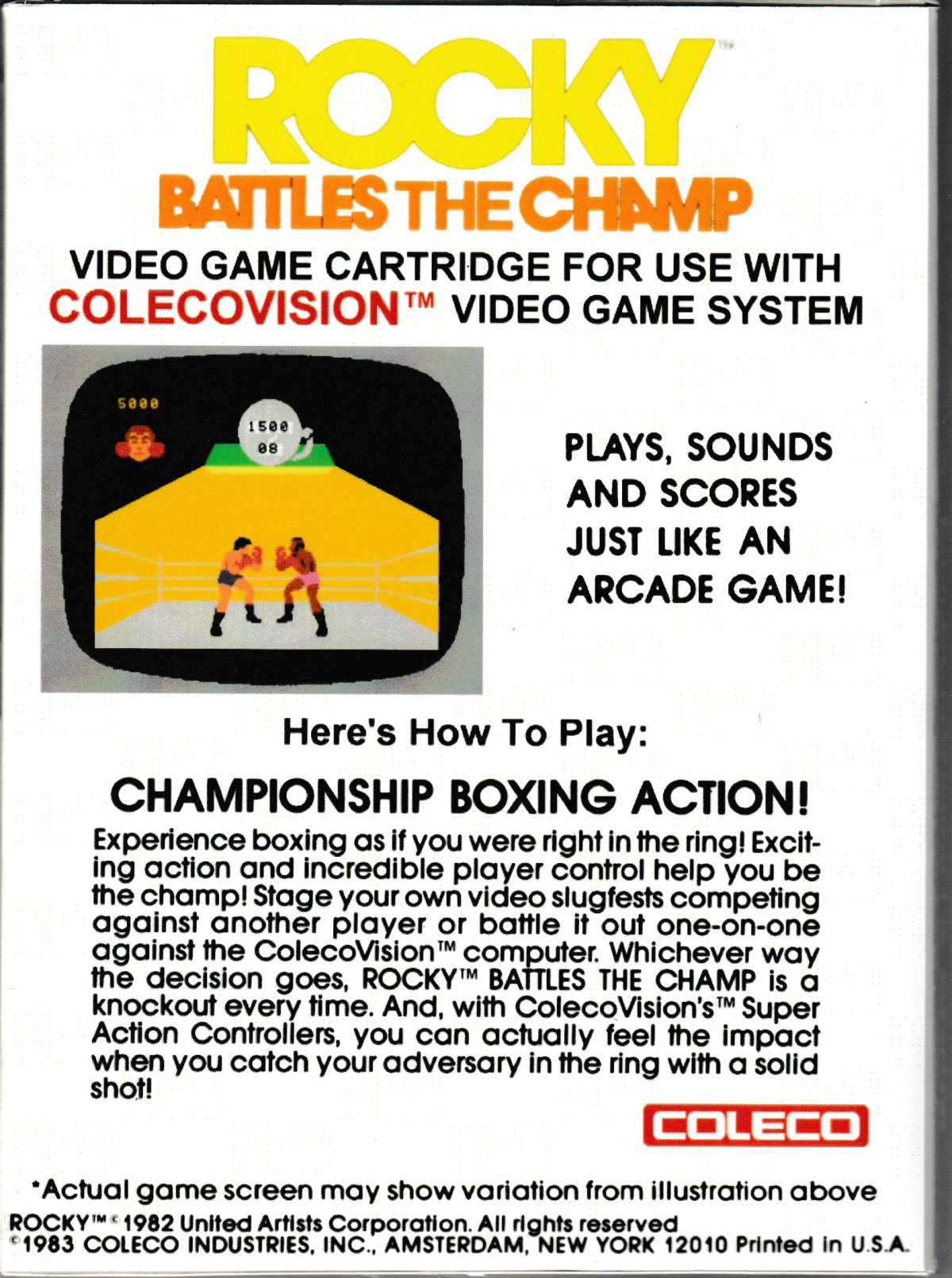
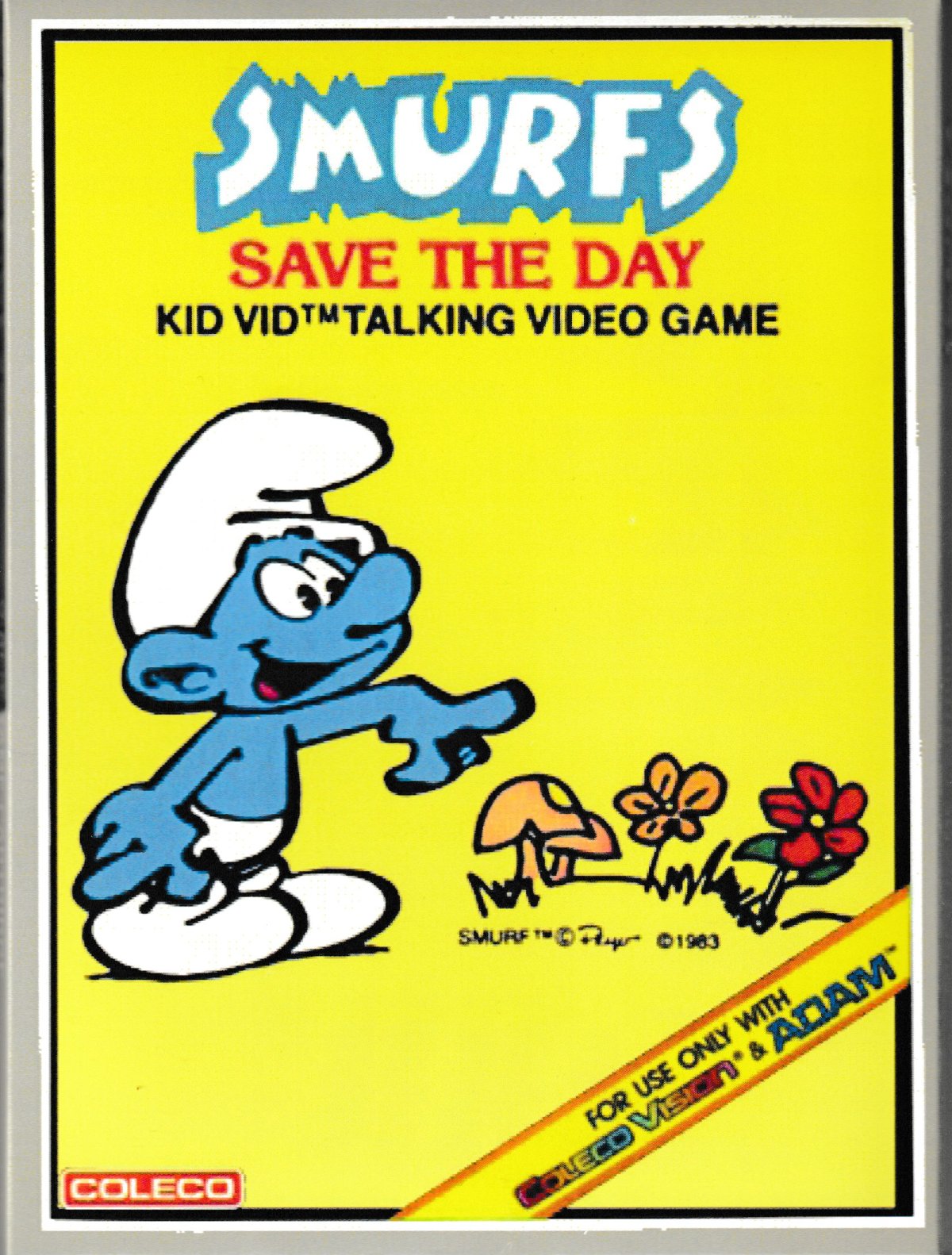
Rare Reproduction Mail Call
(1/25/2026)
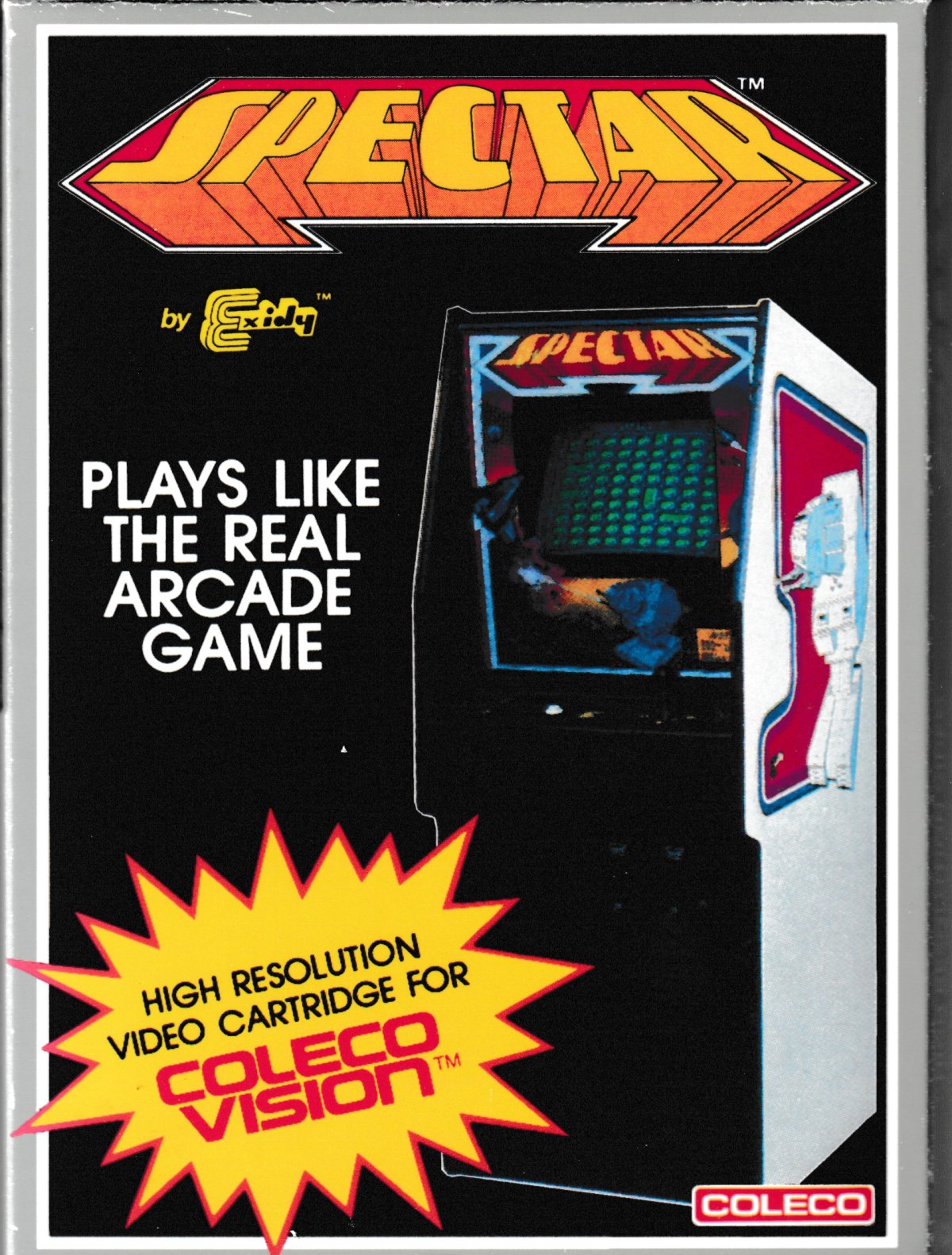
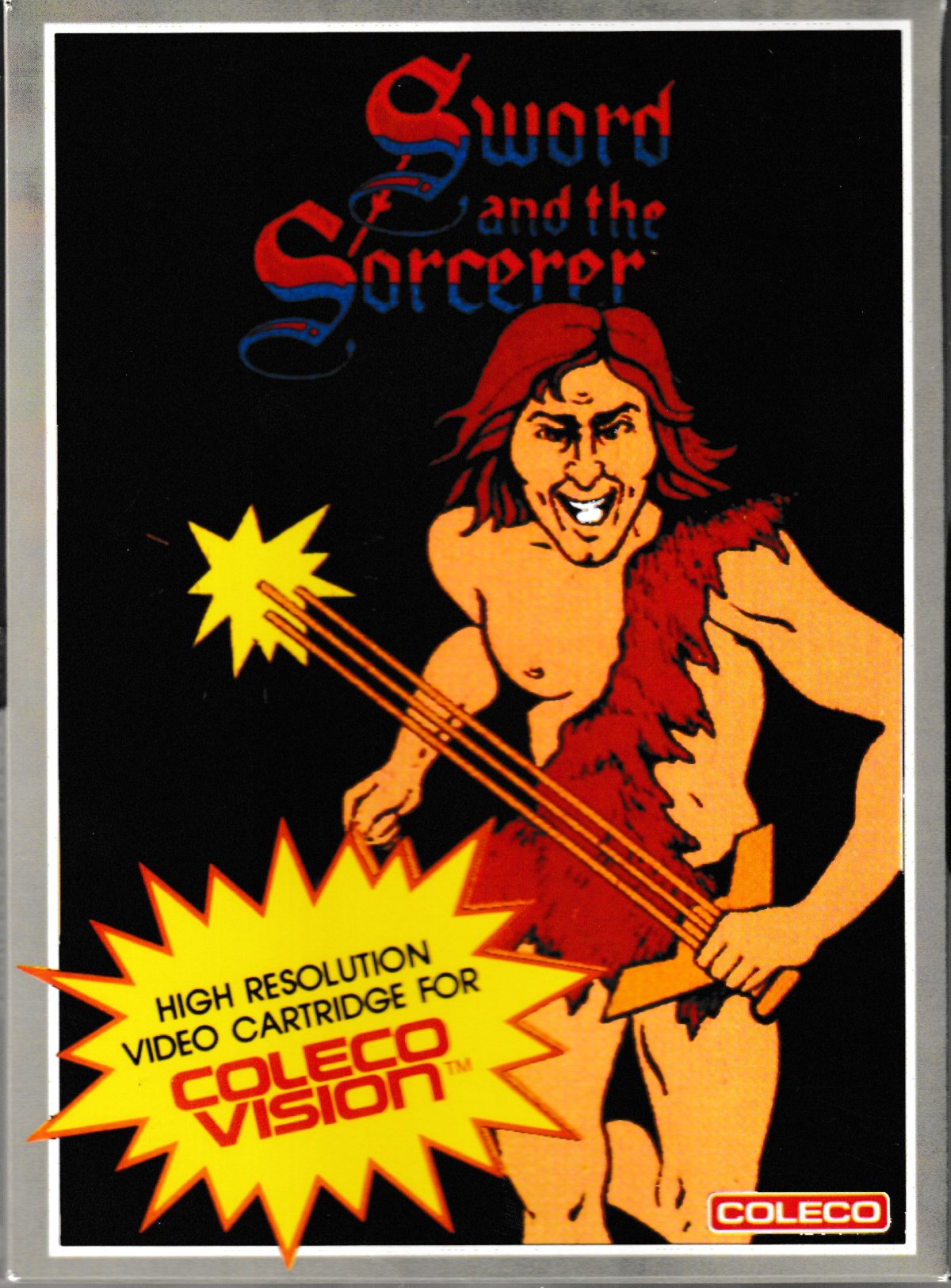
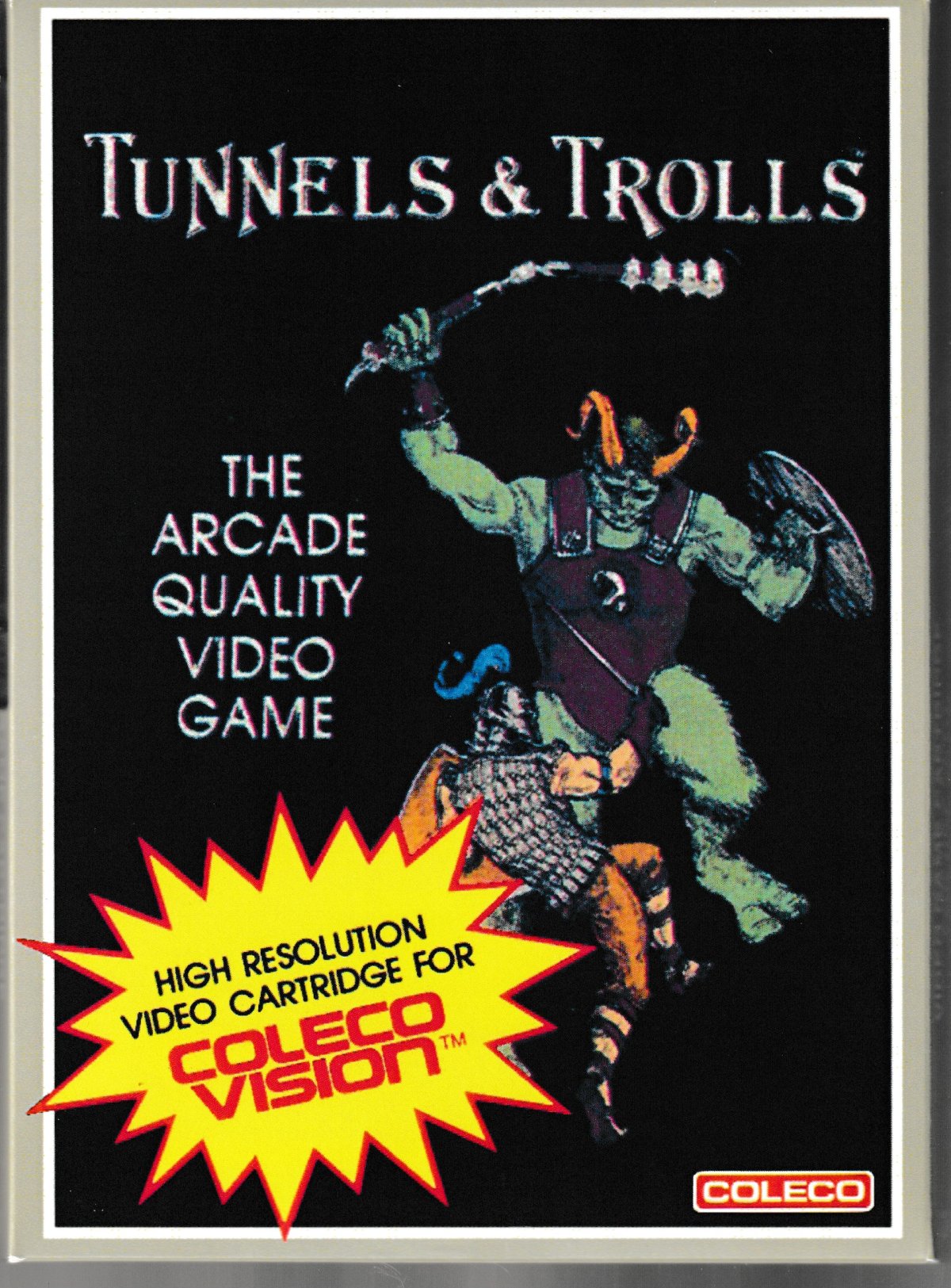
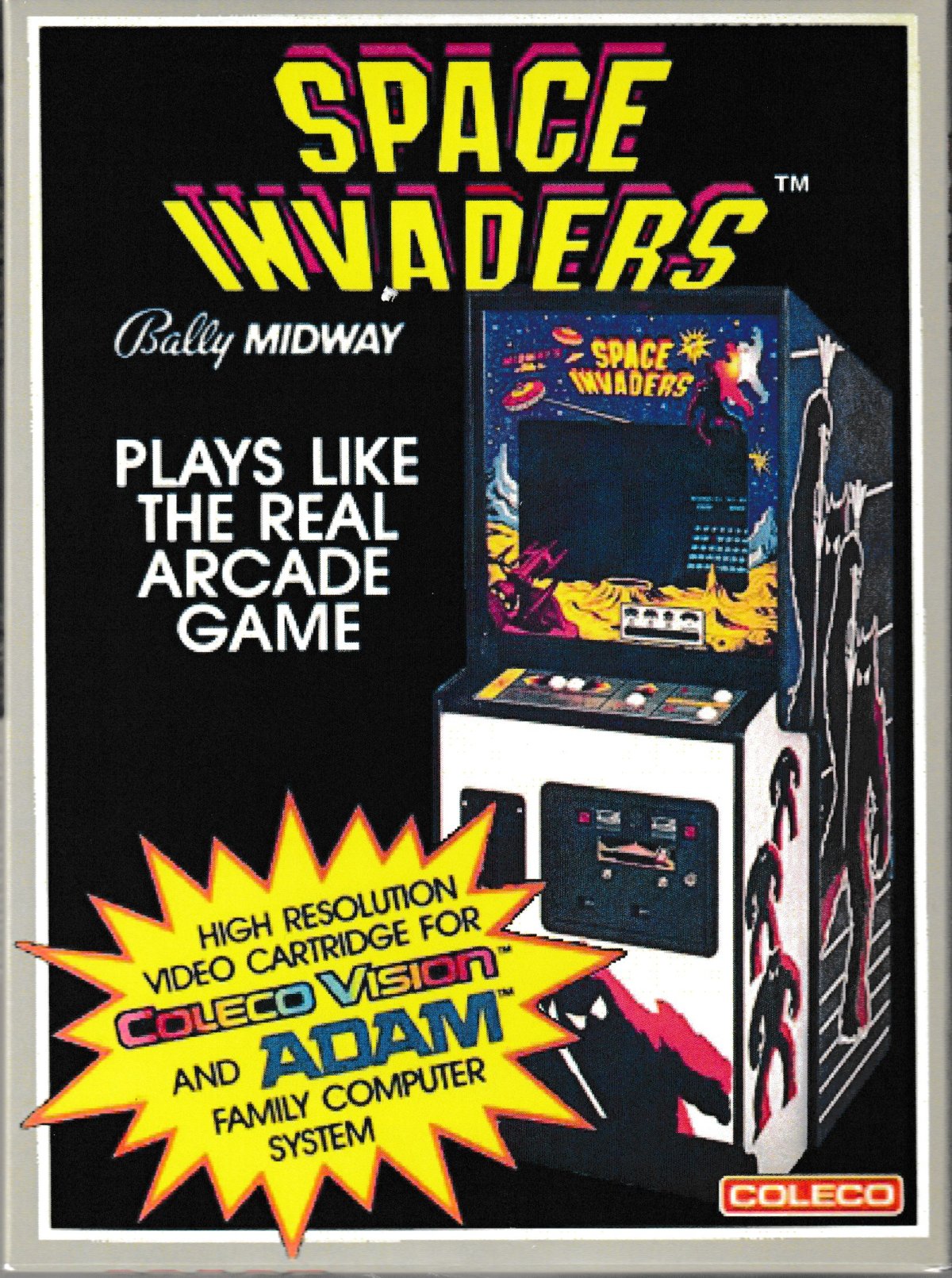
Opcode Mail Call
(1/25/2026)
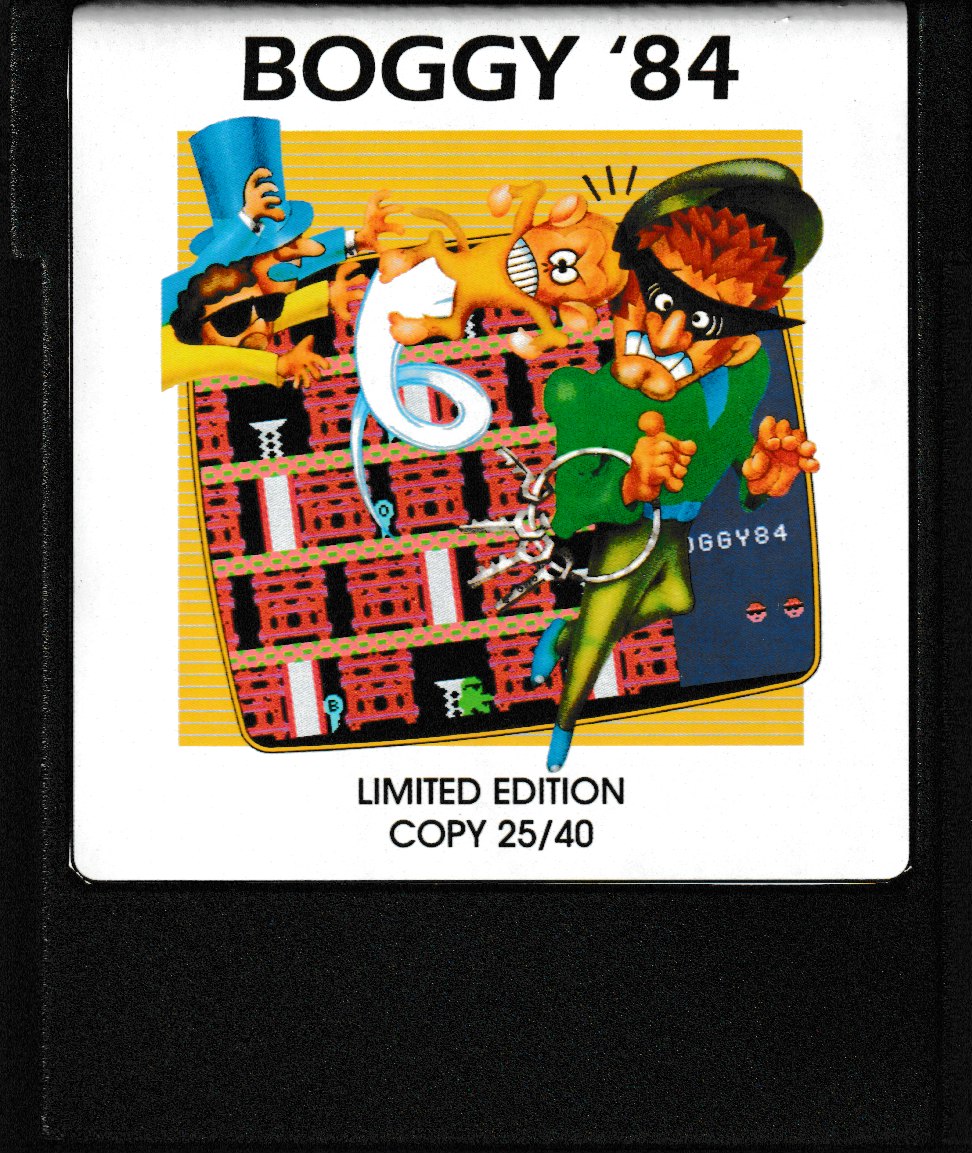
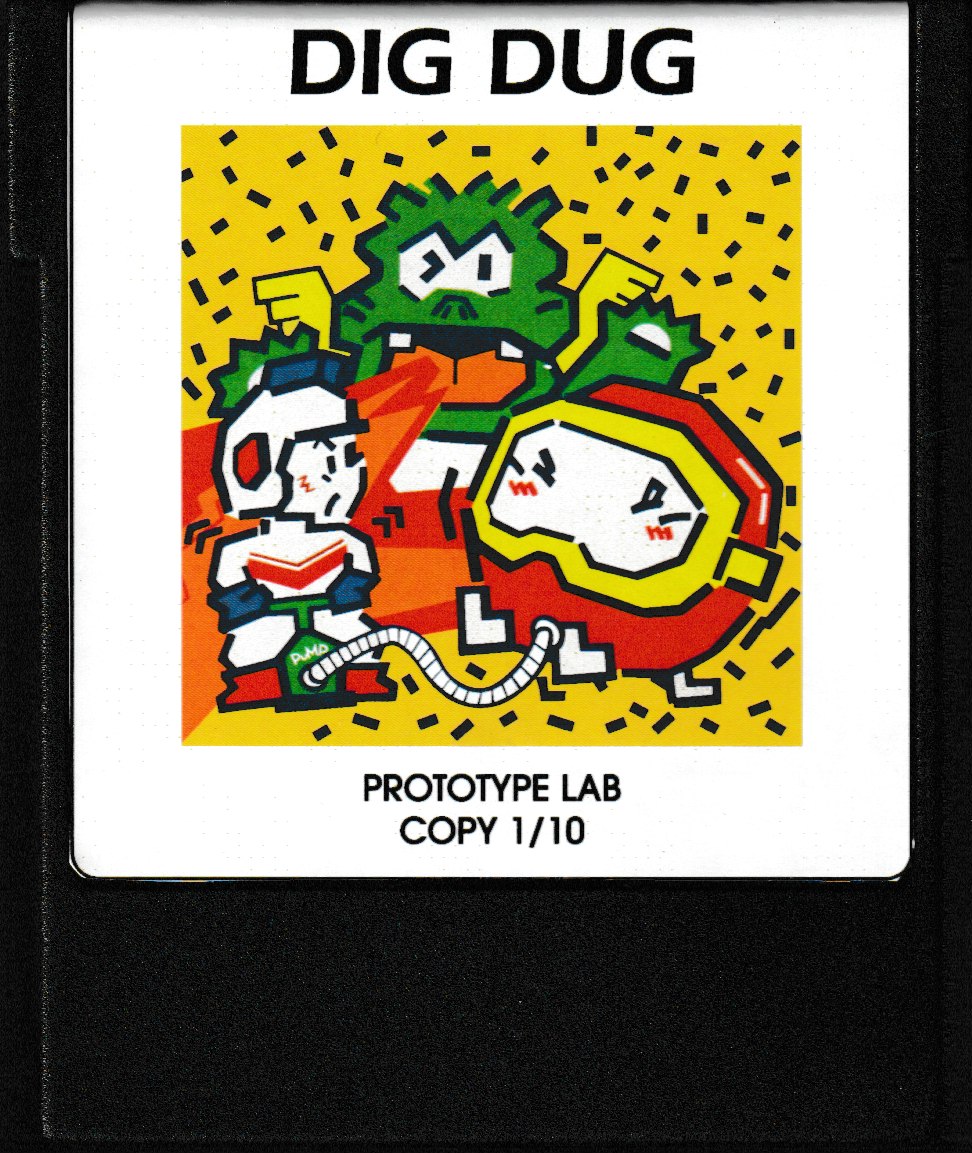
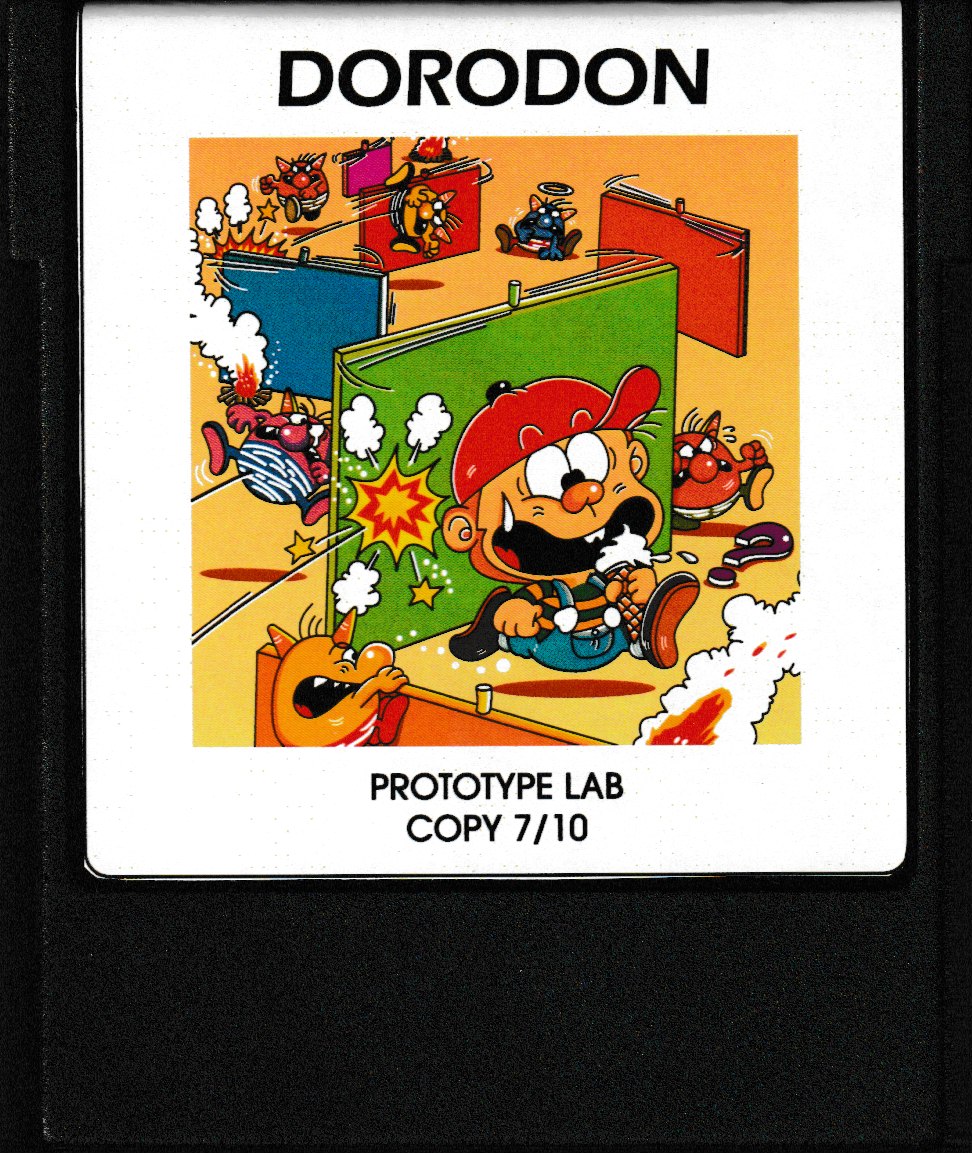
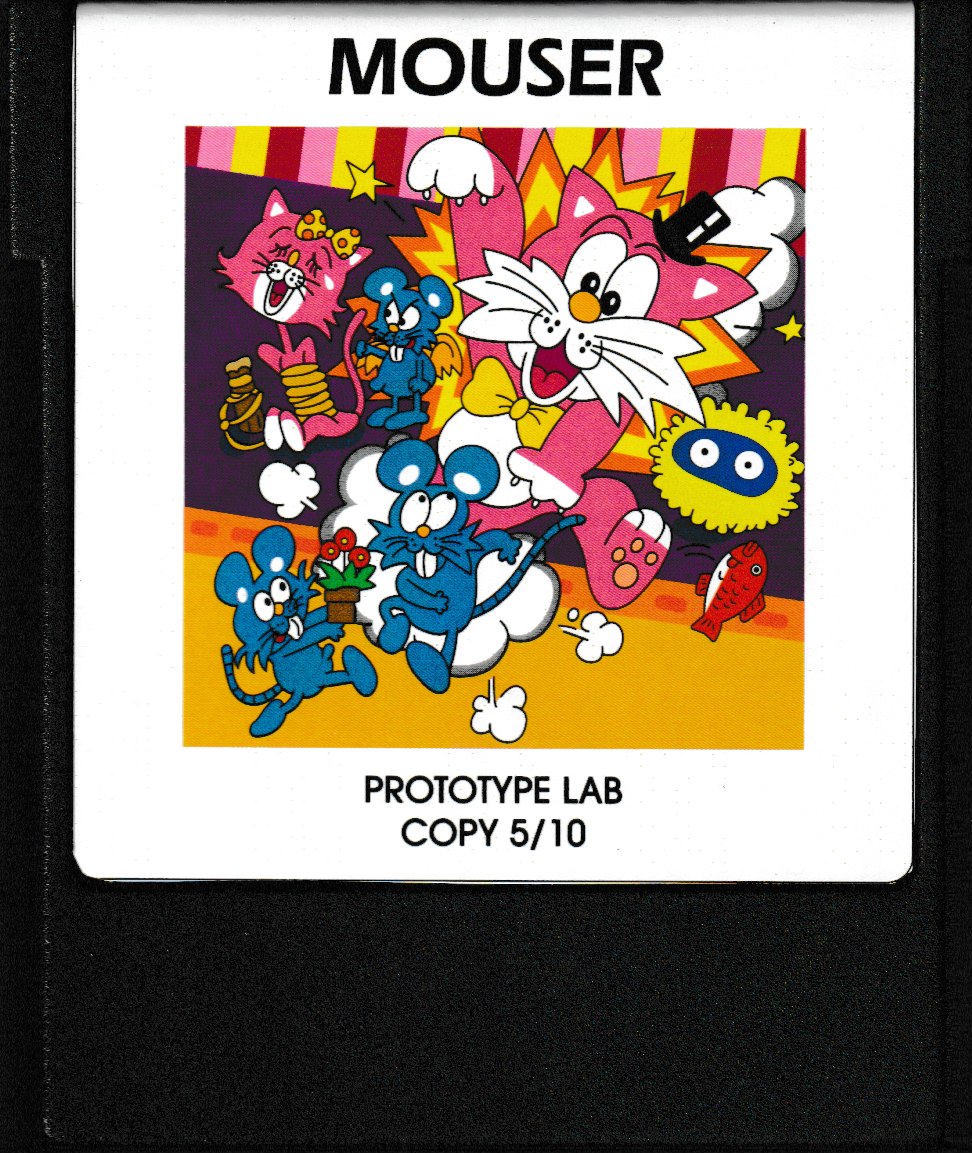
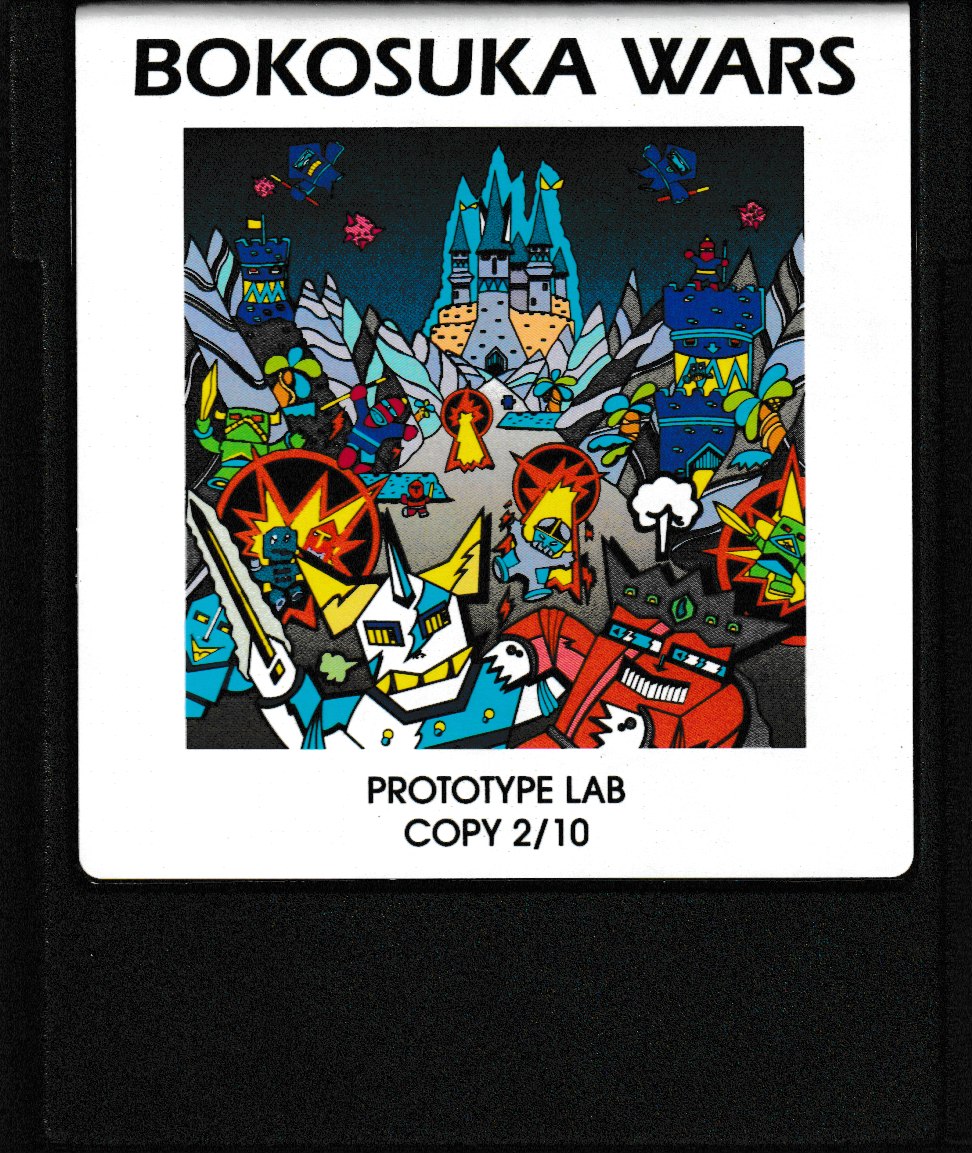
Here We Grow Again!!!!
(1/22/2026)
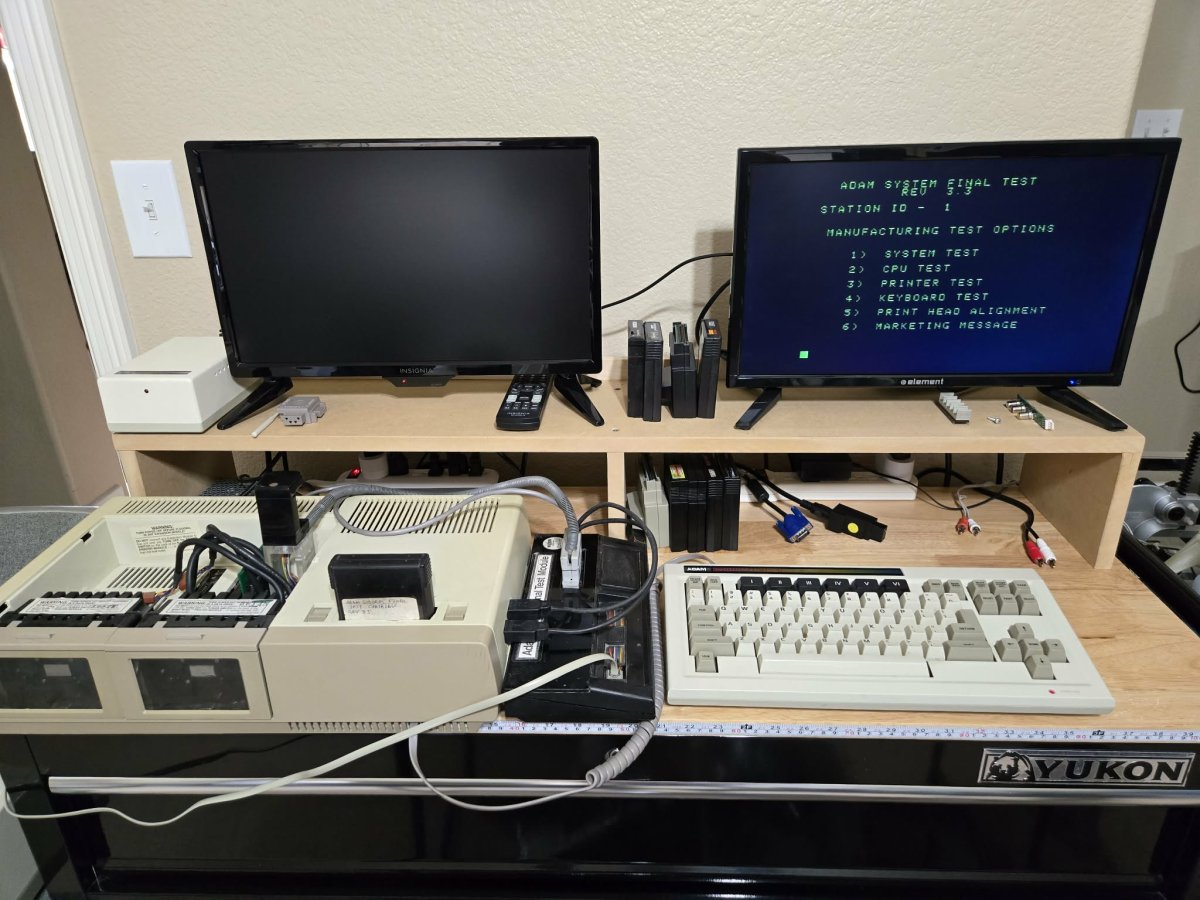
ADAM Final Test Module Gets Turned Back On after 40+ Years!!!!
(1/19/2026)
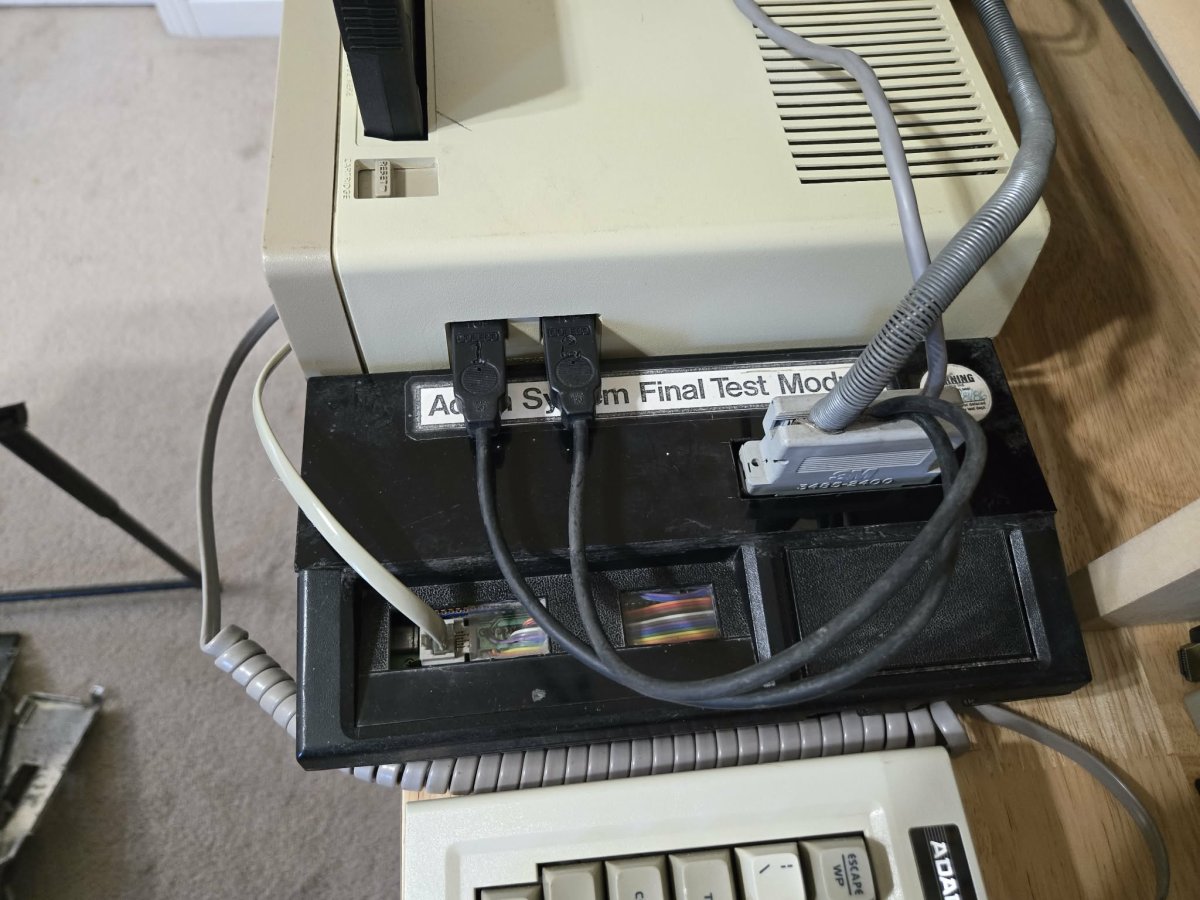
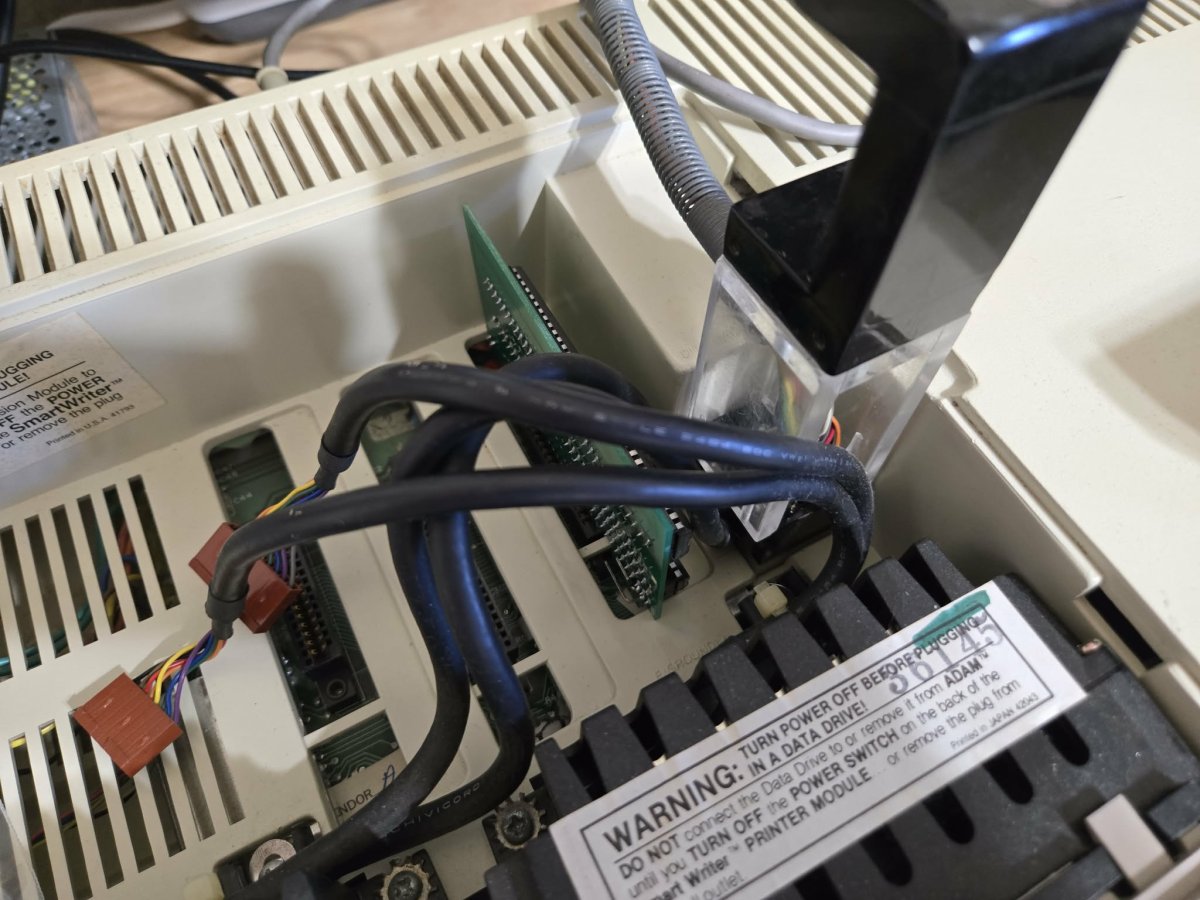
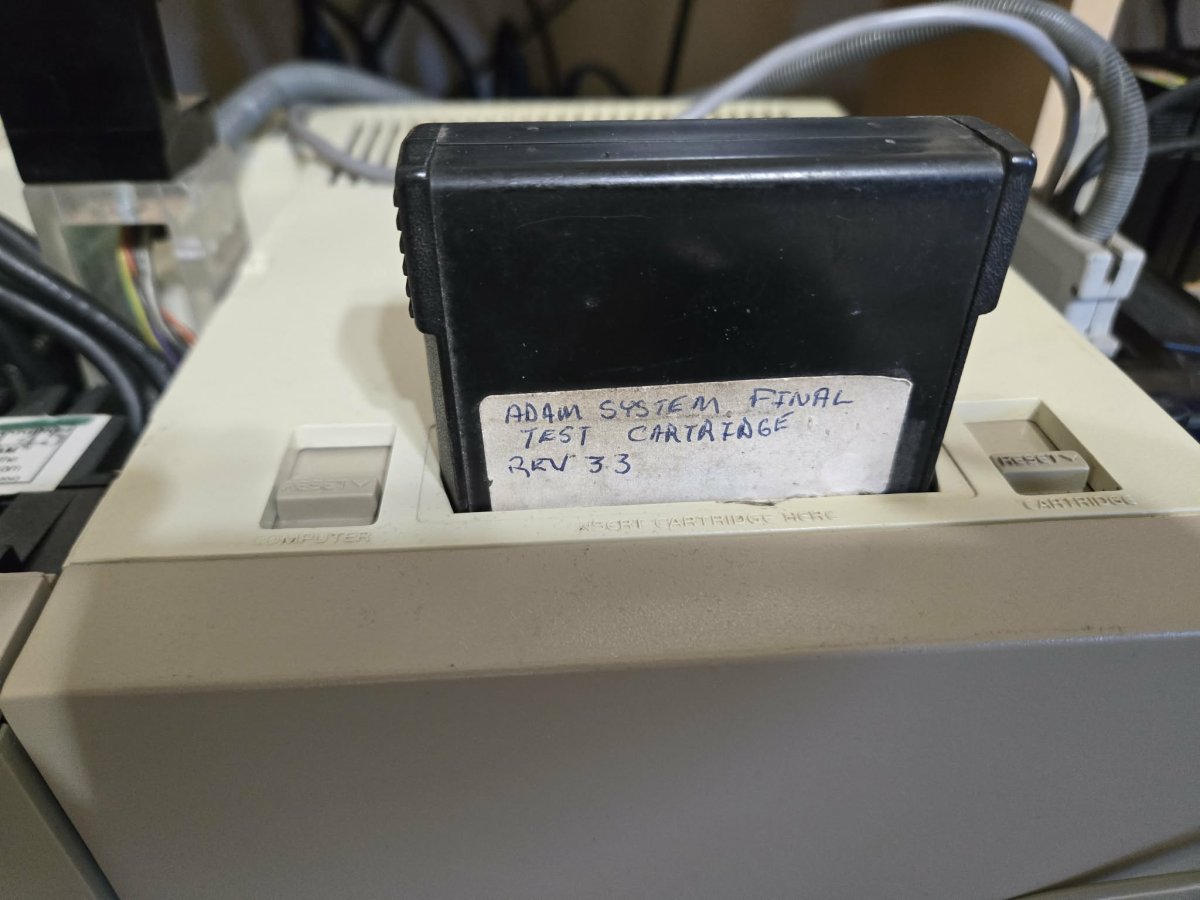
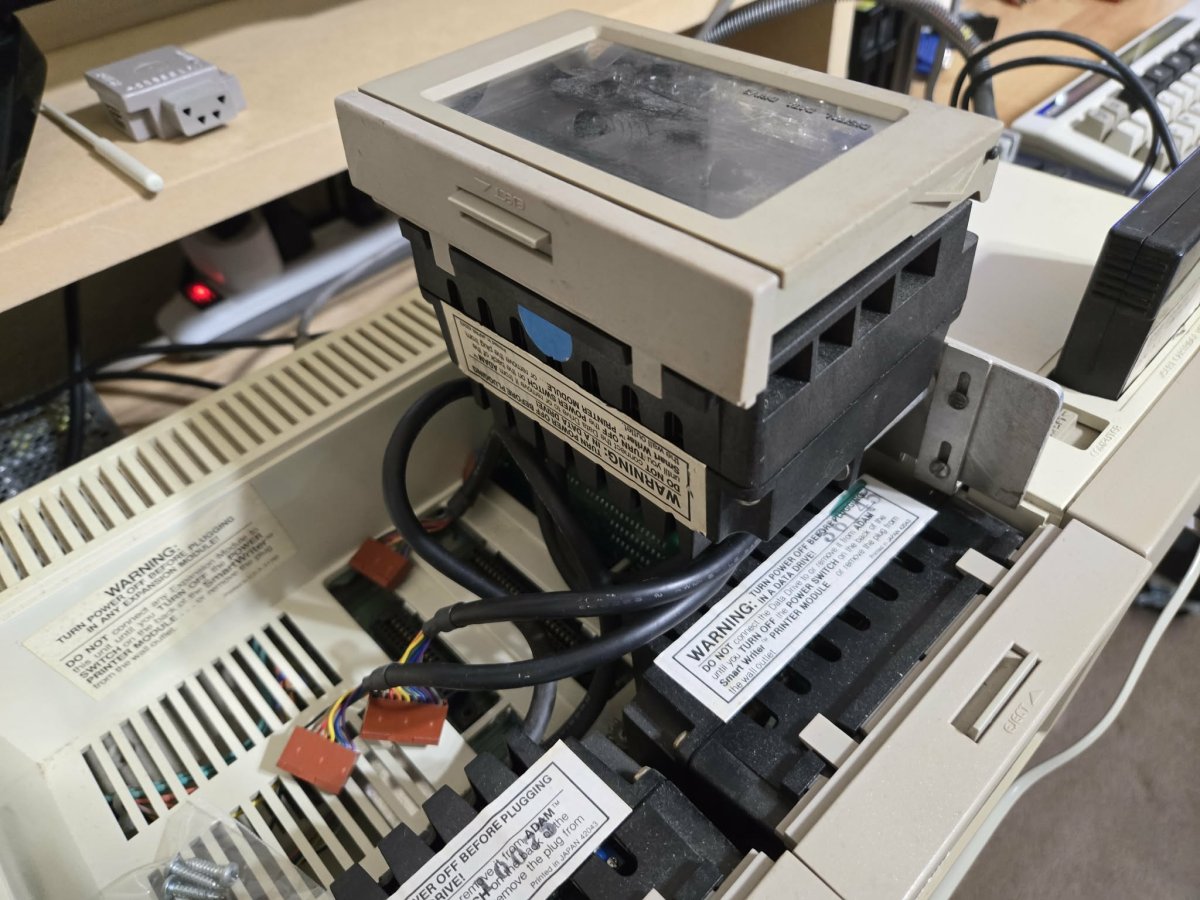
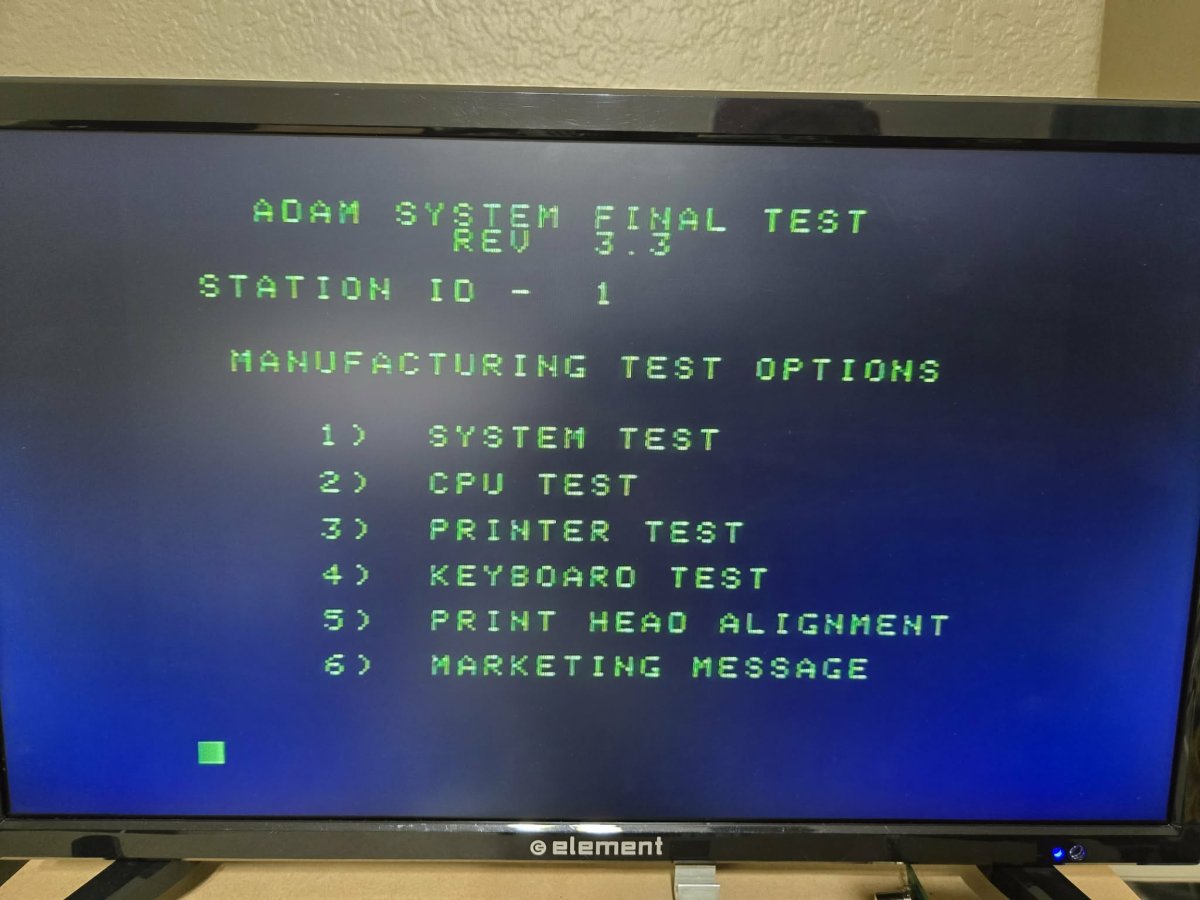
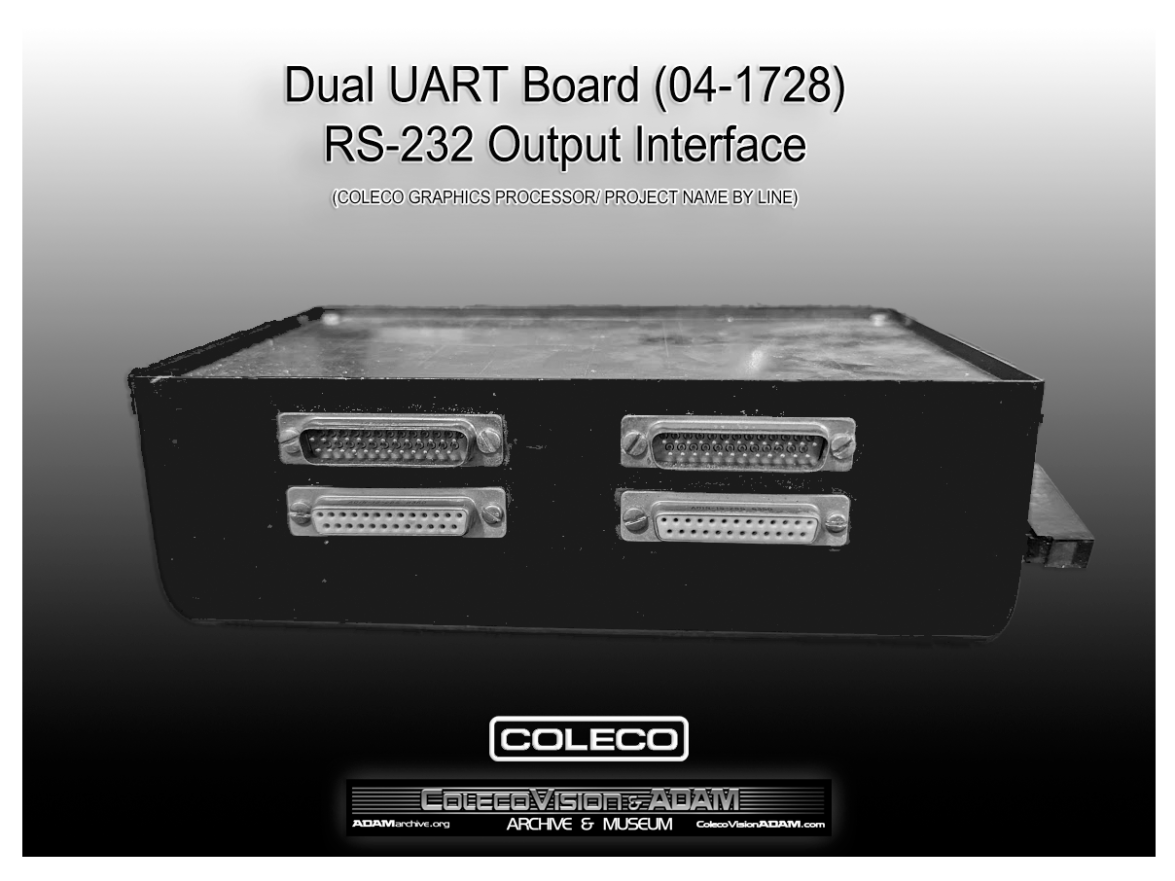
Dual UART Board (04-1728) RS-232 Output Interface
(1/10/2026)
🎉 NEVER-BEFORE-RELEASED ADAM HARDWARE DISCOVERED AND REVIVED! 🎉
(1/06/2026)
The History:
After Mark's successful Powermate IDE hard disk systems (the square black-fronted MI boxes many of you remember), he attempted to develop a SCSI-based storage solution for the ADAM. These SASI cards were prototyped but never released to the public. Whether Mark couldn't tame the physical SCSI drives of the era or couldn't get the head/cylinder/sector specs to cooperate with the ADAM remains a mystery.
The Revival:
We've solved the puzzle using modern technology! By mounting a BlueSCSI board (Blue Pill microprocessor + SD card) on top of Mark's original prototype cards, we now have fully functional SCSI-based hard disk storage for the ADAM. The software is derived from Mark's original Powermate code, modified to work with this new setup.
What We Found:
Two card versions: v1.0 (soldered jumper) and v2.0 (moveable jumper)
One card includes an autoboot EPROM originally for the Powermate MFM system
Card traces match the ADAMnet side of Mark's IDE interface cards
Runs TDOS 4.5 and EOS just like the original Powermate units
Think of it as a "mini Powermate"—the same way compact flash setups are miniaturized IDE units, this is a compact SCSI solution using Mark's proven software foundation.
A full manual has been written in the style of the original Micro Innovations documentation. Another piece of ADAM history preserved! 📚
#ColecoADAM #RetroComputing #VintageComputers #MicroInnovations #Preservation #8bit #BlueSCSI #SCSI #ComputerHistory
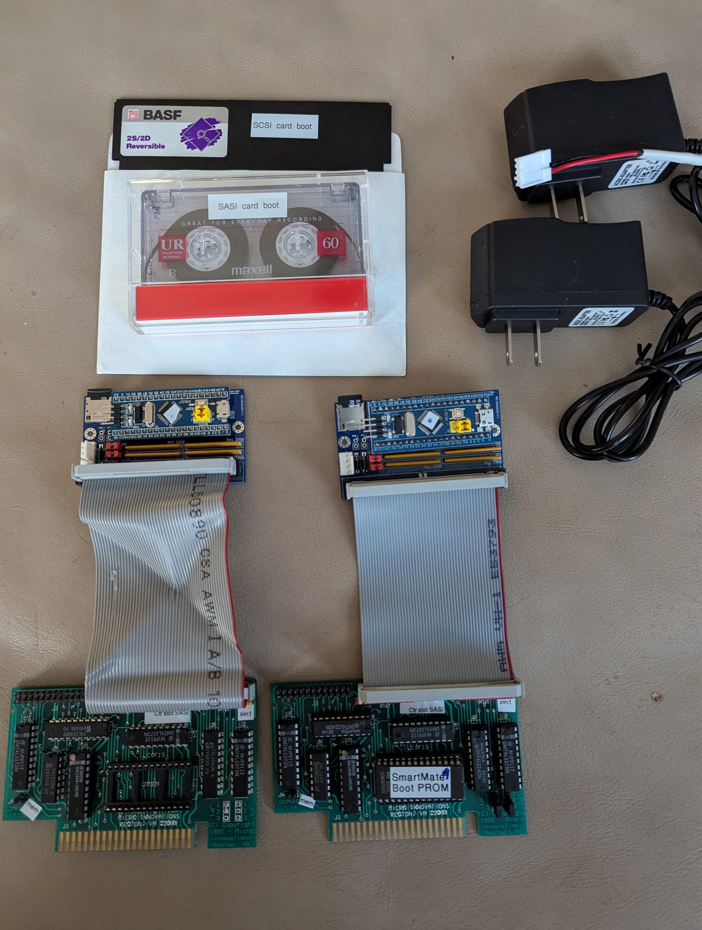
Almost 45 Years!!!!!
(1/01/2026)
What are you thoughts on this logo to represent this milestone?


